
Search News
Industry Portal
Popular Tags
VFD energy efficiency metrics that often mislead comparisons
Author
Marcus Torque
Time
Apr 23, 2026
Pageviews
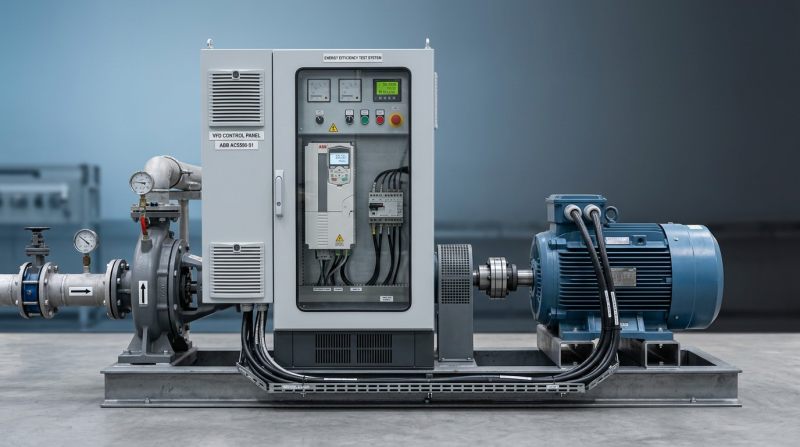
When evaluating drives, vfd energy efficiency metrics can look precise yet still distort real-world comparisons. For buyers, engineers, and plant leaders, the bigger question is how those figures relate to load profiles, system losses, and predictive maintenance for motors. This article explains where common efficiency claims fail, what test conditions matter most, and how to compare data from any vfd variable frequency drive supplier with greater confidence.
Why do VFD energy efficiency metrics so often create false confidence?
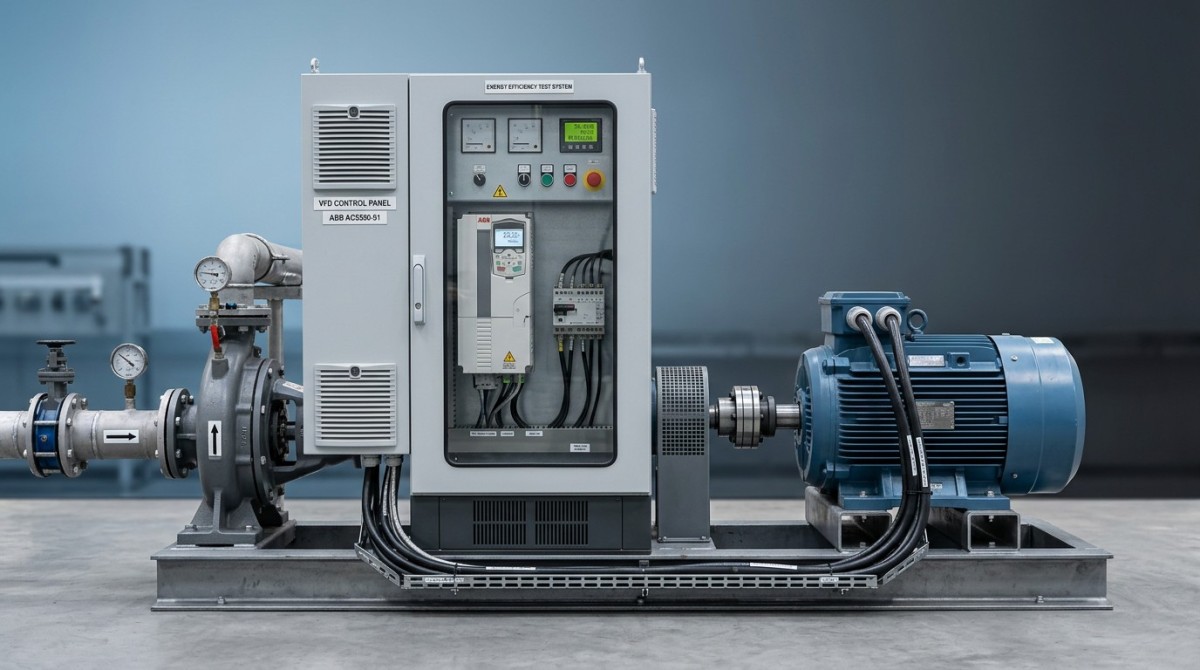
A variable frequency drive is rarely judged in isolation in actual production. It works inside a chain that includes the motor, gearbox, driven load, control logic, harmonic environment, ambient temperature, and maintenance quality. Yet many comparisons still reduce performance to one efficiency number measured under a narrow test point, often near rated load and stable conditions. That is useful, but it is not enough for investment decisions.
The most common mistake is assuming that a higher quoted drive efficiency automatically means lower plant energy use. In many factories, motors spend long periods at 30%–70% load, not at full load. Fans, pumps, conveyors, compressors, winding lines, and mixers all have different torque behaviors. If one supplier reports performance at 100% load and another emphasizes partial-load curves, the two numbers may look comparable while representing very different operating realities.
Another trap is boundary confusion. Some vfd energy efficiency metrics include only inverter conversion losses, while others discuss system efficiency more broadly. A procurement team may compare drive-only efficiency from one datasheet with motor-and-drive package performance from another. The difference can materially affect projected payback periods, especially in multi-line plants where dozens of motors from 5 kW to 250 kW operate in mixed duty cycles.
For information researchers and decision-makers, the right question is not “Which number is highest?” but “What operating envelope does this number represent?” That shift matters because energy cost models, carbon reporting, and replacement planning all depend on how the drive performs over 8-hour, 16-hour, or 24-hour duty patterns, not just laboratory peak points.
Three boundaries that should always be clarified
- Is the published value measured for the drive alone, the motor-drive package, or the full mechanical system including transmission losses?
- At what load points was efficiency recorded: 25%, 50%, 75%, and 100%, or only one nominal operating point?
- Which supporting conditions apply, such as switching frequency, carrier settings, ambient range, cooling method, and input harmonic mitigation?
G-IFA’s cross-sector benchmarking approach is valuable here because it treats automation hardware as part of an engineering stack rather than isolated marketing claims. In smart manufacturing, small specification gaps can create large forecast errors when aggregated across several assets, several shifts, and several sites. Transparent comparison starts with standardized definitions and consistent measurement boundaries.
Which test conditions matter most when comparing a VFD variable frequency drive supplier?
When comparing offers from any vfd variable frequency drive supplier, test conditions often matter more than the headline percentage. A drive may post excellent conversion efficiency at one switching frequency, then show different thermal behavior or higher motor stress under another setting. In practical terms, that can influence both energy use and motor life, especially in continuous-duty applications above 12 hours per day.
Input voltage stability also matters. A plant with fluctuating mains quality, long cable runs, or heavy harmonic distortion can see very different results from catalog assumptions. Likewise, cooling conditions affect losses. A drive operating inside a panel at 40°C–50°C may not match values measured in cleaner, cooler test environments. Comparing like for like means demanding the operating context behind the metric.
Motor pairing is another overlooked variable. The same drive can behave differently when matched with an older induction motor, a premium-efficiency motor, or a permanent magnet motor. If the purchasing team evaluates the drive only, but the application requires a package decision, efficiency and reliability discussions should include motor insulation stress, speed range stability, torque delivery, and expected maintenance intervals such as quarterly checks or annual shutdown inspections.
The table below summarizes the conditions that most often distort comparisons. These are not exotic engineering details. They are routine factors that affect budget accuracy, line stability, and total lifecycle cost in general industrial use.
If a supplier cannot provide these details in a structured way, the comparison is incomplete. For cross-plant evaluation, procurement teams should align all bids around the same 4- to 6-point operating profile and the same environmental assumptions. That alone can remove much of the ambiguity hidden inside seemingly precise vfd energy efficiency metrics.
A practical 4-step data request before shortlisting
- Ask for efficiency values at multiple torque and speed points, not just nominal load.
- Request the exact motor type and cable length assumptions used for testing.
- Confirm whether harmonic filters, reactors, or EMC accessories were included.
- Match all supplier responses to the same duty cycle window, such as 3 shifts, 5 days, or 24/7 operation.
Where do real energy losses hide beyond the published efficiency number?
In industrial automation, the useful question is not just how efficient the drive is, but where the remaining losses appear in the system. Some losses occur inside the power electronics. Others come from harmonics, motor heating, oversized selections, gearbox inefficiency, throttled flow processes, or poor control tuning. A purchasing decision that ignores these layers may overvalue a strong datasheet and undervalue a better-matched system design.
For pumps and fans, process control strategy often dominates savings. If a drive is used to replace dampers or throttling valves, the system can save meaningful energy across variable demand periods. But if the process already runs near constant full speed, the difference between two drives may be much smaller than expected. This is why energy projections should be linked to application logic, not copied from generic savings claims.
Maintenance also affects apparent efficiency. Cooling path blockage, poor panel ventilation, loose terminations, or degraded bearings can increase losses over a 6- to 12-month operating period. Predictive maintenance for motors and drives therefore matters in energy analysis. Vibration monitoring, temperature trending, and alarm history do not merely support reliability; they help explain why measured consumption drifts away from the original business case.
The following comparison shows how different loss layers should be interpreted during planning. It helps operators and enterprise decision-makers separate drive efficiency from system efficiency and lifecycle performance.
This layered view is especially important for G-IFA audiences because factory modernization decisions often span PLC logic, motion systems, motor controls, and data platforms. Evaluating a drive without considering surrounding assets may simplify the spreadsheet, but it usually weakens the engineering decision.
What operators should monitor after commissioning
Key checkpoints during the first 30–90 days
- Compare actual current draw against the expected load profile at low, medium, and peak production states.
- Track enclosure temperature and fan condition weekly during the early stabilization period.
- Review alarms, trips, and speed-control hunting that may indicate poor tuning rather than poor hardware.
- Coordinate motor bearing and vibration checks with predictive maintenance routines at monthly or quarterly intervals.
How should procurement teams compare offers without being misled?
Procurement teams often receive quotations that look technically similar but are not economically equivalent. One drive package may include line reactors, braking options, communication cards, or compliance documentation. Another may present an attractive base price while shifting integration cost, panel redesign, or commissioning effort downstream. If vfd energy efficiency metrics are reviewed apart from total scope, the selected bid may look cheaper than it actually is.
For general industry projects, a practical evaluation window is usually 3 layers deep: acquisition cost, implementation cost, and operating cost over 3–5 years. This does not require speculative modeling. It requires structured inputs: duty cycle, maintenance regime, expected speed range, environmental conditions, and communication requirements with PLC, SCADA, or MES systems. That is where technical filtering adds value to purchasing discipline.
A strong shortlist should also examine delivery risk. Lead times in industrial automation can vary from 2–4 weeks for standard configurations to 8–12 weeks or more for customized power ranges, enclosure demands, or region-specific compliance combinations. Decision-makers should therefore assess availability and engineering fit together, rather than treating them as separate discussions.
The checklist below can be used during bid normalization. It supports more reliable comparisons across suppliers, system integrators, and retrofit proposals.
Five procurement checks before approving a VFD package
- Verify that all bids use the same duty profile, such as 20% low load, 50% mid load, and 30% high load over a normal shift.
- Confirm included accessories: EMC filters, reactors, braking resistors, communication modules, and panel cooling requirements.
- Ask whether the offered solution supports predictive maintenance data points, fault history export, and integration with existing control architecture.
- Review compliance needs early, including IEC-related electrical practices, CE-related market access expectations, and plant-specific documentation rules.
- Check service assumptions: startup support, commissioning window, spare parts lead time, and recommended preventive inspection intervals.
This is also where G-IFA’s role as a benchmark repository becomes commercially useful. Buyers can compare hardware precision, control compatibility, and standards alignment across multiple automation pillars instead of treating the drive as an isolated commodity. That reduces selection risk for production directors, system integrators, and enterprise leaders who must justify capex with technical evidence.
Common misconceptions and FAQ for buyers, engineers, and plant leaders
Search intent around vfd energy efficiency metrics is usually tied to one practical question: will the stated performance translate into measurable savings in my plant? The answer depends on load variability, system design, control quality, and maintenance discipline. The questions below address the most frequent misconceptions that appear during early research and supplier comparison.
Does a higher VFD efficiency rating always mean lower total energy consumption?
No. A higher drive efficiency rating may reduce electronic losses, but total consumption depends on the entire motor-driven system. In variable torque applications such as fans and pumps, control strategy and speed reduction can matter more than a small difference in drive conversion efficiency. In constant torque applications, the gain may be narrower. Always evaluate savings over actual operating profiles, ideally across at least 3 load bands.
What load data should I ask a vfd variable frequency drive supplier to provide?
Ask for efficiency or loss data at multiple operating points, such as 25%, 50%, 75%, and 100% load, together with the motor type, switching frequency, ambient assumption, and any accessories included in the test setup. If the supplier provides only one nominal number, your payback model will remain weak. Multi-point data supports better forecasting and better comparison across competing proposals.
How important is predictive maintenance when evaluating energy performance?
It is more important than many teams expect. Over a 6- to 12-month period, contamination, cooling degradation, bearing wear, or poor tuning can shift actual energy use away from the original estimate. Predictive maintenance for motors and drives helps identify that drift early. For plants running 16–24 hours per day, the operational value of condition visibility can exceed the value of a small catalog efficiency advantage.
Are standards and compliance documents relevant to energy comparisons?
Yes, because standards discipline improves comparability. While compliance marks do not guarantee lower energy use by themselves, they help define documentation quality, safety practices, electrical compatibility, and acceptable testing frameworks. For multinational manufacturers, alignment with common international references such as ISO, IEC, and CE-related expectations can reduce implementation friction during plant rollout and audit preparation.
Why choose G-IFA when screening VFD efficiency claims and automation investment risk?
G-IFA helps industrial teams make clearer decisions by connecting component data to factory reality. Instead of reviewing a drive in isolation, stakeholders can assess how energy efficiency claims interact with motor behavior, control architecture, standards alignment, and digital monitoring readiness. This matters when one purchasing choice affects uptime, integration complexity, maintenance planning, and long-term operational cost across several automation layers.
For information researchers, G-IFA offers a structured way to filter marketing noise from engineering substance. For operators and maintenance teams, it supports attention to parameters that influence actual performance over weeks and months, not just acceptance day. For procurement and enterprise decision-makers, it creates a more consistent basis for comparing suppliers, accessories, implementation scope, and compliance needs.
You can contact G-IFA to discuss parameter confirmation, VFD package comparison, motor-drive matching, delivery lead-time planning, standards-related documentation, and integration fit with PLC, motion control, MES, or broader smart factory architecture. If you are preparing a retrofit or a new-line investment, it is also practical to request support on bid normalization, load-profile framing, and the selection of the right data points for quotation review.
A more reliable VFD decision usually begins with 4 inputs: application type, operating load range, control environment, and maintenance expectations. Bring those details into the discussion, and the comparison will move beyond isolated vfd energy efficiency metrics toward a more dependable automation investment case.
Recommended News
- 2026/06/22How to Use an Importers Directory for Electronics to Find Verified BuyersImporters directory for electronics: learn how to identify verified buyers, check trade activity, assess technical fit, and turn directory data into qualified sales opportunities.
- 2026/06/22Wholesale Pet Toys: How to Compare Materials, MOQ, and Supplier QualityWholesale pet toys buying guide: compare materials, MOQ, and supplier quality to reduce risk, improve margins, and choose safer, better-selling products with confidence.
- 2026/06/22What Drives Car Maintenance Cost and How to Budget for RepairsCar maintenance cost depends on driving habits, vehicle age, parts quality, and repair timing. Learn how to budget smarter, avoid costly surprises, and plan repairs with confidence.