
Search News
Industry Portal
Popular Tags
Which VFD energy efficiency metrics actually reflect savings
Author
Marcus Torque
Time
Apr 23, 2026
Pageviews
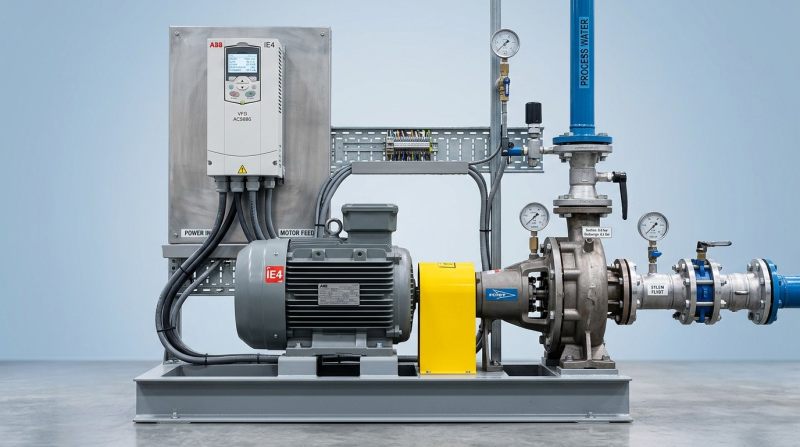
For engineers, buyers, and plant leaders, the short answer is this: the VFD energy efficiency metrics that most accurately reflect real savings are not just the drive’s nameplate efficiency. What matters most is how the drive performs across the actual load profile, speed range, control method, motor pairing, harmonic behavior, and system-level operating hours. A “high-efficiency” VFD can still deliver disappointing savings if it is oversized, poorly tuned, or applied to the wrong load type. For decision-makers comparing options, the most useful metrics are those that connect directly to kilowatt-hour reduction, demand reduction, process stability, and lifecycle operating cost.
In practice, the best evaluation combines electrical performance data with application context. That means looking beyond brochure claims and reviewing partial-load efficiency, real operating duty cycles, motor-drive matching, power quality, and maintenance implications. For plants moving deeper into Industry 4.0, these metrics should also be considered alongside servo motor torque-speed curves, predictive maintenance for motors, and benchmarked automation data so that energy savings are measured as part of total production efficiency rather than as an isolated specification.
Which VFD metrics actually indicate real energy savings?
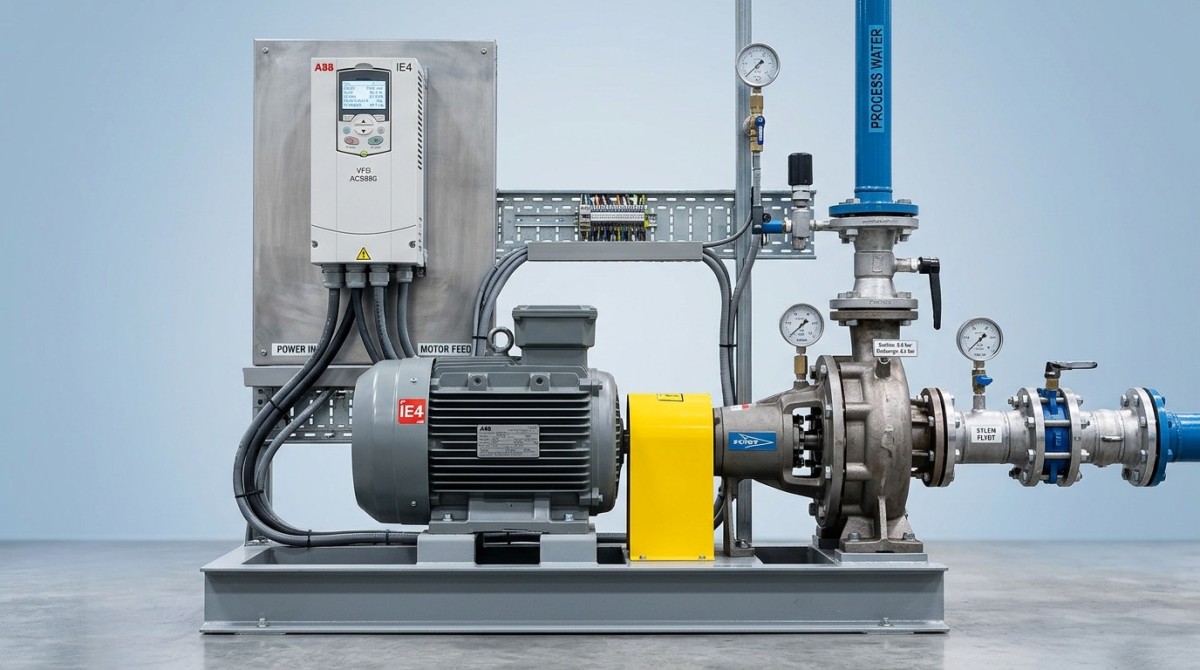
If your goal is to estimate actual savings, focus on the metrics that affect energy use in the field, not just in lab conditions. The most meaningful VFD energy efficiency metrics include:
- Drive efficiency at partial load: Most systems do not operate at full load all day. A VFD that performs well at 40% to 80% load may save more over a year than one with a slightly better peak efficiency rating.
- System-level kWh reduction: The most useful number is not drive loss alone, but how much total energy the motor-driven application consumes before and after VFD installation.
- Control mode effectiveness: Variable torque applications such as fans and pumps often produce the clearest savings because reducing speed sharply reduces power consumption.
- Power factor and input current behavior: While power factor improvement does not always equal direct kWh savings, it can affect overall electrical performance and utility costs.
- Harmonic distortion: Excessive harmonics can create upstream losses in transformers, cables, and other equipment, reducing net energy benefit.
- Motor-drive matching efficiency: The VFD and motor must work efficiently as a pair, especially in precision or continuously operating systems.
- Idle and standby losses: In facilities with many drives, these smaller losses can accumulate into meaningful annual cost.
The key point is simple: the metric that best reflects savings is the one tied to the machine’s real operating pattern. A single published efficiency percentage does not tell the whole story.
Why nameplate efficiency alone can be misleading
Many buyers assume that a VFD with a 97% or 98% efficiency rating will automatically generate major savings. That assumption is incomplete. Drive conversion losses are only one part of the equation. In many applications, the real savings come from using speed control to avoid wasting mechanical energy, especially where throttling, dampers, bypass valves, or fixed-speed operation previously caused inefficiency.
For example, in centrifugal fan and pump systems, reducing motor speed can reduce power demand dramatically due to the affinity laws. In these cases, the biggest savings driver is not a one-point difference in drive efficiency, but the system’s reduced power draw at lower speed. By contrast, in constant torque applications such as conveyors, extruders, or positive displacement systems, the savings may be smaller and depend more on control quality, duty cycle, and process optimization.
This is why sophisticated users evaluate application efficiency, not just device efficiency. They ask:
- How often does the motor run below rated speed?
- What is the actual load profile over a shift, day, or season?
- Is the system variable torque or constant torque?
- Are there existing mechanical control losses that a VFD can eliminate?
- Will harmonics or poor motor matching offset part of the expected gain?
What metrics matter most for different types of readers?
Different stakeholders interpret VFD energy efficiency metrics differently because their decisions are not the same.
For information researchers and technical evaluators, the most useful data includes tested efficiency curves, harmonic performance, overload capability, thermal behavior, and compatibility with specific motor classes. They want to verify whether vendor claims hold up under realistic operating conditions.
For operators and end users, what matters most is whether the drive lowers energy use without causing nuisance trips, unstable speed control, overheating, or maintenance complications. Ease of tuning, readability of diagnostics, and stable operation under actual plant conditions are often more important than minor differences in brochure values.
For procurement teams, the critical issue is lifecycle cost. A lower-priced drive may not be the better buy if it has weaker partial-load efficiency, poorer reliability, or limited integration capabilities that increase engineering time later.
For business decision-makers, the most meaningful metrics are annual kWh savings, payback period, avoided downtime, and impact on production consistency. They are less interested in isolated electrical figures than in whether the investment reduces operating expenditure with manageable implementation risk.
How to judge whether a VFD will save energy in your application
A practical evaluation should follow a system-based method rather than relying on generic assumptions.
- Identify load type
Determine whether the application is variable torque, constant torque, or constant power. This is the first filter for estimating savings potential. - Measure the real duty cycle
Collect actual run-time, speed range, load fluctuation, start-stop frequency, and seasonal variation data. Logged plant data is much more reliable than operator estimates. - Compare baseline control method
If the current system uses dampers, throttling valves, bypass loops, or mechanical brakes to manage flow or speed, VFD savings potential is often significant. - Review partial-load efficiency curves
Ask vendors for performance data across the expected operating range, not just full-load conditions. - Check motor compatibility
Motor insulation class, cooling behavior at low speed, and combined efficiency all affect final results. This is where servo motor torque-speed curves and motor characteristics become useful reference points in precision applications. - Account for power quality
Include harmonics, filters, line reactors, and transformer loading in the assessment. These may affect both efficiency and installation cost. - Estimate total ROI
Include energy savings, maintenance reduction, process improvement, and any effect on uptime or quality consistency.
When this process is followed, expected savings become much more credible and easier to defend internally.
How servo motor torque-speed curves and predictive maintenance connect to VFD efficiency decisions
Although VFDs are often discussed separately from servo systems and maintenance analytics, these areas are increasingly linked in modern automation environments. Engineers selecting drives for energy performance should not ignore broader motion and reliability data.
Servo motor torque-speed curves help teams understand how efficiently motion is delivered across the operating range. In applications where precise speed regulation, acceleration, and torque delivery affect cycle time, selecting a drive purely on electrical efficiency may be shortsighted. A system that uses slightly more power but maintains optimal throughput or reduces scrap can deliver better economic performance overall.
Predictive maintenance for motors also matters because a degraded motor-bearing condition, insulation weakness, imbalance, or cooling issue can distort the expected savings from a VFD. If the drive is efficient but the motor system is unhealthy, actual plant performance will fall short of the model. Monitoring vibration, current signature, thermal data, and fault trends helps preserve the savings that justified the investment in the first place.
For data-driven factories, the best practice is to combine VFD energy metrics with maintenance diagnostics and motion benchmarking. That approach aligns with how advanced manufacturing organizations make lower-risk automation decisions.
What questions should buyers ask vendors before trusting energy-saving claims?
To separate measurable value from generic marketing, buyers should ask specific technical and commercial questions:
- What is the drive efficiency at the actual load points relevant to this application?
- Can you provide third-party test data or benchmarked field results?
- What harmonic mitigation measures are required, and how do they affect total system efficiency?
- What motor types and sizes were used in the published performance data?
- How does the drive perform in low-speed continuous duty?
- What are the standby losses and cooling requirements?
- What commissioning quality is needed to achieve the projected savings?
- Can you model annual kWh savings based on our actual duty cycle?
- What reliability data supports the lifecycle cost estimate?
These questions shift the conversation from generic “high efficiency” positioning to evidence-based evaluation.
A practical rule of thumb for interpreting VFD energy efficiency metrics
If you need a simple decision framework, use this one:
The most trustworthy VFD energy efficiency metrics are those that combine drive efficiency, operating profile, and application behavior into a system-level savings estimate.
In other words:
- Useful: annual kWh savings, partial-load efficiency, duty-cycle-based ROI, measured before-and-after power use
- Supportive but incomplete: nameplate efficiency, power factor, DC bus design, cooling method
- Potentially misleading if isolated: peak efficiency percentages with no operating context
For many facilities, the biggest savings do not come from choosing the drive with the highest advertised efficiency. They come from selecting the right drive for the load, matching it correctly to the motor, commissioning it properly, and validating performance with real operating data.
Conclusion
Which VFD energy efficiency metrics actually reflect savings? The answer is the metrics that describe real operating performance, not just catalog performance. Partial-load efficiency, application-specific kWh reduction, motor-drive matching, harmonic behavior, and duty-cycle-based ROI provide a far clearer picture than nameplate numbers alone.
For engineers, operators, procurement teams, and business leaders, the smartest path is to evaluate VFDs as part of a broader automation system. When energy metrics are considered together with servo motor torque-speed curves, predictive maintenance for motors, and benchmarked automation data, investment decisions become more accurate, more defensible, and more valuable over the full lifecycle of the equipment.
In short, real savings come from system truth, not specification-sheet simplicity.
Recommended News
- 2026/06/21Smart Watches Buying Guide: How to Compare Health Sensors, Battery Life, and OSSmart watches buying guide: compare health sensors, battery life, and OS compatibility to find a model that fits your routine, delivers reliable insights, and feels smarter every day.
- 2026/06/21Custom Components vs Standard Parts: How to Decide for Cost, Lead Time, and FitCustom components or standard parts? Learn how to compare cost, lead time, fit, maintenance, and lifecycle risk to make smarter automation decisions with confidence.
- 2026/06/21RV Components Explained: Which Parts Affect Safety, Power, and Water Systems Most?RV Components shape safety, power, and water reliability more than most owners expect. Learn which parts matter most, avoid costly failures, and upgrade smarter.