
Search News
Industry Portal
Popular Tags
How to Compare AGV Suppliers for Low-Maintenance Fleets
Author
Cobots
Time
Apr 25, 2026
Pageviews
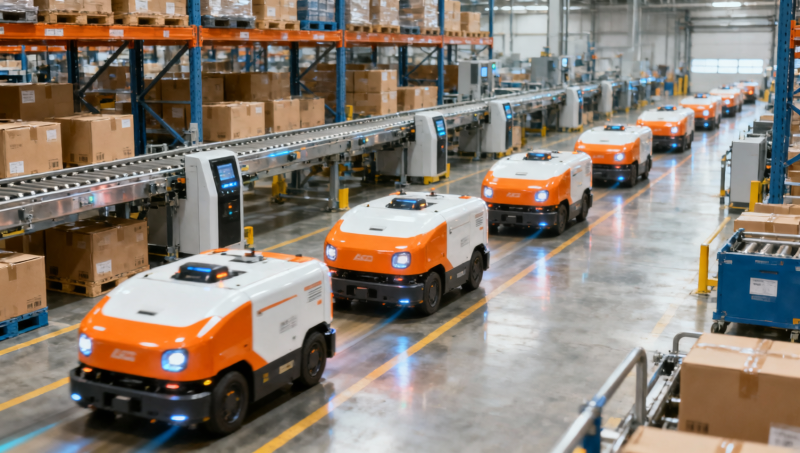
Choosing the right AGV supplier for a low-maintenance fleet is not just about comparing upfront price or vehicle specifications. For most factories, the real question is which vendor can deliver stable uptime, predictable service costs, easy parts replacement, strong software integration, and long-term support as operations scale. If you are evaluating suppliers, the best decision usually comes from comparing lifecycle cost, maintenance design, diagnostics capability, local service responsiveness, and system compatibility—not from brochure claims alone.
In today’s industrial automation B2B platform environment, buyers are under pressure to reduce labor dependency while avoiding hidden maintenance burdens. That is why AGV supplier comparison should focus on measurable reliability, maintainability, and support depth. This guide explains how procurement teams, operators, engineers, and decision-makers can assess AGV suppliers in a more practical and lower-risk way.
What buyers really need to compare when selecting an AGV supplier
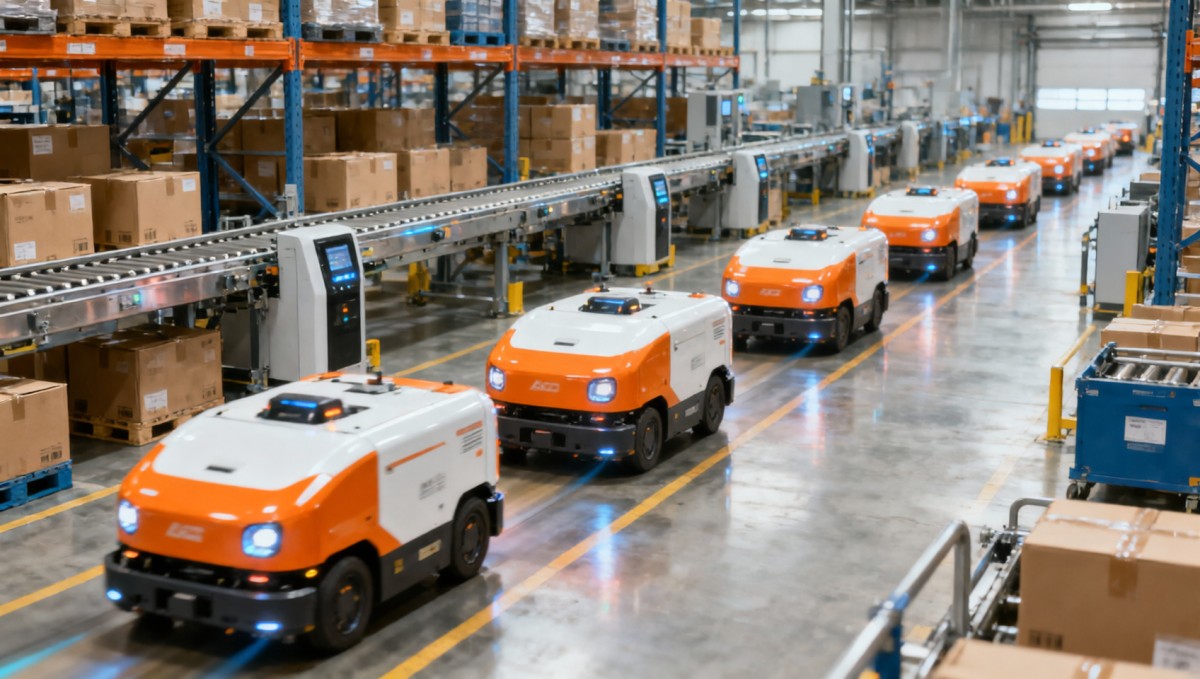
When people search for how to compare AGV suppliers for low-maintenance fleets, they are usually trying to answer one practical question: which supplier will create the fewest operational problems over time. That means the comparison should start with fleet performance in real factory conditions, not marketing language.
A strong AGV supplier should be evaluated across five core dimensions:
- Maintenance frequency: How often do vehicles require scheduled service, wear-part replacement, recalibration, or manual troubleshooting?
- Ease of maintenance: Can in-house teams replace batteries, wheels, sensors, and drive components quickly without specialist intervention?
- System visibility: Does the supplier provide remote diagnostics, health monitoring, fault history, and predictive maintenance tools?
- Service capability: Are spare parts, field engineers, and technical support available in your region within acceptable response windows?
- Integration reliability: Can the AGV system connect smoothly with WMS, MES, ERP, PLC, elevator control, and line-side automation?
These points matter because low maintenance is rarely the result of one feature alone. It usually comes from good mechanical design, mature software, accessible service architecture, and proper application engineering.
Why low-maintenance fleets matter more than low purchase price
Many buyers initially compare AGV suppliers based on unit cost. That is understandable, but it can lead to the wrong choice. A lower-priced AGV may become more expensive if it causes frequent stoppages, requires proprietary service visits, or depends on hard-to-source parts.
For procurement and management teams, the better metric is total cost of ownership over three to seven years. This includes:
- Vehicle purchase and deployment cost
- Software licensing and update fees
- Preventive maintenance labor
- Unplanned downtime cost
- Spare parts consumption
- Battery replacement cycle
- Operator retraining or workflow adjustment
- Expansion and reconfiguration costs
A supplier offering low-maintenance AGV fleets should be able to explain how its design reduces long-term service intensity. Examples include modular component layout, standardized spare parts, sealed drive units, durable navigation sensors, and batteries optimized for industrial duty cycles.
For business decision-makers, this matters because maintenance directly affects throughput stability, labor efficiency, and production planning. In high-utilization facilities, even small service interruptions can create significant operational cost.
How to evaluate AGV reliability beyond supplier claims
Reliability should be validated with evidence. A qualified AGV supplier should be able to provide more than general statements such as “high stability” or “advanced technology.” Buyers should ask for data and application references.
Useful questions include:
- What is the average fleet uptime in similar deployments?
- What are the most common failure points in actual operation?
- How many intervention events occur per vehicle per month?
- What is the expected service interval for wheels, batteries, and sensors?
- How is performance affected by dust, floor variation, traffic density, or temperature changes?
- Can the supplier share case studies from comparable industries or warehouse layouts?
Buyers should also distinguish between pilot reliability and scaled fleet reliability. A system that works well with five AGVs may behave differently when expanded to fifty vehicles sharing traffic logic, charging schedules, and task priorities.
For operators and engineering teams, another important factor is fault recovery. Low-maintenance fleets are not only those that fail less often, but also those that recover faster when exceptions occur. This includes intuitive HMI alerts, clear root-cause reporting, and simple restart procedures.
Maintenance design: the practical details that reduce service burden
If your goal is a low-maintenance AGV fleet, maintenance design should be one of the most heavily weighted comparison factors. This is where many long-term cost differences become visible.
Look closely at whether the AGV system is designed for serviceability:
- Modular components: Can motors, controllers, scanners, and batteries be replaced individually?
- Accessible layout: Are service points easy to reach without dismantling major assemblies?
- Standardized parts: Does the supplier use widely available industrial-grade components where possible?
- Battery strategy: Are charging cycles optimized, and is battery swap or charging maintenance manageable for your team?
- Wheel and traction wear: How often do consumables need replacement under your floor and load conditions?
- Cleaning tolerance: How well does the system handle dust, debris, packaging residue, or light moisture?
Suppliers that truly understand low-maintenance deployment will also discuss preventive care procedures in realistic terms. If a vendor cannot clearly explain weekly, monthly, and annual maintenance tasks, that is a warning sign.
For factory users, the best AGV systems are often those that in-house maintenance teams can support after reasonable training, without relying constantly on vendor intervention.
The role of industrial IoT and predictive maintenance in AGV supplier comparison
Industrial IoT has become a major differentiator in AGV supplier selection, especially for factories focused on uptime and smart maintenance. A modern AGV system should not only execute transport tasks but also generate actionable health data.
Predictive maintenance capabilities may include:
- Battery health tracking
- Motor temperature and current monitoring
- Drive wheel wear trend analysis
- Navigation sensor status monitoring
- Error code logging and event history
- Remote diagnostics dashboards
- Maintenance alerts based on actual utilization rather than fixed intervals
This is especially valuable for larger fleets, where manual maintenance scheduling becomes inefficient. Suppliers with strong industrial IoT integration can help users move from reactive repair to condition-based maintenance, reducing unnecessary checks while preventing avoidable failures.
For procurement teams comparing vendors on an industrial automation B2B platform, this is a critical area to verify in live demonstrations. Ask whether the system can integrate with your MES, WMS, or centralized maintenance platform, and whether maintenance data is available in usable formats.
Support capability is often the hidden factor behind fleet maintenance performance
Even well-designed AGVs need service support. One of the biggest mistakes in AGV supplier comparison is underestimating the impact of after-sales capability. A supplier with good engineering but weak support infrastructure can still create high maintenance risk.
Evaluate support on several levels:
- Local presence: Is there regional service coverage, or will all support depend on remote communication?
- Spare parts availability: Are critical components stocked locally or shipped internationally with long lead times?
- Response commitment: What are the SLA terms for remote and on-site support?
- Training quality: Does the supplier train operators, technicians, and supervisors separately?
- Documentation: Are service manuals, wiring diagrams, fault trees, and maintenance checklists complete and understandable?
- Software support: How are updates, patches, backups, and cybersecurity issues handled?
For enterprise decision-makers, supplier stability also matters. Buyers should consider whether the vendor has the financial strength, partner ecosystem, and engineering maturity to support fleets over many years. AGV systems are not short-term purchases; they are operational infrastructure.
How integration strength affects maintenance and operational risk
An AGV fleet may look mechanically sound but still become high-maintenance if the software and controls integration is weak. Poor integration often creates recurring issues such as dispatch errors, traffic congestion, charging conflicts, and line-side delivery failures.
That is why AGV supplier evaluation should include integration capability with the broader automation environment. Relevant interfaces may include:
- Warehouse management systems
- Manufacturing execution systems
- ERP platforms
- PLC-controlled production lines
- Conveyors, lifts, and automatic doors
- AS/RS and smart warehouse subsystems
Suppliers with strong integration experience usually reduce maintenance burden because their systems handle exceptions more intelligently and require fewer manual workarounds. They can also adapt routes, tasks, and traffic logic more effectively when layouts or production requirements change.
This is particularly important in Industry 4.0 environments, where AGVs are expected to operate as part of a connected digital production ecosystem rather than as isolated transport devices.
A practical checklist for comparing AGV suppliers side by side
To make supplier comparison more objective, buyers should use a weighted evaluation model. This helps cross-functional teams assess low-maintenance potential from engineering, operational, and business perspectives.
A practical comparison checklist may include:
- Mechanical durability: Chassis quality, wheel life, drive system robustness, environmental tolerance
- Maintenance simplicity: Modular service design, access to components, skill level required for repair
- Software maturity: Fleet control stability, traffic logic, diagnostics, update process
- Predictive maintenance tools: Health monitoring, alerts, data reporting, remote visibility
- Integration capability: APIs, industrial protocol compatibility, prior MES/WMS/PLC integration cases
- Support strength: Local engineers, training, parts stock, service response times
- Reference projects: Similar industry, similar load profile, similar floor and workflow conditions
- Lifecycle cost: Service cost forecast, consumables, batteries, software fees, upgrade cost
- Scalability: Ability to expand fleet without major performance or maintenance penalty
- Compliance and engineering credibility: Alignment with relevant ISO, IEC, CE, and industrial safety practices
For best results, involve procurement, operations, maintenance, automation engineering, and management in the scoring process. Each group sees different risks, and a low-maintenance fleet depends on all of them being addressed early.
Common mistakes when choosing an AGV supplier for low-maintenance fleets
Several recurring mistakes lead buyers to choose systems that look attractive at the proposal stage but become costly later:
- Focusing too heavily on purchase price instead of lifecycle value
- Accepting generic reliability claims without site-specific evidence
- Ignoring consumables and battery replacement economics
- Overlooking software usability for operators and maintenance teams
- Underestimating integration complexity with existing automation systems
- Choosing a supplier without strong regional service and spare parts support
- Failing to validate performance under real traffic, load, and environmental conditions
Buyers can reduce these risks by requesting factory references, conducting acceptance tests around maintenance scenarios, and asking suppliers to define expected intervention frequency before contract award.
Final decision: what the best AGV supplier usually looks like
The best AGV supplier for a low-maintenance fleet is usually not the one with the most aggressive price or the longest feature list. It is the one that can prove stable operation, simple maintenance workflows, strong diagnostics, reliable integration, and dependable support over the full lifecycle of the system.
For information researchers, this means looking beyond product catalogs. For users and operators, it means checking how easily daily issues can be handled. For procurement teams, it means comparing total cost and service terms carefully. For enterprise leaders, it means selecting a supplier that reduces operational risk while supporting long-term automation strategy.
In a smart manufacturing environment, AGVs are part of the factory’s critical production infrastructure. A low-maintenance fleet is built through good engineering, transparent data, and supplier capability that holds up after installation—not just during the sales process. When comparing AGV suppliers, the smartest question is not “Which one is cheaper today?” but “Which one will be easier and safer to operate for years?”
Recommended News
- 2026/10/24Car Spare Parts: How to Check Fitment and Avoid Ordering the Wrong PartOrder car spare parts with confidence. Learn how to verify VINs, OEM numbers, and fitment details to avoid costly mistakes and choose the right replacement first time.
- 2026/10/23How Do You Select a Motion Control System for Synchronized Axes?How do I select a motion control system for synchronized axes? Discover key timing, feedback, and performance checks to choose confidently and reduce costly integration risks.
- 2026/10/23Integrating End-of-Line Sortation with Packing Stations and Conveyor ControlsOptimize end of line sortation with coordinated packing stations and conveyor controls. Learn how to prevent bottlenecks, improve routing accuracy, and handle exceptions reliably.