
Search News
Industry Portal
Popular Tags
Which AGV Supplier Fits Warehouse Automation Best
Author
Cobots
Time
Apr 25, 2026
Pageviews
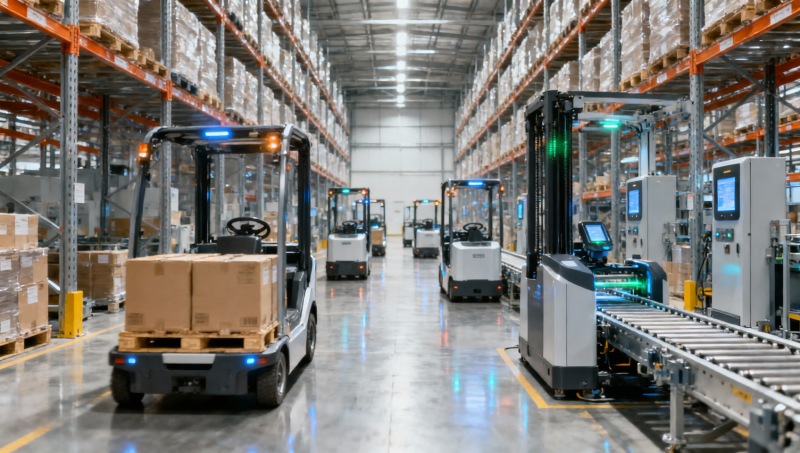
Choosing the right AGV supplier wholesale for warehouse automation can determine how fast, safe, and cost-efficient your facility becomes. For buyers comparing industrial machinery supplier options, the best fit goes beyond price to include low maintenance, control systems OEM compatibility, and long-term smart manufacturing benefits. This guide helps researchers, operators, procurement teams, and decision-makers evaluate AGV partners with a practical Industry 4.0 lens.
In modern warehouse operations, automated guided vehicles are no longer limited to large distribution hubs. Mid-sized factories, spare-parts centers, cold-chain sites, and mixed manufacturing warehouses now use AGVs to reduce forklift traffic, stabilize material flow, and connect storage with production. The supplier you choose affects not only vehicle performance, but also software integration, spare-parts continuity, operator safety, and project scalability over the next 3 to 7 years.
For G-IFA audiences, the decision should be framed as an engineering and investment question. A capable AGV supplier must align with PLC and control system architecture, warehouse management logic, safety compliance, and maintenance capability. That is why warehouse automation selection should start with application fit, data transparency, and lifecycle support rather than headline pricing alone.
What Defines the Best AGV Supplier for Warehouse Automation
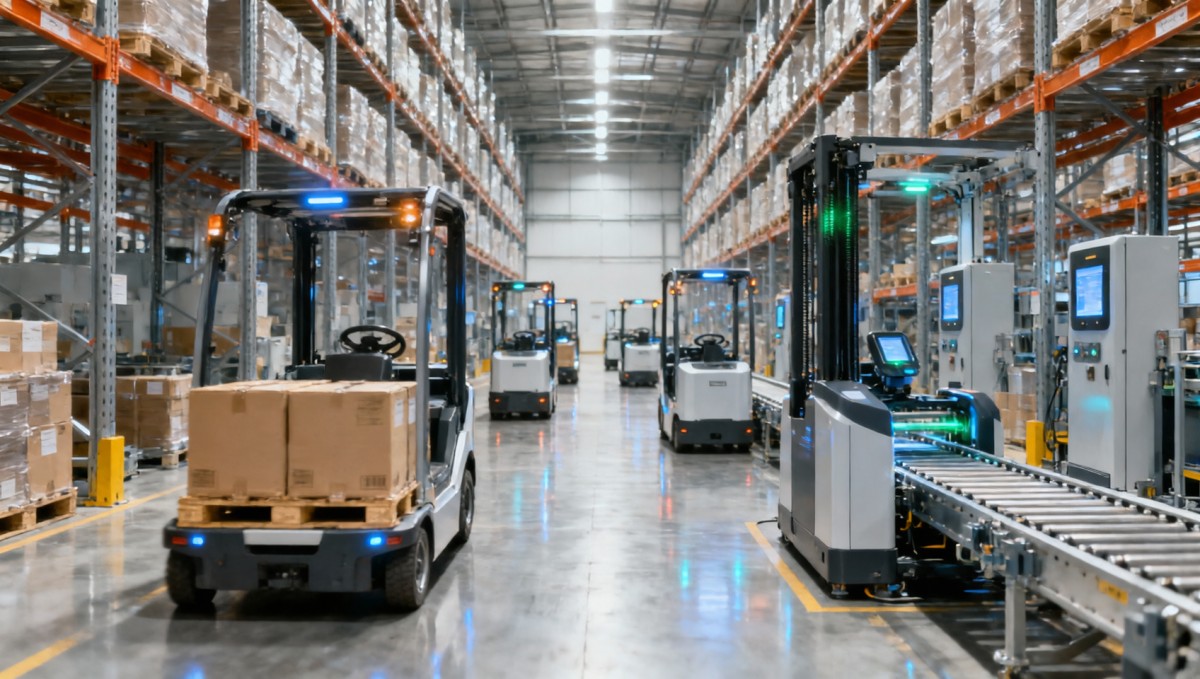
An AGV supplier is not simply a vehicle manufacturer. In warehouse automation, the supplier often delivers a combined package of mobile robots, navigation methods, fleet control software, charging strategy, safety devices, site commissioning, and after-sales support. If one of these layers is weak, the whole system can underperform even when the vehicle hardware looks impressive on paper.
Most buyers should begin with 4 core questions. First, what materials need to move: pallets, bins, carts, or irregular loads? Second, what throughput is required per hour or per shift? Third, what level of system integration is needed with WMS, MES, ERP, or PLC infrastructure? Fourth, how much internal maintenance capability exists on-site? These four variables usually narrow the supplier list faster than price comparisons alone.
In practical terms, an AGV system for warehouse automation may run at speeds of 1.0 to 2.0 m/s, support payloads from 300 kg to more than 1,500 kg, and operate across 2 to 3 shifts per day. Suppliers should therefore explain how their hardware performs under battery cycling, floor condition variation, Wi-Fi latency, and route congestion. A low-cost quote that ignores these realities can create expensive downtime later.
Key capabilities that separate strong suppliers from weak ones
- Clear application engineering for pallet transport, line feeding, staging, and finished goods transfer.
- Compatibility with control systems OEM environments, including common PLC communication logic and I/O coordination.
- Structured commissioning plans, usually in 3 phases: site survey, simulation or route planning, and live deployment.
- Documented maintenance routines with spare-part response targets such as 24 to 72 hours for critical items.
- Scalable fleet software that can expand from 5 vehicles to 20 or more without replacing the platform.
Another sign of a reliable AGV supplier is transparency. Serious vendors will discuss navigation tolerances, battery charging cycles, obstacle detection logic, and expected preventive maintenance frequency. They should also identify boundary conditions such as aisle width, slope limits, floor flatness, and traffic intersections where performance may decline without additional engineering work.
How to Match AGV Types to Warehouse Scenarios
Not every warehouse automation project needs the same AGV configuration. A supplier that is excellent for tugger AGVs in line-side replenishment may be less suitable for pallet stacker AGVs in high-density storage. Buyers should compare the vehicle type against route complexity, load stability, and interaction with people, forklifts, conveyors, and docking stations.
The most common warehouse scenarios include point-to-point pallet transfer, milk-run material delivery, goods receiving to staging, and finished product movement from packaging to dispatch. Each use case changes the technical requirements. For example, a simple loop route with 8 stops may prioritize battery endurance and low maintenance, while a dynamic warehouse with 30 to 50 task points may need stronger fleet scheduling and traffic control logic.
Typical AGV choices by application
The table below helps compare common AGV categories used in warehouse automation projects. It is useful for procurement teams that need an early-stage screening tool before requesting detailed proposals from an industrial machinery supplier.
The key takeaway is that the best AGV supplier is usually the one with proven engineering depth in your exact flow pattern. A warehouse moving 200 pallets per day with narrow aisles and mixed manual traffic has very different needs from a component warehouse running 1,000 small-load missions in a 24-hour cycle.
Important site parameters to confirm before supplier selection
- Aisle width, turning radius, and loading station clearance, often with a tolerance buffer of 100 to 300 mm.
- Floor condition, including cracks, dust, reflectivity, and slope, commonly expected below 3% for many indoor AGV routes.
- Task frequency by hour, by shift, and by peak period, not just average daily volume.
- Interface points with conveyors, roll doors, elevators, pallet dispensers, or manual pick zones.
If these parameters are missing, suppliers may quote with assumptions that later trigger redesign costs. That is why pre-selection engineering matters as much as the equipment specification itself.
Supplier Evaluation Criteria Beyond Price and Basic Specs
Price is visible, but lifecycle cost is what shapes ROI. An AGV supplier offering a lower initial purchase price may still create higher total cost if spare parts are imported slowly, batteries need replacement too early, or software changes require expensive custom work. In many warehouse automation projects, the meaningful comparison horizon is 36 to 60 months rather than the first invoice.
A disciplined evaluation model should include at least 6 dimensions: application fit, software integration, safety concept, maintenance effort, delivery capability, and support responsiveness. For decision-makers, this framework prevents procurement from focusing too narrowly on hardware specifications while missing operational risk.
Practical supplier scorecard for procurement teams
The following comparison table can be adapted into an RFQ process. It helps researchers and buyers assess AGV supplier suitability with a structured set of measurable checkpoints.
A strong supplier should also discuss service boundaries honestly. For example, who handles floor correction, Wi-Fi coverage issues, or ERP middleware? If responsibilities are unclear, delays can extend deployment from 8 weeks to 16 weeks or more. Clear scope definition is one of the most overlooked procurement protections in warehouse automation.
Common buying mistakes
- Choosing the fastest quoted lead time without checking commissioning resources and spare-part readiness.
- Assuming every AGV supplier can integrate equally well with existing PLC or MES environments.
- Ignoring operator training, even though 6 to 12 hours of structured training can reduce avoidable stoppages.
- Evaluating battery capacity only by runtime, not by charging strategy, shift pattern, and replacement cost.
For G-IFA-aligned evaluation, buyers should prioritize verifiable engineering detail. The best AGV supplier demonstrates how its platform works within a broader automation stack, not as an isolated mobile machine.
Integration, Safety, and Maintenance in an Industry 4.0 Environment
Warehouse automation succeeds when AGVs communicate cleanly with surrounding systems. In an Industry 4.0 setting, that often means linking fleet management software to WMS task generation, MES production orders, PLC status feedback, and sometimes ERP-level reporting. Suppliers that offer open communication options, event logs, and clear alarm structures make expansion far easier than closed systems with limited visibility.
Compatibility with control systems OEM architecture matters especially in mixed factories. An AGV may need to exchange status signals with conveyors, automatic doors, pallet wrappers, AS/RS interfaces, or robotic loading cells. If the supplier cannot define handshake timing, signal mapping, and fault-recovery logic, then the automation chain becomes fragile. Even a 2-second delay at each docking point can significantly reduce throughput across hundreds of missions per day.
Safety and service checkpoints to include in every review
The table below highlights technical and operational checkpoints that should be discussed before contract award, particularly for facilities with shared human-robot traffic.
This table shows why the cheapest fleet price rarely tells the full story. Battery strategy changes charger count. Safety logic changes aisle speed. Training quality changes recovery time from common alarms. Maintenance planning changes how often an operator needs outside support. In other words, long-term warehouse automation value is created in the system details.
Implementation sequence that reduces project risk
- Map current material flow and identify 1 to 3 repeatable routes with stable mission logic.
- Validate site conditions, digital interfaces, and safety zones before final equipment configuration.
- Run pilot deployment with measurable KPIs such as missions per hour, docking success rate, and charging utilization.
- Expand fleet only after software logic, alarm handling, and maintenance routines are proven.
For many factories, starting with a pilot of 2 to 5 AGVs is more effective than launching a large fleet immediately. It helps validate route design, user acceptance, and software integration before capital commitment grows.
How Buyers, Operators, and Decision-Makers Should Finalize the Choice
Different stakeholders judge AGV suppliers differently. Operators care about ease of use, alarm clarity, and safe movement near workstations. Procurement teams focus on cost structure, service terms, and spare-part availability. Decision-makers look at scalability, ROI, and integration with digital factory plans. The best supplier is the one that satisfies all three layers without forcing trade-offs that create hidden costs later.
Before final approval, it is wise to request a structured proposal review with technical, commercial, and service checkpoints. That review should compare at least 3 categories: hardware performance, software and controls compatibility, and lifecycle support. Even when two suppliers offer similar payload and speed, the better engineering workflow can reduce commissioning friction by weeks.
Final decision checklist
- Confirm whether the supplier has mapped your route logic, station count, and peak-hour mission demand in detail.
- Check whether software can exchange data with WMS, MES, ERP, and PLC systems without excessive custom middleware.
- Verify local or regional service capability, including spare-part lead times and escalation procedures.
- Review acceptance metrics such as docking accuracy, uptime targets, and response time for critical failures.
- Assess whether expansion from the initial fleet to future phases can happen without replacing the software backbone.
Frequently asked questions during AGV supplier selection
How long does AGV deployment usually take? For a standard indoor warehouse automation project, basic deployment may take 8 to 16 weeks, depending on route complexity, software integration, and site readiness. Projects involving multiple interfaces or special safety zones may take longer.
What is a reasonable pilot size? Many facilities begin with 2 to 5 vehicles on one high-frequency route. This is often enough to test mission stability, charging rhythm, and operator interaction before scaling to 10 or more units.
Which metrics matter most during evaluation? Focus on payload suitability, docking repeatability, fleet scheduling capability, preventive maintenance frequency, spare-part response time, and interface readiness with warehouse and factory control systems.
Is the lowest-priced supplier ever the right choice? Sometimes, but only when the supplier also proves service depth, integration readiness, and lifecycle support. A lower quote without technical transparency often increases risk in the first 12 months of operation.
For organizations using G-IFA as a technical reference point, the smartest choice is usually a supplier that can demonstrate engineering discipline across robotics, controls, software, motion systems, and service execution. That broader view helps de-risk investment and supports warehouse automation that remains effective as operations grow.
If you are comparing AGV supplier options for a new or upgraded warehouse automation project, take the next step with a requirements-based evaluation rather than a price-only shortlist. Contact us to discuss your application, request a tailored solution framework, or explore more smart manufacturing and industrial automation insights through G-IFA.
Recommended News
- 2026/10/24Car Spare Parts: How to Check Fitment and Avoid Ordering the Wrong PartOrder car spare parts with confidence. Learn how to verify VINs, OEM numbers, and fitment details to avoid costly mistakes and choose the right replacement first time.
- 2026/10/23How Do You Select a Motion Control System for Synchronized Axes?How do I select a motion control system for synchronized axes? Discover key timing, feedback, and performance checks to choose confidently and reduce costly integration risks.
- 2026/10/23Integrating End-of-Line Sortation with Packing Stations and Conveyor ControlsOptimize end of line sortation with coordinated packing stations and conveyor controls. Learn how to prevent bottlenecks, improve routing accuracy, and handle exceptions reliably.