
Search News
Industry Portal
Popular Tags
How to find an AGV supplier wholesale with low upkeep
Author
Cobots
Time
May 21, 2026
Pageviews
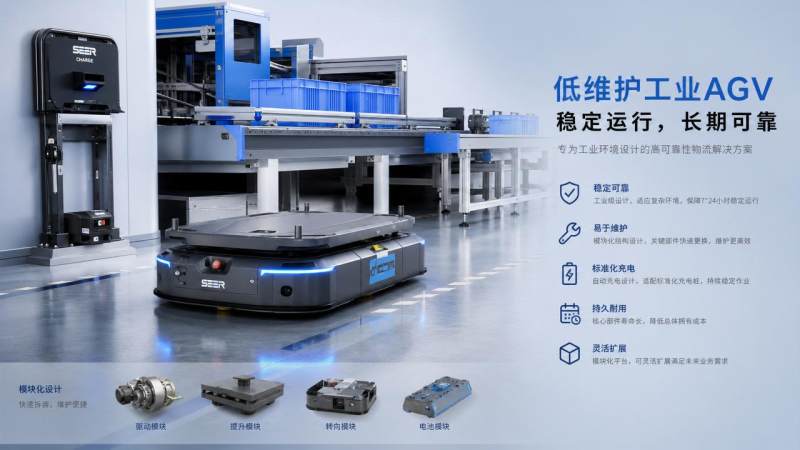
For procurement teams, choosing an agv supplier wholesale with low maintenance is not only about price, but also about long-term operating efficiency, spare parts availability, and system reliability. In smart manufacturing, the right supplier can reduce downtime, lower upkeep costs, and support scalable automation, making supplier evaluation a critical step before any AGV investment decision.
In practice, AGV sourcing affects far more than the initial equipment budget. A low-cost unit that needs frequent battery replacement, software intervention every 2 to 4 weeks, or imported spare parts with a 30-day lead time can quickly erase any procurement savings.
For buyers in manufacturing, warehousing, electronics, automotive, food processing, and other automation-heavy sectors, the better question is not simply which vendor is cheapest. It is which agv supplier wholesale with low maintenance can support stable throughput, predictable servicing, and scalable deployment over a 3 to 7 year lifecycle.
This article outlines how procurement teams can evaluate suppliers using technical, commercial, and after-sales criteria. It also reflects the kind of engineering-based screening valued by G-IFA, where automation decisions are judged by operational integrity, standards alignment, and measurable production value.
Why low-maintenance AGV sourcing matters in industrial procurement
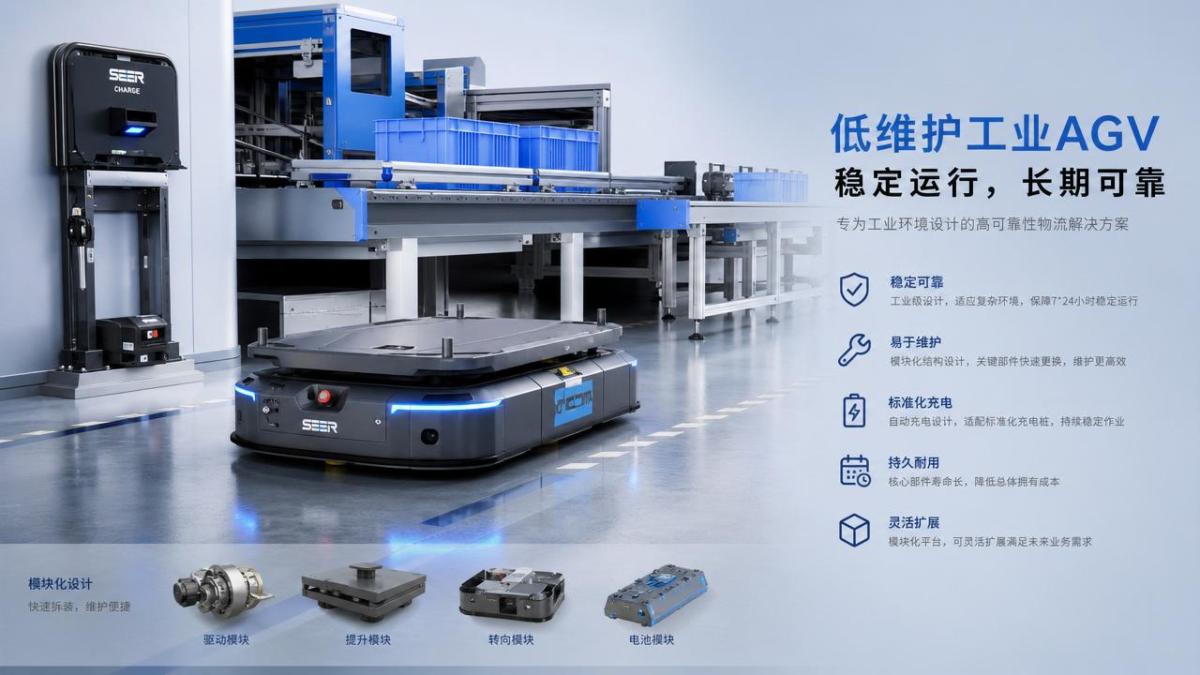
An AGV is not just a mobile platform. It is part of a wider automation architecture that may include PLC systems, conveyor interfaces, MES or ERP links, traffic control software, safety sensors, and charging infrastructure. When one layer underperforms, maintenance hours rise across the system.
That is why an agv supplier wholesale with low maintenance should be assessed at system level. Procurement teams should look at component durability, software stability, mean service intervals, and ease of part replacement, rather than relying on brochure claims alone.
The hidden cost behind “low purchase price”
In many factories, AGV upkeep costs come from 4 recurring sources: batteries, wheels, sensors, and software support. If wheel wear appears every 6 to 9 months in dusty environments, or if recalibration is needed after every route change, maintenance labor can become a major overhead.
A supplier offering a unit price that is 8% lower may still create a total ownership cost that is 15% to 25% higher over 36 months. For procurement teams, that difference directly affects ROI, spare inventory planning, and internal budget approval.
Operational indicators buyers should prioritize
Low-maintenance AGV procurement should be tied to measurable indicators. These may include charging cycle life, navigation accuracy, service response time, modularity of drive components, and local spare parts coverage within 24 to 72 hours.
- Battery service life: often 1,500 to 3,000 charging cycles depending on chemistry and duty profile
- Navigation repeatability: commonly within ±10 mm to ±20 mm for standard indoor transport tasks
- On-site support response: ideally within 24 to 48 hours for mission-critical production lines
- Routine inspection frequency: monthly for heavy duty use, quarterly for lighter applications
These metrics help buyers compare offers beyond catalog language. They also create a stronger basis for contract clauses, acceptance standards, and long-term service negotiations.
Where low upkeep creates the most value
The value of low maintenance is highest where AGVs run across 2 or 3 shifts, where labor replacement is a key objective, or where unplanned downtime disrupts synchronized processes. Typical examples include line-side material feeding, pallet transfer, clean workshop logistics, and raw material movement between workstations.
In these settings, procurement decisions influence uptime, output balance, and maintenance staffing. A reliable wholesale supplier reduces pressure on both engineering and purchasing by providing standardized parts, documented service procedures, and stable product iterations.
How to evaluate an agv supplier wholesale with low maintenance
A practical supplier review should combine technical due diligence with procurement controls. The goal is to confirm not only that the AGV works in a demo, but that it remains maintainable over repeated operating cycles, route changes, and plant expansions.
Supplier screening checklist
Before RFQ comparison, buyers can use a structured matrix covering 6 core dimensions. This helps separate capable automation partners from traders with limited after-sales depth.
This kind of matrix helps procurement teams move discussions from sales promises to service evidence. A credible agv supplier wholesale with low maintenance should be able to answer these points with drawings, parts lists, maintenance intervals, and support commitments.
Questions to ask during RFQ and supplier audit
During supplier qualification, the most useful questions are often operational rather than promotional. Buyers should request clear answers in writing, especially when comparing 3 or more vendors.
Technical questions
- What is the typical preventive maintenance interval: every 500 hours, 1,000 hours, or quarterly?
- Which parts are considered wear items, and what is their average replacement cycle?
- Can batteries, drive wheels, and sensors be replaced on site within 30 to 60 minutes?
- What floor conditions are required for stable navigation: flatness, dust level, slope, and traffic density?
Commercial questions
- What spare parts are included in the first-year recommendation package?
- What is the lead time for standard units: 4 to 8 weeks or longer for customized configurations?
- What warranty scope applies to batteries, control boards, and safety components?
- Does the quotation include software licensing, commissioning, and operator training?
A supplier that answers precisely is usually easier to manage after delivery. Vague answers often indicate weak service discipline or a limited engineering background.
Technical features that reduce AGV maintenance over time
Not all AGV designs create the same maintenance burden. For procurement teams, understanding a few key design choices can reduce service risk before the purchase order is issued.
Component design and modularity
Modular assemblies lower service time because failed parts can be swapped without disassembling the full chassis. This is especially relevant for drive units, battery trays, safety scanners, and control cabinets.
For example, replacing a modular wheel-drive pack in less than 45 minutes is far better than a 3-hour repair requiring factory return. Over 10 or 20 vehicles, this difference materially affects maintenance planning and spare stock levels.
Navigation and software stability
Low upkeep is also shaped by the navigation method. Magnetic tape systems may be simple, but route changes often require physical intervention. SLAM or laser navigation can reduce mechanical rework, though software quality becomes more important.
Buyers should ask how frequently map recalibration is required and whether route edits can be completed by trained in-house staff in under 20 minutes. This matters in factories where production layouts change every 3 to 6 months.
Battery and charging strategy
Battery maintenance is one of the biggest lifecycle variables. Lithium batteries usually reduce maintenance compared with lead-acid systems because they need less routine handling and support faster opportunity charging.
However, the best option depends on duty cycle. A plant running 16 to 24 hours per day may benefit from automatic charging integration, while lower-utilization sites may focus more on charging station simplicity and replacement cost.
The table below compares common AGV design choices from a maintenance perspective.
For buyers seeking an agv supplier wholesale with low maintenance, these design details often matter more than headline speed or load numbers. A balanced specification supports simpler servicing, better uptime, and cleaner lifecycle costing.
Procurement risks, contract points, and implementation advice
Even a technically strong AGV can become a difficult purchase if the commercial terms are weak. Procurement teams should define service expectations before award, not after installation. This is especially important for multi-unit orders and cross-border sourcing.
Common mistakes when buying wholesale AGVs
- Comparing only unit price without a 12 to 36 month maintenance cost forecast.
- Failing to confirm spare parts lead times for wear items and control electronics.
- Accepting unclear warranty terms for batteries and software-related failures.
- Ignoring floor condition and traffic complexity during technical review.
- Skipping operator and maintenance training in the implementation scope.
These mistakes are common when AGV procurement is treated as a simple equipment purchase rather than an automation system project. The result is usually delayed commissioning, extra engineering hours, or recurring service dependence on the supplier.
Contract terms worth locking in
A strong contract should define 5 practical areas: delivery scope, spare package, acceptance test, support response, and software ownership. This makes supplier accountability easier to manage once the AGV fleet enters production.
- Factory acceptance and site acceptance criteria with measurable route, load, and charging tests
- Recommended spare parts list for the first 12 months of operation
- Remote support response target, such as within 4 hours for diagnosis
- On-site intervention window, such as within 48 to 72 hours depending on region
- Software update policy, including version records and rollback procedures
Implementation steps for lower upkeep after delivery
Selecting an agv supplier wholesale with low maintenance is only the first step. Upkeep is also shaped by commissioning discipline and internal process readiness. Plants that implement a structured handover usually experience fewer service calls in the first 6 months.
Recommended 5-step rollout
- Validate floor conditions, traffic rules, and charging locations before installation.
- Run acceptance testing under real loads, ideally across 1 full shift or longer.
- Train operators, maintenance staff, and supervisors separately by role.
- Build a preventive maintenance calendar with weekly, monthly, and quarterly tasks.
- Review error logs after the first 30 and 90 days to adjust routes and service plans.
This approach reduces early-life failures and helps procurement teams prove value internally. It also supports cleaner collaboration between purchasing, engineering, and operations.
Why benchmark-driven evaluation is useful
For industrial buyers, benchmark-based screening creates a more objective shortlist. Platforms and engineering references aligned with ISO, IEC, and CE expectations can help teams compare AGV suppliers using technical transparency rather than pure marketing language.
This is particularly valuable when AGVs must integrate with robotics, PLC controls, servo systems, or MES software. A supplier that performs well in isolation may still create maintenance burdens if interface compatibility is weak or documentation is incomplete.
Finding an agv supplier wholesale with low maintenance requires a lifecycle mindset. Buyers should compare support capability, spare parts access, software stability, modular design, and contract clarity with the same rigor used for price negotiation.
For procurement teams responsible for automation reliability, the right supplier is one that helps control downtime, simplify service, and support future expansion without excessive upkeep. If you are evaluating AGV options for your factory, warehouse, or integrated production line, contact us to discuss your application, request a tailored sourcing framework, or learn more about practical automation solutions guided by engineering-grade benchmarks.
Recommended News
- 2026/10/24Car Spare Parts: How to Check Fitment and Avoid Ordering the Wrong PartOrder car spare parts with confidence. Learn how to verify VINs, OEM numbers, and fitment details to avoid costly mistakes and choose the right replacement first time.
- 2026/10/23How Do You Select a Motion Control System for Synchronized Axes?How do I select a motion control system for synchronized axes? Discover key timing, feedback, and performance checks to choose confidently and reduce costly integration risks.
- 2026/10/23Integrating End-of-Line Sortation with Packing Stations and Conveyor ControlsOptimize end of line sortation with coordinated packing stations and conveyor controls. Learn how to prevent bottlenecks, improve routing accuracy, and handle exceptions reliably.