
Search News
Industry Portal
Popular Tags
Why low maintenance matters when picking an agv supplier
Author
Cobots
Time
May 16, 2026
Pageviews
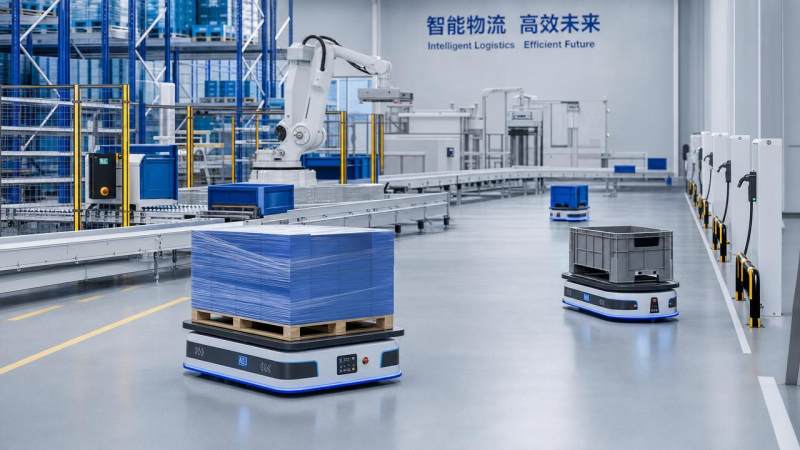
When evaluating automation partners, low maintenance is more than a cost issue—it directly affects uptime, labor efficiency, and long-term ROI. Choosing an agv supplier wholesale with low maintenance can help decision-makers reduce service interruptions, simplify fleet management, and protect production continuity. For manufacturers seeking reliable automation investments, maintenance demands should be a key factor from the very start.
Why does low maintenance matter so much in AGV supplier selection?
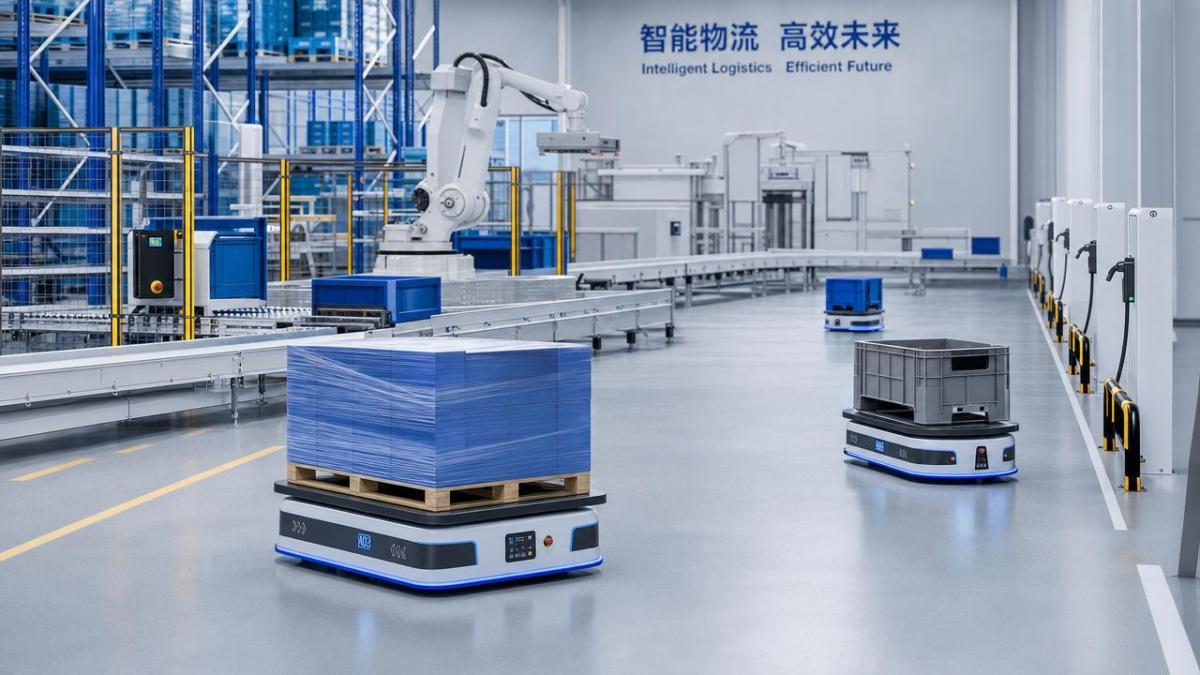
For enterprise decision-makers, AGV procurement is rarely about vehicle price alone. The true business impact appears after deployment, when daily uptime, spare parts turnover, software stability, battery care, and technician availability start shaping total cost of ownership.
A low-maintenance fleet reduces unplanned downtime across warehousing, assembly, intralogistics, and material transfer. In mixed-industry environments, where production schedules are tightly linked to MES, ERP, conveyors, robots, and PLC-controlled stations, even short AGV disruptions can ripple into broader line inefficiencies.
That is why the phrase agv supplier wholesale with low maintenance should be understood as a strategic sourcing criterion. It reflects not only hardware durability, but also software architecture, standardization of components, remote diagnostics capability, and the supplier’s ability to support scalable fleet operations.
- Lower service frequency helps internal teams focus on production rather than troubleshooting transport interruptions.
- Simplified maintenance planning improves labor allocation, especially where plants operate multiple shifts or lean maintenance teams.
- Standardized parts and diagnostic tools reduce spare inventory complexity across sites and regions.
- More stable AGV performance supports predictable throughput, which matters when upstream robotics and downstream packaging systems rely on synchronized material flow.
Low maintenance is a system issue, not only a mechanical issue
Many buyers still evaluate AGVs mainly by payload, speed, and navigation type. Those metrics matter, but they do not fully explain maintenance intensity. Wheel wear, sensor contamination sensitivity, battery charge cycles, firmware update discipline, and fault recovery logic often determine whether a fleet remains manageable at scale.
This is where G-IFA adds value. By benchmarking automation hardware and software against practical engineering expectations and recognized frameworks such as ISO, IEC, and CE-related compliance pathways, G-IFA helps decision-makers compare not just product claims, but the operational foundations behind them.
What drives maintenance workload in an AGV fleet?
Before selecting an agv supplier wholesale with low maintenance, procurement teams should understand what creates service burden over time. Maintenance is rarely caused by one factor. It is usually the combined result of design decisions, site conditions, integration quality, and support responsiveness.
The table below shows common maintenance drivers and their operational consequences in industrial environments.
This comparison shows why maintenance should be evaluated as an engineering ecosystem. A supplier may offer attractive pricing, but if drive components wear quickly or software logs are difficult to interpret, the fleet becomes expensive to sustain.
Site conditions often expose hidden maintenance risk
Factories across automotive, electronics, food processing, consumer goods, and general manufacturing all use AGVs differently. Smooth warehouse floors are not the same as oily machining areas. Light-duty carton transport is not the same as pallet movement around robotic cells.
Decision-makers should ask whether the proposed AGV design matches actual floor condition, traffic density, obstacle frequency, and integration demands. A low-maintenance solution in one plant may become a high-service burden in another if environmental fit is poor.
How to compare AGV suppliers beyond price and payload
When comparing vendors, buyers need a structured framework. The goal is not simply to find the cheapest unit, but to identify the agv supplier wholesale with low maintenance that can support reliable operations across the expected service life.
The table below can be used during RFQ, technical review, or supplier shortlist discussions.
This approach helps procurement teams move from product comparison to lifecycle risk assessment. In practice, a supplier with stronger documentation, better remote service tools, and more transparent maintenance schedules often delivers superior value even if unit price is not the lowest.
Questions decision-makers should not skip
- What components require routine inspection, and at what interval under normal operating conditions?
- Can plant technicians complete first-line maintenance without waiting for external engineers?
- How are software updates managed, tested, and rolled back if issues appear after deployment?
- Which alarms are self-recoverable, and which ones stop the vehicle until manual intervention?
- What floor, temperature, and contamination limits are recommended for stable performance?
Which technical signals suggest a low-maintenance AGV supplier?
A credible agv supplier wholesale with low maintenance usually demonstrates technical discipline across both hardware and software. Buyers should look for evidence of maintainability in design, not just broad claims about intelligence or efficiency.
Hardware indicators
- Accessible service points for batteries, wheels, safety scanners, and connectors.
- Reduced dependence on custom parts that are difficult to replace across international sites.
- Stable motion control architecture with controlled acceleration, deceleration, and low shock transmission.
- Protection design appropriate for dust, minor impacts, and common industrial contamination.
Software and control indicators
- Fleet management software that offers detailed event logs rather than generic fault messages.
- Remote access tools that allow diagnosis without stopping the entire system for long on-site checks.
- Compatibility with broader factory automation layers, including PLC & Control Systems and Industrial IoT platforms.
- Logical permission control so maintenance, IT, and operations teams can work without creating data confusion.
G-IFA’s cross-sector perspective is useful here because AGVs do not operate in isolation. Their maintenance burden often reflects interaction quality with motion control components, line-side automation, data systems, and plant communication architecture. A supplier that understands only the vehicle, but not the full production ecosystem, may create hidden long-term risk.
How does low maintenance improve ROI in real operating scenarios?
Return on investment improves when AGVs move more material with fewer interruptions, fewer emergency callouts, and less dependence on specialist labor. This is especially important for companies scaling automation across multiple plants, where repeatability of support becomes as important as unit performance.
Typical business gains from lower maintenance intensity
- Reduced downtime costs in lines where material delivery directly affects robotic cells or packaging throughput.
- Lower training burden because frontline staff can handle routine checks with clear procedures.
- More predictable budgeting for spare parts, software support, and preventive service windows.
- Faster replication when the same AGV concept is deployed across sites with similar layouts and workflows.
In procurement terms, this means the best-value supplier is not always the one with the lowest invoice price. It is often the supplier whose AGV design produces fewer service events, cleaner integrations, and more manageable lifecycle costs over several years.
What standards, compliance, and documentation should buyers review?
Compliance does not guarantee low maintenance, but it is part of sound supplier evaluation. Buyers should verify whether the supplier can provide documentation relevant to machine safety, electrical architecture, and deployment conditions. This becomes more important in multinational projects or regulated production environments.
The table below summarizes documentation areas that support safer and more maintainable AGV deployment.
Documentation quality is often overlooked during sourcing, yet it strongly influences maintainability. Plants with solid manuals and integration records usually recover from issues faster and reduce dependence on one individual technician or one local integrator.
Common mistakes when choosing an agv supplier wholesale with low maintenance
- Selecting based only on acquisition price while ignoring service intervals, spare parts structure, and software support effort.
- Assuming all navigation technologies create the same maintenance burden under dusty, reflective, or congested conditions.
- Overlooking fleet software usability, even though poor alarm visibility can consume more time than hardware replacement.
- Skipping integration review with MES, ERP, PLC, or automated doors until late in the project.
- Failing to define which maintenance tasks stay in-house and which require supplier intervention.
These mistakes are common in cross-functional buying teams where finance, operations, engineering, and IT evaluate the project from different priorities. A structured benchmark process reduces this risk and creates better alignment before purchase orders are issued.
FAQ: practical questions from enterprise buyers
How do we verify whether an AGV supplier is truly low maintenance?
Ask for preventive maintenance schedules, wear part lists, software fault handling methods, and sample service documentation. Then compare those materials against your operating environment, shift pattern, and internal maintenance capability. A serious supplier should explain maintenance tasks clearly instead of relying on vague claims.
Is low maintenance more important for large fleets than for small deployments?
Yes, because service complexity grows quickly with fleet size. A fault pattern that is manageable on three vehicles may become disruptive on thirty. The larger the fleet, the more valuable standardized parts, remote diagnostics, and strong fleet management software become.
What should procurement teams include in supplier discussions?
Include maintenance interval assumptions, site condition limits, battery strategy, integration responsibilities, spare parts planning, operator training, and software update governance. These points help expose hidden lifecycle costs before final selection.
Can a low-maintenance AGV solution still require customization?
Yes. Low maintenance does not mean generic. It means the customization is engineered with serviceability in mind. Route logic, payload interfaces, charging methods, and control integration may all be tailored, but they should remain documented, modular, and easy to support after commissioning.
Why choose us for AGV sourcing intelligence and automation risk reduction?
G-IFA supports enterprise decision-makers who need more than promotional specifications. Our strength lies in connecting AGV evaluation with the broader smart factory context: robotics, PLC & control systems, motion control, Industrial IoT software, and fluid power infrastructure. That cross-disciplinary view helps buyers identify whether a proposed AGV solution will remain maintainable after real production integration.
If you are screening an agv supplier wholesale with low maintenance, we can help you review technical parameters, compare supplier positioning, clarify integration dependencies, and identify documentation gaps before procurement risk becomes operational downtime.
- Request support on parameter confirmation for payload, route type, charging logic, and fleet scale.
- Discuss supplier selection criteria for maintenance planning, spare parts strategy, and software support structure.
- Review delivery cycle considerations for pilot rollout, phased expansion, and multi-site deployment.
- Assess custom solution needs tied to MES/ERP interfaces, PLC coordination, safety expectations, and compliance documentation.
- Open quotation discussions with clearer technical scope, reducing the risk of mismatched proposals.
For manufacturers and system planners seeking dependable automation decisions, a low-maintenance AGV strategy starts with better technical filtering. That is where focused benchmarking and informed comparison create measurable value long before installation begins.
Recommended News
- 2026/10/24Car Spare Parts: How to Check Fitment and Avoid Ordering the Wrong PartOrder car spare parts with confidence. Learn how to verify VINs, OEM numbers, and fitment details to avoid costly mistakes and choose the right replacement first time.
- 2026/10/23How Do You Select a Motion Control System for Synchronized Axes?How do I select a motion control system for synchronized axes? Discover key timing, feedback, and performance checks to choose confidently and reduce costly integration risks.
- 2026/10/23Integrating End-of-Line Sortation with Packing Stations and Conveyor ControlsOptimize end of line sortation with coordinated packing stations and conveyor controls. Learn how to prevent bottlenecks, improve routing accuracy, and handle exceptions reliably.