
Search News
Industry Portal
Popular Tags
Low-Maintenance AGV Wholesale: What Gets Overlooked First?
Author
Cobots
Time
May 12, 2026
Pageviews
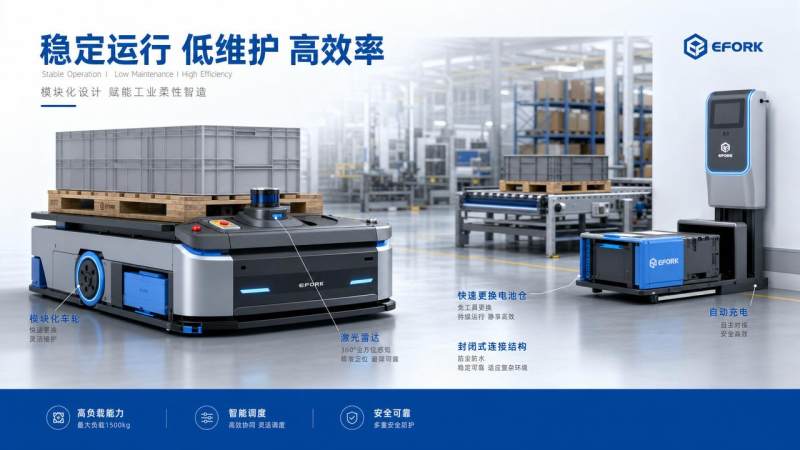
Choosing an agv supplier wholesale with low maintenance sounds straightforward, yet buyers often miss the first details that shape lifecycle cost. Small oversights often become large service problems later.
The real decision is not only about unit price. It includes spare parts access, software stability, charging strategy, safety compliance, and response speed during failures.
For automation projects across warehousing, assembly, electronics, food, and mixed industrial environments, a reliable agv supplier wholesale with low maintenance reduces downtime risk and protects integration value.
What does low-maintenance really mean in AGV wholesale?
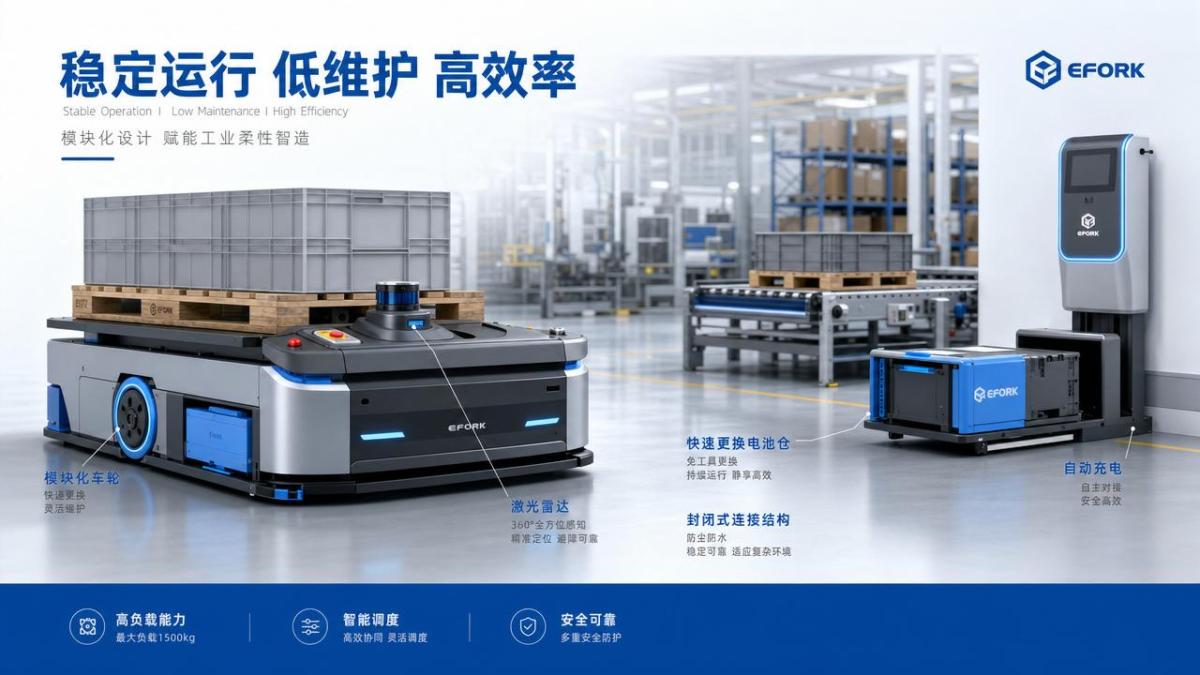
Low-maintenance does not mean maintenance-free. It means fewer wear points, simpler diagnostics, predictable service intervals, and easier replacement of critical components.
A strong agv supplier wholesale with low maintenance usually designs around operational simplicity. That includes modular wheels, accessible batteries, sealed connectors, and standardized sensors.
It also means software that helps maintenance teams quickly locate faults. Error codes should be readable, actionable, and linked to clear troubleshooting workflows.
In Industry 4.0 settings, low maintenance also depends on compatibility. AGVs should connect cleanly with MES, ERP, WMS, PLC, and fleet management systems.
If integration requires custom patches for every update, maintenance costs increase. Software complexity can erase the savings promised by cheap hardware.
Core traits that define low maintenance
- Standardized spare parts with short lead times
- Battery systems with predictable charging cycles
- Remote diagnostics and software update support
- Clear preventive maintenance schedules
- Compliance with ISO, IEC, CE, and site safety requirements
What gets overlooked first when evaluating an agv supplier wholesale with low maintenance?
The first overlooked factor is often the spare parts strategy. Many quotes list the vehicle, but not local inventory, replacement intervals, or critical component availability.
A low purchase price becomes expensive if a drive wheel or lidar module takes eight weeks to arrive. Uptime depends on logistics, not just engineering.
The second issue is service ownership. Some suppliers sell wholesale units through channels, while technical support remains unclear after commissioning.
Ask who handles firmware issues, navigation recalibration, safety validation, and battery faults. A true agv supplier wholesale with low maintenance should define response responsibilities clearly.
The third overlooked area is floor and environment suitability. Dust, oil mist, uneven surfaces, humidity, and traffic intensity directly affect maintenance frequency.
An AGV that performs well in a clean electronics plant may struggle in a mixed-material industrial facility. Environment mismatch creates hidden wear and frequent stops.
Early questions worth asking
- Which parts fail most often, and what are their lead times?
- Are sensors, batteries, and wheels modular or custom?
- Can faults be diagnosed remotely without site visits?
- How often do software updates affect operations?
- What local service coverage exists for emergency support?
How should different application scenarios influence the choice?
Not every low-maintenance AGV fits every workflow. Route complexity, payload variation, shift patterns, and human interaction all change maintenance priorities.
In high-throughput warehousing, wheel wear, charging discipline, and traffic software matter most. In precision assembly, positioning repeatability and sensor calibration become more important.
For food, pharmaceutical, or clean manufacturing areas, enclosure design and cleanability may matter more than top speed. Maintenance depends on hygiene compatibility too.
A capable agv supplier wholesale with low maintenance should map maintenance design to the application instead of offering one generic platform for all industries.
Scenario-specific maintenance priorities
How can software and integration create hidden maintenance costs?
Hardware usually gets the most attention first. Yet software incompatibility often drives the longest delays and the highest support dependence.
An agv supplier wholesale with low maintenance should support standard industrial communication where possible. OPC UA, REST APIs, and stable fleet interfaces reduce future integration friction.
If every change requires supplier-side code edits, maintenance becomes recurring engineering work. That raises cost and slows site optimization.
Cybersecurity is also part of maintenance. Unsupported operating environments, unmanaged update practices, and weak access control increase failure and compliance risk.
Look for version control, rollback capability, digital logs, and remote health monitoring. These functions reduce downtime and support better root-cause analysis.
Integration checkpoints before purchase
- Compatibility with existing PLC and control architecture
- Data exchange with MES, ERP, WMS, or SCADA
- Safety logic interaction with doors, lifts, and conveyors
- Remote access policy and cybersecurity controls
- Update process that does not disrupt production stability
What cost indicators reveal whether low maintenance is real or only marketing?
The best indicator is total cost of ownership over three to five years. Compare service visits, consumables, battery replacement cycles, software fees, and downtime exposure.
A trustworthy agv supplier wholesale with low maintenance should provide measurable assumptions. These include MTBF, preventive maintenance intervals, spare kit recommendations, and energy usage profiles.
Request examples from similar operating conditions. Data from a light-duty pilot route may not reflect a three-shift factory with intensive crossings and variable payloads.
Also compare training burden. If daily checks require specialist knowledge, maintenance costs rise through dependence on external experts.
Quick evaluation table
How do you compare suppliers without missing the first critical detail?
Start with a structured checklist, not a product brochure. The right comparison method makes hidden maintenance risks visible before contracts are signed.
Review mechanical design, battery approach, sensor architecture, software openness, service coverage, and safety certification as one connected system.
When selecting an agv supplier wholesale with low maintenance, ask for a sample preventive maintenance plan and a real spare parts list. General promises are not enough.
It also helps to validate one live reference case with similar floors, payloads, shifts, and integration depth. Context matters more than brand claims.
Practical comparison steps
- Define the real operating environment and duty cycle.
- List parts expected to wear within the first two years.
- Check software interface maturity and update governance.
- Verify service response commitments and local support channels.
- Model lifecycle cost using realistic downtime assumptions.
The lowest-risk choice is usually the supplier that explains limitations clearly. Transparent constraints are easier to manage than vague performance claims.
In smart manufacturing, dependable automation comes from verified engineering, maintainable design, and integration discipline. That is the foundation of true low maintenance.
Before choosing an agv supplier wholesale with low maintenance, build a shortlist around serviceability, software fit, and spare readiness. Then test each option against real production conditions.
A careful review now can prevent years of avoidable downtime, support friction, and replacement cost. The first overlooked detail is often the most expensive one.
Recommended News
- 2026/10/24Car Spare Parts: How to Check Fitment and Avoid Ordering the Wrong PartOrder car spare parts with confidence. Learn how to verify VINs, OEM numbers, and fitment details to avoid costly mistakes and choose the right replacement first time.
- 2026/10/23How Do You Select a Motion Control System for Synchronized Axes?How do I select a motion control system for synchronized axes? Discover key timing, feedback, and performance checks to choose confidently and reduce costly integration risks.
- 2026/10/23Integrating End-of-Line Sortation with Packing Stations and Conveyor ControlsOptimize end of line sortation with coordinated packing stations and conveyor controls. Learn how to prevent bottlenecks, improve routing accuracy, and handle exceptions reliably.