
Search News
Industry Portal
Popular Tags
Do Energy-Saving 6 Axis Robot Arms Pay Off in Daily Operation?
Author
Dr. Victor Gear
Time
May 12, 2026
Pageviews
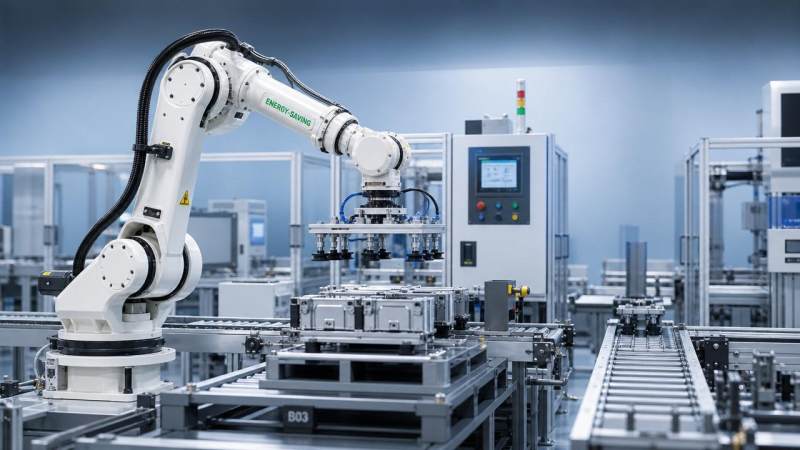
For operators focused on uptime, power efficiency, and daily output, the real question is whether a wholesale 6 axis robot arm with energy-saving features can deliver measurable value beyond the purchase price.
In modern production lines, lower energy use, stable motion control, and reduced operating costs can directly affect shift performance, making this a practical investment issue—not just a technical trend.
The answer is often yes, but only when daily operation data supports it. A wholesale 6 axis robot arm with energy-saving design must prove value through cycle stability, power draw, maintenance demand, and total cost per unit.
Why a structured review matters before daily deployment

Energy-saving claims can sound impressive, yet payback depends on real workload, payload, speed, idle time, and integration quality. Without a clear review process, expected savings may never appear on the shop floor.
A wholesale 6 axis robot arm with energy-saving features affects more than electricity bills. It influences heat generation, servo wear, control precision, downtime patterns, and even HVAC load in enclosed production areas.
That is why a checklist-based evaluation works well. It turns broad efficiency claims into practical questions tied to production rhythm, safety standards, and measurable operating results.
Core points to verify before deciding if payback is real
Use the following points to judge whether a wholesale 6 axis robot arm with energy-saving technology can produce daily operating gains in a mixed industrial environment.
- Compare active power use at real cycle speed, not brochure values, because motion profile, acceleration, and payload shifts strongly affect actual energy consumption per shift.
- Check idle and standby consumption, since many robot cells spend significant time waiting between parts, pallets, or upstream machine release signals.
- Verify whether servo drives support regenerative braking, allowing deceleration energy to be reused or managed more efficiently during repetitive motion cycles.
- Review path optimization functions inside the controller, because smoother trajectory planning often reduces power spikes, wear, and non-productive motion time.
- Measure cycle consistency under full payload, since unstable motion can erase energy savings through rework, missed picks, or slower compensation movements.
- Evaluate thermal performance in long shifts, as lower internal heat often improves component life and reduces cooling demand inside compact automation cells.
- Confirm compatibility with PLC, MES, and monitoring software so energy data can be tracked against output, alarms, and maintenance events.
- Assess maintenance intervals for reducers, cables, and brakes, because lower friction and better control efficiency should support reduced service frequency.
- Check ISO, IEC, and CE alignment to ensure the wholesale 6 axis robot arm with energy-saving features meets accepted automation safety and performance expectations.
- Calculate total cost per produced unit, combining electricity, downtime, spare parts, programming effort, and expected operating life rather than purchase price alone.
What daily payback usually looks like in practice
Payback rarely comes from one dramatic factor. It usually appears through several small gains that repeat across every hour of operation.
A wholesale 6 axis robot arm with energy-saving design can reduce current peaks during acceleration. That helps stabilize electrical load and may lower stress on supporting equipment.
Smoother motion also cuts vibration and heat. Over time, this can improve cable life, reduce lubrication issues, and support more predictable preventive maintenance windows.
In facilities where dozens of robots run across multiple shifts, even modest energy reduction per arm can become a meaningful operating advantage. The savings grow when uptime remains stable.
Application notes across different operating scenarios
Material handling and palletizing
In handling tasks, repeated start-stop motion dominates energy behavior. Focus on acceleration tuning, standby power, and regenerative drive performance during frequent deceleration.
A wholesale 6 axis robot arm with energy-saving capability pays off faster here when paths are repeatable and shift hours are long.
Welding and machine tending
These cells depend on coordination with upstream equipment. Check whether energy-saving modes interfere with restart timing, torch position accuracy, or door-open waiting states.
The best results come when low-energy standby functions work without adding delay to cycle recovery after machine completion signals.
Assembly and precision handling
For precise assembly, the priority is not only lower power use. Smooth, efficient motion must also preserve repeatability, force control stability, and part placement quality.
Here, a wholesale 6 axis robot arm with energy-saving engineering should show strong control resolution and low drift during extended operation.
Mixed-line flexible production
Flexible lines often change recipes, payloads, and speeds. Check whether the robot maintains efficiency across varied programs instead of only one ideal benchmark task.
The broader the product mix, the more important software-level optimization becomes for maintaining both output and energy savings.
Commonly overlooked issues that weaken the expected return
Oversized robot selection is one of the biggest hidden problems. Excess payload capacity often means unnecessary mass, higher power use, and reduced efficiency in normal cycles.
Poor end-effector design can also waste energy. Heavy grippers, unbalanced tools, and air leaks may cancel benefits from a wholesale 6 axis robot arm with energy-saving features.
Some lines ignore idle-state behavior. If the robot spends long periods waiting but does not enter efficient standby logic, the daily savings estimate will be misleading.
Weak data visibility is another risk. Without metering linked to output and downtime records, it is difficult to prove whether efficiency gains are genuine or assumed.
Integration shortcuts create hidden costs as well. If programming, safety zoning, or PLC coordination are unstable, energy efficiency will not compensate for lost throughput.
A simple way to evaluate operational payoff
- Record baseline electricity use, cycle time, and downtime from the current process for at least one normal production week.
- Request measured consumption data for the wholesale 6 axis robot arm with energy-saving setup under a similar payload and motion profile.
- Include tool weight, compressed air use, controller load, and auxiliary equipment when comparing expected daily operating cost.
- Estimate annual savings against the complete installed cost, then test how results change under lower utilization or different shift patterns.
- Confirm that service support, spare parts access, and software diagnostics are strong enough to protect uptime after deployment.
FAQ on operational value
Is lower energy use enough to justify replacement?
Not by itself. The strongest case combines lower power use with stable cycle time, lower heat, reduced maintenance, and dependable integration performance.
How quickly can savings appear?
High-utilization lines usually reveal trends faster. Multi-shift operation often shows clearer value than low-duty applications with long idle periods.
Does software matter as much as hardware?
Yes. A wholesale 6 axis robot arm with energy-saving hardware still depends on trajectory planning, standby logic, diagnostics, and control integration to achieve daily savings.
Final take and next step
A wholesale 6 axis robot arm with energy-saving features can absolutely pay off in daily operation, but only when evaluated through real production conditions and full lifecycle logic.
The most reliable approach is to compare measured power use, cycle stability, integration effort, and maintenance impact against current line performance. That turns efficiency from a promise into evidence.
For stronger decisions, use benchmark-oriented data, international standards alignment, and transparent operating metrics. That is where G-IFA adds value by filtering automation options through verified engineering criteria.
Start with one production cell, gather one week of baseline data, and test the numbers against a qualified wholesale 6 axis robot arm with energy-saving configuration before wider rollout.
Recommended News
- 2026/05/30Is lithium battery storage for off-grid applications safe?Lithium battery storage for off-grid applications can be safe with certified cells, smart BMS, thermal control, and expert integration—learn how to reduce risk and boost uptime.
- 2026/05/30Why do decarbonization costs vary by plant?Decarbonization costs vary by plant due to assets, automation, energy mix, and data. Learn how to benchmark sites, cut risk, and prioritize smarter investments.
- 2026/05/30How can industrial infrastructure cut downtime?Industrial infrastructure can cut downtime with smarter asset visibility, resilient automation, predictive maintenance, and proven recovery plans. See the checklist.