
Search News
Industry Portal
Popular Tags
Robotic Arms Quotation: What Usually Gets Left Out
Author
Dr. Victor Gear
Time
May 14, 2026
Pageviews
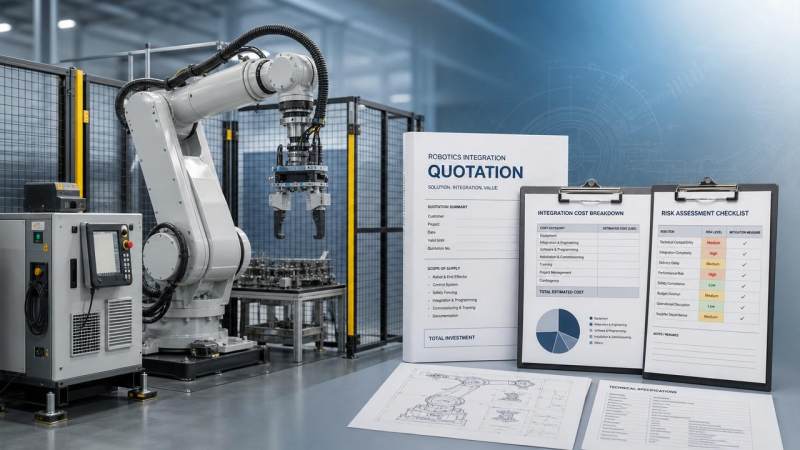
A robotic arms quotation often looks straightforward, but key cost drivers and technical assumptions are frequently left out. For procurement teams, missing details can lead to budget overruns, integration delays, and performance gaps. This article explains what a robotic arms quotation should really include, helping buyers compare offers more accurately and reduce risk before committing to an automation investment.
Why does a robotic arms quotation so often miss critical details?
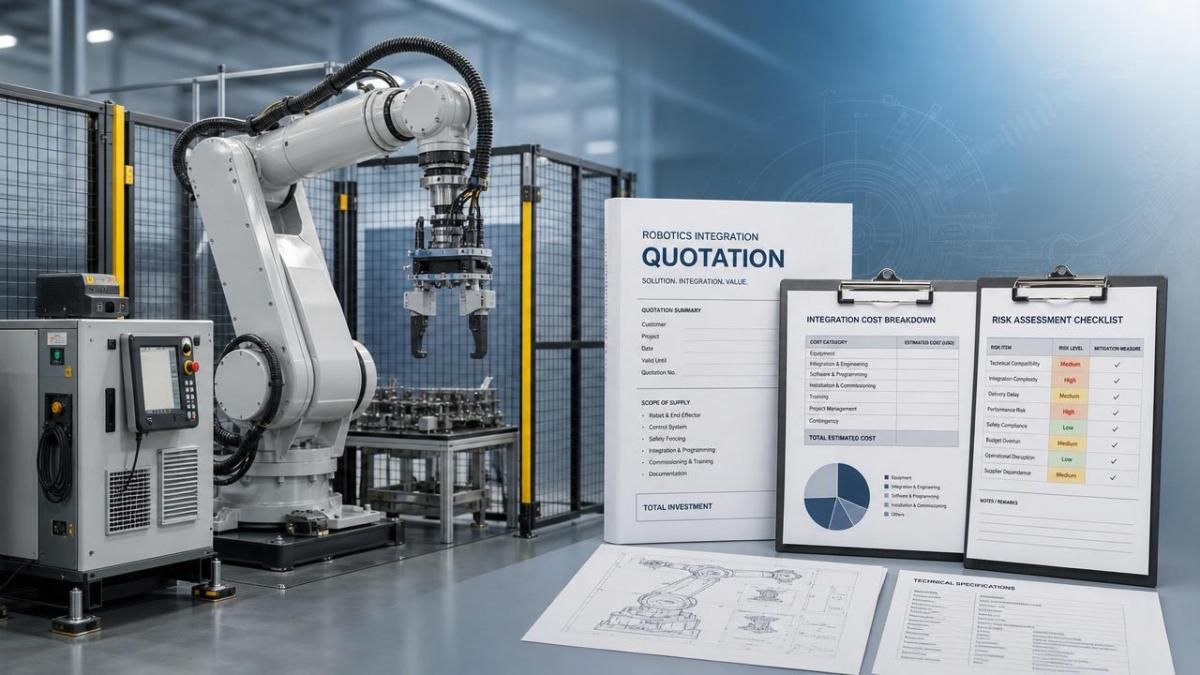
In industrial automation, a robotic arms quotation rarely covers only the robot. It usually sits inside a larger system that may include end-of-arm tooling, safety architecture, control integration, software communication, installation, and acceptance testing.
Procurement teams often receive offers that look comparable on price but differ sharply in scope. One supplier may include a teach pendant, cable package, and commissioning hours, while another may price only the arm body and controller.
This is where quotation review becomes a risk-control task, not just a price exercise. In multi-sector factories, the impact of omitted line items can spread into PLC modifications, fixture redesign, MES connectivity, and production downtime.
What procurement teams usually underestimate
- Application complexity: Pick-and-place, welding, palletizing, dispensing, and machine tending impose very different cycle time, repeatability, and payload demands.
- Integration responsibility: The robotic arm supplier is not always responsible for grippers, vision, conveyors, guards, or third-party PLC communication.
- Lifecycle cost: Spare parts, preventive maintenance, training, and remote support are frequently excluded from the first robotic arms quotation.
- Compliance scope: CE-related documentation, safety validation, and local electrical conformity may require separate engineering work.
For buyers working across general manufacturing environments, the safest approach is to treat each robotic arms quotation as a technical document with commercial consequences. G-IFA supports this evaluation by benchmarking automation components against recognized industrial standards and cross-system performance logic.
What should a complete robotic arms quotation include?
A usable robotic arms quotation should make the technical and commercial boundary visible. If that boundary is vague, the buyer cannot compare suppliers fairly or estimate the real project budget.
The table below outlines the most important quotation elements procurement teams should request before internal approval.
A detailed robotic arms quotation should reduce ambiguity. If a supplier cannot define inclusions, exclusions, and performance assumptions in writing, the quote is not yet mature enough for final purchasing review.
Minimum documentation to request with the quotation
- A formal scope matrix showing what is included, excluded, and optional.
- A preliminary layout or mounting concept to confirm floor space and access.
- A cycle-time assumption sheet with part presentation conditions and upstream/downstream dependencies.
- A utility list covering power, compressed air, network, and environmental conditions.
Which cost items are commonly omitted from a robotic arms quotation?
For procurement professionals, the largest problem is not a high quoted price. It is a low initial price that expands after approval. A robotic arms quotation can appear competitive while pushing major costs into later engineering change orders.
The comparison below highlights where hidden costs usually appear in smart factory projects.
These omissions matter because robotic systems are not isolated assets. They depend on upstream material presentation, downstream handling, control logic, and plant safety design. G-IFA’s cross-pillar view is valuable here because robotic quotations often fail at the interfaces, not at the arm itself.
Hidden cost signals buyers should not ignore
- The quotation uses broad phrases such as “standard integration” without listing interfaces.
- The cycle time is quoted, but no part orientation or infeed condition is defined.
- The quote mentions compliance but does not specify which documents or tests are included.
- Warranty is stated, but response time, spare availability, and wear-part exclusions are missing.
How should buyers compare one robotic arms quotation against another?
Comparing quotations line by line is not enough. Buyers need a normalized framework that converts different supplier offers into the same decision logic. That logic should balance technical fit, implementation risk, compliance scope, and total cost.
A practical quotation comparison method
- Start with application fit. Check payload, reach, repeatability, speed, ingress protection, and environmental suitability against the real process.
- Review system boundaries. Identify whether tooling, vision, guarding, controls, and factory interfaces are included, optional, or excluded.
- Check implementation assumptions. Compare lead time, FAT, SAT, installation responsibility, and operator training scope.
- Score lifecycle support. Look at spare parts strategy, local service capability, documentation, and software backup policy.
- Calculate total landed cost. Include shipping, customs where relevant, site modification, utilities, downtime, and internal engineering hours.
In many projects, the cheapest robotic arms quotation becomes the most expensive after redesign, schedule slippage, or poor interoperability. Procurement teams should therefore align with automation engineering before final commercial negotiation.
Questions that expose quotation weakness
- What exact throughput can be achieved under our part presentation conditions?
- Which interfaces to PLC, MES, and quality systems are included in this price?
- What is the acceptance standard at FAT and SAT, and who signs it off?
- Which standards or safety requirements are assumed by the supplier, and which remain our responsibility?
What technical assumptions should never stay hidden?
A robotic arms quotation is only reliable when the technical assumptions are visible. If those assumptions are hidden, the supplier may still claim compliance later while delivering a system that fails your production reality.
Key assumptions to confirm before purchase order
- Payload includes the gripper, brackets, cables, pneumatic fittings, and any part weight variation, not just the nominal product mass.
- Reach calculation considers machine door opening, fixture depth, safe approach angles, and maintenance access around the cell.
- Cycle time reflects acceleration limits, part detection time, communication delay, and quality confirmation steps, not only dry-run motion.
- Environmental suitability covers dust, humidity, washdown risk, ambient temperature, and electrical quality at site.
- Utility requirements include voltage, air pressure, network architecture, and cabinet heat management.
For buyers in Industry 4.0 environments, software assumptions matter as much as mechanical ones. A robotic cell may physically work but still fail business expectations if recipe data, traceability events, or alarm reporting cannot connect to plant systems.
This is why G-IFA emphasizes the relationship between hardware precision and software intelligence. Quotation evaluation should not stop at reach and payload. It must also check control compatibility, communication openness, and digital integration readiness.
How do standards and compliance affect the final quotation?
Compliance work can materially change project cost and timing. Yet many procurement teams discover this only after vendor selection. A robotic arms quotation should identify whether the price assumes basic component conformity only or complete system-level compliance support.
Compliance areas that may affect cost
- Electrical design review according to applicable industrial control requirements.
- Safety circuit architecture, guarding concept, and validation documents.
- Technical file support, manuals, and labeling for the delivered cell.
- Factory acceptance and site acceptance criteria linked to risk and performance.
Where international projects are involved, buyers should also verify whether the supplier understands the practical difference between component compliance and full system deployment obligations. Referencing ISO, IEC, or CE-related expectations is helpful, but the quotation must translate those references into real project tasks.
FAQ: what do procurement teams ask most about a robotic arms quotation?
How can I tell whether a robotic arms quotation is complete?
Look for a clear scope breakdown covering robot hardware, tooling, controls, safety, installation, commissioning, and acceptance criteria. If exclusions are short and vague, request a formal clarification list before moving forward.
What is the most common pricing mistake in robotic arm procurement?
The most common mistake is evaluating only the base robot price. Total project cost usually depends on application tooling, safety design, software integration, and ramp-up support. These items often outweigh small differences in arm price.
How long is the usual delivery cycle after quotation approval?
It depends on stock status, customization level, controls scope, and acceptance requirements. Buyers should request separate timing for hardware lead time, panel build, software development, FAT, shipping, installation, and SAT rather than relying on one total number.
Should I ask for optional pricing in the same robotic arms quotation?
Yes. Ask suppliers to separate mandatory scope from options such as spare parts kits, advanced training, extra software functions, or vision upgrades. This helps procurement protect budget while keeping future expansion visible.
Why work with G-IFA before finalizing a robotic arms quotation?
For procurement teams, speed matters, but clarity matters more. G-IFA helps buyers de-risk robotic arm investment by filtering quotations through engineering logic, cross-sector automation benchmarks, and practical interface awareness across robotics, PLC control, motion systems, industrial software, and fluid power.
This is especially useful when multiple vendors provide technically different offers that appear commercially similar. A stronger quotation review process can prevent budget drift, underperforming automation cells, and delayed production launch.
What you can consult us about
- Parameter confirmation for payload, reach, repeatability, cycle time, and environment fit.
- Quotation comparison for different suppliers, integration scopes, and technology routes.
- Lead-time review covering hardware delivery, commissioning windows, and production launch planning.
- Custom solution assessment involving tooling, PLC communication, MES or ERP interfaces, and safety architecture.
- Certification and compliance discussion related to common international standards and documentation expectations.
- Quotation communication support so your team can ask sharper technical questions before issuing a purchase order.
If your current robotic arms quotation seems low, incomplete, or difficult to compare, contact G-IFA for a structured review. We can help you verify assumptions, identify hidden cost items, refine selection criteria, and improve confidence before you commit budget to an automation project.
Recommended News
- 2026/10/24Car Spare Parts: How to Check Fitment and Avoid Ordering the Wrong PartOrder car spare parts with confidence. Learn how to verify VINs, OEM numbers, and fitment details to avoid costly mistakes and choose the right replacement first time.
- 2026/10/23How Do You Select a Motion Control System for Synchronized Axes?How do I select a motion control system for synchronized axes? Discover key timing, feedback, and performance checks to choose confidently and reduce costly integration risks.
- 2026/10/23Integrating End-of-Line Sortation with Packing Stations and Conveyor ControlsOptimize end of line sortation with coordinated packing stations and conveyor controls. Learn how to prevent bottlenecks, improve routing accuracy, and handle exceptions reliably.