
Search News
Industry Portal
Popular Tags
Automation Engineering Quotation Red Flags Before Signing
Author
Dr. Victor Gear
Time
May 14, 2026
Pageviews
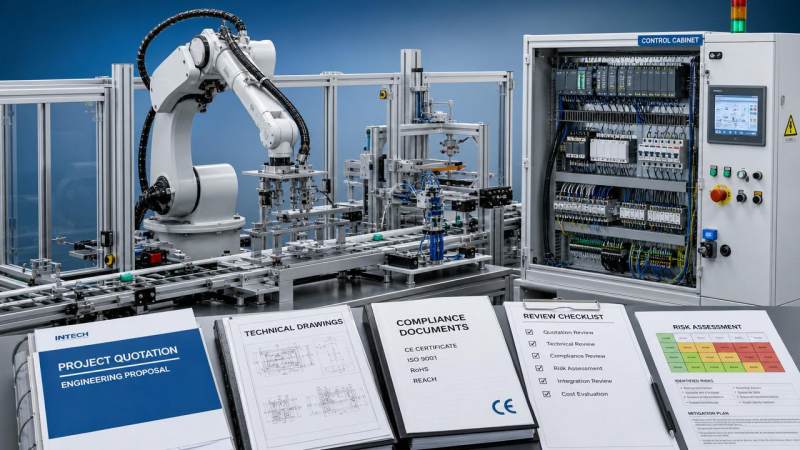
Before approving any automation engineering quotation, evaluators need to look beyond the headline price and test the proposal for hidden risk. A low number can mask weak scope control, missing compliance work, poor integration planning, or limited after-sales support.
In industrial automation, quotation errors often appear late, during commissioning, validation, or ramp-up. By then, schedule pressure and change orders can multiply total cost. A structured review helps compare offers on technical depth, lifecycle value, and execution reliability.
Why an automation engineering quotation needs structured review
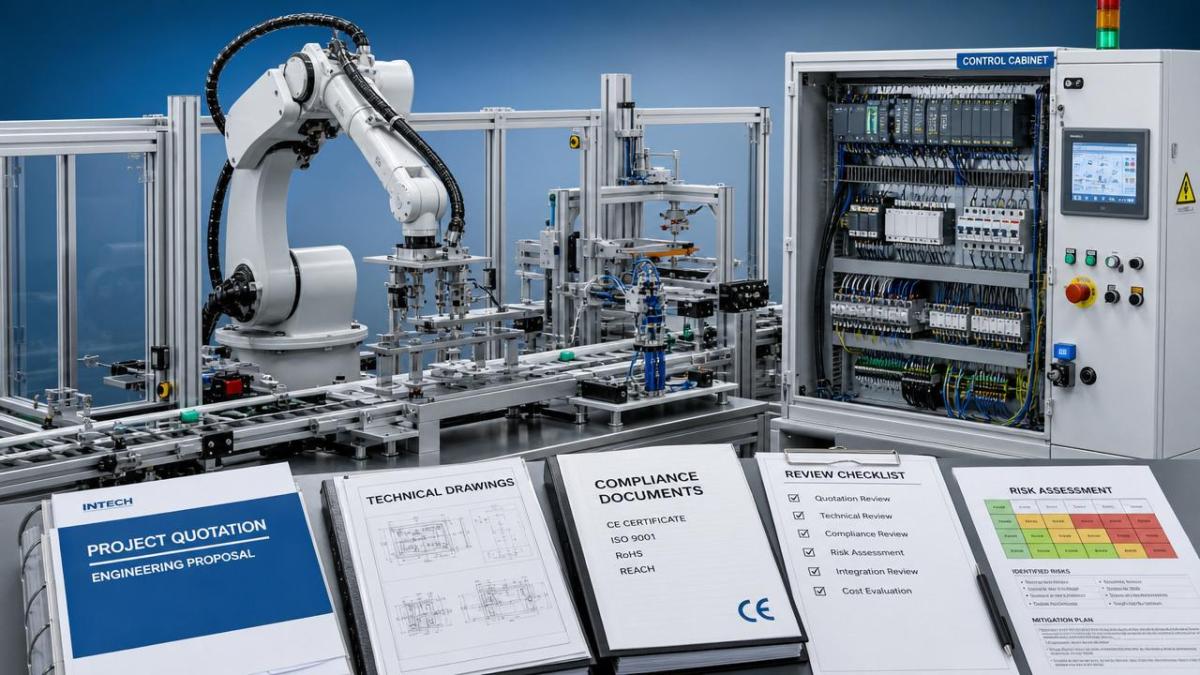
An automation engineering quotation is more than a price sheet. It is a compressed engineering promise covering design assumptions, interfaces, performance targets, safety scope, software logic, and support obligations.
In mixed-industry projects, complexity rises fast. Robots, PLCs, motion systems, pneumatics, sensors, MES links, and cybersecurity controls must work together. If one part is undefined, the commercial risk usually lands on the buyer.
This is why every automation engineering quotation should be checked line by line. The goal is not only cost control, but also compliance, uptime, maintainability, and predictable handover.
Key red flags to check before signing
- Scope wording is vague, using terms like “as needed” or “if required,” without listing engineering deliverables, hardware quantities, software modules, and commissioning boundaries.
- The automation engineering quotation excludes interface responsibility between robot cells, PLC panels, drives, conveyors, vision systems, or MES connections, creating future ownership disputes.
- Performance targets are missing or weak, with no defined cycle time, repeatability, uptime, OEE contribution, accuracy tolerance, or product changeover expectations.
- Compliance references are incomplete, mentioning CE, ISO, IEC, or local electrical codes without stating testing methods, documentation packages, or integrator responsibility.
- Safety scope is separated from controls scope, leaving unclear who delivers risk assessment, guarding logic, safety PLC programming, validation, and operator access zoning.
- Software terms are shallow, with no version control method, source code ownership, backup policy, alarm philosophy, recipe management, or cybersecurity hardening details.
- The bill of materials uses generic component descriptions, making it impossible to verify model compatibility, spare parts availability, lead times, or long-term serviceability.
- Factory Acceptance Test and Site Acceptance Test conditions are not defined, allowing major defects to be postponed until installation, when correction becomes slower and costlier.
- Warranty language is narrow, covering only replacement parts while excluding labor, travel, remote diagnostics, software debugging, and restart support after failure.
- Payment milestones are front-loaded, collecting most cash before FAT, SAT, or stable production, reducing commercial leverage if technical delivery slips.
- Commissioning duration looks unrealistically short, especially where multiple vendors, legacy machines, utilities, and production change windows must be coordinated carefully.
- Training, manuals, as-built drawings, and maintenance documentation are absent or lightly described, increasing dependency on the supplier after handover.
A practical review table for faster comparison
How the warning signs change by application
New production line projects
For greenfield lines, the biggest risk in an automation engineering quotation is assumption mismatch. Utilities, floor loading, network architecture, line balancing, and upstream or downstream readiness must be explicitly stated.
Look closely at integration boundaries. If conveyors, machine vision, ERP tags, or traceability functions are listed as optional, the quoted system may not be production-ready at startup.
Retrofit and brownfield upgrades
Retrofits carry hidden uncertainty around legacy controls, mechanical wear, and undocumented wiring. A solid automation engineering quotation should include survey findings, compatibility checks, and downtime assumptions.
If the proposal avoids responsibility for old PLC communication, panel modifications, or safety circuit migration, later changes can become expensive and disruptive.
Robot cell and motion control systems
In robotic and servo-driven applications, confirm payload, reach, acceleration profile, tool weight, cable routing, and path accuracy. These variables strongly affect achievable cycle time and mechanical life.
A weak automation engineering quotation may show robot brand and axis count, but omit end-effector validation, collision logic, or recovery mode design.
MES, IIoT, and software-connected automation
When the quotation includes data integration, clarify tag counts, protocol standards, historian scope, API ownership, and cybersecurity responsibility. Software vagueness often causes the largest change orders.
Also verify who validates data quality. Dashboards are useless if machine states, batch records, and alarms are not consistently mapped and tested.
Often overlooked risks in an automation engineering quotation
Spare parts strategy
A competitive automation engineering quotation can still create long-term downtime risk if critical spares are obsolete, regionally unavailable, or not identified by failure impact.
Change management rules
Without a documented method for engineering changes, even minor sensor moves or HMI edits may trigger disputes over delay, cost, and acceptance responsibility.
Energy and utility assumptions
Compressed air quality, hydraulic pressure, cooling, and power stability affect automation performance. If utilities are assumed but not specified, startup failures become likely.
Data and intellectual property ownership
Source code, PLC comments, robot programs, recipes, and integration connectors should be clearly owned or licensed. Otherwise, future expansions may depend on one supplier only.
Practical actions before approving the quotation
- Request a deviation list that compares the automation engineering quotation against the technical specification, highlighting omissions, assumptions, and proposed substitutions.
- Ask for a responsibility matrix covering mechanical, electrical, software, safety, network, documentation, FAT, SAT, training, and warranty ownership.
- Tie milestone payments to evidence, such as approved drawings, successful FAT, completed installation, SAT signoff, and stable production output.
- Validate component choices against international standards, regional service coverage, lifecycle status, and interoperability with the existing factory platform.
- Require measurable acceptance criteria for cycle time, reject rate, availability, alarm response, recipe accuracy, and safety validation completion.
Final review and next step
A strong automation engineering quotation should make engineering responsibility visible, not hidden. Clear scope, verified compliance, realistic testing, and support depth usually matter more than the lowest initial figure.
For cross-sector automation decisions, benchmark the quotation against documented standards, integration complexity, and maintainability requirements. G-IFA supports this approach by filtering claims through engineering transparency and internationally relevant performance criteria.
Before signing, compare at least three proposals using the same review matrix. If one automation engineering quotation cannot clearly answer scope, compliance, software, and lifecycle questions, pause approval until the gaps are resolved.
Recommended News
- 2026/10/24Car Spare Parts: How to Check Fitment and Avoid Ordering the Wrong PartOrder car spare parts with confidence. Learn how to verify VINs, OEM numbers, and fitment details to avoid costly mistakes and choose the right replacement first time.
- 2026/10/23How Do You Select a Motion Control System for Synchronized Axes?How do I select a motion control system for synchronized axes? Discover key timing, feedback, and performance checks to choose confidently and reduce costly integration risks.
- 2026/10/23Integrating End-of-Line Sortation with Packing Stations and Conveyor ControlsOptimize end of line sortation with coordinated packing stations and conveyor controls. Learn how to prevent bottlenecks, improve routing accuracy, and handle exceptions reliably.