
Search News
Industry Portal
Popular Tags
Low-maintenance AGV wholesale: where do service costs hide?
Author
Cobots
Time
May 07, 2026
Pageviews
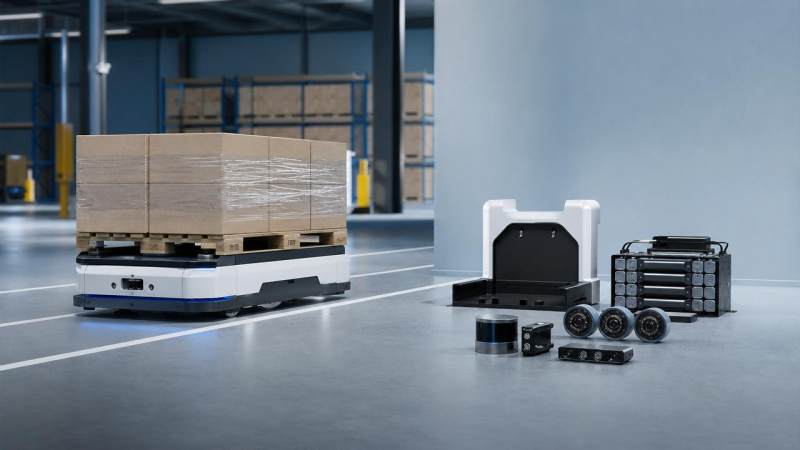
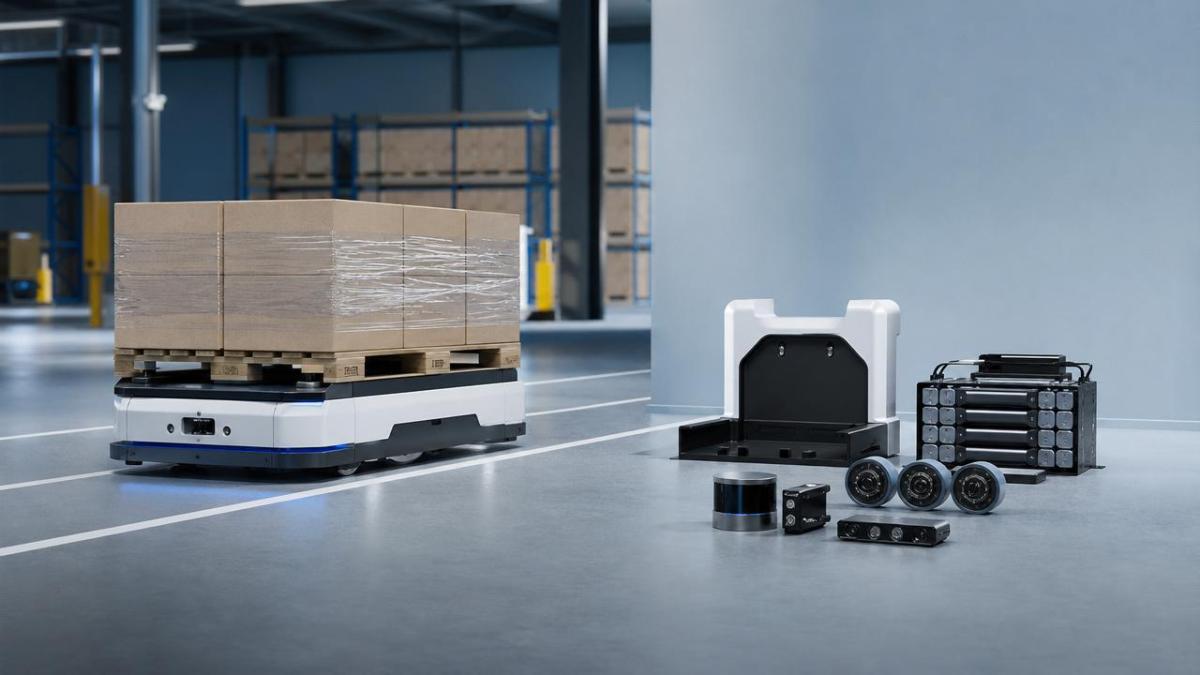
Choosing an agv supplier wholesale with low maintenance can look like a clear cost win, yet hidden service expenses often emerge after deployment. For finance approvers, the real question is not only unit price, but how maintenance cycles, spare parts, software updates, and integration support affect total ownership cost. This article helps you identify where those costs hide before they erode ROI.
Why scenario differences matter before approving an AGV budget
For a finance approver, the phrase agv supplier wholesale with low maintenance is only meaningful when tied to a specific operating environment. A warehouse with long, predictable routes does not create the same service burden as a mixed-model factory with changing line layouts. A supplier may advertise low service needs, but maintenance cost is shaped by battery chemistry, navigation method, software architecture, spare parts policy, operator training, and local support coverage.
This is why scenario-based evaluation matters. In some applications, a low-priced AGV fleet stays inexpensive because routes are stable and usage is moderate. In others, the same wholesale offer becomes expensive after frequent wheel replacement, software tuning, sensor recalibration, and overtime service visits. Decision quality improves when you compare service exposure by use case instead of comparing vehicle prices alone.
For organizations guided by Industry 4.0 principles, such as those benchmarked by G-IFA, the best purchasing decision is rarely about the cheapest machine. It is about the most predictable lifecycle cost across hardware, controls, connectivity, and support. That is especially true when AGVs are linked to PLC systems, MES workflows, and production takt requirements.
Typical business scenarios where hidden service costs appear
An agv supplier wholesale with low maintenance may be suitable in multiple sectors, but the cost profile changes by application. Finance teams should review at least the following scenarios before approving a purchase order.
Stable pallet transport in finished-goods warehouses
This is usually the most favorable case. Routes are fixed, floor conditions are managed, and payload patterns are predictable. In this environment, service costs often stay low if the supplier uses durable drive units and offers remote diagnostics. The main hidden expenses tend to be battery replacement cycles, charger downtime, and annual software support fees.
Component movement in mixed-model assembly plants
This scenario is more complex. AGVs interact with manual operators, changing stations, and varying SKU priorities. What appears to be a low-maintenance wholesale fleet may require frequent mapping updates, sensor cleaning, traffic logic changes, and interface support with line-side systems. Service costs often hide inside change requests rather than inside parts consumption.
High-throughput e-commerce and distribution centers
Here the challenge is utilization. Vehicles run longer shifts, accelerate more often, and operate under tighter uptime expectations. Even if each unit is sold under an agv supplier wholesale with low maintenance promise, wheel wear, battery degradation, and control board failures may surface faster. A finance approver should examine maintenance intervals under peak duty, not under brochure conditions.
Electronics, pharmaceutical, and controlled environments
These settings add compliance and cleanliness requirements. Maintenance labor can become more expensive because service access is restricted, replacement parts must meet stricter standards, and downtime windows are limited. In such settings, “low maintenance” is less about fewer failures and more about easier validation, cleaner component design, and traceable service procedures.
Scenario comparison: where service costs usually hide
The table below helps finance teams compare where the service burden is likely to appear when evaluating an agv supplier wholesale with low maintenance across common business situations.
The cost categories that most often get missed
When a vendor positions itself as an agv supplier wholesale with low maintenance, the hidden expenses are rarely invisible in principle. They are usually scattered across contracts, assumptions, and operational handoffs. Finance approvers should isolate the following categories.
1. Spare parts pricing versus spare parts availability
Low maintenance claims often focus on failure rate, but downtime cost depends on whether parts are stocked locally. A cheap wheel assembly becomes expensive if import lead time stops production for days. Review not only the parts list, but also local inventory commitment, substitution policy, and whether critical boards are repairable or only replaceable.
2. Software support after the initial warranty period
AGV fleets are software-defined assets. Navigation tuning, cybersecurity patches, traffic logic updates, and API compatibility all create post-launch service costs. In factories using MES, ERP, or WMS connections, version mismatch can trigger repeated support charges. Low maintenance on the mechanical side does not guarantee low support on the digital side.
3. Integration responsibility gaps
In many projects, the AGV vendor, integrator, and internal automation team each assume another party will handle signal tuning, docking accuracy, or fleet workflow exceptions. These gray zones become billable service hours. For finance teams, a key test is whether responsibilities are defined at the PLC, network, software, and site acceptance levels.
4. Consumables and environmental wear
Floor quality, dust, temperature, and shift intensity can sharply change maintenance economics. A supplier may genuinely offer a robust low-maintenance design, but if the plant floor has expansion joints, debris, or slope transitions, wheel and sensor wear accelerate. Always ask for service assumptions based on your real site conditions.
5. Training and internal capability gaps
Some fleets appear low cost only because the supplier expects your staff to handle first-line maintenance, battery care, and minor recovery procedures. If the site lacks trained technicians, external visits increase. A practical cost model should include training refresh, shift coverage, and turnover risk.
Different buyer types should ask different questions
The right evaluation framework also depends on company scale and operating model. An agv supplier wholesale with low maintenance may be attractive for all of them, but the approval logic changes.
For multi-site manufacturers
Standardization matters more than headline purchase savings. If every plant needs a different support arrangement, service cost multiplies. Ask whether one fleet platform can be used across multiple factories, whether spare parts are common, and whether diagnostics are centralized.
For fast-growing regional operators
Scalability matters most. A fleet that is inexpensive at 10 units may become support-heavy at 50 if software licensing is per vehicle, not per site. Review how maintenance planning, fleet orchestration, and support fees scale over expansion phases.
For cost-sensitive SMEs
Cash flow predictability matters more than the theoretical lowest lifecycle cost. These buyers should prioritize service packages with clear annual caps, quick access to consumables, and simple preventive maintenance routines. A premium feature set that requires specialist intervention may not be financially suitable.
How to judge if a low-maintenance wholesale AGV offer fits your scenario
A sound approval process turns the supplier claim into a scenario test. Before signing with an agv supplier wholesale with low maintenance, confirm these items:
- What utilization level was used to define maintenance intervals?
- Which parts are considered consumables and excluded from warranty?
- Are software updates included, and for how many years?
- Who pays for remapping after layout or process changes?
- What is the guaranteed on-site response time by region?
- Can your internal team perform first-level maintenance without voiding support terms?
- Is the fleet compatible with existing control systems, industrial networks, and supervisory software?
If a vendor cannot answer these questions with documented assumptions, the “low maintenance” promise is not yet finance-ready.
Common scenario misjudgments that inflate service spending
Many post-deployment cost overruns begin with a mismatch between the use case and the procurement model. One frequent mistake is buying a standardized wholesale fleet for a site that changes layout every quarter. Another is judging maintenance only by mechanics while ignoring recurring software intervention. A third is assuming integrator availability equals manufacturer service capacity.
Finance teams also underestimate the cost of minor interruptions. In a takt-driven plant, even short AGV recovery events can trigger labor imbalance, line-side shortages, and expedited technician visits. In these situations, service cost is not just a maintenance invoice; it becomes an operational risk cost. That is why scenario suitability should be validated jointly by operations, engineering, IT, and finance.
FAQ for finance approvers evaluating low-maintenance AGV sourcing
Does wholesale pricing always reduce total ownership cost?
No. Wholesale pricing helps capital expenditure, but total ownership cost depends on uptime, support model, integration effort, and lifecycle parts strategy. An agv supplier wholesale with low maintenance creates value only when those items are controlled.
Which scenario usually gets the best return from low-maintenance AGVs?
Stable, repetitive transport routes with clean floors and consistent payloads usually offer the best return. The more dynamic the environment, the more attention should shift toward software support and change management cost.
What should be included in a financial comparison sheet?
Include purchase price, commissioning, spare parts kit, charger infrastructure, annual software fees, response SLA, expected consumables, training, integration change requests, and projected battery replacement. This creates a more realistic comparison than unit cost alone.
Final decision guidance by scenario
For finance approvers, the best way to evaluate an agv supplier wholesale with low maintenance is to map service exposure to your actual operating scenario. If your environment is stable and repetitive, focus on battery life, local spare parts, and predictable support fees. If your operation changes frequently, focus on software maintenance, integration accountability, and engineering responsiveness. If uptime is mission-critical, test service assumptions under peak throughput, not average use.
A disciplined decision process should ask one practical question: where will this fleet consume service budget in year two and year three? When that answer is clear, unit price becomes easier to judge, ROI becomes more credible, and procurement risk falls. If needed, use a technical benchmark approach grounded in automation standards, interoperability, and lifecycle evidence so the selected solution fits both operational reality and financial governance.
Recommended News
- 2026/10/24Car Spare Parts: How to Check Fitment and Avoid Ordering the Wrong PartOrder car spare parts with confidence. Learn how to verify VINs, OEM numbers, and fitment details to avoid costly mistakes and choose the right replacement first time.
- 2026/10/23How Do You Select a Motion Control System for Synchronized Axes?How do I select a motion control system for synchronized axes? Discover key timing, feedback, and performance checks to choose confidently and reduce costly integration risks.
- 2026/10/23Integrating End-of-Line Sortation with Packing Stations and Conveyor ControlsOptimize end of line sortation with coordinated packing stations and conveyor controls. Learn how to prevent bottlenecks, improve routing accuracy, and handle exceptions reliably.