
Search News
Industry Portal
Popular Tags
Low-Maintenance AGV Supplier Wholesale: What Impacts Service Cost?
Author
Cobots
Time
May 04, 2026
Pageviews
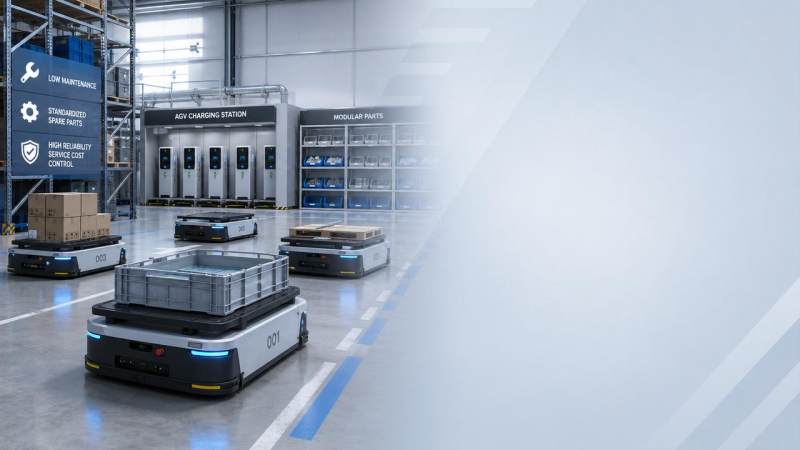
For finance decision-makers, choosing an agv supplier wholesale with low maintenance is not only about purchase price but also about long-term service cost control. From spare parts availability and software updates to technician response time and system reliability, several factors directly affect total ownership cost. Understanding these cost drivers helps reduce budget risk and supports smarter automation investment decisions.
Why does service cost matter so much when evaluating an agv supplier wholesale with low maintenance?
For financial approvers, the initial quotation is only the visible part of the investment. The larger risk often appears after installation, when maintenance contracts, emergency repairs, battery replacement, software support, and downtime begin to affect operating cash flow. That is why an agv supplier wholesale with low maintenance attracts attention: it promises more predictable lifecycle cost, fewer disruptions, and lower pressure on annual operating budgets.
In industrial automation, service cost is rarely driven by one single factor. It usually comes from the interaction between hardware durability, control software stability, spare parts logistics, and the supplier’s support model. A low-priced AGV system can become expensive if failures are frequent or if every update requires paid intervention. By contrast, a higher-quality wholesale supplier may reduce cost over five to seven years through better engineering reliability and faster fault recovery.
This is especially relevant in smart manufacturing environments where AGVs connect with PLCs, MES, warehouse systems, and production scheduling software. Once mobile automation becomes part of a larger digital workflow, even a small service issue can create chain losses in labor utilization, order fulfillment, and production continuity. Finance teams therefore need a total-cost view rather than a unit-price view.
What cost components should finance teams check beyond the purchase price?
When reviewing proposals from an agv supplier wholesale with low maintenance, it helps to break service cost into clear categories. This makes vendor comparisons more objective and avoids approving a solution that looks efficient on paper but creates hidden expenses later.
A practical review method is to request a three-year and five-year service model from each supplier. This should include scheduled maintenance, typical failure items, software support terms, and assumptions about operating hours. Vendors that cannot provide this transparency may not be the best fit for budget-sensitive projects.
Which technical factors most directly affect whether an AGV system stays low maintenance?
Not every AGV marketed as “low maintenance” performs equally in real factory conditions. Finance stakeholders should understand the technical drivers because these directly shape service intensity and replacement cycles.
First, component quality matters. Drive wheels, motors, gearboxes, sensors, controllers, and battery systems determine wear rate and fault frequency. An agv supplier wholesale with low maintenance typically uses proven industrial-grade components rather than low-cost substitutes. This may raise upfront cost, but it usually lowers repair frequency and improves uptime consistency.
Second, navigation architecture influences maintenance effort. Natural navigation, SLAM-based systems, and QR-based guidance each have different support profiles. Some require less physical infrastructure but more software tuning; others are easier to diagnose but less flexible in changing layouts. The right choice depends on whether the site prioritizes easy route changes, stable fixed operations, or fast scale-up.
Third, software maturity is often underestimated. Route congestion logic, traffic control, fleet scheduling, and error handling all affect how often operators need manual intervention. Better software reduces collision risk, task interruption, and dispatch inefficiency. From a cost standpoint, fewer operator interventions mean lower hidden labor cost and lower productivity loss.
Fourth, maintainability by design is critical. Can technicians access key modules quickly? Are batteries easy to replace? Are sensor assemblies modular? Is remote diagnostics built in? Systems designed for quick service generally cost less to maintain because labor time per incident is lower.
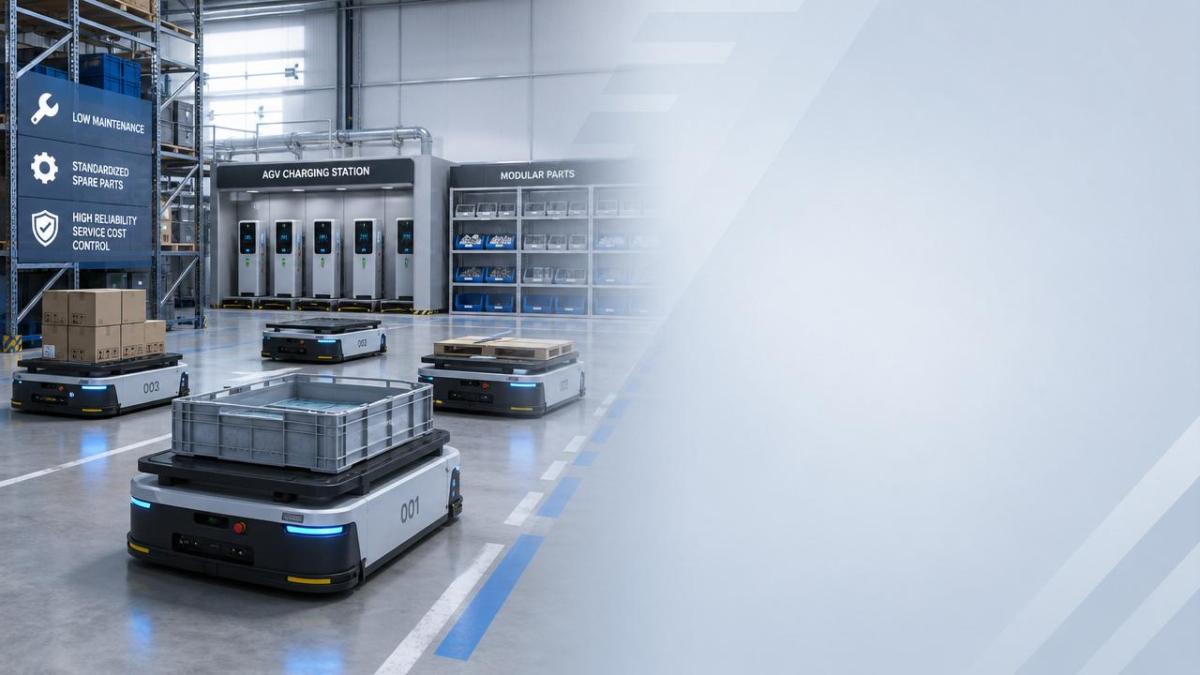
How do spare parts, service network, and response time change the real total ownership cost?
A technically sound AGV can still become expensive if support delivery is weak. This is where many finance teams misjudge supplier risk. The true value of an agv supplier wholesale with low maintenance is not only fewer failures, but also lower cost when failures do happen.
Spare parts availability is one of the biggest cost multipliers. If a wheel motor or laser sensor needs several weeks of lead time, the business may need backup units, excess safety stock, or temporary manual handling. All of these create indirect cost. Suppliers with regional warehouses, standardized components, and transparent part numbers generally reduce this risk.
Response time also matters because downtime cost is often larger than repair cost. In high-throughput facilities, one unavailable AGV can affect material flow, workstation feeding, and shipping schedules. Finance teams should ask for service-level commitments covering remote diagnosis, spare dispatch timing, and onsite intervention. A supplier with 24/7 remote support and local field engineers may justify a higher service contract because it protects operational continuity.
Another point is whether the supplier’s support model is reactive or predictive. Predictive maintenance features such as battery health monitoring, motor temperature alerts, and route anomaly logs help reduce unplanned events. These data-driven capabilities align closely with the Industry 4.0 mindset promoted by organizations like G-IFA, where verifiable performance and system transparency are central to investment quality.
What are the most common mistakes buyers make when comparing AGV suppliers?
The first mistake is focusing only on unit price. A low quotation can hide expensive consumables, paid software updates, or limited warranty scope. For a finance approver, this creates uncertainty that may not appear until the second budget cycle.
The second mistake is assuming all maintenance contracts offer the same value. Some contracts include preventive visits, remote monitoring, and firmware updates, while others cover only labor during business hours. The wording matters. A seemingly low annual fee may exclude the very items most likely to generate service invoices.
The third mistake is ignoring integration complexity. If the AGV fleet must connect with warehouse software, conveyors, robotic cells, or MES, every interface can become a support dependency. A supplier that lacks integration experience may produce more troubleshooting hours, more upgrade friction, and more third-party coordination cost.
The fourth mistake is not checking reliability references in similar applications. A hospital, e-commerce warehouse, and automotive plant do not stress AGVs in the same way. A credible agv supplier wholesale with low maintenance should be able to show references with comparable loads, shift patterns, floor conditions, and traffic density.
The fifth mistake is treating maintenance as only a technical issue. In reality, service cost is a financial planning issue. Downtime exposure, replacement timing, labor reallocation, and support escalation all affect return on investment. Procurement, engineering, operations, and finance should review these factors together.
How can finance decision-makers judge whether a supplier is truly low maintenance before approval?
A good evaluation process combines technical evidence with commercial clarity. Instead of accepting marketing claims, ask suppliers to quantify expected maintenance performance. This creates a more defensible approval basis.
Start with failure-rate indicators. Request mean time between failures, typical battery life, wheel replacement intervals, and average annual maintenance hours per vehicle. If the supplier cannot provide benchmark data, it may indicate limited deployment maturity or inconsistent field tracking.
Next, request a sample service workflow. How is a fault reported? What can be resolved remotely? Which spare parts are stocked locally? How quickly can software engineers intervene? A mature supplier will have a documented escalation path and measurable response standards.
It is also wise to review design standardization. Fleets built on common modules are usually cheaper to support because parts are interchangeable and technician training is simpler. This is an important marker when searching for an agv supplier wholesale with low maintenance across multi-site deployments.
Finally, ask for a lifecycle cost scenario under your own operating assumptions: number of units, daily run hours, ambient conditions, payload profile, and required software integration. Service cost accuracy improves significantly when the supplier models the real use case instead of using generic assumptions.
What questions should be asked before moving forward with procurement or supplier discussions?
Before approving budgets or shortlisting vendors, finance teams can use a simple question set to reduce uncertainty and improve cross-functional alignment. These questions help reveal whether an agv supplier wholesale with low maintenance is truly positioned to control long-term service cost.
- What is included in the warranty, and which parts or software functions are excluded?
- What are the expected replacement intervals for batteries, wheels, sensors, and drive modules?
- Are software updates, cybersecurity patches, and fleet optimization tools included or billed separately?
- What local spare stock is available, and what are the lead times for critical components?
- What response times are contractually committed for remote and onsite support?
- Can the supplier provide references in similar automation, manufacturing, or intralogistics environments?
- How easily can the system adapt if production routes, throughput, or integration requirements change?
These questions matter because service cost is not a fixed number; it is a result of engineering quality, operational fit, and supplier capability. For financial approvers, a reliable support structure often produces better ROI than the cheapest initial quote.
Final takeaway: what should finance teams prioritize first?
The best way to evaluate an agv supplier wholesale with low maintenance is to treat maintenance as a lifecycle investment variable, not a technical afterthought. Purchase price, service model, software policy, parts access, and downtime exposure should all be reviewed together. In many cases, the strongest financial decision is the one that delivers stable uptime, predictable support costs, and lower operational risk over several years.
For organizations building smarter factories, this disciplined approach aligns with the broader Industry 4.0 objective of combining hardware precision, software intelligence, and verifiable performance data. If you need to confirm a practical solution, expected service cycle, integration scope, or quotation structure, the best next step is to discuss operating hours, application scenario, spare parts strategy, support SLA, and projected five-year ownership cost before final approval.
Recommended News
- 2026/10/24Car Spare Parts: How to Check Fitment and Avoid Ordering the Wrong PartOrder car spare parts with confidence. Learn how to verify VINs, OEM numbers, and fitment details to avoid costly mistakes and choose the right replacement first time.
- 2026/10/23How Do You Select a Motion Control System for Synchronized Axes?How do I select a motion control system for synchronized axes? Discover key timing, feedback, and performance checks to choose confidently and reduce costly integration risks.
- 2026/10/23Integrating End-of-Line Sortation with Packing Stations and Conveyor ControlsOptimize end of line sortation with coordinated packing stations and conveyor controls. Learn how to prevent bottlenecks, improve routing accuracy, and handle exceptions reliably.