
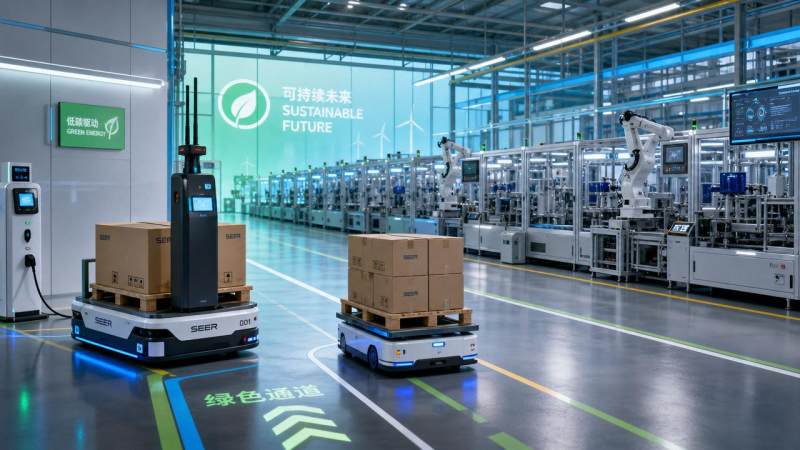
Sustainable logistics is becoming a board-level priority as manufacturers face rising energy costs, tighter carbon targets, and pressure to improve operational resilience.
Automated Guided Vehicles and Autonomous Mobile Robots are no longer just tools for labor savings; they are strategic assets for reducing operational waste.
For enterprise decision-makers, the real question is not whether mobile automation is modern, but where it measurably cuts emissions and cost.
Where AGV and AMR Automation Actually Reduces Emissions
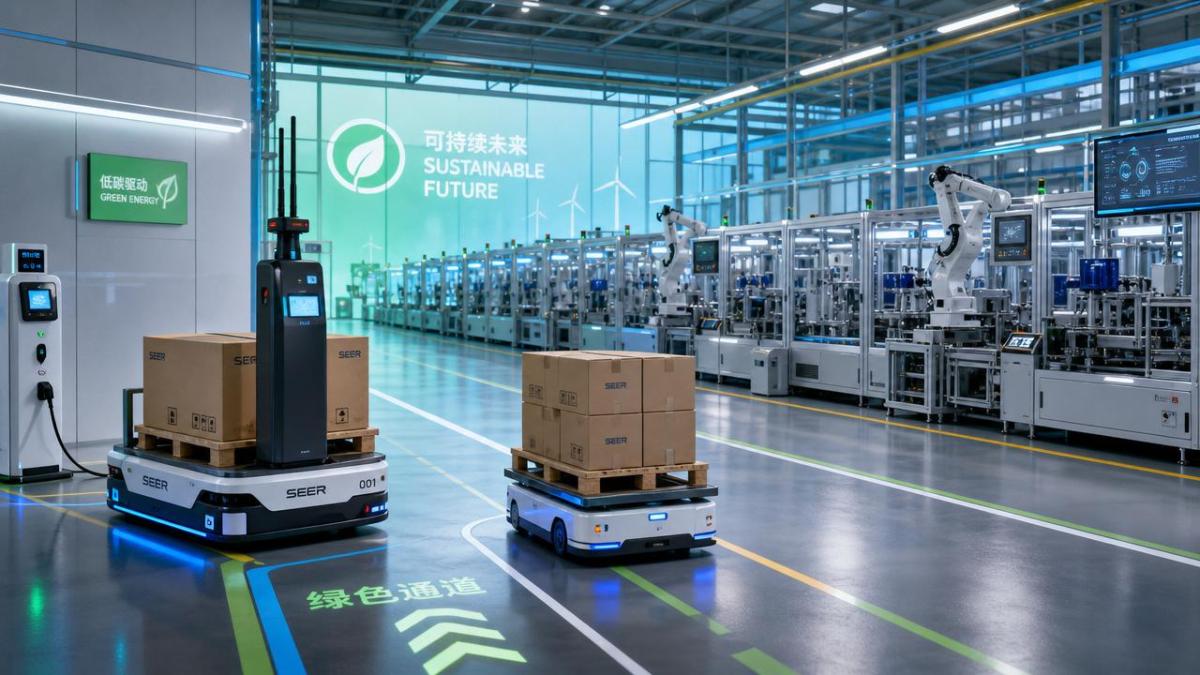
The strongest sustainability gains usually come from material-flow efficiency, not from the robot itself replacing a conventional vehicle one-for-one.
In many factories, emissions hide inside fragmented transport: forklifts waiting, operators searching, pallets staged twice, and urgent trips made without coordination.
AGVs and AMRs reduce this waste by standardizing routes, dispatching missions automatically, and aligning transport with real production demand.
When fewer movements are required to deliver the same output, energy consumption, congestion, equipment wear, and indirect labor waste all decline together.
This is why sustainable logistics should be evaluated as a system redesign, not a procurement exercise focused only on robot specifications.
The Business Case: Sustainability Must Pay Back Operationally
Enterprise leaders rarely approve automation because it sounds environmentally responsible; they approve it when sustainability improves resilience, predictability, and financial performance.
The measurable case usually begins with reduced forklift dependency, fewer manual handling incidents, and lower variability in internal logistics cycle times.
Electric AGVs and AMRs also support lower local emissions inside facilities, especially where diesel or LPG forklifts are still used.
Even when forklifts are already electric, automation can reduce energy per transported unit by cutting unnecessary travel and idle movement.
The payback improves further when robots operate across shifts, support lights-out processes, or stabilize material supply to high-value production lines.
Executives should therefore connect sustainability metrics with familiar business indicators: throughput, labor availability, downtime risk, safety, inventory turns, and energy intensity.
AGV or AMR: Which Platform Fits Sustainable Logistics Goals?
AGVs are well suited to predictable, high-volume transport routes, especially in structured environments where fixed paths and repeatability matter.
They can deliver strong sustainability benefits when replacing frequent forklift shuttle routes between receiving, storage, production, and finished goods areas.
AMRs provide greater flexibility, using onboard navigation to adapt to people, obstacles, route changes, and dynamic warehouse conditions.
They are valuable where SKU variety, layout changes, or mixed human-robot workflows make fixed automation less attractive.
From a sustainability perspective, the choice depends on flow stability, facility complexity, integration needs, and the expected life of the layout.
A poor fit can undermine both environmental and financial returns, because robots may travel inefficiently or require excessive operational workarounds.
The Emission Hotspots Decision-Makers Should Map First
Before selecting equipment, manufacturers should identify where logistics emissions and waste are actually generated inside the facility and across adjacent processes.
Common hotspots include repetitive forklift loops, long internal transfers, staging buffers, line-side replenishment, waste removal, and empty return trips.
Another frequent source is poor synchronization between warehouse systems, production schedules, and transport execution, creating avoidable waiting and rehandling.
Mapping these flows helps leaders distinguish high-impact automation opportunities from attractive but low-value pilot projects.
A practical assessment should include trip frequency, travel distance, payload utilization, waiting time, energy use, accident history, and production criticality.
The objective is to find movements where automation can reduce total activity, not merely perform the same inefficient activity automatically.
How Smart Routing and Dispatching Cut Waste
The most powerful emissions reduction often comes from software intelligence: mission dispatching, fleet coordination, charging logic, and traffic management.
A well-designed system assigns the nearest suitable robot, combines compatible tasks, and avoids sending vehicles across the facility unnecessarily.
It can also prioritize urgent line-side deliveries while delaying low-priority movements until they can be grouped efficiently.
This reduces empty mileage, battery cycling, congestion, and the number of vehicles required to meet service-level targets.
For decision-makers, this means fleet management capability should receive as much scrutiny as payload, speed, or navigation technology.
Integration with MES, ERP, WMS, PLCs, conveyors, doors, elevators, and safety systems determines whether routing intelligence becomes real operational value.
Energy Management: Beyond Replacing Fuel with Batteries
Electrification is important, but sustainable logistics requires managing when, where, and how energy is consumed across the automated fleet.
Opportunity charging can keep robots available while avoiding deep battery cycles that shorten battery life and increase replacement impact.
Charging schedules can also be aligned with shift patterns, renewable energy availability, or facility energy-demand management strategies.
Advanced systems monitor energy consumption per mission, route, payload, and operating zone, revealing inefficiencies that manual fleets rarely expose.
This data allows continuous improvement teams to redesign layouts, adjust inventory locations, or change replenishment policies based on evidence.
For sustainability reporting, energy transparency supports more credible internal carbon accounting and strengthens the business case for future automation phases.
Safety, Labor, and Sustainability Are Connected
Safety is often treated separately from sustainability, but in logistics operations the two are closely linked.
Forklift accidents can cause injuries, product loss, equipment damage, downtime, and emergency replenishment activity that increases waste.
AGVs and AMRs introduce controlled movement, defined interaction rules, speed management, sensors, and traceable incident data.
However, automation does not eliminate risk automatically; it changes the risk profile and requires disciplined traffic design.
Executives should ask whether pedestrian zones, crossings, loading points, and emergency procedures are redesigned around human-robot collaboration.
A safer and more predictable workplace improves retention, reduces disruption, and supports the broader social dimension of sustainable manufacturing.
What ROI Should Include in a Sustainable Logistics Project
A narrow ROI model can undervalue AGV and AMR projects by counting labor savings while ignoring measurable operational and sustainability benefits.
A stronger model includes energy use, equipment maintenance, accident reduction, product damage, downtime avoidance, space utilization, and inventory movement efficiency.
It should also account for scalability: whether the first deployment creates a reusable platform for additional lines, warehouses, or plants.
Decision-makers should compare total cost of ownership, including batteries, software licenses, integration, maintenance support, training, and future fleet expansion.
Carbon reduction should be translated into management-relevant indicators, such as emissions per unit produced or energy per pallet moved.
This prevents sustainability from becoming an isolated ESG claim and ties it directly to operational competitiveness.
Implementation Risks That Can Dilute Sustainability Gains
The main risk is automating a poor process without correcting layout, scheduling, or inventory policies that created waste originally.
Another risk is underestimating integration complexity, especially when legacy control systems, manual exceptions, or inconsistent master data remain unresolved.
Some projects also fail to define service-level expectations clearly, causing either overinvestment in fleet size or unacceptable delivery delays.
Facility readiness matters: floor quality, Wi-Fi coverage, charging locations, docking accuracy, and safe interaction zones all influence performance.
Change management is equally important, because supervisors and operators must trust the system and understand how to manage exceptions.
To protect sustainability outcomes, pilot metrics should measure flow improvement, not only robot uptime or successful navigation.
When AGV and AMR Deployment Makes the Most Sense
Mobile automation is most compelling in facilities with repetitive material movement, labor constraints, safety concerns, and measurable internal transport waste.
It is especially relevant for automotive, electronics, pharmaceuticals, food and beverage, e-commerce, consumer goods, and high-mix manufacturing environments.
Plants with multiple shifts, long walking distances, frequent replenishment tasks, or strict traceability requirements often see stronger returns.
Facilities planning expansion or modernization can integrate AGV and AMR requirements early, avoiding expensive retrofits later.
Conversely, very low-volume operations, unstable processes, or poorly defined logistics responsibilities may need process improvement before automation investment.
The best candidates are operations where automation supports both near-term efficiency and a longer roadmap toward intelligent factory execution.
Key Questions Executives Should Ask Vendors and Integrators
Decision-makers should ask vendors how their systems reduce total vehicle miles, empty trips, waiting time, and energy per completed mission.
They should request evidence from comparable facilities, including before-and-after logistics metrics rather than only marketing claims about automation capability.
Integration questions are essential: how the fleet manager communicates with MES, WMS, ERP, PLCs, conveyors, and facility infrastructure.
Executives should also examine cybersecurity, data ownership, maintenance response, spare parts availability, software upgrade policies, and international compliance standards.
For global manufacturers, standardization across plants can be as important as local performance in a single facility.
A vendor should demonstrate not only robotics competence, but also understanding of industrial workflows, safety engineering, and sustainability measurement.
Building a Roadmap from Pilot to Enterprise Value
A successful sustainable logistics program usually starts with one high-value flow, then expands through standard interfaces and repeatable deployment methods.
The pilot should prove operational stability, safety acceptance, integration reliability, and measurable reductions in distance, waiting, or manual handling.
Once validated, the organization can expand to adjacent flows, additional shifts, more payload types, and multi-zone fleet coordination.
Leadership should define governance early, including ownership between operations, engineering, IT, EHS, procurement, and continuous improvement teams.
This prevents the project from becoming a disconnected automation island and helps embed sustainability into daily performance management.
The long-term goal is a logistics network that senses demand, allocates resources intelligently, and improves through operational data.
Conclusion: Sustainable Logistics Is a Measurable Automation Strategy
AGVs and AMRs cut emissions most effectively when they reduce unnecessary movement, improve routing, stabilize material flow, and expose energy data.
For enterprise decision-makers, the value is not simply replacing forklifts with robots; it is redesigning logistics around measurable efficiency.
The strongest projects connect sustainability with productivity, safety, resilience, and total cost of ownership from the beginning.
Organizations should start with emission hotspots, validate results through operational metrics, and scale only where automation improves the system.
When deployed with disciplined engineering and clear business objectives, mobile automation becomes a practical foundation for sustainable logistics.