
Search News
Industry Portal
Popular Tags
Why low maintenance matters when choosing an agv supplier
Author
Cobots
Time
May 28, 2026
Pageviews
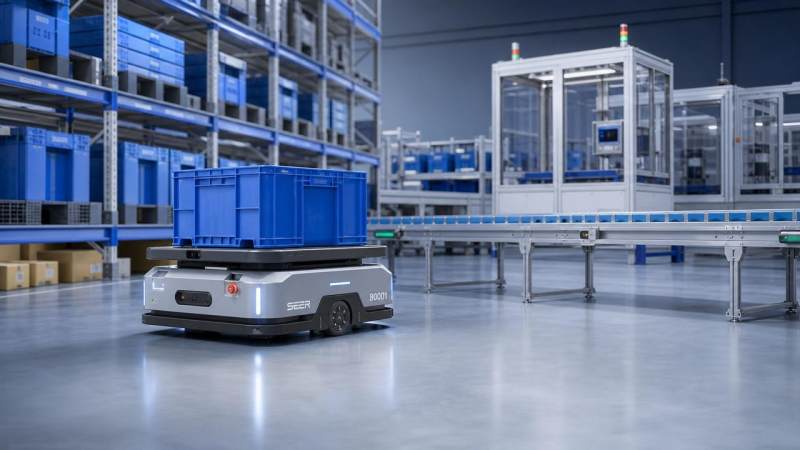
When selecting an AGV partner, long-term reliability matters more than the initial price. Choosing an agv supplier wholesale with low maintenance helps reduce downtime, control service costs, and protect automation ROI across diverse industrial settings.
In modern factories, warehouses, and mixed production environments, maintenance burden affects every performance indicator. It shapes uptime, spare parts planning, software stability, safety compliance, and the speed of future expansion.
For smart manufacturing programs, low-maintenance AGVs are not just a convenience. They are a strategic risk-control asset that supports continuous operations and more predictable lifecycle management.
Why low maintenance matters in high-variation automation scenarios
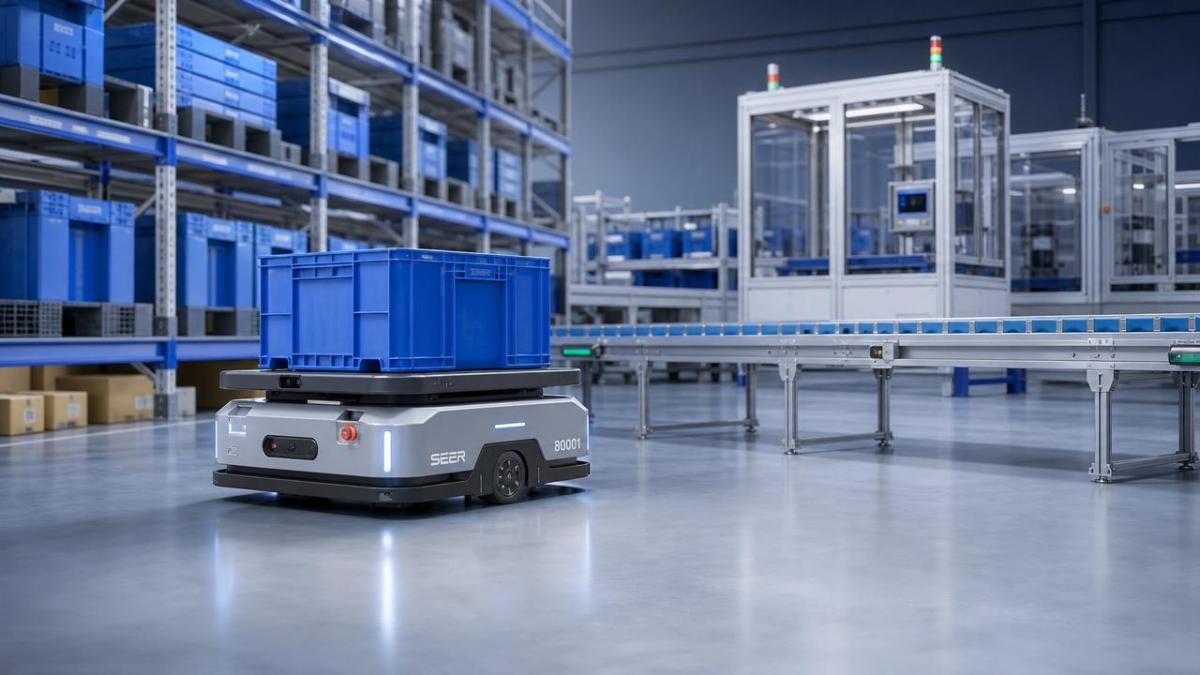
Not every facility uses AGVs in the same way. Some sites need nonstop material transport. Others need flexible routing between production cells, buffer zones, and shipping lanes.
In each case, the real question is not only payload or speed. It is how often the system needs manual intervention, component replacement, recalibration, or software troubleshooting.
An agv supplier wholesale with low maintenance usually delivers stronger value in environments with labor constraints, multi-shift operation, and strict delivery schedules.
Low maintenance also improves technology confidence. When fewer breakdowns occur, teams can focus on throughput optimization instead of emergency repair coordination.
Scenario one: continuous intralogistics lines need stable daily uptime
Large warehouses and distribution hubs depend on smooth pallet flow, route consistency, and battery reliability. In these settings, maintenance frequency directly impacts order fulfillment performance.
If wheels wear too fast, sensors need frequent cleaning, or navigation drifts under heavy traffic, the total cost rises quickly. Initial savings disappear through service interruptions and operator workarounds.
What to verify in this scenario
- Battery cycle life and charging strategy
- Wheel, brake, and drive module replacement intervals
- Traffic control software stability under peak loads
- Remote diagnostics and fault response time
For this application, an agv supplier wholesale with low maintenance should provide documented wear data, predictable service intervals, and clear spare parts availability.
Scenario two: mixed production lines need flexible AGVs with minimal service disruption
Factories with mixed-model production often face changing routes, shifting material priorities, and frequent line balancing. AGVs must adapt without creating new maintenance complexity.
In these environments, low maintenance means more than durable hardware. It also means software updates, fleet integration, and sensor calibration should remain simple and reliable.
Core judgment points for flexible manufacturing
Look at modular design first. A modular AGV simplifies replacement of motors, controllers, and navigation components without taking the full system offline for long periods.
Then review software architecture. A reliable agv supplier wholesale with low maintenance should support controlled updates, secure interfaces, and reduced commissioning effort during line changes.
Scenario three: regulated or precision environments require maintenance predictability
Electronics, pharmaceutical, and high-precision assembly facilities often demand tighter cleanliness, traceability, and repeatability. Here, maintenance quality matters as much as maintenance frequency.
Unexpected repairs can trigger contamination concerns, validation delays, or process interruptions. Therefore, maintenance procedures must be standardized, documented, and easy to audit.
What low maintenance means in precision settings
- Sealed or protected components for dust-sensitive areas
- Stable navigation without frequent recalibration
- Digital maintenance logs for compliance review
- Standardized replacement procedures across fleets
An agv supplier wholesale with low maintenance should align with broader automation standards, system validation needs, and long-term service traceability expectations.
How scenario differences change AGV maintenance priorities
The same AGV specification can perform very differently across applications. Maintenance planning should match the operational context, not just the catalog description.
This is why selecting an agv supplier wholesale with low maintenance requires scenario-based evaluation. The best choice is the one that reduces service friction within the real operating model.
Practical criteria for choosing the right low-maintenance AGV partner
A strong evaluation process should combine mechanical durability, control architecture, and support capability. Maintenance performance depends on all three, not on hardware alone.
- Request lifecycle data, not only brochure specifications.
- Compare preventive maintenance intervals by component type.
- Check whether software faults can be diagnosed remotely.
- Confirm spare parts stocking plans and lead times.
- Review integration compatibility with PLC, MES, and fleet systems.
- Ask for references from similar duty cycles and site conditions.
An agv supplier wholesale with low maintenance should also show engineering transparency. That includes fault history categories, update procedures, and realistic uptime assumptions.
Common mistakes when judging AGV maintenance requirements
One common mistake is focusing only on purchase price. A lower-cost AGV may require more service visits, more consumables, and more unplanned downtime over its working life.
Another mistake is ignoring site conditions. Floor quality, traffic density, temperature variation, and software complexity all influence maintenance demand.
A third mistake is evaluating the vehicle without the support model. Even a well-designed system can become high-maintenance if spare parts, firmware control, or troubleshooting response are weak.
That is why an agv supplier wholesale with low maintenance must be assessed as a full lifecycle partner, not only as a hardware vendor.
How low-maintenance AGV selection supports broader smart factory goals
Low-maintenance AGVs contribute to more than transport efficiency. They support stable data flow, cleaner scheduling logic, and better interoperability across robotics, controls, and industrial software layers.
For organizations advancing Industry 4.0 initiatives, maintenance predictability strengthens digital planning. It improves asset utilization models and reduces uncertainty in automation scaling.
This aligns with the broader engineering focus of G-IFA, where verifiable performance, standards awareness, and cross-system reliability determine whether automation investments truly deliver value.
Next-step actions before choosing an AGV supplier
Start with a simple site maintenance map. List duty cycle, route complexity, floor condition, battery strategy, integration depth, and allowed downtime windows.
Then compare each candidate against those real conditions. Ask for maintenance schedules, service escalation paths, remote support functions, and documented performance in comparable applications.
If long-term resilience is the goal, prioritize an agv supplier wholesale with low maintenance that can prove durable engineering, software stability, and lifecycle support consistency.
The right decision reduces operational risk from day one and creates a stronger foundation for scalable, intelligent, and efficient automation.
Recommended News
- 2026/10/24Car Spare Parts: How to Check Fitment and Avoid Ordering the Wrong PartOrder car spare parts with confidence. Learn how to verify VINs, OEM numbers, and fitment details to avoid costly mistakes and choose the right replacement first time.
- 2026/10/23How Do You Select a Motion Control System for Synchronized Axes?How do I select a motion control system for synchronized axes? Discover key timing, feedback, and performance checks to choose confidently and reduce costly integration risks.
- 2026/10/23Integrating End-of-Line Sortation with Packing Stations and Conveyor ControlsOptimize end of line sortation with coordinated packing stations and conveyor controls. Learn how to prevent bottlenecks, improve routing accuracy, and handle exceptions reliably.