
Search News
Industry Portal
Popular Tags
Automation engineering sourcing mistakes
Author
Dr. Victor Gear
Time
Apr 17, 2026
Pageviews

Choosing the wrong partner in automation engineering sourcing can lead to costly delays, integration failures, and poor long-term ROI. From selecting a motion control supplier and control systems OEM to evaluating MES software sourcing, ERP systems supplier options, hydraulic systems custom solutions, and robotic arms bulk order needs, buyers face complex decisions. This guide helps information researchers identify the most common sourcing mistakes and make smarter choices across the industrial automation B2B platform landscape.
Why automation engineering sourcing goes wrong so early
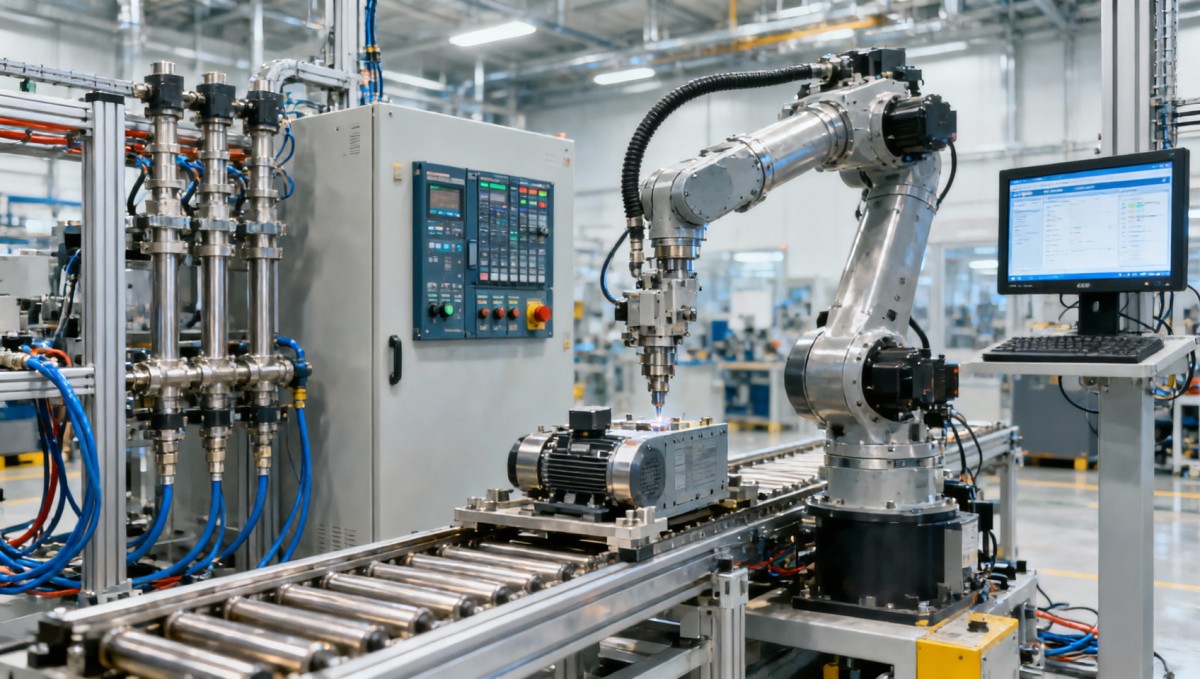
Many sourcing failures begin before a supplier shortlist is even created. Information researchers often compare catalogs, prices, and lead times first, but industrial automation projects depend on system compatibility, control architecture, and lifecycle support. In practical terms, a servo motor, PLC platform, pneumatic assembly, and MES layer must work as one engineering stack, not as isolated purchases.
A common mistake is to treat automation engineering sourcing like standard industrial procurement. Commodity logic works for simple spare parts, but not for multi-layer production systems. A robotic cell or control retrofit usually involves 3 to 5 decision layers: mechanical fit, electrical integration, software communication, compliance review, and after-sales service. Missing even one layer can trigger redesign work in 2–6 weeks.
Another early issue is fragmented information. One supplier may present motor torque data, another may focus on communication protocols, while software vendors emphasize dashboards rather than integration depth. G-IFA helps reduce this mismatch by benchmarking across five key pillars: Industrial Robotics & Cobots, PLC & Control Systems, Motion Control & Transmission, Industrial IoT & Software, and Pneumatic & Hydraulic Systems.
For researchers, the real task is not finding the largest number of vendors. It is filtering risk before formal RFQ. That means checking whether a candidate can support required standards such as ISO, IEC, and CE-related expectations, whether common fieldbus protocols are supported, and whether delivery promises match typical manufacturing timelines such as 4–8 weeks for standard assemblies or longer for customized systems.
The first four sourcing errors to watch
- Comparing quoted price without comparing scope, including software licenses, commissioning hours, spare parts, and training.
- Accepting performance claims without checking operating conditions such as payload range, duty cycle, temperature window, and communication compatibility.
- Shortlisting vendors by brand familiarity alone, while ignoring regional service coverage and response time for breakdown support.
- Separating hardware sourcing from software sourcing, even when both must be validated together for line-level reliability.
Which sourcing mistakes create the highest downstream risk?
Not all automation engineering sourcing mistakes have the same impact. Some cause modest budget leakage, while others compromise commissioning, safety, or OEE targets. The highest-risk mistakes usually appear in projects involving robotic arms bulk order planning, control systems OEM selection, MES software sourcing, or hydraulic systems custom solutions where multiple subsystems must be synchronized during installation and startup.
One high-cost error is choosing a supplier that can deliver equipment but not engineering documentation. In automation projects, missing I/O lists, wiring diagrams, PLC tag mapping, software backup procedures, and maintenance instructions can delay FAT or SAT by 7–15 days. If the site team must reverse-engineer the package, cost rises long after the purchase order is closed.
Another major mistake is overlooking protocol and data interoperability. A motion control supplier may support the required speed and torque, yet fail on integration if the line standard is EtherCAT, PROFINET, Modbus TCP, or another architecture. The same issue affects MES and ERP systems supplier evaluation, where dashboards look attractive but the real question is whether data exchange, traceability, and event handling fit existing workflows.
Researchers should also be careful with “custom” promises. Custom engineering is valuable, but unclear customization can create unbounded lead times, scope drift, and maintenance complexity. In many factories, the practical target is controlled customization: standard core modules plus 10%–30% project-specific adaptation rather than a fully unique platform.
High-risk mistakes ranked by operational impact
The table below helps information researchers prioritize which mistakes deserve the most scrutiny during automation engineering sourcing. It focuses on impact, typical symptoms, and what to verify before supplier engagement moves forward.
The pattern is clear: the most damaging sourcing mistakes are rarely visible in a simple quotation comparison. They appear when engineering depth, interface readiness, and post-installation support are missing. This is why benchmarking repositories like G-IFA matter for early-stage filtering: they help researchers compare suppliers on technical evidence, not presentation quality alone.
A practical rule for early screening
If a supplier cannot answer 5 basic questions within the first review cycle, risk is already visible. Those questions are: Which standards apply? Which protocols are native? What is the standard lead time? What documents are included? What support is available during startup? Researchers can use this as a fast qualification gate before moving to deeper sourcing analysis.
How to evaluate suppliers across robotics, PLC, MES, and fluid power
Automation engineering sourcing becomes more reliable when the evaluation model is adapted to the subsystem. A robotic arm supplier should not be judged by the same criteria as an MES vendor or a hydraulic systems custom solutions provider. The decision framework must still be unified, but the weighting of performance, compliance, software openness, and service capability should change by category.
For industrial robotics and cobots, key checks usually include payload range, reach envelope, repeatability, safety mode options, integration package, and spare parts availability. For PLC and control systems OEM candidates, researchers should focus on CPU scalability, I/O architecture, supported programming environments, cybersecurity practices, and local engineering support. In many factories, the wrong PLC choice remains in place for 7–10 years, so platform lock-in matters.
For motion control and transmission, torque curve data, encoder compatibility, thermal behavior, and communication latency are often more important than headline power figures alone. For Industrial IoT, MES, and ERP systems supplier analysis, the questions shift toward data model quality, API or connector options, traceability functions, user roles, and deployment approach. A strong interface design can save months of rework later.
Pneumatic and hydraulic sourcing requires another lens. Pressure range, contamination control, seal selection, duty cycle, fluid compatibility, and maintenance interval all influence total lifecycle cost. Custom hydraulic systems can solve complex applications, but they also require stronger engineering review on schematics, safety interlocks, and serviceability.
Subsystem-specific sourcing checks
The following matrix supports supplier comparison across different automation categories. It is especially useful for information researchers collecting longlist data before technical teams perform final validation.
This matrix shows why a generic supplier scorecard often fails. A well-built sourcing model uses 3 common layers for every category: technical fit, implementation risk, and lifecycle support. Then it adds category-specific checks. G-IFA’s cross-sector benchmark approach is useful here because researchers can compare unlike systems within one structured decision process.
A five-point validation checklist before RFQ
- Confirm the operating envelope, such as payload, cycle time, pressure range, or data throughput needed under real production conditions.
- Map all interfaces: mechanical, electrical, protocol, software, and documentation handover.
- Check lifecycle assumptions, including spare parts horizon, update policy, and local support response within 24–72 hours if required.
- Review compliance relevance, including applicable ISO, IEC, CE, and plant-specific documentation expectations.
- Separate standard configuration from custom engineering so price, lead time, and warranty remain transparent.
What should information researchers verify before talking to sales?
Early contact with suppliers is useful, but unstructured conversations can create confusion fast. Before requesting proposals, information researchers should prepare a minimum data pack. This usually includes application type, current line architecture, preferred PLC family if known, target production rate, environmental conditions, compliance requirements, and project timing. Even a basic 1–2 page sourcing brief improves quote quality.
The next step is to define what counts as comparable. A robotic arms bulk order request should separate robot body pricing from controller, teach pendant, safety package, cables, software options, gripper, and integration services. An MES software sourcing review should separate licensing model, connector scope, deployment effort, user count assumptions, and post-go-live support. Without this, quotations look comparable but are not.
Researchers should also estimate schedule sensitivity. Some projects can absorb a 2-week delay, while others are tied to shutdown windows or launch deadlines. That changes sourcing priorities. For urgent retrofits, a proven standard package with shorter lead time may outperform a better-looking custom option that takes 8–12 weeks and adds commissioning risk.
Documentation should be treated as a sourcing deliverable, not an afterthought. Ask whether the quote includes electrical drawings, CAD files if needed, PLC comments, alarm lists, spare parts list, and maintenance guidance. In industrial automation, documentation quality directly affects uptime, training speed, and troubleshooting efficiency after handover.
Pre-supplier contact checklist
- Define 3 core objectives: performance target, integration requirement, and acceptable project timeline.
- List 5 key constraints such as budget range, plant standard, available space, utility conditions, and compliance needs.
- Decide which deliverables are mandatory at quote stage and which can wait until design freeze.
- Prepare a shortlist logic that scores suppliers on evidence, not on brochure completeness.
Why this matters in a B2B platform environment
Industrial automation B2B platforms can speed up discovery, but they can also flatten critical engineering differences. Two vendors may appear equivalent online while offering very different scope depth, documentation quality, and long-term service capability. G-IFA adds value by acting as a technical filter, helping researchers interpret supplier information in a way that aligns with real factory deployment needs rather than platform listing language.
Standards, compliance, and lifecycle cost: the details buyers often miss
Compliance is often treated as a final approval topic, but it should be part of automation engineering sourcing from the beginning. If a supplier cannot explain applicable standards, documentation expectations, or regional conformity considerations, the risk is not only regulatory. It also affects installation acceptance, safety review, and customer handover quality. In cross-border sourcing, this becomes even more important.
Researchers should distinguish between product conformity language and project compliance readiness. A component may align with common international expectations, yet the full system still requires application-specific safety design, documentation, and integration validation. This matters in robotics cells, control panels, and fluid power assemblies where the system context determines much of the final compliance workload.
Lifecycle cost is another blind spot. The initial quote may look attractive, but a low-cost source can become expensive if spare parts are slow, software support is limited, or maintenance intervals are short. In practical sourcing analysis, total ownership should be reviewed across at least 4 cost buckets: procurement, integration, operation, and service. This is especially relevant for servo systems, PLC platforms, and MES subscriptions.
For example, a standard motion package with slightly higher upfront price may reduce engineering hours, simplify commissioning, and keep spare parts common across multiple lines. Over a 3–5 year period, that can outweigh an initial discount. Information researchers do not need to calculate a perfect TCO model, but they should flag cost drivers early enough for technical and procurement teams to review together.
Common compliance and lifecycle checks
- Ask whether documentation supports installation, commissioning, maintenance, and traceability requirements across the expected project region.
- Check if replacement parts, firmware support, and service resources are likely to remain available over a typical 5–10 year equipment lifecycle.
- Review whether custom modifications affect warranty clarity, spare part standardization, or validation burden at site level.
Where G-IFA fits into this review
G-IFA supports de-risked sourcing by organizing benchmark intelligence around internationally relevant engineering criteria rather than only commercial promotion. For researchers comparing robotics, PLC, MES, motion, and hydraulic options, this creates a more consistent basis for judging compliance readiness, integration effort, and lifecycle implications before they move to final vendor engagement.
FAQ: practical answers for automation engineering sourcing research
The questions below reflect common search intent from information researchers evaluating automation engineering sourcing, industrial automation B2B platforms, and supplier comparison workflows. Each answer focuses on practical judgment rather than generic procurement advice.
How do I compare automation suppliers when specifications look similar?
Start with three layers: technical fit, integration fit, and lifecycle support. If two servo systems show similar power ratings, compare protocol support, commissioning tools, documentation, thermal margins, and spare part lead times. If two MES vendors show similar dashboards, compare API depth, traceability logic, deployment effort, and user-role control. Similar brochures often hide very different project burdens.
What is a realistic lead time assumption in automation engineering sourcing?
There is no single number, but researchers can work with common ranges. Standard industrial components may ship in days or a few weeks, while engineered assemblies often require 4–8 weeks. More customized systems, software integrations, or multi-supplier packages can extend to 8–12 weeks or more depending on design freeze, testing scope, and documentation depth. Always ask what portion of the timeline is manufacturing, software work, and validation.
What are the most overlooked documents during supplier evaluation?
The most overlooked items are often I/O lists, alarm lists, software backup rules, spare parts lists, revision history, and maintenance instructions. For custom hydraulic or control packages, schematic clarity is especially important. For MES and ERP systems supplier reviews, interface specifications and data mapping assumptions are frequently under-reviewed. Missing documents create major delays later even when hardware arrives on time.
When should I prefer a standard solution over a custom one?
Choose standard solutions when the process requirement is common, timeline pressure is high, or maintenance simplicity matters more than perfect fit. Choose controlled customization when the standard platform covers about 70%–90% of the need and only specific adaptation is required. Be cautious when a supplier proposes deep customization without a clear base platform, revision process, and service plan.
Why choose G-IFA for smarter sourcing research
If your team is evaluating automation engineering sourcing options across robotics, PLC and control systems, motion control, MES or ERP software, and pneumatic or hydraulic solutions, the real challenge is not access to vendor names. It is separating usable engineering intelligence from incomplete commercial information. G-IFA is built to support that exact decision stage.
Our value is practical and specific. We help information researchers and industrial decision makers compare technologies against cross-sector benchmarks, review compatibility with common international standards, and identify likely sourcing risks before RFQ, pilot purchase, or full-scale procurement. This reduces wasted time for production directors, system integrators, and automation engineers who need sharper early-stage filtering.
You can consult G-IFA for parameter confirmation, product selection logic, expected delivery cycle ranges, custom solution boundaries, software and hardware integration concerns, certification-related questions, sample or pilot evaluation planning, and quotation comparison structure. These are the issues that most often determine whether an automation sourcing project moves efficiently or becomes expensive later.
If you are currently comparing a motion control supplier, control systems OEM, MES software sourcing route, ERP systems supplier shortlist, hydraulic systems custom solutions provider, or robotic arms bulk order plan, use G-IFA as your technical filter first. Better sourcing starts with better questions, better comparison criteria, and clearer evidence before commitment.
- industrial robotics
- motion control
- industrial IoT
- MES software
- ERP systems
- hydraulic systems
- control systems
- industrial automation
- automation engineering
- robotic arms
- ERP systems supplier
- motion control supplier
- robotic arms bulk order
- automation engineering sourcing
- industrial automation B2B platform
- control systems OEM
- hydraulic systems custom
- MES software sourcing
Recommended News
- 2026/10/24Car Spare Parts: How to Check Fitment and Avoid Ordering the Wrong PartOrder car spare parts with confidence. Learn how to verify VINs, OEM numbers, and fitment details to avoid costly mistakes and choose the right replacement first time.
- 2026/10/23How Do You Select a Motion Control System for Synchronized Axes?How do I select a motion control system for synchronized axes? Discover key timing, feedback, and performance checks to choose confidently and reduce costly integration risks.
- 2026/10/23Integrating End-of-Line Sortation with Packing Stations and Conveyor ControlsOptimize end of line sortation with coordinated packing stations and conveyor controls. Learn how to prevent bottlenecks, improve routing accuracy, and handle exceptions reliably.