
Search News
Industry Portal
Popular Tags
When Industrial Equipment Downtime Starts Pointing to Design Issues
Author
Dr. Victor Gear
Time
Apr 17, 2026
Pageviews
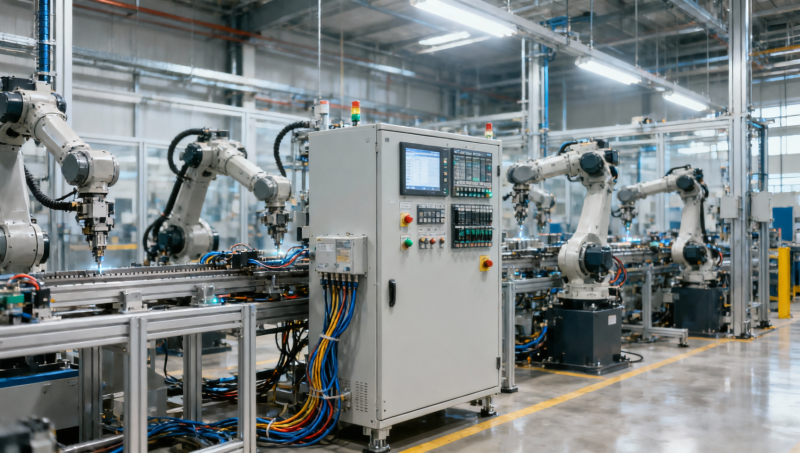
When recurring industrial equipment downtime starts to feel “normal,” the problem is often no longer routine maintenance. In many factories, repeated stoppages, unstable robotic arms performance, control faults, overheating drives, or frequent component replacement are early signs of design issues in industrial machinery, automation components, or the overall industrial control architecture. For information researchers and frontline operators, the key question is not just how to restart production faster, but how to tell whether downtime is pointing to a deeper weakness in factory integration, production automation, or intelligent manufacturing design.
The short answer is this: if failures repeat in similar conditions, appear across linked subsystems, or persist despite maintenance, the design itself deserves investigation. That may include undersized motors, poor control logic, improper environmental protection, communication bottlenecks, bad cable routing, weak pneumatic sizing, or mismatches between software behavior and mechanical load. Understanding these patterns early helps teams reduce hidden costs, improve manufacturing systems reliability, and make better automation solutions decisions before downtime becomes a structural loss.
When does downtime stop being a maintenance problem and start looking like a design problem?
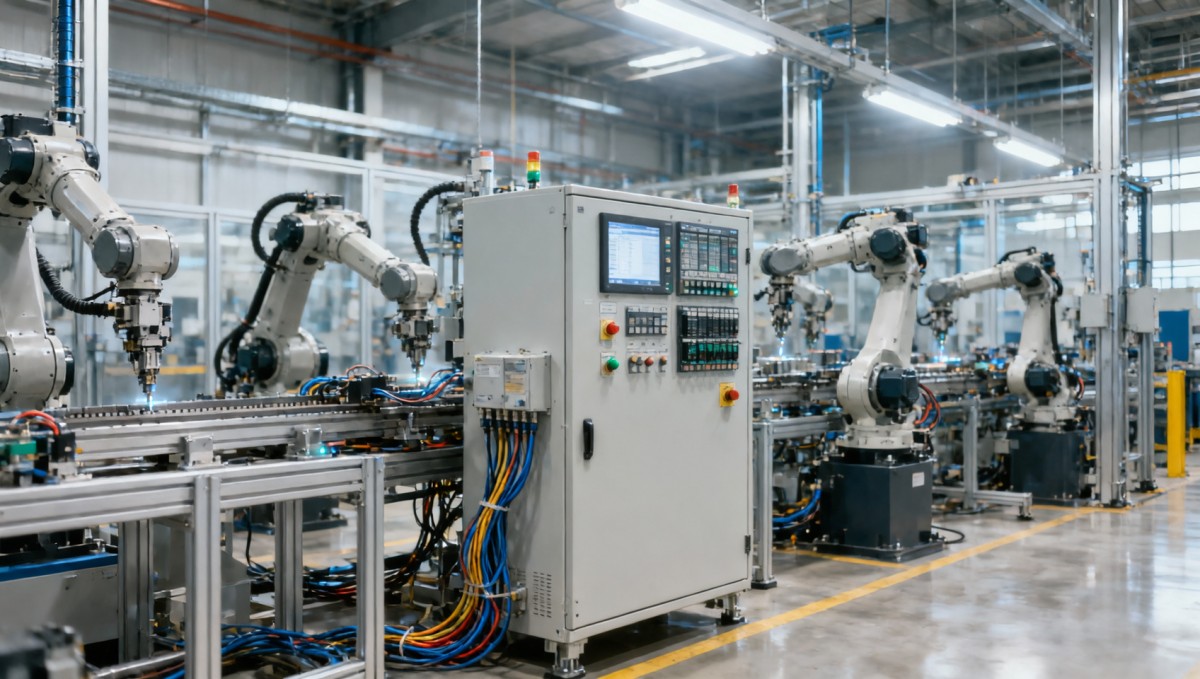
Operators and plant teams usually first treat downtime as a maintenance issue: replace the worn part, reset the PLC, adjust the sensor, lubricate the actuator, and restart the line. That is appropriate for isolated failures. But when the same type of disruption keeps returning, especially under predictable production conditions, the pattern often suggests a design-level cause rather than a simple service issue.
Common signals include:
- Repeated failure of the same component even after replacement with correct parts
- Downtime triggered by peak load, speed changes, or product variation
- Frequent alarms across multiple devices rather than one isolated machine element
- Control instability such as hunting, oscillation, delayed response, or unplanned stops
- Chronic overheating in drives, motors, cabinets, hydraulic units, or compressors
- Intermittent communication loss between PLCs, HMIs, robots, or MES-connected systems
- Downtime that increases after throughput expansion or recipe complexity increases
If maintenance actions temporarily solve the issue but the same symptoms return, the root cause may lie in equipment sizing, system integration, environmental assumptions, or flawed automation logic. In smart manufacturing environments, this matters even more because one bad design choice can propagate across connected assets and software layers.
What design flaws most often hide behind recurring industrial equipment downtime?
Not all design issues are dramatic engineering mistakes. Many come from small mismatches between expected operating conditions and real production behavior. These are some of the most common causes.
1. Incorrect component sizing
Servo motors, reducers, pneumatic cylinders, pumps, valves, power supplies, and cable systems may all work “on paper” but fail under real cycle time, torque, pressure, temperature, or duty-cycle demands. An undersized drive or actuator may survive testing yet create repeated stoppages in full production.
2. Poor system integration between mechanical, electrical, and software layers
Industrial downtime often reflects interface problems rather than isolated part defects. A robotic arm may be mechanically capable, but if motion profiles, gripper timing, sensor feedback, and PLC logic are poorly coordinated, the full cell becomes unreliable. In production automation, integration quality often matters as much as individual hardware quality.
3. Weak industrial control architecture
PLC scan times, network latency, signal prioritization, safety interlocks, and alarm logic can all contribute to downtime. Overloaded control systems may produce delayed actions, nuisance trips, or unstable line behavior. In highly automated manufacturing systems, the controls design must match process complexity, not just basic machine operation.
4. Environmental design mismatch
Dust, heat, vibration, humidity, oil mist, and voltage fluctuation can shorten component life and trigger random faults. If enclosure ratings, cooling methods, cable protection, or component placement do not match the real factory environment, downtime becomes a recurring symptom of design assumptions that were too optimistic.
5. Inadequate maintainability and service access
Even a technically functional machine can suffer excessive downtime if it is difficult to inspect, clean, adjust, or replace parts. Poor access design increases mean time to repair and can also encourage operator workarounds that create further reliability problems.
How can operators and evaluators tell whether the issue is isolated failure or a structural reliability problem?
For target readers such as information researchers and equipment users, the goal is not to perform a full engineering redesign alone. The goal is to recognize patterns that justify deeper technical review. A few practical questions help make that distinction.
- Does the downtime happen under the same production conditions?
If stoppages occur during high-speed runs, product changeovers, or heavier loads, the issue may be linked to design limits. - Has the part already been replaced more than once?
If yes, the failed component may be the victim, not the cause. - Do faults spread across upstream and downstream systems?
If one stop causes robot, conveyor, sensor, and HMI faults together, the architecture or logic may be too fragile. - Did the problem appear after line modification or throughput increase?
This often reveals low design margin in the original automation solution. - Are technicians relying on temporary parameter changes or repeated resets?
Frequent workaround behavior is a strong indicator that the original design is not robust enough.
A useful rule is this: if the root cause keeps moving but the downtime pattern stays the same, the system design deserves scrutiny. Many factories spend months replacing sensors, drives, or valves when the real issue is architecture, sequencing logic, or load mismatch.
Which downtime patterns are especially important in smart manufacturing and factory integration projects?
In intelligent manufacturing, downtime signals are more informative because modern lines are tightly connected. A recurring stop may point to a design gap in one of several areas covered by advanced factory integration.
Industrial Robotics & Cobots
Repeated collision recovery, servo overload, poor repeatability, or unstable end-effector timing can indicate payload miscalculation, weak fixture design, path planning problems, or integration flaws between robot controller and peripheral equipment.
PLC & Control Systems
Nuisance alarms, inconsistent sequence behavior, safety trips, and communication delays often suggest weak control logic structure, overloaded networks, poor I/O mapping, or insufficient fault handling strategy.
Motion Control & Transmission
Frequent coupling wear, backlash-related positioning faults, motor overheating, or vibration-related shutdowns may reveal poor transmission design, bad inertia matching, or unsuitable acceleration profiles.
Industrial IoT & Software (MES/ERP)
If downtime appears around recipe download, production synchronization, data handshakes, or traceability transactions, the issue may not be machine hardware alone. It may involve software timing, data integrity, interface buffering, or weak exception handling between systems.
Pneumatic & Hydraulic Systems
Slow actuation, pressure instability, seal failure, or temperature-related fluid behavior can indicate that the fluid power design is unsuitable for cycle demand, contamination risk, or environmental conditions.
For teams evaluating manufacturing systems, these patterns are valuable because they show where a reliability problem is likely systemic rather than random.
What should teams review before blaming operators or increasing maintenance frequency?
One of the most costly mistakes in industrial environments is assuming downtime results mainly from operator error or insufficient maintenance discipline. Those factors do matter, but they should be tested against design evidence. Before increasing PM frequency or retraining staff again, teams should review the following:
- Actual vs. designed operating load
Compare real throughput, cycle time, product weight, ambient temperature, and shift pattern against original design assumptions. - Failure history by location and condition
Look for clusters by station, time window, product SKU, or speed range. - Alarm and event sequence data
The first event is often more important than the final shutdown alarm. - Change log after commissioning
Parameter edits, software patches, mechanical modifications, and temporary bypasses can expose deeper design instability. - Mean time between failure and mean time to repair
A low MTBF may suggest weak design robustness; a high MTTR may indicate poor serviceability design. - Compliance and engineering benchmark alignment
Review whether the equipment and automation components are actually suited to relevant ISO, IEC, and CE expectations, not just nominally compliant.
This type of review helps teams avoid treating symptoms only. It also supports more informed decisions when comparing industrial machinery vendors, automation hardware, or line redesign proposals.
How do design-related downtime issues affect long-term automation investment decisions?
For both researchers and operators, downtime is not just an operational inconvenience. It is a decision signal. Frequent stoppages can change the total value of an automation solution in several ways:
- Higher lifecycle cost through spare parts, labor, lost output, and quality loss
- Lower confidence in scaling when a line cannot handle higher throughput or process variation
- Reduced return on automation investment because nominal productivity is never reached in practice
- Increased integration risk when new equipment is added to an already fragile architecture
- Operator dependency when only experienced staff can keep the line stable through manual intervention
This is why benchmark-driven evaluation matters. A factory may buy high-spec components, but if the interaction between mechanics, controls, software, and fluid power is poorly engineered, reliability remains weak. The best automation decisions are based not only on rated performance, but also on design margin, fault tolerance, maintainability, and standards-based engineering integrity.
What is the most practical next step when downtime starts suggesting a design issue?
If the evidence points beyond maintenance, the next step is not necessarily a full replacement project. Often, the best approach is a structured design review focused on the failure pattern. That review should include operations, maintenance, controls, and integration perspectives.
Priority actions usually include:
- Map recurring downtime by machine state, product type, and environmental condition
- Trace alarm chronology to identify the initiating event
- Verify component sizing against actual duty cycle and load
- Review PLC logic, network traffic, and interlock architecture
- Inspect thermal management, cabinet layout, cable routing, and contamination exposure
- Check whether current robotic arms, drives, valves, and software settings match real production demands
- Assess whether the line design allows practical maintenance and safe intervention
For organizations involved in factory integration and intelligent manufacturing, this process reduces the risk of repeating the same design weakness in future lines or upgrades.
Recurring industrial equipment downtime is often one of the earliest and clearest signals that a system was not designed with enough margin, coordination, or real-world operating fit. When failures repeat despite maintenance, the focus should shift from isolated parts to the broader design of industrial machinery, automation components, and industrial control architecture. For readers evaluating production automation or using equipment daily, the most useful mindset is simple: do not ask only what failed—ask why the system keeps creating the same failure conditions.
That shift in thinking leads to better troubleshooting, better vendor evaluation, and better long-term automation solutions. In modern manufacturing systems, reliability is rarely the result of one good component alone. It comes from sound engineering decisions across the entire system.
- industrial robotics
- motion control
- servo motors
- industrial IoT
- hydraulic systems
- automation hardware
- control systems
- smart manufacturing
- robotic arms
- production automation
- industrial control
- automation solutions
- manufacturing systems
- industrial machinery
- automation components
- factory integration
- industrial equipment
- system integration
Recommended News
- 2026/10/24Car Spare Parts: How to Check Fitment and Avoid Ordering the Wrong PartOrder car spare parts with confidence. Learn how to verify VINs, OEM numbers, and fitment details to avoid costly mistakes and choose the right replacement first time.
- 2026/10/23How Do You Select a Motion Control System for Synchronized Axes?How do I select a motion control system for synchronized axes? Discover key timing, feedback, and performance checks to choose confidently and reduce costly integration risks.
- 2026/10/23Integrating End-of-Line Sortation with Packing Stations and Conveyor ControlsOptimize end of line sortation with coordinated packing stations and conveyor controls. Learn how to prevent bottlenecks, improve routing accuracy, and handle exceptions reliably.