
Search News
Industry Portal
Popular Tags
High-Precision Robotic Welders: What Really Matters
Author
Dr. Victor Gear
Time
Apr 25, 2026
Pageviews
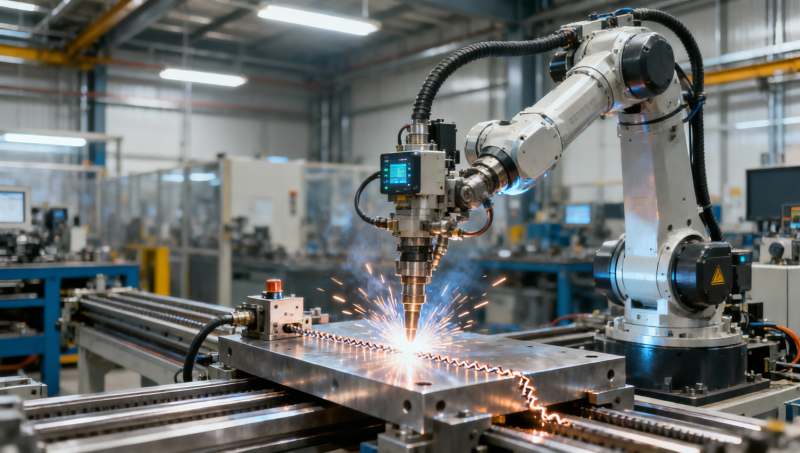
In smart manufacturing, the question is not whether a robotic welder is “high precision” on paper, but whether that precision survives real production conditions. For most buyers, operators, and decision-makers, what really matters is the combination of weld consistency, path repeatability under load, torch and fixture integration, software usability, uptime, and supportability. A robotic welding system that looks impressive in a specification sheet can still underperform if calibration drifts, programming is cumbersome, or maintenance data is inaccessible. The right choice reduces scrap, stabilizes throughput, lowers rework, and improves long-term ROI.
What should buyers actually look at beyond the “high-precision” claim?
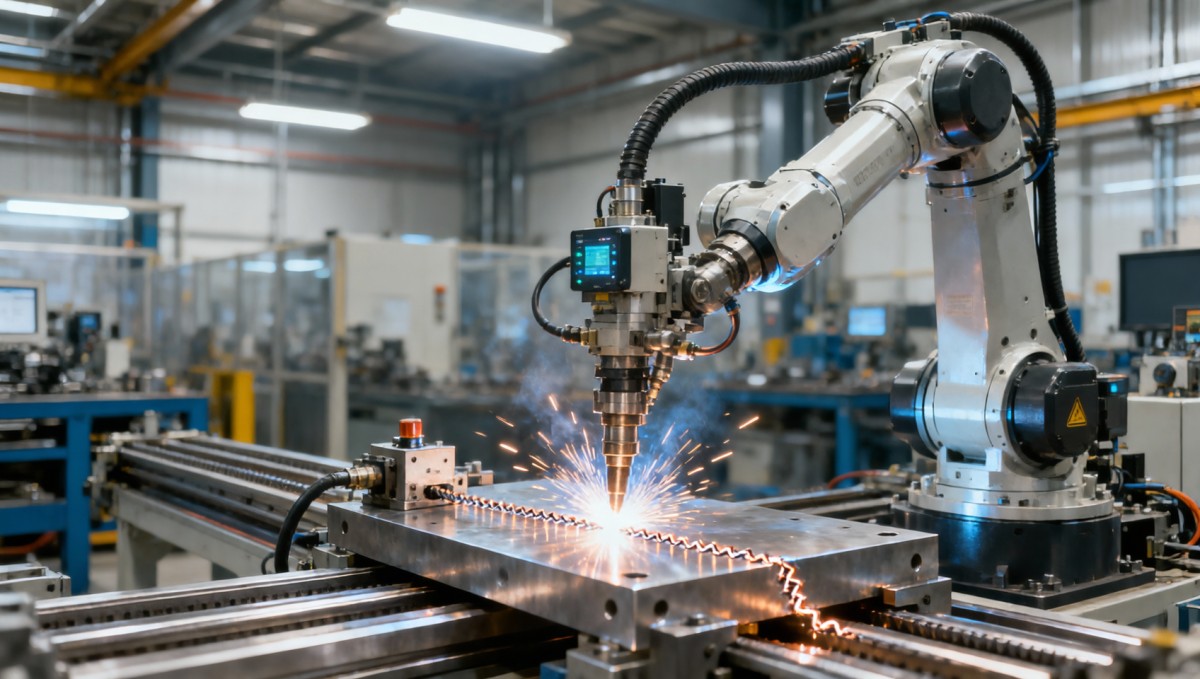
When users search for high-precision robotic welders, they are usually not looking for a vague definition of precision. They want to know which performance factors make a measurable difference in production and which claims are mostly marketing language. In practice, precision only creates value when it translates into acceptable weld quality at target cycle times, with repeatable results across shifts, materials, and part batches.
The most useful starting point is to separate four related but different ideas:
- Repeatability: how consistently the robot returns to the same programmed point.
- Path accuracy: how closely the actual weld path matches the intended path.
- Process stability: whether wire feed, arc performance, torch angle, travel speed, and heat input remain controlled.
- System-level precision: how the robot, positioner, fixture, sensors, and software work together.
For real-world welding cells, system-level precision matters most. A robot arm with excellent repeatability can still produce inconsistent welds if the fixture design is weak, the workpiece variation is high, the torch TCP is not maintained, or seam tracking is missing where fit-up changes are common.
This is why experienced procurement teams and automation engineers do not assess the robot alone. They evaluate the full robotic welding cell as a production asset.
Which technical factors have the biggest impact on weld quality and consistency?
If the goal is better weld quality, lower scrap, and more stable output, the following factors deserve the most attention.
1. Repeatability under real load conditions
Published repeatability values are useful, but they should be interpreted carefully. Ask whether the stated performance reflects actual welding payloads, torch cable packages, and motion patterns. High-speed movement, extended reach, and heavy dress packs can affect path behavior. A robot that performs well in ideal lab conditions may behave differently on a production line with long duty cycles and thermal variation.
2. Welding process compatibility
Different welding applications place different demands on the robot. MIG/MAG, TIG, spot welding, and laser welding all require specific motion characteristics, integration capabilities, and control logic. Thin materials, cosmetic welds, and complex geometries often require more refined path control than basic structural welds. Precision should therefore be matched to the process, not judged in isolation.
3. TCP stability and calibration control
Tool Center Point accuracy is a major contributor to weld consistency. If the torch neck changes slightly after maintenance or collision, the path can drift enough to affect penetration, bead profile, or spatter levels. Systems that support fast TCP verification, automated calibration routines, and operator-friendly correction workflows are often more valuable than systems with impressive but hard-to-maintain nominal specifications.
4. Seam tracking and sensing
In many factories, part variation is unavoidable. This is where through-arc seam tracking, laser seam finding, vision guidance, or touch sensing can make the difference between stable production and frequent rework. For users processing variable joints or inconsistent upstream parts, sensing may matter more than marginal differences in robot repeatability.
5. Fixture and positioner quality
A robotic welder is only as precise as the parts presented to it. Weak clamping, fixture wear, poor datum control, and unstable workpiece positioning can erase the benefits of a high-end robot. For heavy duty industrial equipment applications, this becomes especially important because larger components can introduce more distortion, tolerance variation, and accessibility challenges.
How do you judge whether a robotic welding system will deliver ROI?
For purchasing teams and business leaders, precision is not the end goal. Return on investment is. The best robotic welder OEM or system integrator should be able to show how precision contributes to measurable business outcomes such as:
- Lower scrap and rework rates
- Higher first-pass yield
- More predictable cycle times
- Reduced dependence on scarce skilled welders
- Less downtime from manual correction and quality intervention
- Improved traceability and process documentation
A practical ROI review should include more than equipment price. Buyers should compare:
- Total installed cost: robot, welding power source, safety system, positioners, fixtures, sensors, software, commissioning, and training
- Operating costs: consumables, spares, preventive maintenance, calibration, and energy use
- Quality costs: scrap, rework, post-processing, inspection burden, and customer complaints
- Downtime risk: fault recovery time, parts availability, and remote support capability
- Scalability: whether the system can be replicated across lines or plants
In many cases, the most profitable investment is not the robot with the absolute highest specification, but the one with the best balance of precision, maintainability, software usability, and service support.
What are the most common sourcing risks when comparing robotic welder OEMs?
Many sourcing failures happen because teams buy around headline specifications instead of production reality. Common risks include:
Overvaluing repeatability while ignoring process variation
Even a highly precise robot cannot compensate for inconsistent part quality, poor fixturing, or unstable welding parameters without the right sensing and control strategy.
Underestimating programming complexity
If offline programming, job changeover, or operator adjustment is too difficult, the cell may become heavily dependent on a few specialists. That increases operating risk and slows production adaptation.
Ignoring maintainability
Wear components, torch cleaning systems, cable routing, collision recovery, and calibration routines all affect long-term uptime. A cell that is difficult to maintain often becomes expensive after the first year.
Weak industrial IoT and data integration
Today, industrial IoT for predictive maintenance is increasingly relevant for welding automation. Buyers should ask whether the system can expose data on alarms, cycle counts, torch maintenance, servo health, weld parameters, and fault patterns. Integration with MES/ERP or plant monitoring platforms can improve planning, service scheduling, and root-cause analysis.
Insufficient support and commissioning quality
The OEM and integrator ecosystem matters. Response time, application engineering depth, spare parts logistics, and local service capability can have more impact on long-term performance than small differences in raw robot specifications.
What questions should engineers, operators, and procurement teams ask before buying?
A strong evaluation process usually includes these questions:
- What materials, thickness ranges, and joint types has the system already proven in similar applications?
- What is the robot’s repeatability, and under what payload and speed conditions was it measured?
- How are TCP calibration and torch wear handled in normal production?
- What seam tracking or sensing options are available for variable parts?
- How long does changeover take for new part variants?
- What quality metrics improved in comparable customer installations?
- How is production and maintenance data collected, visualized, and exported?
- What training is required for operators, maintenance staff, and programmers?
- What are the expected uptime levels and the most common failure points?
- How fast can the supplier provide remote support, on-site service, and spare parts?
For organizations evaluating options through an industrial automation B2B platform, these questions help turn broad supplier comparisons into technically meaningful decisions. Benchmarking across robotics, controls, motion systems, and software layers is especially important when the welding cell will be part of a larger smart factory roadmap.
Where does high precision matter most—and where is it less critical?
High precision matters most when applications involve tight joint tolerances, visually sensitive welds, thin materials, complex multi-axis motion, or downstream processes that depend on consistent weld geometry. Examples include automotive components, precision metal fabrication, electronics enclosures, battery structures, and high-spec industrial assemblies.
It is relatively less critical when the process is dominated by large tolerances, substantial gap variation, heavy structural welding, or applications where fixture quality and sensing capability are the real bottlenecks. In such cases, spending more on extreme robot precision may deliver less value than improving fixturing, positioners, sensing, or process monitoring.
This is particularly relevant for buyers of heavy duty industrial equipment. In large-part welding, rigidity, reach strategy, external axis coordination, thermal distortion control, and workpiece presentation may influence results more than the robot’s nominal precision class alone.
Final takeaway: what really matters in a high-precision robotic welder?
What really matters is not precision as an isolated specification, but precision that holds up in production and produces business results. The best robotic welding solution is one that combines repeatable motion, stable welding process control, reliable calibration, suitable sensing, strong fixture integration, usable software, and dependable after-sales support.
For information researchers, the key is to compare system-level capability rather than catalog claims. For operators and engineers, the focus should be ease of calibration, programming, and maintenance. For procurement teams and business leaders, the real decision factors are total cost of ownership, uptime, risk reduction, and the ability to scale automation confidently.
In short, a high-precision robotic welder is valuable only when it improves weld quality, reduces variation, and keeps production running predictably. That is the standard that should guide any serious sourcing decision.
Recommended News
- 2026/10/24Car Spare Parts: How to Check Fitment and Avoid Ordering the Wrong PartOrder car spare parts with confidence. Learn how to verify VINs, OEM numbers, and fitment details to avoid costly mistakes and choose the right replacement first time.
- 2026/10/23How Do You Select a Motion Control System for Synchronized Axes?How do I select a motion control system for synchronized axes? Discover key timing, feedback, and performance checks to choose confidently and reduce costly integration risks.
- 2026/10/23Integrating End-of-Line Sortation with Packing Stations and Conveyor ControlsOptimize end of line sortation with coordinated packing stations and conveyor controls. Learn how to prevent bottlenecks, improve routing accuracy, and handle exceptions reliably.