
Search News
Industry Portal
Popular Tags
How to Source an OEM Robotic Welder for Shipbuilding
Author
Dr. Victor Gear
Time
Apr 25, 2026
Pageviews
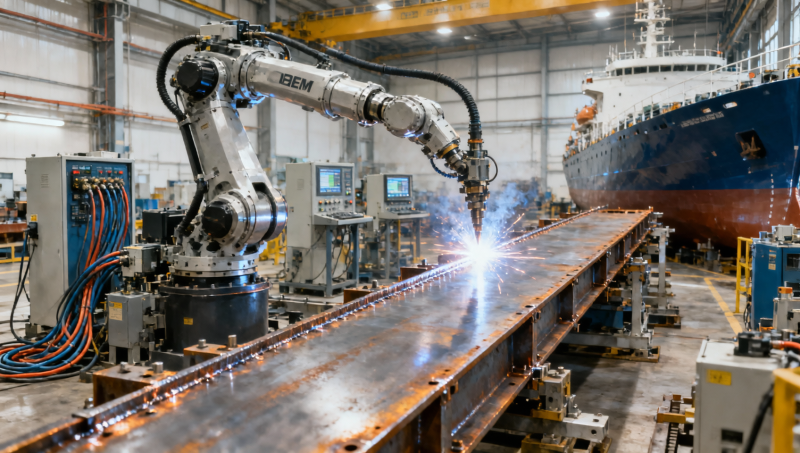
Sourcing an industrial robotic welder OEM for shipbuilding requires more than comparing industrial equipment price lists. Buyers must assess welding precision, heavy duty industrial equipment reliability, control systems OEM compatibility, and long-term smart manufacturing benefits. Backed by industrial IoT solutions and data-driven benchmarking, this guide helps procurement teams, engineers, and decision-makers identify the right automation partner with lower risk and higher production efficiency.
In shipbuilding, welding automation is tied directly to hull integrity, labor utilization, project deadlines, and compliance with marine fabrication standards. An OEM robotic welder that performs well in a light fabrication workshop may fail in a shipyard environment where large steel sections, positional welding, long seams, humidity, and high duty cycles are routine. That is why sourcing must be based on application fit, not headline specifications alone.
For information researchers, operators, procurement teams, and business decision-makers, the key challenge is balancing technical capability with implementation risk. A robotic welding cell for shipbuilding often affects upstream fit-up, downstream inspection, PLC integration, spare parts planning, and training requirements over a 5- to 10-year lifecycle. A structured sourcing process reduces hidden costs and improves the odds of stable production.
Why Shipbuilding Demands a Different OEM Robotic Welder Standard
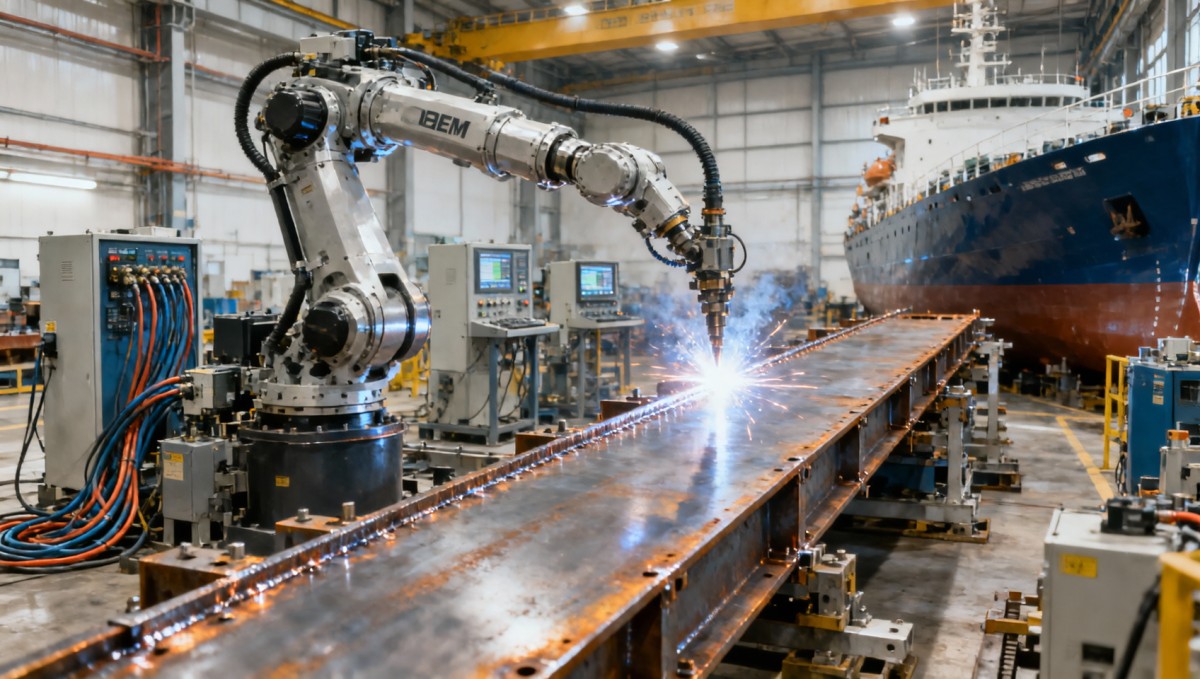
Shipbuilding welding is fundamentally different from general metal fabrication. Workpieces are larger, seam lengths are longer, and weld positions can vary from flat and horizontal to vertical and overhead. In many yards, plate thickness ranges from 4 mm to 40 mm, while structural sections can require multi-pass welding and stable heat input control across shifts of 8 to 12 hours. An OEM robotic welder must be selected with these realities in mind.
Another major difference is environmental exposure. Shipyards and block assembly workshops may face dust, temperature swings, vibration from nearby handling systems, and inconsistent part presentation. This places greater importance on robot protection grade, torch durability, cable package management, and sensor robustness. If the system cannot maintain repeatability under industrial stress, even a high-end robot arm will not deliver consistent seam quality.
Cycle time in shipbuilding is not only about arc-on speed. It includes fixture loading, seam tracking, repositioning, weld parameter switching, and inspection readiness. A robotic welding OEM should understand how to optimize the full workcell, including jigs, motion control, welding power source coordination, and data capture. A system that improves arc-on time from 35% to 50% can create a meaningful throughput gain without changing shipyard headcount.
OEM experience also matters because shipbuilding projects often involve low-to-medium volume production with high mix. Unlike a highly repetitive automotive line, a shipyard may process different block designs over a 2- to 6-month program cycle. This means offline programming, quick recipe changeover, and flexible fixture strategy are often more valuable than peak speed alone.
Core technical realities in marine welding automation
- Long seam applications demand stable travel speed, wire feed consistency, and low drift over repeated runs of 2 m to 12 m.
- Heavy duty use requires high uptime, often above 85% planned availability, with predictable preventive maintenance intervals.
- Part variation makes seam finding, touch sensing, or laser tracking more important than nominal robot repeatability alone.
- Control system compatibility with PLC, MES, and quality traceability tools is increasingly required in Industry 4.0 shipyards.
Typical sourcing priorities by buyer role
The table shows why sourcing an OEM robotic welder for shipbuilding should be cross-functional. A low purchase price may satisfy procurement in the short term, but poor integration or weak support can delay commissioning by 2 to 6 weeks and create much higher lifetime cost.
How to Evaluate Welding Performance, Robot Configuration, and Integration Readiness
A practical evaluation starts with the weld itself. Buyers should define joint types, material grades, thickness ranges, target deposition rates, acceptable distortion levels, and inspection methods before comparing suppliers. For shipbuilding, common decision factors include fillet weld consistency, multi-pass sequencing, root pass control, and the ability to maintain bead quality across long seams and varied fit-up conditions.
Robot payload and reach should match the torch package, positioner strategy, and work envelope. In many marine applications, a 6-axis robot paired with a 2-axis positioner offers better access than a robot-only system. Reach may need to cover 2.0 m to 3.5 m depending on the fixture layout, while cable management and anti-collision design become critical when welding around stiffeners and structural members.
The welding package is equally important. Buyers should review power source compatibility, wire feeder stability, torch cooling method, seam tracking sensors, and fume extraction interface. A system designed for standard MIG/MAG shipyard use may need pulse capability for thinner sections or better spatter control. Duty cycle performance under continuous use should be confirmed, especially when production targets exceed 2 shifts per day.
Integration readiness often separates a true OEM partner from a simple equipment seller. The robotic welder should communicate reliably with PLC platforms, safety devices, conveyors, positioners, and production software. Buyers should ask whether the OEM supports Ethernet-based communication, digital weld data logging, alarm history export, and recipe management linked to part numbers or MES instructions.
Technical checklist before requesting a formal quotation
- Define 3 to 5 representative weld joints and provide drawings, thickness, material, and expected batch volume.
- Clarify whether the project needs a standalone cell, gantry-assisted solution, or robot plus positioner layout.
- Confirm target tolerances, such as path accuracy expectations and allowable seam offset compensation.
- List required interfaces: PLC, HMI language, barcode input, MES, remote diagnostics, and safety zoning.
- Request a commissioning plan, operator training scope, and preventive maintenance schedule.
Suggested evaluation ranges for shipyard projects
While final values depend on the process and layout, buyers often compare repeatability in the sub-millimeter range, commissioning windows of 2 to 8 weeks, and operator training programs lasting 2 to 5 days for basic use plus deeper engineering training for 1 to 2 weeks. These ranges are not guarantees, but they help frame realistic expectations during technical review.
The following table can be used as a compact benchmark when reviewing competing OEM robotic welder proposals for shipbuilding.
These ranges help standardize vendor comparison. More importantly, they reveal whether a supplier understands shipyard operating pressure rather than quoting a generic industrial robot package.
OEM Selection Criteria Beyond Price: Reliability, Software, and Lifecycle Support
Price comparison is necessary, but it should come after technical fit and support capability are screened. A lower initial quote may exclude positioner synchronization, offline programming licenses, weld data collection, or operator certification support. In shipbuilding, those omissions often resurface as unplanned engineering change orders, slower startup, and higher downtime during the first 6 to 12 months.
Reliability should be evaluated as a system attribute, not only as robot brand reputation. Ask how the OEM handles torch wear, nozzle cleaning, cable fatigue, shock loading, and preventive maintenance intervals. A robust cell design typically includes clear service access, protected routing, fault diagnostics, and spare parts lists that distinguish consumables from long-lead items. This matters when production cannot tolerate waiting 3 to 5 weeks for a specialized replacement component.
Software capability is increasingly central to smart manufacturing. A modern OEM robotic welder for shipbuilding should support production recipe management, weld parameter traceability, alarm logging, and basic performance dashboards. Even if a yard is not yet running a full MES integration, data readiness today can simplify future upgrades tied to digital quality control, maintenance planning, or energy analysis.
This is where a benchmarking-driven approach becomes valuable. Platforms like G-IFA help buyers compare automation hardware and software capability through a structured lens spanning industrial robotics, PLC and control systems, motion transmission, IIoT software, and fluid power. For shipbuilding buyers, that means evaluating not just a robotic arm, but the complete automation stack that affects production resilience and scale-up potential.
Five lifecycle factors that often decide long-term value
- Spare parts accessibility: critical parts list, local stock strategy, and lead times for high-failure consumables versus low-failure assemblies.
- Remote service capability: VPN or secure remote diagnostics can reduce troubleshooting time from days to hours in many cases.
- Software maintainability: backup routines, user permissions, and version control are essential for stable operation over 5+ years.
- Training continuity: refresher training every 6 to 12 months helps maintain output when staff changes occur.
- Expansion readiness: cells should support future additions such as extra positioners, seam tracking upgrades, or MES data links.
Common procurement mistakes
One frequent error is evaluating only the robot arm and ignoring fixture quality. In shipbuilding, poor fit-up or unstable clamping can reduce welding consistency more than robot path performance. Another mistake is underestimating changeover complexity. If the workcell needs 45 minutes to switch jobs, the expected productivity gain may disappear in a high-mix environment.
A third mistake is buying a system that cannot integrate with existing control architecture. If the OEM cannot clearly define I/O lists, safety logic, communication protocol, and signal ownership, commissioning risk increases. The result can be avoidable delays, repeated debugging, and dependence on external specialists for minor software adjustments.
A Practical Sourcing Process for Procurement Teams and Engineering Leaders
A disciplined sourcing process usually outperforms rushed quotation collection. For most shipbuilding automation projects, a 5-step approach works well: requirement definition, supplier screening, technical validation, commercial negotiation, and acceptance planning. This process helps keep procurement and engineering aligned while giving management a clearer view of project timing, cost exposure, and implementation risk.
Start by documenting the production target. That includes expected monthly throughput, weld type mix, available floor space, power supply constraints, operator skill level, and future expansion plans. If the yard expects product variation across 10 to 20 block configurations per year, flexibility and software support should carry more weight than raw speed. If the line is repetitive, cycle time optimization and automation of part handling may become top priorities.
Next, use a short list of 3 to 5 OEM candidates and require them to respond to the same technical package. Standardized comparison is critical. Ask each supplier for a cell layout, utility list, assumptions, exclusions, training plan, service scope, and expected lead time. This prevents misleading comparisons where one quote includes sensors, positioners, and software, while another includes only the robot and power source.
Technical validation should include either a sample weld test, simulation review, or FAT-oriented demonstration. In larger projects, a pre-acceptance review can identify programming gaps, reach limitations, and fixture conflicts before equipment shipment. Even a 1-day validation workshop can remove many uncertainties that would otherwise surface during installation.
Recommended sourcing workflow
This workflow helps teams move from broad supplier interest to evidence-based selection. It also creates traceable decision points, which is useful when projects involve multiple stakeholders across engineering, operations, purchasing, and finance.
Acceptance criteria to define early
Before signing a purchase order, define 3 categories of acceptance: weld quality, cycle performance, and system reliability. For example, buyers may specify approved bead profile on representative joints, target cycle time under a given fixture condition, and stable operation over an agreed production test window. Early definition prevents disagreement later and improves accountability on both sides.
Implementation Risks, FAQ, and What to Ask Before You Sign
Even a technically strong OEM robotic welder can underperform if implementation planning is weak. Common risks include insufficient foundation for heavy fixtures, underestimated fume extraction needs, poor operator involvement during HMI design, and missing spare consumables at startup. A realistic ramp-up plan should include installation checks, dry run validation, weld qualification, and a support escalation path for the first 30 to 90 days.
Training should also be role-based. Operators need safe startup, recipe selection, basic recovery, and daily maintenance. Technicians need fault diagnosis, backup procedures, and parameter adjustment rules. Engineers need programming, optimization, and interface management. Without layered training, teams often remain dependent on the OEM for routine tasks long after handover.
For shipyards pursuing digital transformation, ask whether the system can export weld data, downtime records, and maintenance events in a usable format. This is especially relevant for decision-makers who want to connect robotics investments with broader smart manufacturing goals across quality, scheduling, and asset performance. G-IFA’s cross-pillar benchmarking perspective is useful here because robotic welding value is strongest when hardware, controls, and software work as one system.
Below are common questions buyers ask when sourcing a shipbuilding robotic welder OEM, along with practical guidance that supports both short-term implementation and long-term operation.
How long does delivery and commissioning usually take?
For a standard robotic welding cell, manufacturing lead time may range from 8 to 16 weeks depending on the robot platform, welding package, sensors, and fixture complexity. Commissioning on site commonly takes 2 to 8 weeks. More customized systems with positioners, gantry elements, or software integration can require longer, especially if plant readiness is delayed.
Which indicators matter most during procurement?
Focus on at least 6 indicators: weld quality on your actual joints, integration scope, training depth, spare parts strategy, support response time, and acceptance criteria. Price should remain on the list, but only after these factors are scored. In many projects, the hidden cost of weak support exceeds the gap between the lowest and second-lowest quote.
Is a robotic welder suitable for every shipyard?
Not automatically. It is best suited to yards with repeatable weld families, sufficient part preparation discipline, and a willingness to standardize some workflow. If fit-up quality is highly inconsistent or product mix changes every day without planning, returns may be slower. A phased deployment starting with one high-volume weld family is often a lower-risk approach.
What should be included in the final OEM discussion checklist?
- Detailed scope boundaries between OEM supply, yard utilities, fixture responsibility, and software integration.
- FAT and SAT documents with measurable pass criteria rather than general statements of functionality.
- Consumables and spare parts package for the first 6 to 12 months of operation.
- Training matrix by role, including maintenance and programming coverage.
- Remote and on-site service terms, including response timing and escalation contacts.
Choosing an OEM robotic welder for shipbuilding is ultimately a strategic sourcing decision, not a simple equipment purchase. The right partner should match welding performance to marine production realities, integrate cleanly with controls and software, support the cell over its lifecycle, and provide enough transparency for a confident buying decision. If you are evaluating automation options for shipbuilding or broader smart manufacturing projects, contact G-IFA to explore benchmark-based insights, compare solution pathways, and get a more informed sourcing framework tailored to your production goals.
- industrial robotic welder oem
- industrial robotics
- motion control
- industrial IoT
- automation hardware
- control systems
- smart manufacturing
- industrial equipment
- control systems OEM
- industrial equipment price
- industrial IoT solutions
- smart manufacturing benefits
- heavy duty industrial equipment
- Industry 4.0
- industrial robotic welder oem for shipbuilding
Recommended News
- 2026/10/24Car Spare Parts: How to Check Fitment and Avoid Ordering the Wrong PartOrder car spare parts with confidence. Learn how to verify VINs, OEM numbers, and fitment details to avoid costly mistakes and choose the right replacement first time.
- 2026/10/23How Do You Select a Motion Control System for Synchronized Axes?How do I select a motion control system for synchronized axes? Discover key timing, feedback, and performance checks to choose confidently and reduce costly integration risks.
- 2026/10/23Integrating End-of-Line Sortation with Packing Stations and Conveyor ControlsOptimize end of line sortation with coordinated packing stations and conveyor controls. Learn how to prevent bottlenecks, improve routing accuracy, and handle exceptions reliably.