
Search News
Industry Portal
Popular Tags
Where miniaturization of motion control adds hidden cost
Author
Dr. Victor Gear
Time
Apr 23, 2026
Pageviews
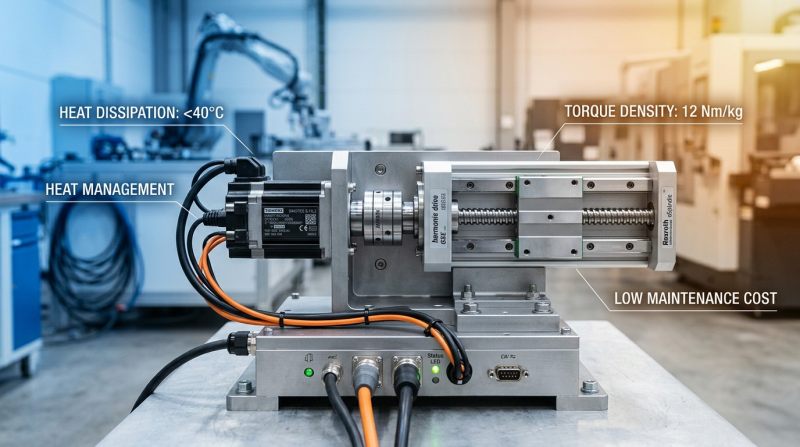
As the miniaturization of motion control accelerates, manufacturers often overlook hidden trade-offs in heat, torque density, and lifecycle cost. For engineers, buyers, and decision-makers comparing servo motor torque-speed curves, gearbox backlash precision data, or linear guide load rating benchmarks, smaller is not always smarter. This article examines where compact designs create unexpected expenses—and how predictive maintenance for motors and smarter component selection can reduce risk.
In smart manufacturing, compact actuators, integrated drives, and shorter transmission paths often look attractive on paper. They can reduce cabinet footprint by 20%–40%, simplify machine architecture, and support high-density equipment layouts. Yet in real production environments, the smallest package is not always the lowest-cost solution once thermal stress, maintenance intervals, contamination exposure, and replacement complexity are considered.
For production directors, system integrators, operators, and procurement teams, the practical question is not whether miniaturization is valuable. The real question is where miniaturization creates measurable benefits, and where it pushes cost into less visible areas such as derating, downtime, precision loss, or shorter service life. That distinction matters when comparing motion control systems across robotics, packaging, electronics assembly, medical manufacturing, and general automation.
Why smaller motion control packages can cost more over time
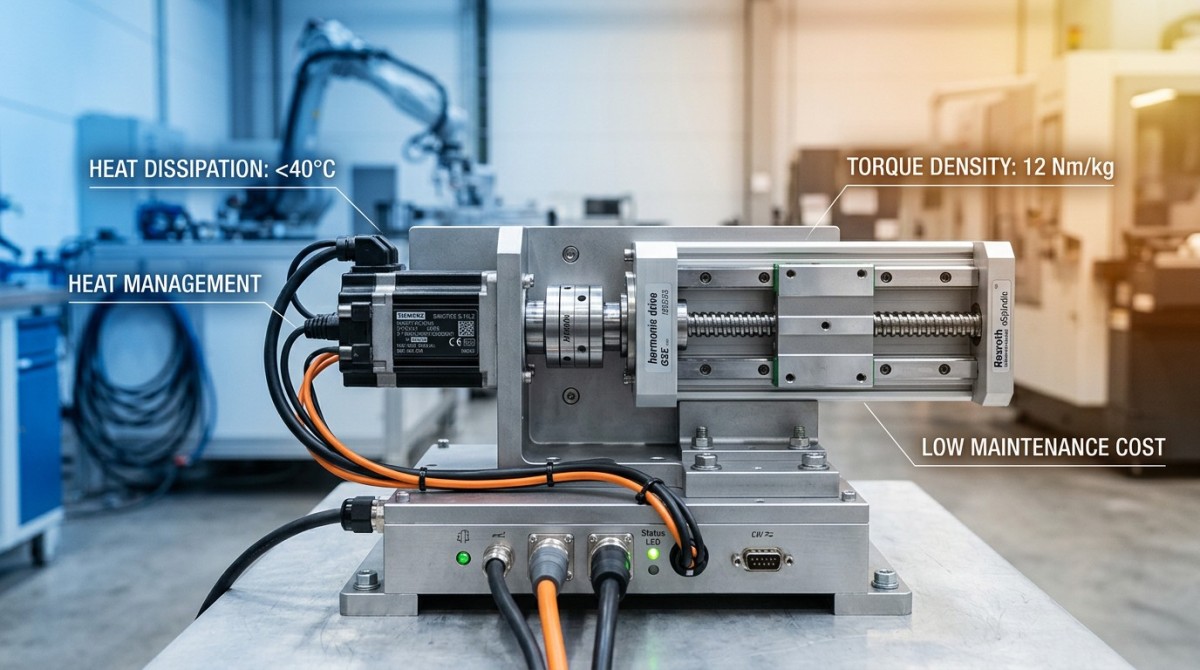
Miniaturized motion control systems usually combine more function into less space: compact servo motors, integrated amplifiers, smaller gearheads, slim linear modules, and reduced cable routing. This can lower initial machine footprint and improve design flexibility. However, when power density rises faster than heat can dissipate, performance margins narrow. A motor that fits perfectly in a CAD model may run 10°C–20°C hotter in continuous duty than a slightly larger frame with the same application profile.
That extra thermal load affects bearings, insulation, encoder stability, lubricants, and drive electronics. In many production lines, the cost does not appear in the purchase order. It appears 6–18 months later as unplanned shutdowns, reduced torque at speed, nuisance faults, or frequent component replacement. For plants running 2 shifts or 24/7 cycles, even a 1% increase in unplanned downtime can outweigh the savings from a smaller axis package.
Another hidden cost is system-level complexity. A compact axis may need tighter enclosure conditions, more careful airflow management, shorter service intervals, or higher-grade connectors to maintain reliability. The hardware itself may be smaller, but the engineering tolerance for error is also smaller. When line builders ignore this, maintenance teams inherit a system with less thermal headroom and less forgiveness under overload, shock, or contamination.
Where hidden cost usually appears first
The first cost signal often appears in three places: rising temperature, falling precision under load, and shorter service intervals. These are especially common in compact servo applications with rapid acceleration, frequent starts and stops, or duty cycles above 60%–70%. In pick-and-place, inspection stages, and indexing systems, miniaturization can improve dynamics but also intensify wear if sizing margins are too tight.
- Thermal derating reduces usable torque during long production runs.
- Smaller gearboxes can show faster backlash growth under repetitive shock loads.
- Tightly packaged linear axes may be more sensitive to dust, misalignment, and lubrication gaps.
- Integrated designs can cut wiring time but increase replacement cost when one internal component fails.
The comparison below shows where compact design often shifts cost from visible capex into operational risk and lifecycle expense.
For G-IFA readers evaluating hardware across global benchmarks, the key lesson is simple: a reduced footprint should be assessed against the total operating context, not just dimensional efficiency. In many cases, the real cost premium of miniaturization is not the component price but the reduction in performance margin.
Heat, torque density, and precision: the technical trade-offs buyers often miss
Miniaturization raises torque density, but torque density is not a free gain. Higher continuous force or torque in a smaller housing increases current density, thermal concentration, and sensitivity to duty profile. A compact motor that performs well at 2-second indexing cycles may struggle in a 12-hour continuous packaging or converting process where ambient cabinet temperature already reaches 40°C.
Precision can also become more expensive to maintain in smaller transmission components. A gearbox rated for low backlash at commissioning may not hold that same precision after 8 to 12 months if repetitive reversal, shock loading, or poor lubrication is present. For applications requiring ±0.02 mm to ±0.1 mm repeatability, small drift can quickly affect yield, alignment, or reject rate.
Linear motion is another area where hidden cost appears. Slimmer linear guides and compact ball screw modules can look ideal for electronics or laboratory automation, but their actual load reserves may be too narrow for real-world contamination, uneven mounting, or moment loads. A guide that is correctly sized for nominal mass but not for dynamic side load can lose smoothness and accuracy much earlier than expected.
Technical checkpoints before approving a compact design
Engineering and procurement teams should validate compact motion control systems against measurable thresholds rather than marketing claims. The purpose is not to reject miniaturization, but to confirm whether the system still has enough operating margin for the production environment.
- Check continuous torque versus peak torque, not just advertised maximum output.
- Review duty cycle, ambient temperature, and enclosure ventilation at actual plant conditions.
- Compare initial backlash with projected backlash growth under cyclic reversal.
- Confirm load rating for radial, axial, and moment loads in linear systems.
- Verify maintenance access time; a 15-minute replacement target can become 90 minutes in dense machine layouts.
The table below summarizes practical technical warning signs that often indicate a compact axis is under-sized for industrial use.
A common mistake is treating compactness as a universal upgrade. In reality, compact motion control works best when thermal pathways, mechanical stiffness, and maintenance strategy are designed together. Without that system view, high torque density often becomes high failure density.
Where miniaturization makes sense and where it usually does not
Miniaturized motion control can be highly effective in applications where payload is low, travel is short, accuracy requirements are moderate to high, and the duty cycle is predictable. Electronics assembly, inspection positioning, semiconductor handling, and compact laboratory automation are good examples. In these settings, saving 15%–30% of installation space can create clear value without forcing extreme mechanical stress.
The economics change in high-shock, high-inertia, or contamination-heavy environments. Packaging lines with abrupt acceleration, food production areas with washdown exposure, metalworking machines with particulate contamination, and heavy palletizing cells often punish under-sized components. Here, a compact drive system may still function, but it may need more frequent maintenance, tighter tuning windows, or earlier replacement.
For procurement teams, the key is to link application profile to motion architecture. A small form factor is valuable only if it reduces total installed cost without increasing service burden. If the replacement interval falls from 5 years to 2 years, the “space-saving” decision may actually increase total cost of ownership.
Application fit by operating condition
The following matrix helps buyers and specifiers judge whether miniaturization supports or undermines long-term performance.
In cross-sector benchmarking, G-IFA often frames motion control selection as a balance between precision density and resilience. Compact systems are strongest where every millimeter of machine space matters and process conditions remain controlled. They are weakest where overload, dust, vibration, thermal cycling, or frequent human intervention dominate the operating reality.
Common decision errors
- Choosing the smallest motor that meets peak torque, while ignoring continuous duty and ambient heat.
- Comparing initial backlash values without considering backlash growth after millions of cycles.
- Assuming compact integrated axes automatically lower maintenance labor.
- Ignoring access clearance, which can double service time in dense machine cells.
The better approach is to align miniaturization with application physics, maintenance capacity, and replacement cost. If one of those three is missing, the hidden cost usually surfaces later in the operating budget.
How predictive maintenance and smarter component selection reduce risk
Predictive maintenance becomes more valuable as components get smaller and more densely loaded. In compact motion control systems, there is less tolerance for drift before temperature, vibration, current imbalance, or positional error begins affecting output quality. Monitoring these signals early can turn a hidden cost into a manageable service event.
For motors, useful indicators include winding temperature trend, current signature, bearing vibration, encoder error frequency, and acceleration profile deviation. In gearboxes and linear systems, maintenance teams should also track backlash change, lubricant condition, and abnormal noise under standard duty. Even a monthly review cycle can identify deterioration before it causes a full line stop.
Smarter component selection starts much earlier, at the specification stage. Teams should compare not only dimensions and rated performance, but also derating data, bearing arrangement, lubrication method, ingress protection, connector durability, and replacement logistics. A component that costs 8% more upfront may save 20%–30% in service and downtime over a 3-year operating period if it preserves wider performance margins.
A practical 5-step risk-reduction workflow
- Define the real duty cycle, including acceleration, dwell time, load variation, and ambient temperature.
- Size the axis for continuous operation margin, not just peak demand.
- Benchmark backlash, load reserve, and thermal behavior against application tolerance.
- Set predictive maintenance thresholds for temperature, vibration, and current trend.
- Review replacement time, spare strategy, and operator access before final approval.
This workflow is especially useful for procurement teams working with system integrators. It converts a vague preference for “smaller” into a structured evaluation of lifecycle performance.
What operators and maintenance teams should watch
Operators are often the first to notice subtle shifts in compact motion systems. Signs such as warmer housings, longer settling time, inconsistent positioning, unusual noise during reversal, or more frequent alarms should not be dismissed as normal variation. In many factories, these symptoms appear 4–12 weeks before a more serious failure event.
For G-IFA-aligned decision making, predictive maintenance is not just a software layer. It is a way to protect the engineering value of motion control hardware by linking performance data to replacement timing and procurement planning. That link is essential when factories aim to de-risk investment across robotics, control systems, transmission components, and industrial software.
Procurement checklist and FAQ for motion control miniaturization
A successful purchase decision should connect engineering evidence with plant operations. For buyers comparing compact servo motors, precision gearheads, and linear motion modules, a disciplined checklist can prevent expensive oversights. The goal is not only to verify performance at commissioning, but also to estimate service burden over 12, 24, and 36 months.
Below are the most useful procurement questions: What is the true continuous load? How much thermal margin exists at the highest ambient condition? How does backlash change over time? How fast can the component be replaced in the actual machine layout? What spare parts strategy is realistic for a multi-line factory? These questions often matter more than nominal compactness.
For enterprises building smart manufacturing roadmaps, motion control should be evaluated as part of a wider automation stack. Mechanical miniaturization, control architecture, condition monitoring, and software visibility all influence the final cost curve. That is why benchmark-driven selection has become increasingly important across modern production lines.
FAQ: How should buyers compare compact motion systems?
How much operating margin is typically reasonable?
In many industrial applications, teams prefer not to size a motor or linear axis right at its continuous limit. A practical reserve depends on duty cycle and environment, but a measurable margin for heat, shock, and load variation is usually safer than selecting a package that only satisfies peak demand on paper.
When is a compact gearbox a risk?
It becomes a risk when the application involves frequent reversals, shock loads, or tight repeatability demands over long cycles. In these cases, backlash growth can create hidden quality and maintenance costs even if the initial precision specification looks acceptable.
What service issue is most underestimated?
Replacement access is often underestimated. A compact system inside a crowded machine can require far more disassembly time than expected. What looks like a 20-minute swap in a design review can take 1–2 hours during live plant maintenance.
How can decision-makers lower investment risk?
Use benchmark-based comparison across thermal behavior, torque-speed performance, backlash stability, load reserve, and maintenance access. Then combine that with predictive maintenance planning so hardware selection and digital oversight work together rather than independently.
Miniaturization in motion control can deliver real value, but only when footprint reduction does not erase thermal margin, mechanical resilience, or service practicality. The most reliable path is to compare compact designs against real duty cycles, measurable precision requirements, and lifecycle maintenance cost rather than dimensional appeal alone.
G-IFA supports this decision process by helping manufacturers, engineers, buyers, and factory leaders interpret automation hardware through verifiable benchmarks and system-level context. If you are evaluating servo systems, gearboxes, linear modules, or predictive maintenance strategies for a smarter production line, contact us to discuss your application, request a tailored comparison framework, or explore more motion control solutions.
Recommended News
- 2026/10/24Car Spare Parts: How to Check Fitment and Avoid Ordering the Wrong PartOrder car spare parts with confidence. Learn how to verify VINs, OEM numbers, and fitment details to avoid costly mistakes and choose the right replacement first time.
- 2026/10/23How Do You Select a Motion Control System for Synchronized Axes?How do I select a motion control system for synchronized axes? Discover key timing, feedback, and performance checks to choose confidently and reduce costly integration risks.
- 2026/10/23Integrating End-of-Line Sortation with Packing Stations and Conveyor ControlsOptimize end of line sortation with coordinated packing stations and conveyor controls. Learn how to prevent bottlenecks, improve routing accuracy, and handle exceptions reliably.