
Search News
Industry Portal
Popular Tags
Miniaturization of motion control and heat tradeoffs
Author
Dr. Victor Gear
Time
Apr 23, 2026
Pageviews
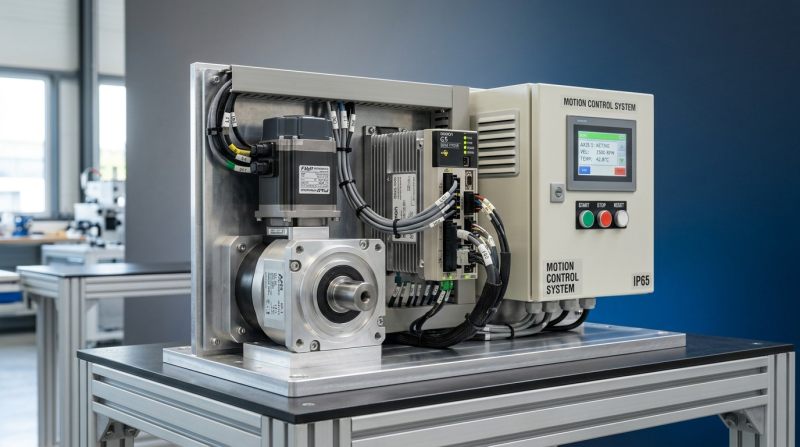
As miniaturization of motion control accelerates across smart factories, engineers and buyers must balance compact design with heat, torque, and reliability. From servo motor torque-speed curves to vfd energy efficiency metrics and predictive maintenance for motors, understanding these tradeoffs is essential for safer upgrades, better system integration, and more confident automation investment decisions.
Why miniaturized motion control creates both opportunity and thermal risk
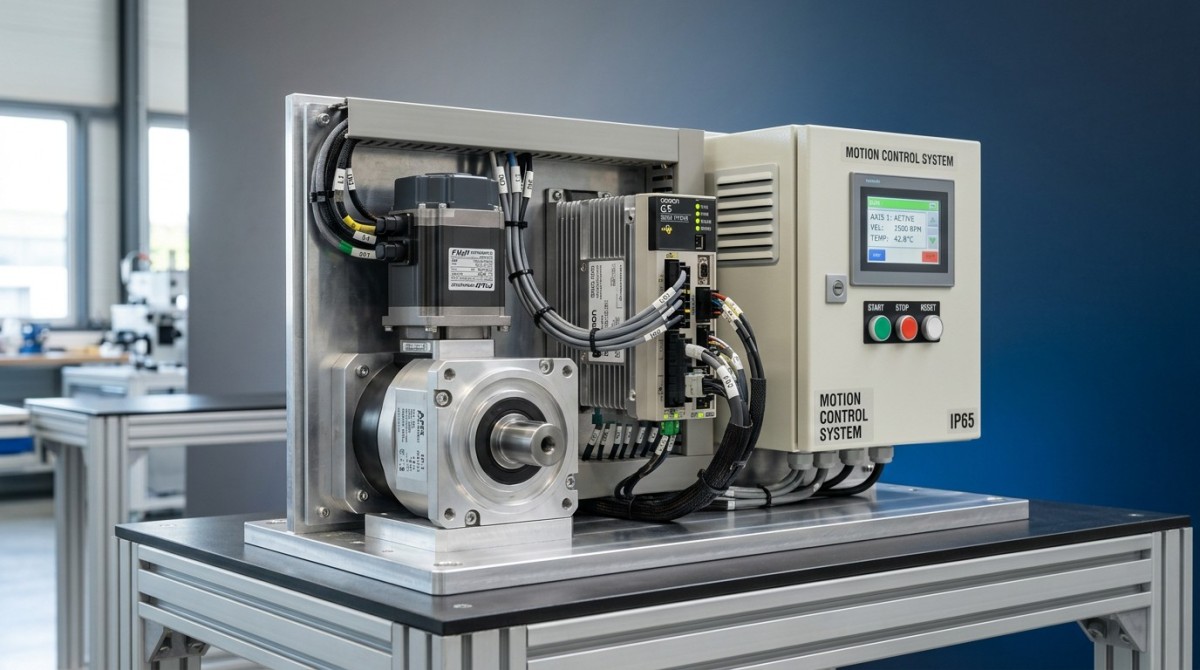
Miniaturization of motion control is no longer limited to electronics assembly or semiconductor tools. It now affects packaging lines, medical device production, warehouse automation, and compact machine modules across many industrial sectors. The business case is clear: smaller axes reduce footprint, shorten cable runs, and often improve machine density. Yet once the motor, drive, gearbox, encoder, and brake are compressed into a tighter space, heat concentration becomes a practical design constraint rather than a secondary calculation.
For operators, the first symptom is rarely a dramatic failure. It is usually unstable positioning after 2–4 hours of continuous duty, higher enclosure temperature, or nuisance trips in summer production conditions. For procurement teams, the risk appears earlier in the evaluation stage: two compact servo packages may look similar on paper, but one may derate sharply above 40°C ambient while another can sustain its rated torque with better thermal paths and drive tuning stability.
This is where engineering due diligence matters. A compact motion axis is not judged by peak torque alone. It must be assessed by continuous torque, thermal time constant, allowable overload duration, duty cycle, drive switching behavior, and the cooling conditions inside the cabinet or machine frame. In many retrofit projects, reducing axis size by 15%–30% can save space, but thermal margin may shrink faster than the mechanical envelope.
G-IFA helps production directors, system integrators, and automation engineers de-risk these tradeoffs by benchmarking motion control and transmission components against practical industrial requirements and recognized frameworks such as ISO, IEC, and CE-related expectations. That matters when the goal is not simply to buy a smaller motor, but to maintain uptime, control energy use, and avoid hidden redesign costs after installation.
Where the tradeoff becomes visible in real factories
In compact automation cells, heat accumulates in three linked zones: the motor body, the drive cabinet, and the surrounding mechanical structure. A high-speed servo motor mounted near guarding or in a sealed stainless enclosure behaves very differently from the same motor in open-air assembly equipment. The same applies to a vfd-driven conveyor motor in dusty utility areas, where restricted airflow may quietly reduce service life over a 6–12 month period.
Motion control selection also changes when machine builders pursue modular equipment. Compact modules are easier to ship and install, but denser power electronics can create local hot spots. If cable bend radius, connector temperature class, and braking resistor placement are not reviewed together, miniaturization can shift risk from layout efficiency to maintenance burden.
- Compact servo axes often improve machine density, but may require tighter thermal verification during 24/7 or multi-shift operation.
- Small enclosures reduce installation space, yet can raise internal temperatures by 5°C–15°C depending on load profile and ventilation strategy.
- Higher speed in a smaller frame can support throughput goals, but may increase bearing stress, acoustic noise, and derating sensitivity.
Which technical parameters matter most when size goes down?
When engineers compare compact motion systems, the most common mistake is to focus on rated power and ignore the thermal behavior behind it. In miniaturized motion control, the critical question is not “Can this axis move?” but “Can this axis repeat the required move every cycle, every shift, and within the real temperature envelope of the machine?” A smaller package can still be the right choice, but only if performance is reviewed at system level rather than component level.
Servo motor torque-speed curves become especially important here. Peak torque may support indexing, cutting, or rapid pick-and-place, but continuous torque determines whether the motor can survive the duty profile without overheating. If the application demands frequent acceleration, high holding torque, or repeated braking every 3–8 seconds, the usable operating window may be much narrower than the catalog headline suggests.
VFD energy efficiency metrics also deserve attention in compact systems. A drive that performs well at nominal load may not be equally efficient in partial-load, stop-start, or fan-limited environments. For procurement teams, this means the total cost of ownership should include not only the initial price, but also cabinet cooling needs, harmonic mitigation if required, maintenance intervals, and the cost of unplanned stoppage.
The table below highlights the practical parameters that most strongly influence heat tradeoffs in miniaturized motion control systems used in smart manufacturing and industrial automation.
A disciplined review of these parameters often prevents the most expensive mistake: buying a compact axis that technically meets motion requirements, but requires extra cooling, oversized drives, or reduced cycle rates after commissioning. In practice, 4 core checks usually reveal most risk: continuous torque margin, enclosure temperature, drive efficiency at real load, and allowable overload time.
How to read heat risk beyond the datasheet
Datasheets are necessary, but they do not replace application context. Ambient temperature may be listed at 25°C or 40°C, while real equipment sees localized conditions above that range near drives, transformers, or process heaters. A motor operating close to rated current in an enclosed machine base may face very different thermal behavior than in an open lab test stand.
Engineers should also separate motor heat from system heat. Brakes, gearboxes, couplings, regenerative events, and control cabinet design all contribute to overall thermal loading. In short-cycle applications, even a well-chosen servo motor can underperform if the surrounding architecture cannot reject heat efficiently.
A practical 5-point verification list
- Confirm continuous torque at the actual duty cycle, not only peak acceleration moments.
- Estimate cabinet or enclosure temperature during the longest production window, often 8–16 hours.
- Review whether braking energy is dissipated safely without raising nearby component temperatures.
- Check whether cable routing and connector ratings remain valid in tighter mechanical spaces.
- Plan predictive maintenance for motors and drives before thermal drift becomes a quality problem.
How do compact servo systems compare with larger-frame alternatives?
Not every machine benefits equally from aggressive miniaturization. In some cases, a slightly larger motor-drive package provides better life-cycle value because it preserves thermal headroom and simplifies maintenance. The right decision depends on cycle rate, available footprint, enclosure design, allowable temperature rise, and whether the line runs intermittently, one shift, or 24/7.
For information researchers and buyers, comparison analysis is useful because compact systems often outperform larger units in responsiveness and machine packaging, while larger-frame alternatives may offer more forgiving operation under variable loads. Neither is universally superior. The better choice is the one aligned with process risk, not the one with the smallest dimensions.
The following table compares typical decision factors between compact motion control packages and more conventional frame sizes in industrial automation projects.
This comparison shows why procurement should not isolate component price from system behavior. A compact package may reduce frame size and installation cost, but if it requires additional ventilation, thermal shielding, or more frequent inspection every quarter, the savings can narrow quickly. Conversely, a larger frame may occupy more space yet deliver steadier operation over 12–24 months in demanding duty cycles.
When compact motion control is usually the better fit
Compact solutions are typically strong candidates when machine footprint is expensive, motion distances are short, and the axis operates in a controlled temperature environment. Examples include pick-and-place modules, small indexing tables, compact conveyors, dosing systems, electronics assembly units, and robotic end-of-arm devices where every kilogram or cubic centimeter affects performance.
They are also attractive when modular machine shipping, rapid deployment, or close coupling to digital diagnostics is a priority. In these cases, the best suppliers are those that can provide not just hardware data, but also usable integration guidance on derating, cable routing, drive tuning, and maintenance planning.
What should buyers, integrators, and operators check before procurement?
A reliable procurement process for miniaturized motion control should combine engineering validation with commercial clarity. Buyers often face a 3-sided pressure set: budget limits, short lead times, and unclear thermal risk. Operators care about alarms, drift, and maintenance workload. Decision-makers care about uptime, integration compatibility, and whether a compact upgrade will improve output without creating new service issues.
A strong evaluation process therefore needs more than a quotation sheet. It should confirm operating profile, thermal assumptions, controller compatibility, compliance expectations, and support scope. In many cross-sector automation projects, a realistic review takes place in 4 steps over roughly 1–3 weeks, depending on application complexity and whether retrofit constraints are involved.
The table below summarizes a practical procurement guide for teams assessing compact servo motors, drives, and related motion control components.
For many teams, the procurement challenge is not lack of options but too many partially comparable options. G-IFA adds value by acting as a technical filter across Industrial Robotics & Cobots, PLC & Control Systems, Motion Control & Transmission, Industrial IoT & Software, and Pneumatic & Hydraulic Systems. That cross-sector perspective is useful because motion choices affect cabinet design, software behavior, maintenance workflows, and line-level performance.
A practical shortlist for decision-makers
- Request continuous and peak torque data tied to the intended duty cycle rather than generic catalog points.
- Ask whether thermal derating begins at specific ambient thresholds such as 40°C or under enclosed installation conditions.
- Check whether predictive maintenance for motors can be integrated through existing PLC, SCADA, MES, or IIoT layers.
- Clarify lead time, spare parts availability, and support expectations for the first 6–12 months of operation.
- Review total system cost, including cooling, commissioning effort, and likely maintenance intervals.
Standards and compliance should not be an afterthought
Compact motion systems often sit inside larger machines, so compliance needs to be understood at equipment level. Depending on region and application, teams typically review electrical safety, EMC behavior, guarding implications, documentation completeness, and whether the selected devices align with broader ISO, IEC, and CE-related project expectations. This review is especially important when equipment is exported or integrated into multi-vendor lines.
A good practice is to confirm compliance documents before purchase order release rather than during site acceptance. That can save 7–15 days of rework in projects with strict validation gates, especially when multiple cabinets, servo axes, or software interfaces are involved.
Common misconceptions, implementation risks, and practical FAQs
Miniaturization of motion control is often marketed as a straightforward upgrade, but field reality is more nuanced. Smaller is not automatically more efficient, and a higher power density package is not always better for long-life industrial use. The real question is whether the compact design matches the process, environment, and service model of the plant.
Three misconceptions appear repeatedly in industrial projects. First, teams assume a smaller servo always saves energy. In reality, system efficiency depends on load profile, drive behavior, and thermal management. Second, buyers assume a motor that fits mechanically will also fit thermally. Third, operators are sometimes asked to manage thermal alarms without being given clear maintenance thresholds or trend visibility.
The practical answer is not to avoid compact motion control, but to deploy it with better verification. That includes installation review, temperature monitoring, and predictive maintenance for motors and drives during the first months after startup. For new lines, the highest-risk period is often the first 30–90 days, when tuning, throughput, and environmental conditions begin to converge.
How should teams monitor compact systems after commissioning?
A practical post-installation plan tracks 4 categories: motor temperature trend, drive alarm history, cycle performance drift, and maintenance intervention frequency. Even simple monthly checks can be useful if they are tied to defined thresholds. For higher-value lines, integrating temperature, current, vibration, or alarm data into an IIoT or MES layer can improve predictive maintenance and reduce reactive service calls.
Which applications are most sensitive to heat tradeoffs?
Applications with frequent acceleration, high indexing frequency, enclosed mounting, washdown constraints, or nearby process heat are usually the most sensitive. Examples include compact packaging cells, labeling units, robotic wrists, medical device assembly, and high-density conveyor zones. In these cases, even a 5°C–10°C increase in local temperature can materially change derating behavior and maintenance intervals.
What is a reasonable implementation workflow?
- Define the real motion profile, including torque demand, cycle rate, and continuous operating hours.
- Validate enclosure and ambient temperature assumptions before final sizing.
- Confirm PLC, control network, and diagnostics integration requirements.
- Plan a 30-day, 60-day, and 90-day performance review after commissioning.
This structured workflow helps users, buyers, and decision-makers avoid a common failure mode: selecting compact hardware correctly but implementing it without enough thermal and diagnostic discipline. In smart factory environments, the best motion upgrade is the one that remains stable in daily production, not just in simulation.
Why work with G-IFA when evaluating compact motion control solutions?
G-IFA is designed for industrial teams that need more than broad marketing claims. As a global intelligence hub and engineering benchmark repository for smart manufacturing and industrial automation, G-IFA helps users compare motion control and transmission options with a practical, decision-oriented lens. That includes the relationship between hardware precision, software intelligence, compliance expectations, and factory-level risk control.
For compact motion projects, that means support where teams most often hesitate: parameter confirmation, thermal tradeoff review, product selection, compatibility with PLC and control systems, expected delivery windows, and the impact of a motion change on the wider automation architecture. This is especially useful when the application spans robotics, conveyors, packaging, material handling, or digitally connected production lines.
If your team is comparing servo motor torque-speed curves, reviewing vfd energy efficiency metrics, or planning predictive maintenance for motors in a compact machine design, G-IFA can help structure the evaluation around real industrial criteria instead of isolated specifications. That reduces decision uncertainty for researchers, operators, procurement teams, and enterprise leaders alike.
Contact us to discuss your application in concrete terms: load profile, enclosure temperature, control compatibility, compliance expectations, target delivery cycle, sample or pilot validation needs, and quotation scope. If you are assessing a retrofit or a new automation line, we can help you narrow options faster, identify thermal risks earlier, and align compact motion control choices with dependable production outcomes.
- servo motor torque-speed curves
- vfd energy efficiency metrics
- miniaturization of motion control
- predictive maintenance for motors
- industrial robotics
- motion control
- servo motors
- industrial IoT
- hydraulic systems
- control systems
- smart manufacturing
- industrial automation
- high-speed servo
- system integration
Recommended News
- 2026/10/24Car Spare Parts: How to Check Fitment and Avoid Ordering the Wrong PartOrder car spare parts with confidence. Learn how to verify VINs, OEM numbers, and fitment details to avoid costly mistakes and choose the right replacement first time.
- 2026/10/23How Do You Select a Motion Control System for Synchronized Axes?How do I select a motion control system for synchronized axes? Discover key timing, feedback, and performance checks to choose confidently and reduce costly integration risks.
- 2026/10/23Integrating End-of-Line Sortation with Packing Stations and Conveyor ControlsOptimize end of line sortation with coordinated packing stations and conveyor controls. Learn how to prevent bottlenecks, improve routing accuracy, and handle exceptions reliably.