
Search News
Industry Portal
Popular Tags
How to Vet an Industrial Machinery Supplier Without Regret
Author
Dr. Victor Gear
Time
Apr 26, 2026
Pageviews
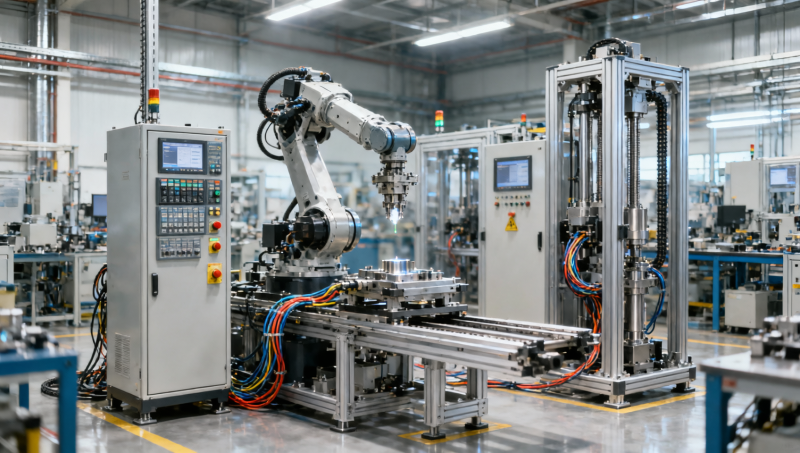
Choosing the right industrial machinery supplier can determine whether your automation project scales smoothly or turns into a costly setback. From wholesale 6 axis robot arm with energy-saving options to MES software sourcing, industrial IoT solutions, and hydraulic systems custom services, every sourcing decision impacts uptime, safety, and ROI. This guide helps procurement teams, engineers, and decision-makers vet suppliers with confidence in today’s smart manufacturing landscape.
When people search for how to vet an industrial machinery supplier, they usually are not looking for generic procurement advice. They want a practical way to avoid late deliveries, poor machine quality, weak after-sales support, hidden compliance risks, and expensive integration failures. The most reliable approach is simple: verify technical capability, proof of performance, service responsiveness, compliance readiness, and total lifecycle value before signing anything. A low quote means very little if the supplier cannot support production stability six months after installation.
What should you check first before trusting an industrial machinery supplier?
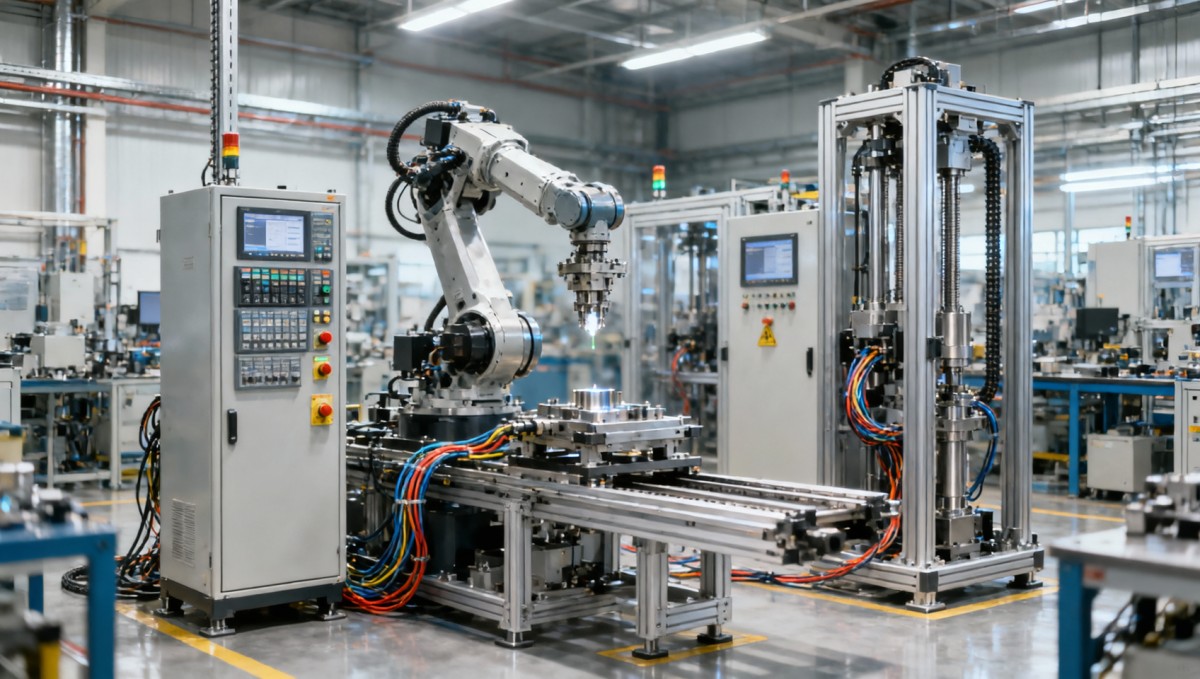
Start with the factors that can create irreversible damage if overlooked: technical fit, manufacturing credibility, compliance, and support capacity. These are the areas that most often separate dependable suppliers from those that become long-term liabilities.
For industrial buyers, the first question is not “Who is cheapest?” but “Who can reliably deliver the required performance in our operating environment?” A supplier for industrial robotics, PLC systems, motion control, MES software, or hydraulic assemblies should be able to explain clearly:
- What industries and applications they already serve
- Whether their solution fits your cycle time, precision, load, safety, and integration requirements
- What international standards or certifications apply to their products
- How they handle commissioning, training, spare parts, and troubleshooting
- What measurable results their existing customers have achieved
If they cannot answer these questions directly, that is an early warning sign. In smart manufacturing, supplier quality is not only about hardware. It is also about documentation quality, integration discipline, software compatibility, and the ability to reduce project uncertainty.
How do you know whether a supplier can actually meet your technical requirements?
This is where many sourcing teams make avoidable mistakes. A polished catalog or trade show demonstration does not prove that a supplier can support your real production conditions. You need evidence tied to your application.
Ask for detailed technical documentation, including:
- Machine specifications and tolerances
- Control architecture and supported communication protocols
- Power requirements and energy consumption data
- Environmental limits such as temperature, dust, vibration, and humidity tolerance
- Maintenance intervals and critical wear parts
- Safety features and applicable standards
If you are sourcing a 6 axis robot arm, for example, look beyond reach and payload. Check repeatability, duty cycle, compatible end-of-arm tooling, controller ecosystem, programming interface, and whether the supplier can support integration with vision systems, conveyors, PLCs, or MES platforms. If you are evaluating MES software or industrial IoT solutions, verify ERP integration, data structure compatibility, cybersecurity measures, user permissions, scalability, and implementation methodology.
The best suppliers do not avoid technical scrutiny. They welcome it. They can map their solution to your line requirements and identify where customization is needed, where standardization is better, and what tradeoffs exist between performance, cost, and implementation speed.
What evidence proves a supplier is reliable, not just good at sales?
Reliability should be validated through records, references, and responsiveness. Ask for proof that the supplier has delivered projects similar to yours in complexity, not just in product category.
Useful forms of evidence include:
- Case studies with measurable outcomes such as scrap reduction, faster cycle times, or improved OEE
- Customer references in similar industries or production environments
- Factory audit access, whether on-site or virtual
- Quality management certifications and internal inspection procedures
- Failure analysis and corrective action processes
- Sample FAT or SAT documentation
Pay attention to how quickly and precisely the supplier answers technical and commercial questions. Responsiveness during pre-sales often predicts support quality after purchase. A trustworthy industrial machinery supplier should be able to provide structured answers, realistic lead times, and transparent risk disclosures. If every answer is vague, delayed, or overly optimistic, your project may face the same pattern later.
How important are compliance, standards, and documentation?
They are critical, especially for organizations operating across regions, regulated sectors, or high-value automated lines. Compliance is not paperwork for its own sake. It protects safety, insurability, legal operability, and long-term maintainability.
Depending on the equipment category, ask suppliers to clarify alignment with relevant standards such as ISO, IEC, CE, and any local electrical, machine safety, or environmental requirements. For automation components and systems, strong documentation should include:
- Declarations of conformity where applicable
- Electrical schematics and mechanical drawings
- Installation and operation manuals
- Maintenance instructions and parts lists
- Software architecture or version documentation
- Risk assessment and safety circuit details where relevant
Incomplete documentation increases commissioning delays, maintenance errors, and compliance exposure. It also creates long-term dependency on the supplier for basic operational knowledge. Good suppliers make your team more capable, not more dependent.
How should buyers evaluate service, spare parts, and long-term support?
Many sourcing failures happen after installation, when the machine is technically delivered but operational support is weak. That is why after-sales capability should be assessed with the same seriousness as product performance.
Ask direct questions such as:
- What are the guaranteed response times for service issues?
- Is remote diagnostics available?
- Which spare parts are stocked locally or regionally?
- What are the typical replenishment lead times for critical components?
- Do they offer operator and maintenance training?
- Can they support software updates, parameter backups, and lifecycle upgrades?
This matters even more for integrated solutions like motion systems, control cabinets, industrial IoT platforms, or hydraulic systems custom services. A supplier may deliver strong equipment but still become a poor choice if replacement parts are hard to get, field engineers are unavailable, or support is outsourced without clear accountability.
For procurement teams and plant managers, one practical metric is downtime exposure. Ask yourself: if this system fails during peak production, how quickly can the supplier help restore operations? The answer often reveals the real value behind the price.
What commercial risks should procurement teams look for beyond the quoted price?
The lowest upfront quote can hide the highest total cost. To vet an industrial machinery supplier properly, compare total lifecycle value, not just purchase price.
Key commercial areas to review include:
- Lead times and schedule reliability
- Payment terms linked to milestones
- Warranty scope and exclusions
- Installation, commissioning, and acceptance terms
- Change-order rules for customization
- Ownership of software licenses, source access, and data rights where relevant
- Expected maintenance and operating costs
Ask suppliers to break down what is included and excluded. In automation projects, hidden costs often appear in integration engineering, site modifications, operator training, validation, consumables, and support subscriptions. A more expensive supplier may still be the better investment if they reduce startup delays, integration errors, and long-term downtime.
What is a practical supplier vetting process that teams can actually use?
A structured process improves decision quality and makes cross-functional alignment easier between engineering, operations, procurement, and management. A practical industrial supplier evaluation process often looks like this:
- Define the application clearly. Specify technical requirements, production targets, standards, utilities, line constraints, and integration needs.
- Create a weighted scorecard. Include technical fit, compliance, service, references, lead time, commercial terms, and total cost of ownership.
- Shortlist suppliers. Remove vendors that cannot prove fit in your industry or application.
- Run technical reviews. Have engineers validate performance claims, interfaces, safety, and maintainability.
- Check references and proof of delivery. Speak with real customers if possible.
- Audit operations. Review production capability, quality systems, and project management discipline.
- Clarify service obligations. Confirm spare parts, training, remote support, and escalation paths.
- Review contract terms carefully. Make sure acceptance criteria and risk responsibilities are explicit.
This process is especially valuable for buyers comparing multiple categories, such as robotics, PLC control systems, MES software, and fluid power suppliers at the same time. It turns supplier selection from opinion into evidence-based risk reduction.
What red flags should make you walk away?
Some warning signs should not be ignored, even if pricing looks attractive:
- Unclear answers about standards, testing, or quality controls
- No relevant customer references or only generic testimonials
- Inconsistent technical documents or missing drawings
- Promises that seem unrealistic for lead time, output, or customization
- Poor communication during the quotation phase
- Weak local support or no clear spare parts plan
- Contracts that leave acceptance criteria vague
- Heavy resistance to audits, demos, or validation steps
In industrial automation, regret usually comes from preventable uncertainty. If the supplier creates confusion before the order, the risk rarely improves afterward.
How can decision-makers balance risk, performance, and ROI?
For executives and plant leaders, the right supplier is the one that protects throughput, safety, and scalability. The evaluation should connect engineering decisions to business outcomes.
A strong supplier can help you:
- Reduce commissioning and ramp-up risk
- Improve equipment availability and OEE
- Support standardization across sites or lines
- Lower lifecycle maintenance and training burden
- Adapt more easily to future automation upgrades
That is especially relevant in Industry 4.0 environments, where machine performance increasingly depends on interoperability between hardware precision and software intelligence. Whether you are sourcing industrial robots, control systems, motion platforms, MES software, or hydraulic and pneumatic assemblies, the best supplier is not just a vendor. It is a risk-managed capability partner.
Vetting an industrial machinery supplier without regret comes down to one principle: verify what matters in operation, not just what looks good in a quotation. Focus on technical fit, proven delivery, standards compliance, support readiness, and total lifecycle value. Buyers who use a structured evaluation process make better decisions, reduce hidden costs, and build automation systems that perform reliably long after procurement is complete.
- wholesale 6 axis robot arm
- industrial robotics
- PLC systems
- motion control
- industrial IoT
- MES software
- hydraulic systems
- control systems
- smart manufacturing
- industrial automation
- industrial machinery
- automation components
- hydraulic systems custom
- MES software sourcing
- industrial machinery supplier
- industrial IoT solutions
- Industry 4.0
- wholesale 6 axis robot arm with energy-saving
Recommended News
- 2026/10/24Car Spare Parts: How to Check Fitment and Avoid Ordering the Wrong PartOrder car spare parts with confidence. Learn how to verify VINs, OEM numbers, and fitment details to avoid costly mistakes and choose the right replacement first time.
- 2026/10/23How Do You Select a Motion Control System for Synchronized Axes?How do I select a motion control system for synchronized axes? Discover key timing, feedback, and performance checks to choose confidently and reduce costly integration risks.
- 2026/10/23Integrating End-of-Line Sortation with Packing Stations and Conveyor ControlsOptimize end of line sortation with coordinated packing stations and conveyor controls. Learn how to prevent bottlenecks, improve routing accuracy, and handle exceptions reliably.