
Search News
Industry Portal
Popular Tags
What Drives Industrial Equipment Prices in 2026
Author
Dr. Victor Gear
Time
Apr 26, 2026
Pageviews
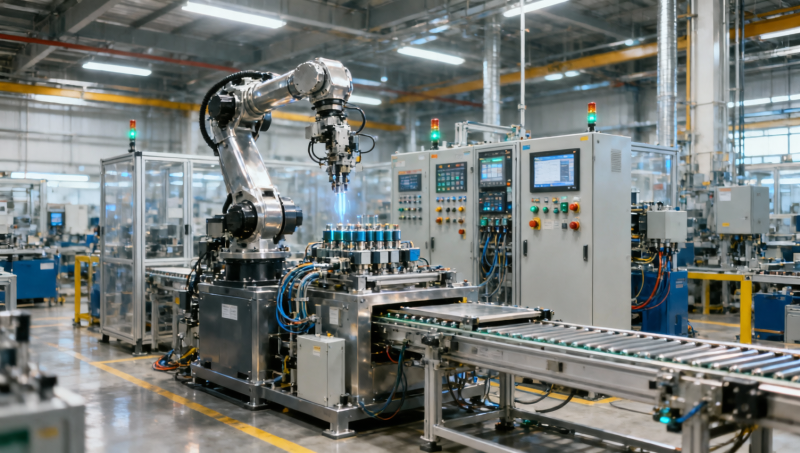
In 2026, industrial equipment price trends are being shaped by supply chain shifts, industrial IoT solutions, and rising demand for heavy duty industrial equipment across smart factories. For buyers comparing an industrial machinery supplier, MES software sourcing, or control systems OEM options, understanding these cost drivers is essential to unlocking smart manufacturing benefits and making lower-risk automation investments.
For most buyers, operators, sourcing teams, and manufacturing decision-makers, the short answer is this: industrial equipment prices in 2026 are not being driven by one single factor. They are being shaped by a mix of component costs, software content, energy efficiency requirements, regional supply chain strategy, compliance standards, and the growing expectation that machines must be automation-ready from day one. That means price comparisons based only on upfront equipment quotes are increasingly misleading.
If you are evaluating robotics, PLC platforms, motion systems, pneumatic and hydraulic equipment, or MES-connected production assets, the real question is not just “Why is this machine more expensive?” but “What exactly am I paying for, what risks does it remove, and what lifetime value does it create?”
What is really pushing industrial equipment prices higher in 2026?
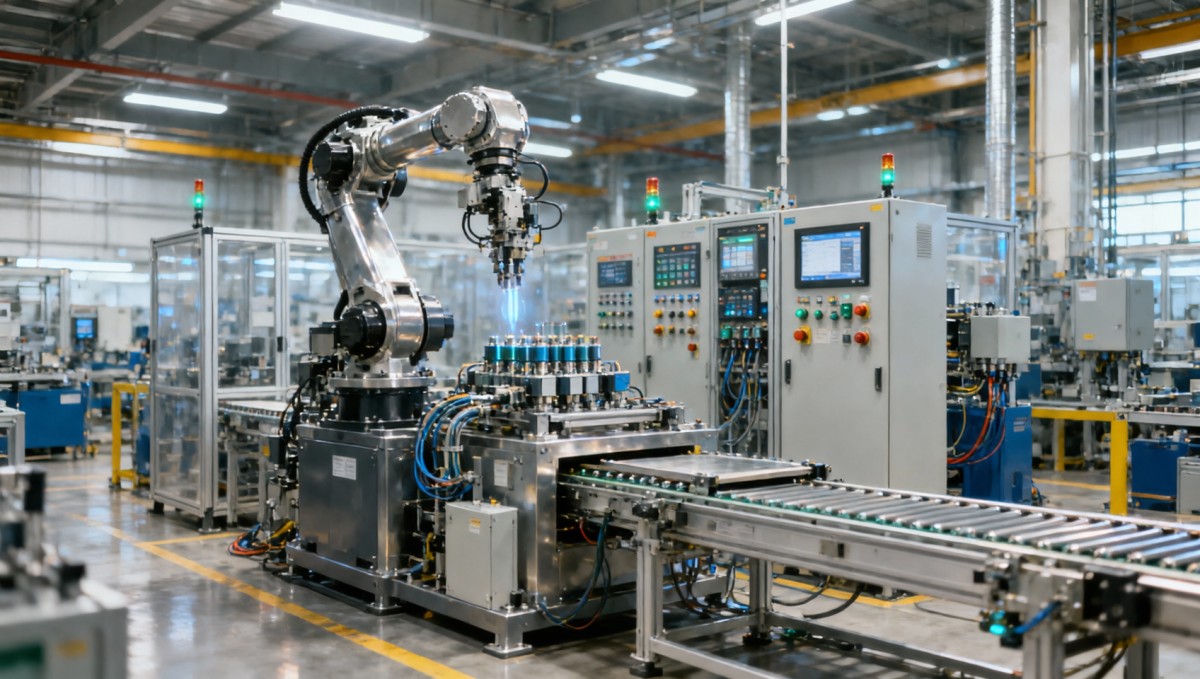
Several forces are converging at the same time, and together they are reshaping industrial machinery pricing.
1. Smarter equipment now includes more software and connectivity.
In many categories, the machine is no longer just a mechanical asset. It may include embedded sensors, remote diagnostics, edge computing capability, machine vision integration, cybersecurity features, and compatibility with industrial IoT solutions. Buyers are paying not only for steel, motors, valves, and controllers, but also for data capability and future interoperability.
2. Core components remain sensitive to global supply chain volatility.
Servo drives, semiconductors, industrial controllers, specialty metals, precision bearings, and power electronics still face cost pressure from regional reshoring, trade restrictions, logistics variability, and uneven supplier capacity. Even when lead times improve, pricing may stay elevated because manufacturers are building redundancy into sourcing.
3. Energy efficiency and compliance add cost, but often reduce lifetime expense.
High-efficiency motors, regenerative drives, low-leakage pneumatics, safer control architectures, and machines designed to meet ISO, IEC, and CE requirements often cost more upfront. However, these features can lower operating cost, reduce downtime, and improve audit readiness. In 2026, compliance and efficiency are increasingly priced in as baseline requirements rather than premium add-ons.
4. Labor scarcity is increasing demand for automation-ready systems.
As factories continue to face skill shortages and labor cost pressure, more companies are investing in robotics, cobots, integrated control systems, and easier-to-maintain equipment. Rising demand for these systems gives suppliers more pricing power, especially in high-performance or application-specific segments.
5. Customization is becoming more common.
Many factories no longer want generic machines. They want equipment that fits MES/ERP workflows, supports traceability, integrates with existing PLC architecture, or handles mixed production demands. Custom engineering, validation, and integration support can significantly raise total project cost.
Which equipment categories are seeing the biggest pricing pressure?
Not all industrial equipment is moving the same way. Buyers should expect very different pricing behavior depending on the category.
Industrial robotics and cobots:
Prices are influenced by payload class, vision integration, safety features, software licensing, and deployment complexity. Entry-level collaborative robots may become more accessible, but advanced robotic cells with inspection, palletizing, or adaptive automation functions can rise sharply in cost.
PLC and control systems:
Controller hardware pricing depends on processor capacity, I/O scale, network protocol support, cybersecurity requirements, and ecosystem compatibility. A lower-cost PLC may create higher integration cost if it does not fit the plant’s existing standards.
Motion control and transmission:
Servo motors, drives, gearboxes, and precision linear systems remain exposed to component quality, tolerance requirements, and application duty cycle. For high-speed or high-precision production, pricing usually reflects performance stability more than raw materials alone.
Industrial IoT, MES, and software-linked systems:
Software-enabled equipment often introduces recurring costs through licensing, implementation, updates, support, and cybersecurity maintenance. Buyers comparing MES software sourcing or connected equipment should include these costs early rather than treat them as secondary.
Pneumatic and hydraulic systems:
Heavy duty industrial equipment in these segments is affected by metal input costs, sealing technology, fluid power efficiency, contamination resistance, and serviceability. In demanding industrial environments, lower-cost components can quickly become expensive through leaks, failures, and maintenance downtime.
Why the lowest quoted price is often the wrong benchmark
One of the biggest procurement mistakes in 2026 is evaluating industrial machinery suppliers mainly on initial purchase price. The more useful benchmark is total cost of ownership over the equipment life cycle.
That includes:
- Installation and commissioning cost
- Integration with existing automation architecture
- Software licensing and update requirements
- Operator training and usability
- Maintenance frequency and spare parts availability
- Energy consumption
- Downtime risk
- Cybersecurity and compliance support
- Scalability for future production changes
For example, a cheaper control platform may save budget upfront but increase engineering hours, reduce diagnostics visibility, and create future upgrade barriers. A higher-priced machine with better data integration and support may deliver faster commissioning, better OEE, and lower risk over time.
This matters especially for enterprise decision-makers who need to justify capital allocation. The best purchase is often the option that lowers operational uncertainty, not just the one that lowers PO value.
How should buyers evaluate whether a higher equipment price is justified?
A practical evaluation framework can help teams separate true value from inflated pricing.
Ask what part of the price comes from performance-critical engineering.
If the premium comes from durability, accuracy, throughput, safety architecture, or integration readiness, it may be justified. If pricing is vague and unsupported by technical differentiation, caution is warranted.
Check standards, certifications, and documentation quality.
Equipment aligned with ISO, IEC, and CE expectations often reduces downstream risk. Strong technical documentation, validation records, and transparent test data are signs of maturity.
Compare support capability, not just hardware specification.
A control systems OEM or industrial machinery supplier with strong commissioning support, application engineering, and spare parts access can create major value. Weak after-sales support often turns a low-cost purchase into a high-cost problem.
Review integration burden.
Can the equipment connect cleanly to MES, ERP, SCADA, existing PLC environments, and plant data systems? Integration friction is one of the most underestimated hidden costs in automation projects.
Model risk scenarios.
What happens if a key part fails, a software patch is required, or a line expansion is needed within 18 months? Price should be evaluated against resilience, not only functionality at startup.
What do different stakeholders care about most?
Industrial equipment pricing is judged differently depending on the reader’s role, so useful analysis must reflect that reality.
Information researchers want market clarity. They need to know whether current price levels are temporary, structural, or driven by technology transition.
Operators and technical users care about usability, maintainability, reliability, and whether “premium” equipment actually makes work easier, safer, and more stable.
Procurement teams focus on quote comparability, supplier risk, standardization, and how to negotiate without creating hidden lifecycle costs.
Business leaders care most about return on investment, capacity impact, energy savings, labor substitution, implementation risk, and the strategic value of future-ready automation.
In practice, the best purchase decisions come from combining these viewpoints. Equipment pricing should be reviewed as a technical, operational, and financial question at the same time.
How to make better industrial equipment buying decisions in 2026
If your factory is planning automation or capacity upgrades, a few actions can improve decision quality immediately.
- Build a comparison model that includes lifecycle cost, not just acquisition cost.
- Standardize evaluation criteria across suppliers: compliance, interoperability, support, lead time, spare parts, and software structure.
- Prioritize equipment that supports smart manufacturing benefits: better data visibility, easier maintenance, scalability, and lower unplanned downtime.
- Challenge unclear premiums: ask suppliers to link price to measurable engineering value.
- Use benchmark-based validation where possible: compare performance claims against recognized international standards and application evidence.
- Align sourcing with plant architecture: the wrong standalone machine can be more expensive than the right integrated one.
In 2026, successful buyers will not be those who simply find the cheapest machine. They will be the teams that understand how pricing reflects capability, risk transfer, and long-term production value.
Conclusion
Industrial equipment prices in 2026 are being driven by a deeper shift in manufacturing itself. As factories move toward smarter, more connected, and more efficient operations, equipment increasingly combines mechanical performance with software intelligence, compliance readiness, and integration value. That changes how prices are built and how they should be judged.
For buyers evaluating heavy duty industrial equipment, industrial IoT solutions, MES-linked assets, or a new industrial machinery supplier, the key is to look beyond the quote. The real decision is whether the equipment reduces operational risk, fits the factory’s digital future, and delivers measurable value over time. When price is evaluated through that lens, better automation decisions become much easier to make.
- industrial robotics
- collaborative robots
- motion control
- servo motors
- industrial IoT
- MES software
- hydraulic systems
- control systems
- smart manufacturing
- industrial control
- industrial machinery
- industrial equipment
- control systems OEM
- MES software sourcing
- industrial machinery supplier
- industrial equipment price
- industrial IoT solutions
- smart manufacturing benefits
- heavy duty industrial equipment
Recommended News
- 2026/10/24Car Spare Parts: How to Check Fitment and Avoid Ordering the Wrong PartOrder car spare parts with confidence. Learn how to verify VINs, OEM numbers, and fitment details to avoid costly mistakes and choose the right replacement first time.
- 2026/10/23How Do You Select a Motion Control System for Synchronized Axes?How do I select a motion control system for synchronized axes? Discover key timing, feedback, and performance checks to choose confidently and reduce costly integration risks.
- 2026/10/23Integrating End-of-Line Sortation with Packing Stations and Conveyor ControlsOptimize end of line sortation with coordinated packing stations and conveyor controls. Learn how to prevent bottlenecks, improve routing accuracy, and handle exceptions reliably.