
Search News
Industry Portal
Popular Tags
How to compare an industrial automation manufacturer in 2026
Author
Dr. Victor Gear
Time
May 02, 2026
Pageviews
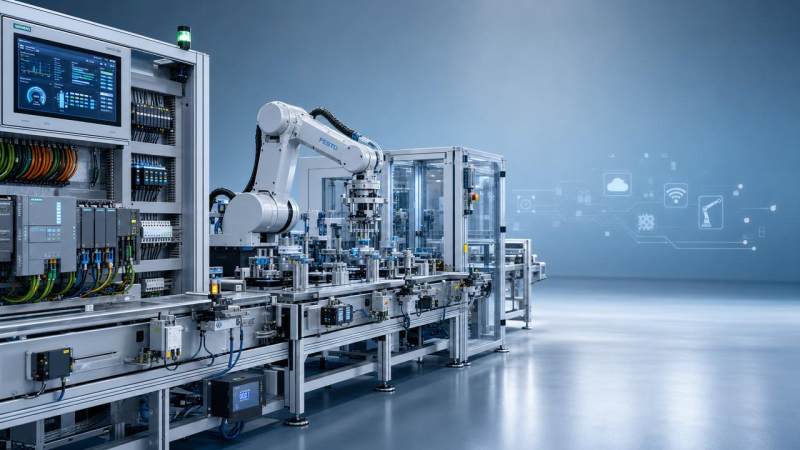
Choosing the right industrial automation manufacturer in 2026 is no longer just about price or product range—it is about data transparency, standards compliance, software compatibility, and long-term operational resilience. For business decision-makers, a structured comparison framework can reduce investment risk, improve production efficiency, and reveal which suppliers truly support smart manufacturing goals in an increasingly complex Industry 4.0 landscape.
Why scenario differences matter when comparing an industrial automation manufacturer
An industrial automation manufacturer may look impressive on a brochure, yet still be the wrong fit for a specific factory environment. A food packaging plant, an automotive supplier, an electronics assembler, and a heavy-process facility all require different balances of speed, hygiene, integration depth, uptime strategy, and regulatory traceability. In 2026, the comparison process must start with application context, not with catalog size alone.
For enterprise decision-makers, the main risk is false equivalence. Two suppliers may both offer robots, PLCs, drives, sensors, and software, but one may be stronger in motion synchronization, while another leads in cross-site MES connectivity or in validated compliance documentation. That is why a serious comparison of an industrial automation manufacturer should focus on where the system will be used, who will operate it, and how performance will be measured over five to ten years.
A scenario-based review also helps internal stakeholders align faster. Operations teams care about uptime and maintenance cycles. Engineering teams focus on interfaces, standards, and diagnostics. Finance departments look at total cost of ownership. Executive leadership wants scalability and strategic resilience. Comparing manufacturers through these use cases produces a more defensible procurement decision.
The most common business scenarios in 2026
Most buyers evaluating an industrial automation manufacturer fall into one of several repeatable business scenarios. Identifying your primary one is the fastest way to narrow the field and avoid overbuying or under-specifying the solution.
This comparison lens is especially useful for companies working with industrial robotics, PLC and control systems, motion control, industrial IoT software, or pneumatic and hydraulic systems. In every case, the best industrial automation manufacturer is the one whose strengths match the production scenario.
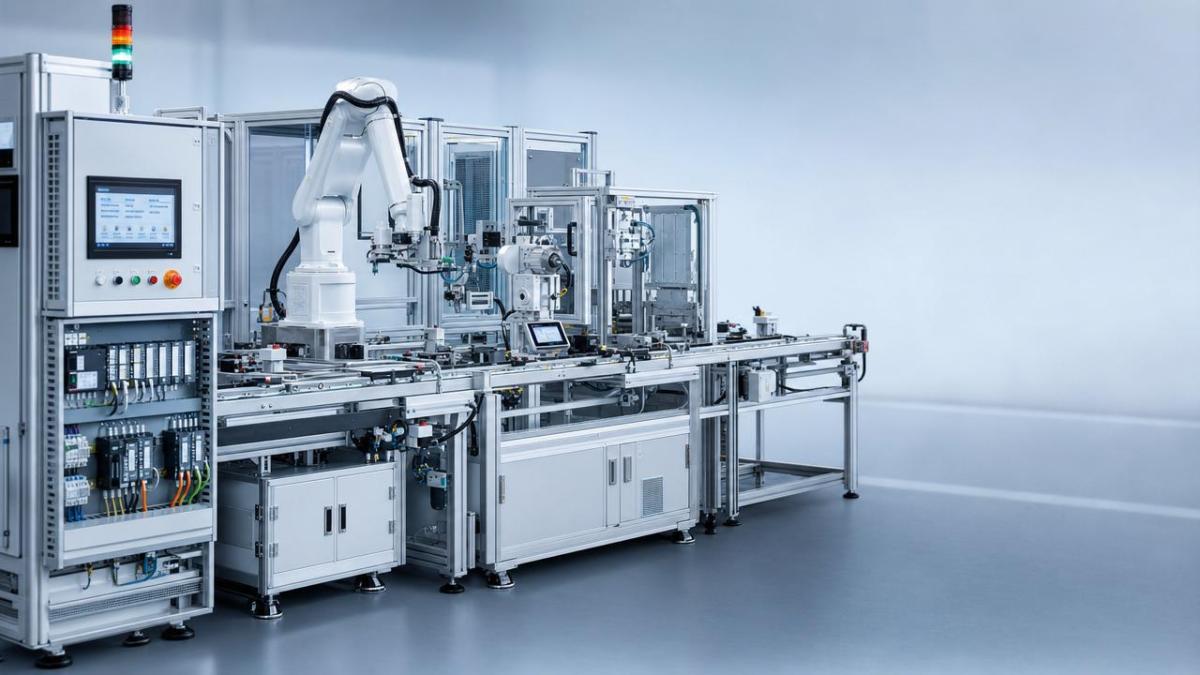
Scenario 1: Greenfield factories need platform strategy, not isolated equipment
If your company is building a new production site, comparing an industrial automation manufacturer should begin with system architecture. In greenfield projects, short-term hardware performance matters, but long-term interoperability matters more. The manufacturer should show how robotics, control platforms, motion systems, industrial software, and data layers will operate as one environment.
Key questions include whether the supplier supports open communication standards, whether MES and ERP integration is proven, and whether engineering tools allow simulation before commissioning. Business leaders should also assess whether the manufacturer can support phased expansion. A line that starts with one production cell may need to scale into multiple automated zones across several shifts or several countries.
In this scenario, a strong industrial automation manufacturer is usually one with deep engineering documentation, strong compliance records, and transparent reference architectures. A broad product catalog without integration maturity is often a warning sign.
Scenario 2: Brownfield retrofits demand compatibility and migration discipline
For manufacturers upgrading existing lines, the comparison logic changes. Here, the wrong partner can create production disruption, hidden rewiring costs, and software lock-in. When evaluating an industrial automation manufacturer for retrofit work, decision-makers should focus on migration pathways rather than feature depth alone.
You need evidence that the supplier can coexist with legacy PLCs, older field devices, installed drives, or mixed-brand HMIs. Protocol conversion, phased commissioning, and backward compatibility often determine project success more than raw technology sophistication. This is particularly true in facilities where downtime is more expensive than capital expenditure.
A reliable industrial automation manufacturer in retrofit scenarios should provide audit tools, transition roadmaps, and practical support for mixed environments. Suppliers that insist on complete replacement from day one may increase risk unless there is a compelling business case.
Scenario 3: High-mix production values flexibility, training, and rapid reconfiguration
Electronics assembly, contract manufacturing, specialty packaging, and customized industrial products often operate in high-mix, low-volume conditions. In these environments, comparing an industrial automation manufacturer requires attention to adaptability. The winning solution is not always the fastest one; it is the one that reduces changeover time, simplifies programming, and supports varied product runs without creating engineering bottlenecks.
Collaborative robots, modular control architecture, recipe management, and user-friendly interfaces become critical. If internal teams must constantly call external engineers for every small adjustment, the automation investment loses flexibility. For this reason, enterprise buyers should evaluate how quickly plant staff can learn the platform and whether diagnostics are clear enough for in-house troubleshooting.
A capable industrial automation manufacturer should be able to demonstrate real applications where frequent product changes were managed without sacrificing traceability, safety, or quality consistency.
Scenario 4: High-volume operations need predictable uptime and service depth
In automotive components, consumer goods, logistics automation, and other throughput-driven environments, the comparison criteria become more operationally strict. An industrial automation manufacturer may offer advanced technology, but if spare parts lead times are long or remote diagnostics are weak, production losses can quickly exceed any purchase savings.
In these cases, buyers should compare mean time between failures, support response structure, installed base maturity, and predictive maintenance tools. Motion control precision, control loop stability, and repeatability are commercial issues, not only technical ones, because small variations can become major cost factors at scale.
The best industrial automation manufacturer for a high-volume facility is often the one with robust lifecycle support, proven reliability data, and a service model aligned to production continuity.
How requirements differ by stakeholder and company scale
A comparison framework should also reflect who is making the decision and how large the business is. A mid-sized manufacturer may prioritize a faster payback period and easier deployment, while a global enterprise may favor standardization across sites and deep cybersecurity governance.
This is where data transparency becomes essential. Organizations such as G-IFA help decision-makers compare manufacturers against standards, benchmarks, and cross-category performance signals, making it easier to separate marketing claims from engineering credibility.
Common comparison mistakes decision-makers should avoid
One common mistake is choosing an industrial automation manufacturer based only on upfront equipment cost. Lower purchase price can hide future software license costs, integration delays, retraining burdens, and weak service availability. Total cost of ownership should include maintenance, energy use, upgrade paths, downtime exposure, and obsolescence planning.
Another error is treating compliance as a formality. In 2026, standards alignment with ISO, IEC, CE, and cybersecurity expectations is a strategic factor. Compliance affects insurance, export readiness, audit performance, and customer confidence. A manufacturer that cannot provide verifiable conformity records may increase risk far beyond the engineering department.
A third mistake is ignoring software fit. Even when evaluating hardware-heavy categories such as servo systems, robots, or pneumatics, software layers matter. Diagnostics, analytics, remote access control, and MES or ERP connectivity strongly influence long-term efficiency. A modern industrial automation manufacturer should be assessed as a hardware-software ecosystem partner, not merely a component supplier.
A practical checklist to compare an industrial automation manufacturer
Before issuing requests for proposal or entering final negotiations, business leaders should validate a short list using a structured checklist:
- Match the supplier to your dominant production scenario: greenfield, retrofit, flexible production, or high-volume automation.
- Confirm standards compliance and request verifiable documentation, not summary claims.
- Assess integration capability across robotics, control systems, motion, IIoT software, and fluid power systems where relevant.
- Evaluate lifecycle support, spare parts strategy, and regional service responsiveness.
- Review software openness, cybersecurity controls, and compatibility with MES or ERP environments.
- Ask for scenario-specific references that resemble your own operational realities.
Conclusion: compare by fit, proof, and future readiness
To compare an industrial automation manufacturer effectively in 2026, decision-makers should begin with the production scenario, then test each supplier against operational fit, standards compliance, integration capability, and service resilience. The right choice for one factory may be the wrong choice for another, even within the same industry. What matters is how well the manufacturer supports your business model, your technical ecosystem, and your long-term digital manufacturing roadmap.
If your organization is preparing for supplier evaluation, start by defining the line environment, upgrade horizon, data requirements, and uptime risks. Then compare each industrial automation manufacturer through evidence, not positioning. A structured benchmark-led approach will help you invest with more confidence and build automation capacity that remains competitive well beyond 2026.
Recommended News
- 2026/10/24Car Spare Parts: How to Check Fitment and Avoid Ordering the Wrong PartOrder car spare parts with confidence. Learn how to verify VINs, OEM numbers, and fitment details to avoid costly mistakes and choose the right replacement first time.
- 2026/10/23How Do You Select a Motion Control System for Synchronized Axes?How do I select a motion control system for synchronized axes? Discover key timing, feedback, and performance checks to choose confidently and reduce costly integration risks.
- 2026/10/23Integrating End-of-Line Sortation with Packing Stations and Conveyor ControlsOptimize end of line sortation with coordinated packing stations and conveyor controls. Learn how to prevent bottlenecks, improve routing accuracy, and handle exceptions reliably.