
Search News
Industry Portal
Popular Tags
How to compare industrial robotics manufacturers beyond payload
Author
Dr. Victor Gear
Time
May 07, 2026
Pageviews
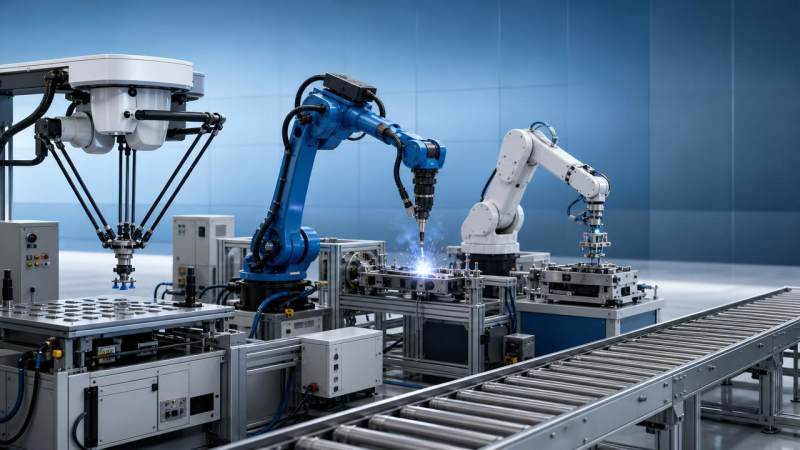
Choosing an industrial robotics manufacturer by payload alone can expose buyers to hidden integration costs, downtime risks, and long-term performance gaps. For business evaluators, a smarter comparison must include control architecture, software compatibility, precision stability, lifecycle support, compliance, and total cost of ownership. This guide outlines the factors that matter most when assessing suppliers beyond headline specs.
Why scenario differences matter when comparing an industrial robotics manufacturer
A payload figure looks simple, but real procurement decisions are rarely simple. A business evaluator reviewing an industrial robotics manufacturer for welding cells will not judge suppliers the same way as a team sourcing robots for electronics assembly, palletizing, or mixed-model packaging. The operating rhythm, tolerance demands, software environment, and maintenance expectations all change by application. That is why the most reliable supplier comparison starts with the production scenario, not the brochure headline.
For Global Intelligent Factory & Automation (G-IFA), this approach reflects a broader Industry 4.0 reality: robot performance is no longer only mechanical. The real benchmark sits at the intersection of arm design, controller capability, motion quality, safety architecture, communication standards, and long-term engineering support. In other words, the best industrial robotics manufacturer for one factory may be a poor fit for another if the surrounding system requirements differ.
Business evaluators should therefore ask a more practical question: in our production context, which supplier capabilities reduce risk, accelerate commissioning, and protect lifecycle value? That shift turns vendor comparison from a catalog exercise into an investment-quality assessment.
Typical application scenarios and what buyers should compare first
Different automation environments create different selection priorities. Before scoring any industrial robotics manufacturer, define the dominant use case and identify the performance factors that affect output, quality, and service continuity.
This scenario-first view helps evaluators avoid overpaying for capabilities they will not use, while also preventing underinvestment in control, software, or support features that directly affect business results.
Scenario 1: High-speed manufacturing lines need motion quality more than headline capacity
In packaging, food handling, consumer goods, and fast-moving assembly environments, the wrong comparison method often starts with reach and payload, then ignores cycle stability. Here, the better industrial robotics manufacturer is usually the one that can maintain repeatable motion over long shifts with low vibration, predictable acceleration, and minimal quality drift.
Evaluators should request more than nominal speed. Ask for sustained throughput under realistic duty cycles, not just ideal laboratory values. Review the controller’s ability to coordinate conveyors, sensors, and upstream PLC logic. In high-output factories, every millisecond of hesitation at handoff points compounds into measurable line loss. A robot that appears cheaper at purchase can become expensive if it creates micro-stops or requires frequent retuning.
This is also a strong use case for checking software tools. A capable industrial robotics manufacturer should offer simulation, offline programming, diagnostics, and communication support that reduce commissioning time. For business evaluators, that translates into a shorter ramp-up and lower risk of production disruption.
Scenario 2: Welding and heavy industrial cells require durability, path control, and service depth
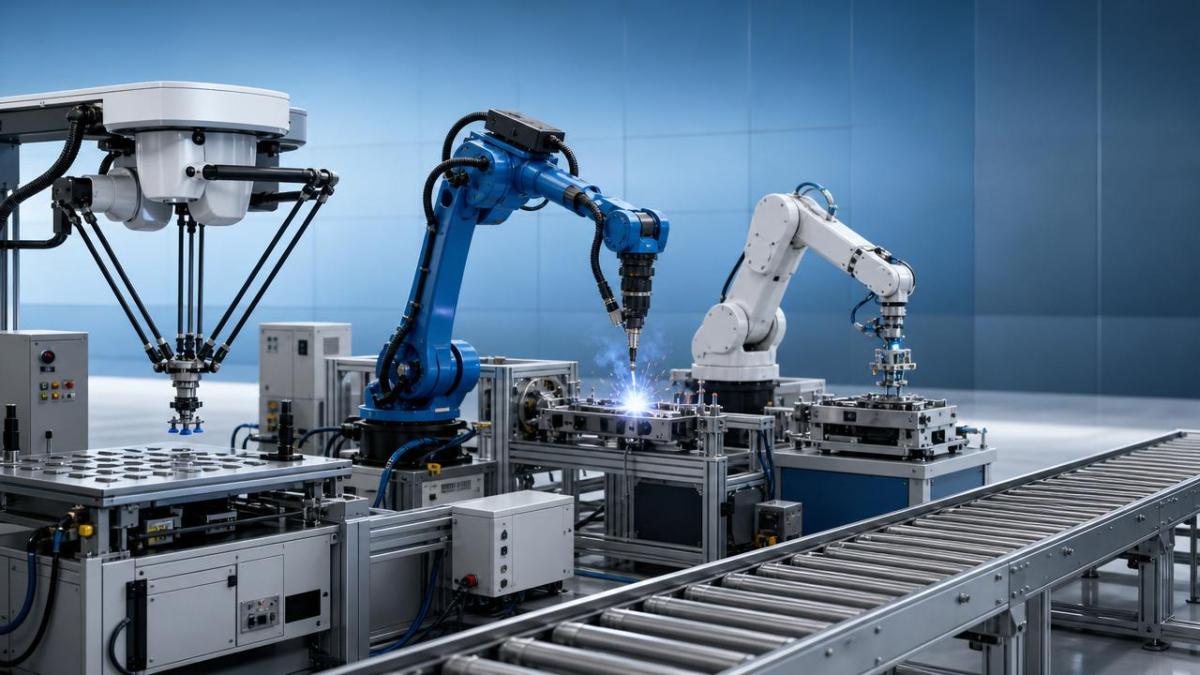
In metalworking, automotive subassembly, and structural fabrication, payload still matters, but it is rarely the full decision driver. The stronger industrial robotics manufacturer for this scenario is often the one with better path accuracy, more stable torch movement, stronger protection against dust and heat, and field-proven integration with welding power sources and positioners.
Business teams should examine three layers. First, assess process compatibility: does the supplier support the welding packages, seam tracking, and sensing options your integrator expects? Second, review serviceability: are spare wrists, dress packs, and controller parts available regionally? Third, verify lifecycle resilience: how often do recalibration, preventive maintenance, and consumable replacements affect uptime?
A manufacturer with strong hardware but weak regional support can become a bottleneck in heavy-duty applications. That is especially important for plants operating around the clock or across multiple geographies. G-IFA-style benchmarking is valuable here because the real risk is not only initial installation success, but the supplier’s ability to sustain stable output against international compliance and engineering expectations.
Scenario 3: Precision assembly and electronics production depend on stability and digital compatibility
For electronics, medical device assembly, precision parts handling, and small-component inspection, an industrial robotics manufacturer should be judged heavily on precision retention, vision integration, and digital traceability. In these settings, downtime is costly, but silent quality drift can be even more damaging because it creates scrap, rework, and customer complaints before the issue is detected.
Look at repeatability data in context. Ask how the robot performs after thermal variation, long operating hours, and multiple product changeovers. Review whether the controller supports camera systems, MES connectivity, and recipe management without custom middleware that increases integration cost. A robot platform that fits neatly into plant software architecture usually delivers better total value than one that forces engineering workarounds.
In this scenario, compliance and cleanliness may also matter more than raw force. Depending on the product environment, evaluators may need to confirm ESD protection, cleanroom suitability, or validation support. The right industrial robotics manufacturer is therefore not simply the one with the highest mechanical specification, but the one whose full stack aligns with precision manufacturing discipline.
Scenario 4: Flexible machine tending and mixed-model production reward ease of changeover
Many small and mid-sized manufacturers invest in robotics not for maximum volume, but for flexibility. In CNC tending, part transfer, light assembly, and low-batch multi-SKU environments, the preferred industrial robotics manufacturer is often the one that reduces programming effort and supports rapid redeployment.
Here, user experience matters. Can plant technicians update recipes without relying on external specialists? Does the interface support guided setup, digital twins, or reusable templates? Are safety functions embedded in a way that simplifies collaboration between operators and automation cells? These practical issues often determine whether the robot becomes a productive asset or an underused machine.
This is also where business evaluators should compare training ecosystems. A sophisticated robot with a steep learning curve may be less valuable than a slightly less advanced system that operators can maintain confidently. The best industrial robotics manufacturer in mixed production is the one that fits workforce capability as well as application needs.
How to compare manufacturers across software, controls, and compliance
Across nearly all scenarios, three non-payload dimensions shape procurement quality: control architecture, software interoperability, and standards compliance. These areas directly affect line integration, cybersecurity posture, validation effort, and future scalability.
- Control architecture: Evaluate motion synchronization, controller openness, diagnostic depth, and compatibility with existing PLC and SCADA systems.
- Software compatibility: Check support for offline programming, APIs, fieldbus protocols, MES/ERP data exchange, and analytics tools.
- Compliance: Confirm alignment with relevant ISO, IEC, CE, and safety requirements, especially for multinational deployment.
- Cyber and remote service readiness: Ask how updates, access control, and remote troubleshooting are managed.
A mature industrial robotics manufacturer should be able to provide clear engineering documentation, application notes, and integration references. If these are vague, the factory may end up absorbing hidden engineering burden after purchase.
Common misjudgments business evaluators should avoid
Several supplier comparisons fail because the evaluation model is too narrow. One common mistake is treating payload as a proxy for overall capability. Another is assuming repeatability numbers are equally meaningful across different duty cycles and environmental conditions. A third is overlooking service network coverage until an urgent failure occurs.
It is also risky to compare one industrial robotics manufacturer against another without considering the surrounding stack: grippers, vision, safety, conveyors, PLCs, and data systems. In practice, integration friction often drives more cost than the robot arm itself. Evaluators should therefore ask for complete cell-level assumptions when reviewing quotations.
Finally, do not underestimate roadmap fit. If your enterprise plans to expand into connected factories, predictive maintenance, or multi-site standardization, the chosen supplier must support that direction. A low-cost robot that cannot scale across plants may undermine long-term automation strategy.
A practical checklist for scenario-based supplier selection
To compare an industrial robotics manufacturer with more confidence, business evaluators can use a simple staged checklist:
- Define the production scenario: volume, variability, takt time, and quality sensitivity.
- Map integration conditions: PLC platform, software stack, safety design, and data requirements.
- Request application-specific proof: case references, benchmark data, and realistic cycle assumptions.
- Score lifecycle support: training, local spare parts, preventive service, and remote diagnostics.
- Review total cost of ownership over several years, not just acquisition price.
This framework is especially useful in cross-functional procurement, where engineering, operations, finance, and quality teams may otherwise prioritize different criteria.
FAQ for business evaluators comparing an industrial robotics manufacturer
Is payload still important?
Yes, but it is a threshold metric, not a full decision metric. Once payload and reach meet the application need, factors such as control quality, integration effort, uptime, and support often determine actual return on investment.
What is the most overlooked comparison factor?
Software and controls. Many buyers underestimate how much commissioning time, changeover speed, and future scalability depend on controller architecture and digital compatibility.
How should multi-site manufacturers compare suppliers?
Prioritize standardization potential: common programming environments, global service coverage, compliance alignment, and consistent spare parts logistics. The best industrial robotics manufacturer for a global enterprise is often the one that reduces complexity across sites.
Final takeaway: match the manufacturer to the factory scenario, not the brochure headline
Choosing an industrial robotics manufacturer beyond payload is ultimately about fit. High-speed lines need motion consistency and controller responsiveness. Welding cells need rugged reliability and process integration. Precision assembly needs accuracy retention and software alignment. Flexible production needs ease of reprogramming and manageable training demands. In every case, the winning supplier is the one that reduces operational risk while supporting measurable business performance.
For evaluators working in modern automation environments, a scenario-based assessment creates a stronger decision path than broad feature comparison alone. Start with the production reality, test the surrounding ecosystem, and benchmark lifecycle support with the same seriousness as mechanical specification. That is how supplier selection becomes a strategic advantage rather than a procurement gamble.
Recommended News
- 2026/10/24Car Spare Parts: How to Check Fitment and Avoid Ordering the Wrong PartOrder car spare parts with confidence. Learn how to verify VINs, OEM numbers, and fitment details to avoid costly mistakes and choose the right replacement first time.
- 2026/10/23How Do You Select a Motion Control System for Synchronized Axes?How do I select a motion control system for synchronized axes? Discover key timing, feedback, and performance checks to choose confidently and reduce costly integration risks.
- 2026/10/23Integrating End-of-Line Sortation with Packing Stations and Conveyor ControlsOptimize end of line sortation with coordinated packing stations and conveyor controls. Learn how to prevent bottlenecks, improve routing accuracy, and handle exceptions reliably.