
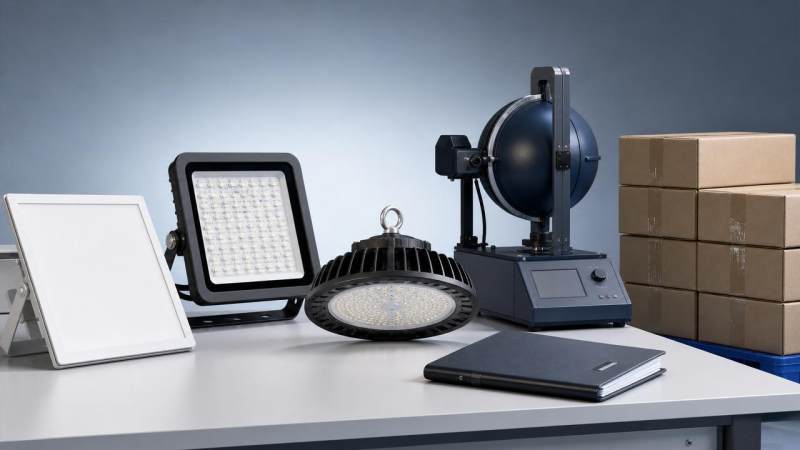
For distributors, agents, and regional resellers, lighting Alibaba sourcing in 2026 remains attractive—but reliability now depends less on platform visibility and more on supplier verification, compliance checks, and long-term quality control. As global buyers face tighter margins, faster delivery expectations, and stricter certification demands, choosing the right lighting partner requires a more technical and data-driven approach. This article examines whether Alibaba is still a dependable channel for lighting procurement and how professional buyers can reduce sourcing risks before committing to volume orders.
The short answer: Alibaba is still useful, but not self-verifying
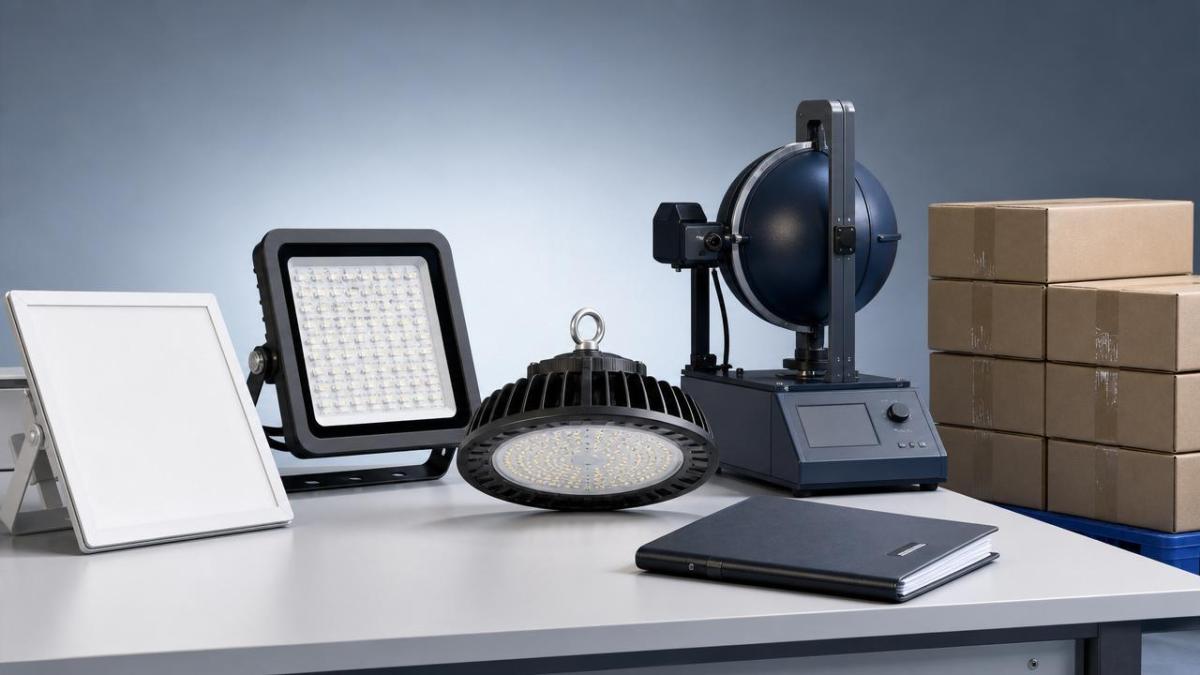
For lighting distributors, Alibaba remains a powerful sourcing gateway in 2026, especially for LED fixtures, commercial luminaires, and private-label products.
However, the platform should not be treated as a guarantee of supplier reliability, product compliance, or long-term delivery stability.
The real question is not whether lighting Alibaba sourcing works, but whether your team has a disciplined verification process.
Professional buyers can still find capable factories, competitive pricing, and flexible customization, but weak screening creates costly downstream risks.
These risks include inconsistent lumen output, missing certificates, driver failures, packaging damage, and after-sales disputes across regional markets.
In 2026, reliable sourcing depends on combining platform discovery with technical audits, sample validation, documentation review, and batch-level inspection.
What distributors actually need from lighting suppliers
Distributors rarely buy lighting only for a single transaction; they need repeatable supply that supports their local customer relationships.
A supplier that offers low prices but unstable quality can damage a reseller’s reputation faster than it improves margins.
Professional buyers usually care about five practical factors: compliance, performance consistency, delivery reliability, customization capability, and warranty response.
For commercial lighting, product data must be credible, not simply attractive on a catalog page or Alibaba storefront.
Distributors need accurate wattage, luminous efficacy, color temperature tolerance, CRI values, beam angles, thermal design, and driver specifications.
For regional agents, certification is equally important because importers often carry legal responsibility after products enter the destination market.
CE, RoHS, UKCA, ETL, DLC, FCC, CB, or local energy labels may be required depending on the region.
A reliable supplier should know which certificates apply to your market, not simply send generic documents when requested.
Where Alibaba still delivers real sourcing value
Alibaba’s biggest advantage is supplier visibility. Buyers can quickly compare product categories, price ranges, minimum order quantities, and customization options.
For distributors exploring new product lines, this saves significant research time compared with relying only on trade fairs.
The platform is especially useful for identifying factories producing LED panels, floodlights, streetlights, high bays, downlights, and smart lighting products.
Many Chinese lighting manufacturers are experienced in OEM and ODM projects, making Alibaba useful for private-label development.
Buyers can also test market demand with smaller trial orders before committing to container-level purchasing or exclusive agency agreements.
Another advantage is competitive pressure. Since many suppliers operate in similar categories, pricing transparency can help negotiate better terms.
Yet price comparison alone is dangerous because lighting products often look similar while internal components differ substantially.
Two fixtures with the same wattage may use different LED chips, drivers, heat sinks, optics, and surge protection designs.
The main risks in lighting Alibaba sourcing in 2026
The largest risk is not outright fraud; it is the gap between listed product claims and repeatable production quality.
Many suppliers present strong product images, but their engineering discipline, factory controls, and export documentation may be weaker.
For lighting, hidden quality differences often appear after installation, when warranty costs become difficult to recover from overseas suppliers.
Common problems include light decay, flickering, poor thermal management, inconsistent color temperature, low power factor, and driver instability.
Distributors should also watch for certificate misuse, where documents belong to another model, another factory, or an outdated product version.
Another risk is supplier identity confusion. Some Alibaba sellers are manufacturers, while others are trading companies or small assemblers.
Trading companies are not always bad, but buyers must understand who controls engineering changes, production scheduling, and quality responsibility.
In 2026, logistics volatility and regional compliance tightening make weak supplier selection more expensive than before.
How to verify whether a lighting supplier is reliable
Start by identifying whether the supplier is a real manufacturer, a trading company, or a hybrid export organization.
Ask for a business license, factory address, production videos, product line photos, and references from similar export markets.
Then verify whether the supplier can explain technical details without relying only on catalog language or sales slogans.
A capable lighting factory should discuss LED chip brands, driver options, heat dissipation, surge protection, photometric files, and aging tests.
Ask for IES files, LM-79 reports, LM-80 data, TM-21 projections, and integrating sphere test results when relevant.
For outdoor and industrial lighting, request IP rating reports, IK impact testing, salt spray results, and temperature rise test data.
Do not accept certificates without checking model numbers, issuing bodies, validity dates, and whether the report matches your selected configuration.
If the supplier avoids technical questions or provides inconsistent answers, that is a stronger warning sign than a higher price.
Sample testing should decide more than the product page
Before placing volume orders, distributors should buy samples from shortlisted suppliers and test them against the claimed specifications.
Samples should be checked for construction quality, brightness, color consistency, packaging strength, labeling accuracy, and installation convenience.
If possible, send samples to a third-party laboratory or use trusted local testing facilities for key performance checks.
A visual inspection is not enough because poor drivers, weak soldering, or thermal problems may not appear immediately.
Run burn-in tests, temperature checks, and repeated switching tests to identify failures before products reach your customers.
Compare multiple samples from the same supplier, not just one perfect unit prepared specially for approval.
For private-label projects, confirm logo durability, packaging artwork, barcode accuracy, instruction manuals, and market-specific warning labels.
Sample approval should become a controlled reference standard, with signed specifications attached to purchase orders.
Pricing: cheap lighting is not always profitable lighting
Alibaba can help distributors find competitive prices, but the lowest quotation is rarely the best commercial decision.
Lighting cost depends heavily on internal components, including LED chips, drivers, aluminum housing weight, optics, cables, and protection circuits.
A supplier can reduce price by using thinner housings, lower-grade drivers, weaker packaging, or less rigorous quality control.
These savings may disappear quickly through returns, replacement shipments, customer complaints, and damaged reseller relationships.
Professional buyers should calculate total landed cost, including freight, duties, testing, inspection, warranty reserve, and potential failure rates.
For distributors, profitability comes from stable repeat orders, not simply winning one purchase at the lowest unit price.
Ask suppliers to break down optional component choices and explain how each option affects lifespan, warranty, and certification.
This allows you to create good, better, and premium product tiers for different customer segments.
Compliance is now a commercial requirement, not paperwork
In many markets, lighting compliance has become stricter because energy efficiency, electromagnetic compatibility, and safety requirements keep evolving.
Distributors must ensure products meet the standards of the destination market before advertising, importing, or tendering.
For example, North American buyers may need ETL, UL-related compliance, DLC listing, FCC, and specific energy performance data.
European buyers often focus on CE, RoHS, ERP, EMC, LVD, and documentation needed for customs or market surveillance.
Middle Eastern, Latin American, African, and Southeast Asian markets may also require local registrations or conformity marks.
A supplier familiar with your market can save weeks of communication and reduce the chance of rejected shipments.
When reviewing lighting Alibaba suppliers, ask which countries they regularly export to and request matching project references.
If their certificates only cover generic models, confirm whether your exact wattage, housing, driver, and configuration are included.
Quality control should continue after the first successful order
One successful trial order does not prove long-term reliability, especially if future production uses different components or subcontracted assembly.
Distributors should establish a written quality agreement covering approved components, tolerances, inspection rules, and change notification procedures.
Any change in LED chips, drivers, housing materials, optics, firmware, or packaging should require buyer approval.
Pre-shipment inspection is strongly recommended for larger orders, particularly when selling under your own brand.
Inspection should include quantity checks, visual condition, functional testing, label verification, packaging drop resistance, and random performance sampling.
For recurring orders, track defect rates by batch, supplier, product type, and customer complaint category.
This data helps distributors identify whether problems are occasional, seasonal, component-related, or linked to specific production lines.
A reliable supplier will welcome structured feedback because it helps preserve a long-term business relationship.
When Alibaba is a good fit for distributors
Lighting Alibaba sourcing is suitable when distributors need broad supplier discovery, flexible customization, and competitive factory-direct pricing.
It works well for buyers who already understand their market requirements and can evaluate technical documentation carefully.
It is also suitable for agents building product portfolios across commercial, residential, outdoor, or industrial lighting categories.
Alibaba is especially helpful when buyers want to compare several factories before visiting China or arranging third-party audits.
For established distributors, the platform can support supplier diversification and reduce dependence on a single factory.
However, Alibaba is less suitable for buyers expecting the platform to replace technical due diligence or legal compliance review.
It is also risky for inexperienced importers who select suppliers only by ranking, response speed, or advertised low price.
The platform is a sourcing tool, not a complete procurement management system.
Red flags that should make buyers pause
Several warning signs should trigger deeper review before placing any serious lighting order through Alibaba.
Be cautious if a supplier cannot provide consistent model numbers, clear datasheets, or certificates matching the quoted product.
Avoid suppliers that constantly change specifications after quoting or refuse to confirm components in writing.
Extremely low prices compared with similar suppliers may indicate reduced material quality, outdated stock, or missing compliance costs.
Poor communication about warranty handling is another concern because distributors need practical support after products reach customers.
If the supplier pressures you to skip samples, avoid inspection, or rush payment, the commercial risk increases significantly.
Also examine whether product photos appear copied, inconsistent, or unrelated to the supplier’s actual production capacity.
A reliable partner should be transparent, technically responsive, and willing to document commitments before production.
A practical sourcing workflow for safer decisions
Begin by defining your target market, certification needs, product category, warranty expectations, and acceptable price range.
Shortlist suppliers based on export experience, technical capability, documentation quality, and responsiveness to detailed questions.
Request comparable quotations using the same specifications, so prices reflect equivalent products rather than different internal designs.
Order samples from at least two or three suppliers and test them under realistic installation or operating conditions.
Verify certificates, review factory information, and consider a third-party audit before moving into high-volume purchasing.
For the first order, keep quantities controlled and require pre-shipment inspection against the approved sample and specification sheet.
After delivery, collect customer feedback and installation data before expanding into larger commitments or exclusive agency arrangements.
This workflow turns lighting Alibaba sourcing from a price gamble into a structured supplier qualification process.
Final verdict: reliable for prepared buyers, risky for passive buyers
Lighting Alibaba sourcing is still reliable in 2026 when distributors treat it as a supplier discovery channel, not a trust shortcut.
The platform remains valuable because it offers access to many lighting manufacturers, customizable products, and competitive global pricing.
Reliability, however, comes from buyer discipline: technical verification, sample testing, certificate review, inspection, and ongoing supplier management.
For distributors and agents, the best results come from balancing price with compliance, durability, service, and repeatable supply performance.
If your team builds a clear sourcing process, Alibaba can still support profitable lighting procurement and long-term supplier partnerships.
If you rely only on listings, badges, or low quotations, the same channel can create serious quality and compliance exposure.
In 2026, the winners are not buyers who find the cheapest lighting supplier, but those who verify the right one.