
Search News
Industry Portal
Popular Tags
What affects fiberglass rebar wholesale pricing most?
Author
Dr. Victor Gear
Time
Jun 01, 2026
Pageviews
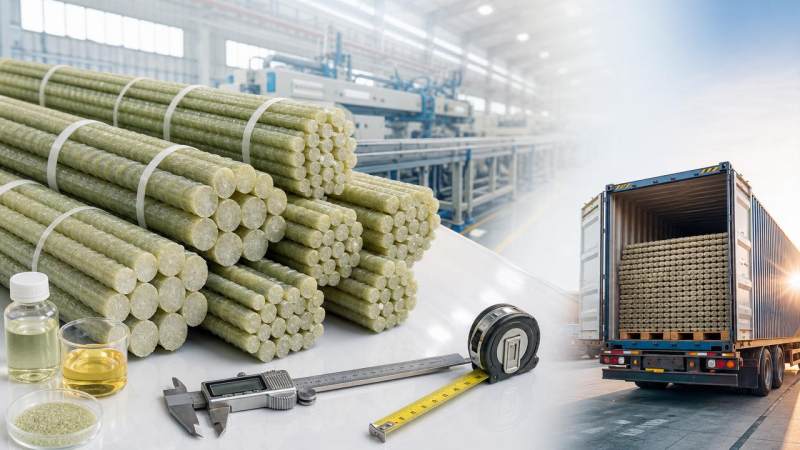
For procurement teams, understanding what drives fiberglass rebar wholesale pricing is essential to controlling project costs without compromising material performance. Prices can shift based on resin type, fiber quality, production standards, order volume, logistics, and supplier certification levels. In infrastructure, industrial construction, and automated manufacturing environments, even small differences in specification or sourcing strategy can significantly affect total landed cost. This guide explains the key pricing factors buyers should evaluate before negotiating with manufacturers or distributors.
Material Composition Is the First Cost Driver
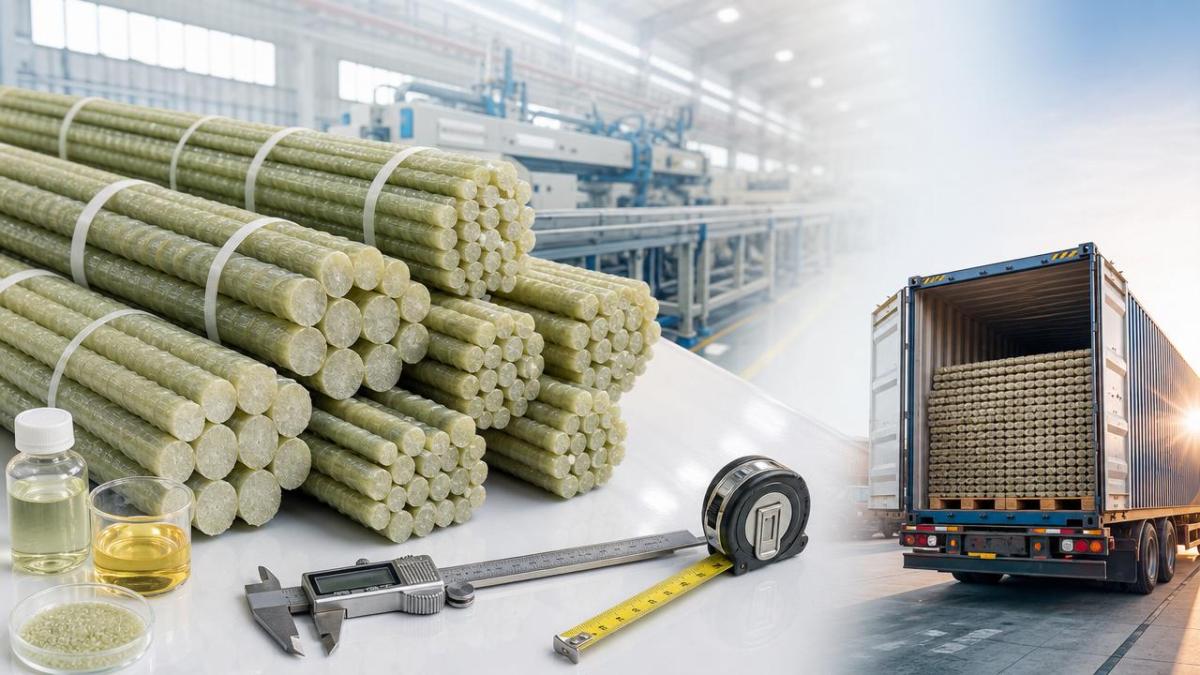
The largest variable in fiberglass rebar wholesale pricing is the combination of glass fiber, resin system, additives, surface treatment, and quality control. Two bars with the same diameter can differ materially in tensile strength, durability, and long-term corrosion resistance.
For procurement buyers, the lowest quoted unit price is rarely the best reference point. A 5%–12% price gap may reflect different resin chemistry, fiber content, curing consistency, or production inspection frequency.
Resin type affects durability and market price
Common resin systems include vinyl ester, epoxy-based formulations, and polyester. Vinyl ester is often selected for infrastructure, marine, and chemically aggressive environments because it provides stronger resistance to chloride, alkali, and moisture exposure.
Polyester-based products may cost less, but they may not suit bridge decks, wastewater facilities, or industrial flooring where long service life is expected. This distinction directly changes fiberglass rebar wholesale quotations.
Fiber quality and content influence mechanical performance
Glass fiber is not a generic input. E-glass and corrosion-resistant glass grades differ in cost and application suitability. Higher fiber volume, typically within a 70%–80% mass range, can improve tensile strength but requires tighter process control.
If a supplier cannot explain fiber grade, fiber ratio, and test method, buyers should treat the offer cautiously. Inconsistent reinforcement content may lead to bending variation, lower bond performance, or failed acceptance checks.
The table below summarizes how material decisions commonly influence fiberglass rebar wholesale cost, application fit, and buyer risk during project sourcing.
The key takeaway is simple: material specification must be aligned with exposure conditions and structural requirements. A cheaper bar can become expensive if replacement, delay, or rejection occurs after delivery.
Standards, Testing, and Certification Levels Change the Quote
Fiberglass rebar wholesale pricing also depends on the depth of quality assurance. Buyers sourcing for civil infrastructure, industrial buildings, or automated production facilities should request more than a product brochure.
Relevant standards may include ASTM, ACI guidance, ISO-based quality systems, CE documentation where applicable, and project-specific test protocols. Each additional verification layer adds cost but reduces procurement uncertainty.
Test reports help compare suppliers fairly
A reliable quotation should clarify tensile strength, modulus, shear performance, bond behavior, moisture resistance, and alkali resistance. Procurement teams often compare at least 3 suppliers, but many compare only diameter and price.
That approach creates risk. A bar quoted as 10 mm may meet different mechanical classes depending on fiber grade, resin curing, and test procedure. Equivalent size does not guarantee equivalent performance.
Recommended document checklist
- Recent mechanical test report covering tensile strength and modulus values.
- Resin and fiber description with application limitations clearly stated.
- Dimensional tolerance data for at least 3 common diameters.
- Packaging method, bundle weight, labeling format, and traceability process.
- Quality inspection frequency, such as batch checks every 5,000–10,000 meters.
For G-IFA’s audience of production directors, system integrators, and automation engineers, documentation consistency is especially important. Smart factories depend on predictable inputs, not only low purchase prices.
When fiberglass rebar is integrated into precast production, automated cutting, robotic placement, or digitally managed construction workflows, unstable tolerances can interrupt downstream equipment and MES-based scheduling.
Order Volume, Diameter Mix, and Production Scheduling
Volume is one of the most visible factors in fiberglass rebar wholesale pricing. Larger orders allow manufacturers to optimize raw material purchasing, die setup, machine utilization, packaging labor, and container loading.
However, order size alone is not enough. A 40,000-meter order using 2 diameters is usually easier to price than a 40,000-meter order split across 8 diameters and 5 custom lengths.
MOQ and batch planning matter
Many manufacturers set minimum order quantities by diameter, length, or total production batch. Typical wholesale MOQs may range from 5,000 to 20,000 meters, depending on bar size and customization level.
Short runs increase line changeover time, cutting adjustments, inspection setup, and packaging complexity. These hidden production costs often appear as higher unit prices or setup charges.
Standard lengths are usually more economical
Standard lengths such as 6 m, 9 m, or 12 m are easier to produce, bundle, and load. Custom cut lengths can reduce site waste, but they may increase factory handling and labeling time.
For buyers, the best approach is to compare total installed cost. A slightly higher fiberglass rebar wholesale price may still be economical if it reduces cutting labor, scrap, and site sorting errors.
- Consolidate diameter requirements before requesting final quotations.
- Separate trial orders from project-scale purchasing plans.
- Ask suppliers to price standard length and custom length options.
- Confirm whether packaging is optimized for manual unloading or forklift handling.
A procurement plan with 4 clear specification groups is easier to negotiate than a fragmented list. Clear demand signals help suppliers reduce production uncertainty and offer more stable wholesale pricing.
Logistics, Packaging, and Total Landed Cost
Freight can significantly affect fiberglass rebar wholesale purchasing, especially for international buyers. Fiberglass rebar is lighter than steel, but length, bundling method, and container utilization still drive landed cost.
A procurement team should evaluate EXW, FOB, CIF, and DDP offers carefully. A low factory price may lose its advantage if inland trucking, port charges, customs clearance, or unloading costs are unclear.
Packaging design protects both product and schedule
Good packaging prevents surface abrasion, bundle deformation, moisture exposure, and labeling confusion. For international shipments, bundles may need waterproof wrapping, wooden supports, steel straps, or project-specific color tags.
Packaging that adds 1%–3% to material cost can prevent costly rejection, particularly when bars must be stored outdoors for 2–8 weeks before installation or fabrication.
The following table helps buyers compare quotation terms and logistics exposure before accepting a fiberglass rebar wholesale offer.
The practical conclusion is that landed cost should be calculated per usable meter, not only per quoted meter. Freight, packaging, loss allowance, and schedule reliability all belong in the same comparison.
Supplier Capability and Automation Readiness
In a modern procurement environment, supplier capability affects fiberglass rebar wholesale pricing as much as raw materials do. Stable suppliers invest in pultrusion control, curing monitoring, inspection tools, and traceable batch records.
For G-IFA’s manufacturing-focused readers, the question is not only whether a supplier can produce bars. The stronger question is whether the supplier can support repeatable, data-driven industrial purchasing.
Why smart manufacturing standards matter
Factories using PLC-controlled lines, MES scheduling, robotic handling, or automated precast systems require predictable inputs. Diameter variation, inconsistent stiffness, or poor labeling can create stoppages in downstream workflows.
A supplier with better process data may quote 3%–7% higher, but can reduce receiving disputes, rework, and production interruptions. Procurement should evaluate these savings before negotiating only on unit price.
Capability indicators buyers should ask about
- Number of active production lines and available monthly capacity range.
- Inspection equipment used for diameter, surface profile, and tensile samples.
- Batch traceability from resin lot and fiber lot to finished bundle label.
- Response time for technical questions, typically within 24–48 hours.
- Ability to support repeat orders with consistent specifications over 6–12 months.
These indicators help purchasing teams separate trading-only offers from engineering-capable supply partners. In critical infrastructure and industrial construction, that distinction has direct financial value.
How Procurement Teams Should Negotiate Wholesale Pricing
Negotiating fiberglass rebar wholesale pricing works best when buyers provide clear technical, commercial, and logistics data from the beginning. Vague requests often lead to broad assumptions and less competitive quotations.
Instead of asking for “best price,” provide diameter schedule, target standard, resin preference, annual forecast, delivery location, packaging requirements, and inspection documents. This can shorten the quotation cycle by several days.
A 5-step sourcing workflow
- Define application exposure, such as marine, tunnel, road slab, or industrial foundation.
- Confirm mechanical requirements and acceptable standard references.
- Request structured quotations from at least 3 qualified suppliers.
- Compare unit price, landed cost, lead time, documents, and warranty terms.
- Place a pilot order before locking a 6-month or annual supply agreement.
Common mistakes that increase cost
One common mistake is mixing structural and non-structural applications in one price comparison. Another is ignoring bend requirements, since fiberglass rebar is commonly supplied straight and needs planned design adaptation.
Buyers also underprice documentation. If a project requires third-party inspection, pre-shipment testing, or special certificates, these should be listed before final negotiation, not after production begins.
Recommended RFQ fields
- Diameter, length, surface type, and estimated quantity per line item.
- Required resin type or exposure condition if resin is not preselected.
- Target delivery date and acceptable production window, such as 21–35 days.
- Destination address, unloading method, and preferred Incoterms.
- Required testing, inspection, labeling, and traceability documents.
When these fields are clear, suppliers can offer more accurate fiberglass rebar wholesale pricing and fewer contingency markups. Transparent purchasing data usually improves negotiation quality for both sides.
Final Buyer Guidance for Cost-Controlled Sourcing
The strongest procurement strategy is to evaluate fiberglass rebar wholesale cost through 4 lenses: material performance, production consistency, logistics efficiency, and supplier accountability. Each lens affects budget and project risk.
A low price can be attractive for temporary, low-risk applications. For infrastructure, precast automation, industrial flooring, and corrosive environments, buyers should prioritize verified specifications and repeatable supply capability.
G-IFA supports procurement teams by framing industrial materials and automation-related inputs through data transparency, benchmark thinking, and engineering integrity. This approach helps buyers compare suppliers beyond surface-level pricing.
If your team is evaluating fiberglass rebar wholesale options for an infrastructure, industrial, or automated manufacturing project, prepare a specification-based RFQ and review total landed cost before final approval.
To refine your sourcing criteria, compare supplier capabilities, or understand how material consistency affects smart production workflows, contact us to get a customized consultation and explore more procurement-ready solutions.
Recommended News
- 2026/10/24Car Spare Parts: How to Check Fitment and Avoid Ordering the Wrong PartOrder car spare parts with confidence. Learn how to verify VINs, OEM numbers, and fitment details to avoid costly mistakes and choose the right replacement first time.
- 2026/10/23How Do You Select a Motion Control System for Synchronized Axes?How do I select a motion control system for synchronized axes? Discover key timing, feedback, and performance checks to choose confidently and reduce costly integration risks.
- 2026/10/23Integrating End-of-Line Sortation with Packing Stations and Conveyor ControlsOptimize end of line sortation with coordinated packing stations and conveyor controls. Learn how to prevent bottlenecks, improve routing accuracy, and handle exceptions reliably.