
Search News
Industry Portal
Popular Tags
SCARA Robots for Automotive Assembly: What to Know First
Author
Dr. Victor Gear
Time
Apr 25, 2026
Pageviews
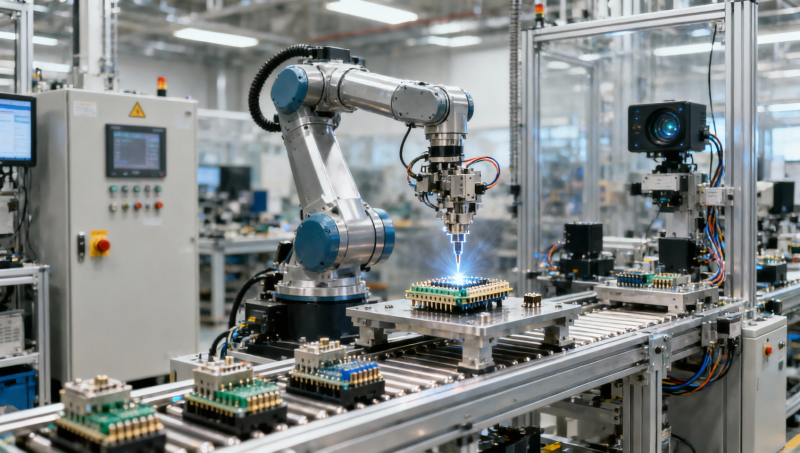
For manufacturers evaluating a scara robot factory for automotive assembly, understanding speed, precision, integration, and lifecycle cost is the first step toward smarter investment. As smart manufacturing benefits expand across global production lines, buyers and engineers must compare industrial automation B2B platform insights, industrial IoT for predictive maintenance, and real-world deployment factors before choosing the right solution.
Why SCARA robots are often shortlisted first in automotive assembly
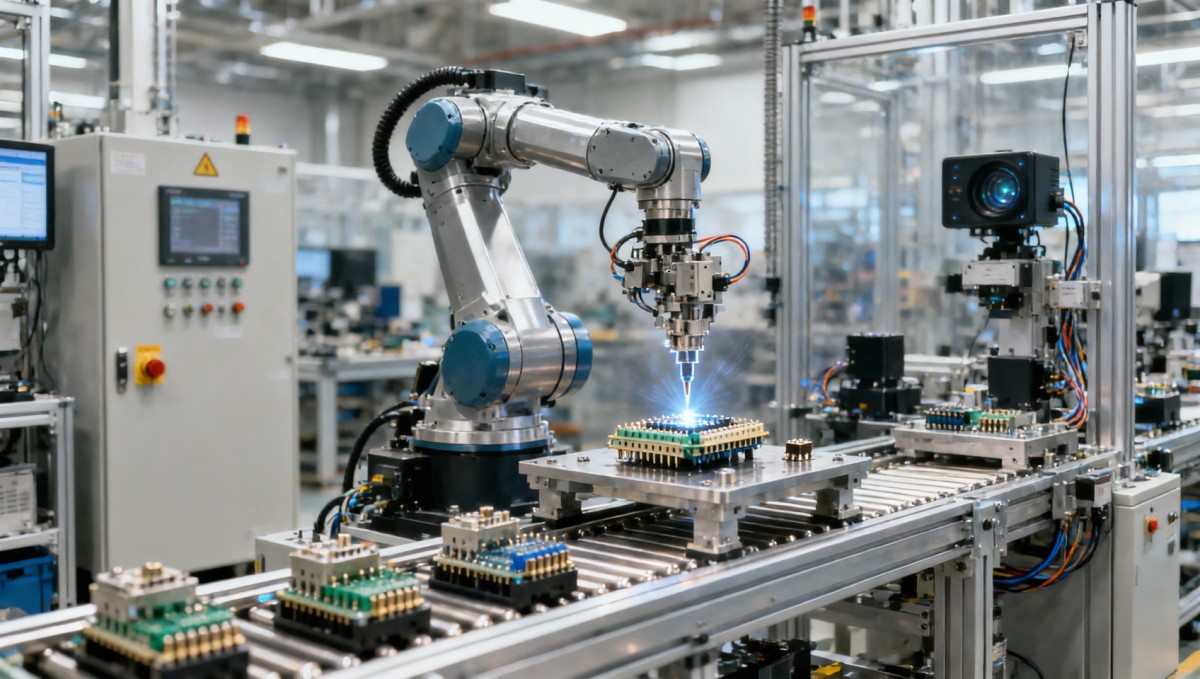
In automotive assembly, SCARA robots are frequently evaluated before larger articulated systems because they combine compact footprint, high repeatability, and fast horizontal movement. For tasks such as screwdriving, small-part insertion, adhesive dispensing, connector placement, and pick-and-place between fixtures, a SCARA robot factory solution can fit into crowded cells where floor space, line balance, and operator access all matter.
The core advantage is selective compliance in the horizontal plane with rigidity in the vertical axis. That makes SCARA robots suitable for repetitive assembly steps that demand stable Z-axis control and fast cycle times, often in the sub-1 second to 3 second range depending on payload, reach, tooling, and vision support. In automotive electronics and interior subassembly, this speed can materially affect throughput.
However, being fast does not automatically mean being the right fit. Production directors and procurement teams should first verify whether the application is dominated by planar motion, moderate payloads, and fixed work envelopes. If the task needs complex angle changes, long reach around obstacles, or multi-face access, a 6-axis robot may deliver better flexibility despite slower cycle performance in some cases.
This is where G-IFA adds value. Instead of viewing industrial robotics as isolated hardware, G-IFA benchmarks the full automation stack across robotics, PLC and control systems, motion control, Industrial IoT software, and pneumatic or hydraulic support. For automotive assembly buyers, this cross-domain view helps reduce integration risk during early-stage comparison and vendor screening.
What problems does a SCARA robot solve best?
- High-speed part transfer between trays, feeders, pallets, and assembly nests in short travel paths, typically within 300 mm to 800 mm movement windows.
- Repeatable insertion and fastening operations where position stability matters more than broad spatial articulation.
- Compact cell layouts where line redesign costs are high and overhead mounting or bench mounting is preferred.
- Semi-automated stations that need easy coordination with conveyors, machine vision, torque tools, and PLC-based interlocks.
Which automotive assembly scenarios are a strong fit, and which are not?
Not every automotive process benefits equally from SCARA deployment. The strongest scenarios are usually subassemblies with predictable geometry, short cycle takt, and stable incoming part presentation. Examples include sensor housing assembly, fuse box handling, relay insertion, dashboard electronics, connector seating, small motor subassembly, and adhesive application on repeat paths. In these scenarios, reach ranges of roughly 400 mm to 1,000 mm and payload bands around 3 kg to 20 kg are commonly considered.
By contrast, body-in-white operations, complex welding paths, wide-area machine tending, and tasks requiring approach from many angles often exceed the natural strengths of SCARA robots. In such cases, integrators may choose 6-axis robots, gantry systems, or dedicated servo stages instead. The wrong selection here can create hidden costs in gripper redesign, fixture complexity, and cycle recovery after faults.
Operators and maintenance teams also need to evaluate process sensitivity. If part tolerances vary widely, feeder stability is inconsistent, or station changeovers occur every few hours, the robot alone will not solve productivity issues. Vision calibration, end-of-arm tooling, and error-proofing logic can become the real performance bottlenecks. A scara robot factory assessment should therefore include peripheral equipment maturity, not just robot speed.
For buyers comparing alternatives on an industrial automation B2B platform, scenario fit should be documented in measurable terms: payload, reach, cycle target, mounting orientation, precision tolerance, communication protocol, and expected daily runtime. A useful rule is to compare at least 3 application classes before shortlisting equipment, especially when a line must run across 2 shifts or 3 shifts with limited downtime windows.
Typical scenario mapping for decision teams
The table below helps information researchers, users, and sourcing teams identify where SCARA robots usually perform well in automotive assembly and where another architecture may be more practical.
The main takeaway is practical rather than theoretical: when the process is compact, repetitive, and throughput-sensitive, SCARA robots can be a strong fit. When motion complexity rises, the perceived cost advantage can shrink quickly because fixturing, programming workarounds, and retooling effort begin to accumulate.
What technical specifications should buyers verify before requesting a quote?
A scara robot factory decision should start with five technical checks: payload, reach, repeatability, cycle time, and integration interface. These are more useful than headline marketing claims because they directly affect line suitability. Automotive assembly buyers should also ask whether the quoted performance assumes no payload, nominal payload, or full payload, since cycle results can vary meaningfully across these conditions.
Repeatability matters more than raw positioning claims in many assembly tasks. For connector handling, small-part placement, and screw start alignment, buyers typically review repeatability ranges in the robot documentation and then compare them against process tolerance stack-up that includes gripper compliance, fixture quality, and part variation. A robot may be precise on paper but still underperform if the surrounding mechanics are not controlled.
Communication and controls are equally important. Automotive lines often require PLC coordination, fieldbus compatibility, vision interface support, safety interlocks, and traceability data exchange with MES or plant software. If the SCARA robot cannot integrate cleanly with existing control architecture within a 2-week to 6-week commissioning window, the apparent equipment savings may disappear during implementation.
G-IFA’s benchmark approach is valuable here because robotic performance should be evaluated alongside PLC responsiveness, servo behavior, software compatibility, and predictive maintenance capability. Industrial IoT for predictive maintenance can help detect abnormal vibration, cycle drift, or motor load trends before they cause unplanned stoppages, especially in high-volume automotive assembly cells that run continuously.
A practical parameter checklist for automotive assembly
Before sending RFQs, teams can use the following parameter guide to structure vendor comparisons and avoid incomplete offers.
This checklist is most effective when combined with a trial-run matrix. Procurement should request at least 3 validation outputs from suppliers: cycle estimate with payload, recommended tooling concept, and a clear list of excluded integration items. That prevents quote comparisons from becoming misleading.
Three hidden technical factors often missed
- Cable routing and hose management can reduce effective speed and shorten component life if the end-of-arm tool is not designed for repetitive high-speed motion.
- Fixture tolerances may create more insertion failures than robot accuracy, especially when metal parts shift under thermal or mechanical load.
- Controller openness affects future upgrades, including vision retrofits, torque traceability, and plant-level data collection.
How should procurement compare SCARA robots against alternatives and total cost?
Buying decisions in automotive assembly should not stop at purchase price. The more useful measure is lifecycle cost over 3 years to 7 years, including installation, tooling, spare parts, maintenance intervals, software integration, operator training, and downtime exposure. A lower initial quote can become more expensive if commissioning stretches from 2 weeks to 10 weeks or if spare lead times are unstable.
SCARA robots are often compared with 6-axis robots, Cartesian systems, and custom hard automation. Each option has different strengths. SCARA usually wins on speed and compactness for repetitive assembly. Cartesian systems can be attractive for highly linear motion and cost-sensitive layouts. Hard automation may deliver the shortest takt for a single dedicated product, but it is less flexible when model mix changes over time.
Enterprise decision-makers should also assess changeover frequency. If the line will support multiple part numbers within 12 months to 24 months, flexibility has financial value. A slightly higher automation investment may lower future engineering spend. On the other hand, for extremely stable, high-volume output with minimal variant changes, a dedicated system can still be commercially attractive.
G-IFA supports this comparison by connecting robot choice to adjacent systems. Motion transmission quality, control responsiveness, software visibility, and maintenance data all influence the real cost curve. That broader benchmark perspective is especially relevant when sourcing across regions or when comparing suppliers on an industrial automation B2B platform with uneven technical detail.
Decision comparison for buyers and plant managers
The following comparison can help teams align technical fit with procurement logic instead of relying on generic claims.
In many automotive assembly programs, the best answer is not the cheapest machine but the option with the lowest total disruption risk. That includes how quickly the line can be installed, validated, maintained, and adapted when quality or demand conditions shift.
A four-step procurement method that reduces misalignment
- Define the process in measurable terms: payload, takt time, tolerances, product variants, and available cell space.
- Request comparable proposals with the same assumptions for tooling, controls, and commissioning scope.
- Evaluate lifecycle items such as maintenance intervals, spare availability, and software support over 3 years to 5 years.
- Validate implementation risk through sample runs, digital simulation, or a phased pilot cell before plant-wide rollout.
What integration, compliance, and maintenance issues should be checked early?
Many SCARA robot projects fail not because of robot mechanics, but because integration questions are raised too late. Automotive assembly environments often require safety planning, electrical compatibility, guarding logic, data exchange, and maintenance access to be resolved before hardware arrives. A 7-day delay in interface clarification can become a multi-week delay during commissioning if the control architecture is already frozen.
Compliance should be approached in a practical way. Buyers commonly review whether the equipment and final system will align with applicable ISO, IEC, CE, plant safety rules, electrical standards, and local commissioning requirements. The exact obligations vary by market and project scope, but the principle is stable: a robot purchase is only one part of system compliance. End-of-line guarding, emergency stop design, validation, and documentation must also be planned.
Maintenance planning deserves equal attention. For production teams, the real question is not whether maintenance is required, but whether it can be performed within the plant’s downtime strategy. If the station runs 16 hours to 24 hours per day, teams should define inspection frequency, spare part stocking, lubrication guidance, backup procedures, and alarm response ownership before acceptance testing.
This is another area where G-IFA’s cross-pillar model matters. A reliable SCARA robot cell depends on the wider system: controller quality, software visibility, motion transmission stability, and predictive maintenance readiness. With industrial IoT for predictive maintenance, plants can monitor trends such as cycle count, abnormal stop frequency, and service thresholds instead of relying only on reactive maintenance.
Early-stage checklist for implementation teams
- Confirm 4 interface layers early: mechanical layout, electrical power, communication protocol, and safety logic.
- Define 3 maintenance basics before FAT or SAT: consumables, critical spares, and recovery steps after emergency stop or fault reset.
- Review compliance documents as a system package, not as robot-only paperwork, especially if export, CE-related review, or multinational plant standards apply.
- Plan operator training in at least 2 tracks: daily operation and maintenance troubleshooting, since these users face different risk points.
Common misconceptions that create avoidable risk
A frequent misconception is that faster robot speed automatically increases output. In reality, feeder consistency, screw supply, vision latency, and fixture unclamp timing can limit throughput more than robot motion. Another misconception is that one robot platform will fit all future tasks. Automotive assembly programs change, and flexibility should be evaluated against expected model variation over the next 12 months to 36 months.
It is also risky to assume maintenance can be handled later. If access space is poor or spare strategy is unclear, the line may suffer longer stop durations during routine service. Good procurement decisions therefore connect equipment choice with serviceability from day one.
FAQ and next-step guidance for automotive assembly buyers
The questions below reflect common search intent from engineers, operators, buyers, and decision-makers comparing SCARA robots for automotive assembly. They are also useful as an internal checklist before discussing a project with suppliers or system integrators.
How do I know whether a SCARA robot is better than a 6-axis robot for my line?
Start with motion complexity, not brand preference. If the task is mostly planar, repetitive, and compact, a SCARA robot is often the stronger choice. If the task needs varied approach angles, obstacle avoidance, or wide-area access, compare 6-axis options. A simple screening method is to review 5 items: required reach, payload, orientation changes, takt time, and fixture density.
What should procurement request in the first quotation round?
Ask for a structured offer that includes robot specification, controller details, communication compatibility, tooling assumptions, installation scope, and estimated commissioning duration. Also request excluded items. For automotive assembly projects, missing scope around vision, torque tools, guarding, and MES linkage often creates the largest quote gaps.
How long does implementation usually take?
There is no single answer, but many projects break into 3 stages: engineering review, mechanical and electrical integration, and commissioning with validation. Depending on customization level, peripheral equipment, and plant readiness, implementation can range from a few weeks for a standardized compact cell to a longer period for a highly integrated automotive station. The key variable is usually interface clarity, not robot delivery alone.
Can Industrial IoT really improve SCARA robot uptime?
Yes, when applied to practical indicators rather than vague dashboards. Useful signals include cycle count, alarm history, motor load trend, downtime category, and maintenance interval tracking. In a high-throughput automotive assembly environment, these data points can help teams schedule service before faults interrupt production.
Why work with G-IFA when evaluating a SCARA robot factory solution?
G-IFA is built for teams that need more than product brochures. We support production directors, system integrators, automation engineers, procurement teams, and plant decision-makers with benchmark-oriented insight across industrial robotics, PLC and control systems, motion control, industrial IoT software, and fluid power systems. That wider view helps automotive assembly projects avoid siloed decisions that look efficient early but create risk later.
If you are comparing SCARA robots for connector assembly, screwdriving, dispensing, or compact transfer stations, we can help structure the evaluation around real project variables: payload and reach confirmation, takt-time fit, control compatibility, maintenance strategy, compliance checkpoints, and expected integration workload. This is especially useful when supplier quotations use different assumptions and are difficult to compare directly.
You can contact G-IFA to discuss 6 practical topics before moving forward: parameter confirmation, application matching, alternative architecture comparison, estimated delivery and commissioning scope, certification and compliance considerations, and solution customization for your line layout. If needed, we can also help define the data points you should collect before requesting a formal quotation.
For manufacturers trying to reduce risk in smart manufacturing investment, the right first step is a clear technical and commercial filter. A SCARA robot may be the right answer for your automotive assembly process, but only when speed, precision, integration, and lifecycle cost are assessed together. That is the level of decision support G-IFA is designed to provide.
- scara robot factory
- industrial robotics
- motion control
- industrial IoT
- control systems
- smart manufacturing
- industrial automation
- 6-axis robots
- industrial automation B2B platform
- smart manufacturing benefits
- linear motion
- industrial IoT for predictive maintenance
- scara robot factory for automotive assembly
Recommended News
- 2026/10/24Car Spare Parts: How to Check Fitment and Avoid Ordering the Wrong PartOrder car spare parts with confidence. Learn how to verify VINs, OEM numbers, and fitment details to avoid costly mistakes and choose the right replacement first time.
- 2026/10/23How Do You Select a Motion Control System for Synchronized Axes?How do I select a motion control system for synchronized axes? Discover key timing, feedback, and performance checks to choose confidently and reduce costly integration risks.
- 2026/10/23Integrating End-of-Line Sortation with Packing Stations and Conveyor ControlsOptimize end of line sortation with coordinated packing stations and conveyor controls. Learn how to prevent bottlenecks, improve routing accuracy, and handle exceptions reliably.