
Search News
Industry Portal
Popular Tags
Shipbuilding Robotic Welder OEM Projects Often Run Into These Delays
Author
Dr. Victor Gear
Time
Apr 28, 2026
Pageviews
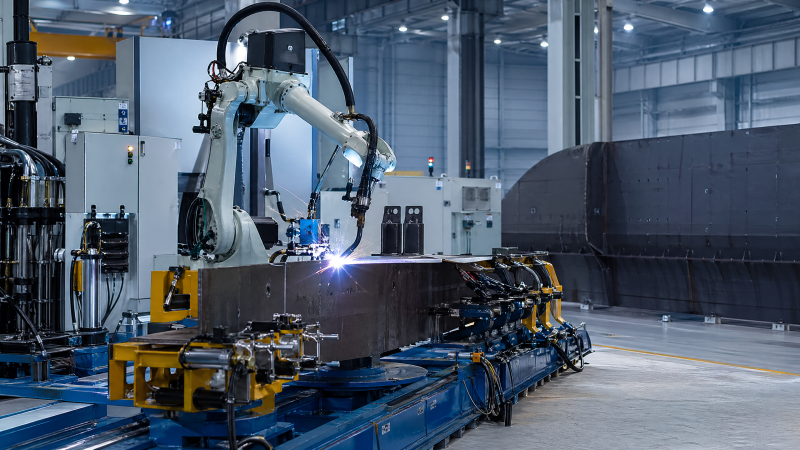
Industrial robotic welder OEM for shipbuilding projects often face hidden delays tied to integration gaps, compliance checks, and rising industrial robotics cost. For buyers comparing a hydraulic systems supplier, reviewing a hydraulic systems quotation, or evaluating automation partners, understanding these bottlenecks is essential to protect timelines, budgets, and long-term production efficiency.
Why do shipbuilding robotic welder OEM projects get delayed so often?
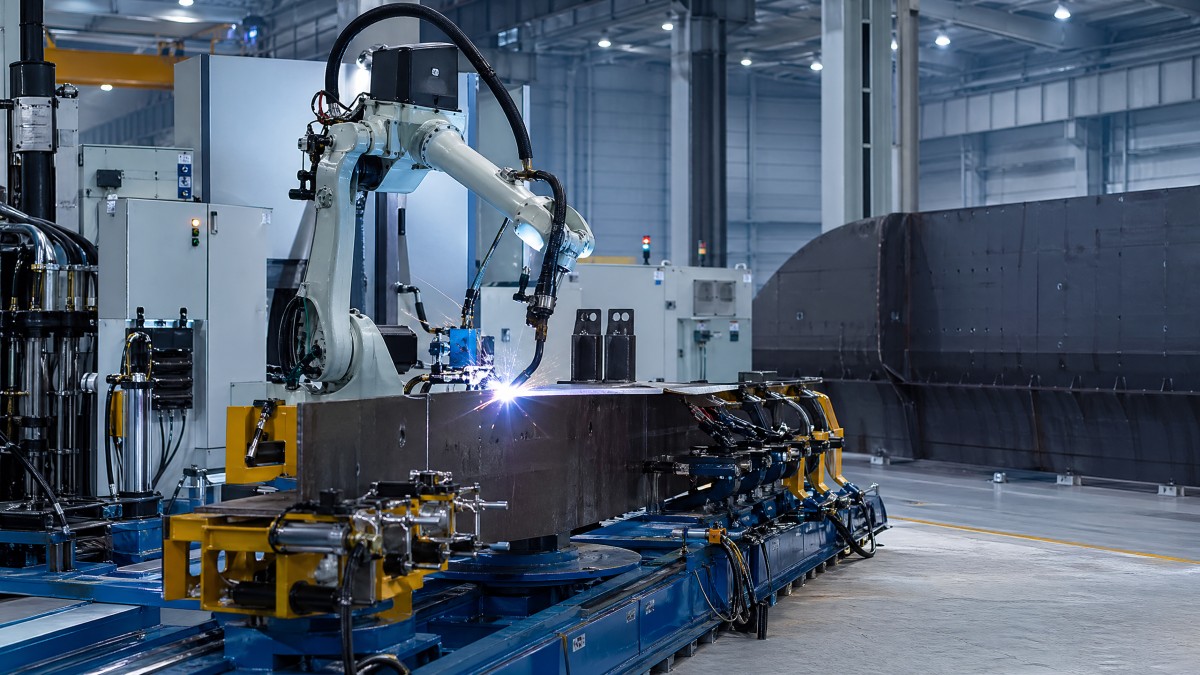
In shipbuilding, a robotic welder OEM project rarely fails because of the robot arm alone. Delays usually appear at the interfaces: welding process validation, fixture readiness, PLC communication, motion coordination, hydraulic support units, and yard-level safety approval. A project that looks ready on paper can still lose 2–6 weeks when one subsystem arrives without matching I/O logic, torch package compatibility, or approved cable routing.
This is especially true when buyers evaluate automation in isolation. Procurement may focus on the industrial robotics cost, operators may focus on ease of use, and management may focus on production start dates. In practice, shipbuilding automation works only when robot, power source, positioner, control system, software layer, and material flow are treated as one engineered system with clear acceptance criteria.
G-IFA addresses this gap by benchmarking equipment and automation architecture across Industrial Robotics & Cobots, PLC & Control Systems, Motion Control & Transmission, Industrial IoT & Software, and Pneumatic & Hydraulic Systems. For production directors and integrators, this cross-functional view reduces the risk of selecting a strong component that performs poorly inside a weak integration chain.
In a typical shipyard or heavy fabrication environment, delays often emerge in 4 stages: pre-engineering, FAT preparation, site installation, and commissioning. If the OEM does not define process ownership at each stage, even a minor mismatch in weld seam tracking or hydraulic clamping response can cascade into schedule slips, rework, and extra contractor days.
The most common delay triggers in shipbuilding automation
The most frequent issue is late system definition. Many projects confirm the robot payload and reach early, but postpone detailed confirmation of welding process windows, plate thickness range, fit-up variation, and environmental constraints. That creates a false sense of readiness. By the time the OEM starts integration, the actual production conditions differ from the quotation basis.
- Robot and power source selected before validating weld joint types, deposition targets, and seam accessibility.
- Hydraulic clamping, lifting, or positioning devices specified by a separate hydraulic systems supplier without synchronized control logic review.
- PLC mapping and fieldbus definition delayed until FAT, creating avoidable rewiring and software revision loops.
- Compliance documents prepared too late for CE-related risk review, electrical inspection, or yard acceptance procedures.
Another major source of delay is unrealistic commissioning assumptions. On complex welding cells, mechanical installation may take 5–10 days, but process tuning and production stabilization can require another 2–4 weeks depending on seam variety, part handling, and operator training. A plan that books only installation time but not process maturation time is almost certain to slip.
Which project stages create the highest schedule risk?
Not every phase carries equal risk. In most robotic welder OEM projects for shipbuilding, the highest-risk windows are the first engineering freeze, the transition from workshop testing to FAT, and the handover from installation to live production. These moments expose whether the selected components were evaluated as a system or merely purchased as a list of hardware items.
For information researchers and procurement teams, one practical way to reduce uncertainty is to compare project stages against likely failure modes. This helps teams ask better questions before approving a hydraulic systems quotation or confirming the industrial robotics cost structure. The table below highlights the project stages where delays most often become expensive.
The pattern is clear: the more a project depends on multi-vendor coordination, the more likely delay cost shifts from hardware lead time to integration lead time. That is why benchmark-driven planning matters. A buyer comparing vendors purely on robot price may miss the stage where the schedule is actually won or lost.
Where operators and managers see the problem differently
Operators usually experience delays as unstable arc start, inconsistent torch access, unclear HMI logic, or excessive manual intervention. Enterprise decision-makers, however, see missed throughput milestones, delayed vessel block delivery, and budget drift. Both views are valid, but they point to different root causes. A robotic cell can be mechanically complete and still be operationally immature.
For this reason, project reviews should include at least 3 layers: production process validation, automation control validation, and maintenance readiness. If one layer is skipped, the cell may pass FAT yet still fail to maintain stable output over a full shift or multi-shift operation.
A practical site-readiness checklist
- Confirm mechanical interfaces, utility points, and floor conditions at least 7–15 days before equipment arrival.
- Verify that hydraulic pressure, pneumatic supply, electrical capacity, and grounding meet the quoted design basis.
- Prepare representative workpieces for 3–5 welding trials, not only ideal sample parts.
- Assign operator, maintenance, and controls personnel to support commissioning from day one.
These steps sound basic, yet many delays stem from them. In heavy industry, scheduling discipline is not administrative detail; it is part of technical performance.
How should buyers evaluate industrial robotics cost beyond the robot price?
Industrial robotics cost in shipbuilding cannot be judged by base machine price alone. A realistic budget must include the robot, welding package, positioners, sensing, safety system, PLC integration, hydraulic or pneumatic auxiliaries, software adaptation, FAT support, installation, and post-start optimization. When these items are fragmented across multiple quotations, the lowest visible price often produces the highest delivered cost.
This is where procurement teams benefit from structured comparison. Instead of asking which robotic welder OEM is cheaper, ask which supplier defines the complete delivery boundary more clearly. A complete quotation may appear 10%–20% higher at first glance, yet reduce change orders, idle labor, and timeline extension costs during commissioning.
The same logic applies when reviewing a hydraulic systems supplier. If the hydraulic package is quoted without response-time expectations, valve logic, pressure stability range, maintenance access, or controls handshake details, the project inherits future integration risk. Hidden costs do not disappear; they simply move from procurement to commissioning.
The table below can help buyers compare industrial robotics cost in a more decision-useful way. It does not provide universal pricing, because actual project value depends on layout, weld complexity, and standards scope. Instead, it shows where cost and delay are typically connected.
A better quotation is not simply more detailed. It should also reveal assumptions. If the document does not state part tolerance, weld seam condition, utility requirements, or expected operator skill level, the buyer should treat those gaps as future commercial exposure.
3 purchasing questions that prevent expensive surprises
- What is the exact handover boundary between the robotic welder OEM, the hydraulic systems supplier, and the site installation team?
- Which performance targets will be proven at FAT, and which will only be proven after site commissioning?
- How many software revisions, process adjustments, and training days are included before extra charges apply?
These three questions often reveal whether a quotation is engineered for delivery or only for order entry.
What standards, controls, and integration details should not be ignored?
Compliance and integration reviews are common delay points because they arrive late in the project sequence. In international automation projects, buyers often need alignment with ISO, IEC, and CE-related expectations, even when the final equipment configuration is customized. The issue is not just paperwork. Standards shape safety circuits, panel design, cable practices, documentation completeness, and acceptance logic.
In shipbuilding robotic welding, controls architecture also matters. A project may include a 6-axis robot, servo positioner, seam tracking option, and hydraulic clamping system, but if alarm handling, interlock timing, and emergency stop behavior are not defined early, the final system can require repetitive debug cycles. Each cycle may consume 1–3 days, especially when multiple vendors must approve changes.
G-IFA’s value in this environment is technical filtering. By comparing automation hardware and software against international engineering expectations, buyers can identify whether a proposed solution is consistent across mechanics, controls, and digital layers. This is useful not only for procurement, but also for production directors who need predictable startup and maintenance performance.
For practical decision-making, the following comparison can be used during supplier review, FAT preparation, or compliance planning.
The key takeaway is simple: standards review should not sit outside engineering review. In a robotic welding project, compliance, controls, and mechanical design affect one another. Treating them as separate approvals is a common cause of avoidable delay.
4 integration details that deserve early attention
Teams should confirm at least 4 areas before the build starts. First, whether the welding process range matches actual joint conditions. Second, whether the PLC and robot controller share a stable communication model. Third, whether hydraulic or pneumatic actions are synchronized with welding motion. Fourth, whether operators can recover routine alarms without waiting for engineering support.
When these four points are addressed early, projects tend to move faster through FAT and SAT. When they are postponed, every later test becomes slower and more expensive.
How can procurement teams reduce delays and make better supplier decisions?
A strong procurement strategy for shipbuilding automation is not about pushing all vendors toward the lowest number. It is about turning technical uncertainty into a structured buying process. That means defining evaluation criteria before issuing RFQs, aligning engineering and purchasing language, and comparing quotations on completeness rather than headline price alone.
For information researchers, a useful first filter is whether the supplier can discuss the project in system terms. Can they explain interactions among robot path planning, welding process, PLC logic, servo positioning, MES or data connectivity, and hydraulic support functions? If not, the risk of hidden delay remains high even if the quote looks commercially attractive.
For end users and operators, the best early question is whether production stability was designed into the project. Ask about recipe control, fault recovery logic, consumable access, maintenance intervals, and training scope. A cell that looks sophisticated but is hard to operate will often underperform after the integrator leaves site.
For enterprise decision-makers, the right metric is not only CAPEX. It is schedule reliability plus usable throughput. If a lower-cost robotic welder OEM proposal adds 3–5 weeks of startup risk, the apparent savings may disappear in delayed output, contractor extension, and vessel schedule pressure.
A 5-point supplier selection framework
- Check delivery boundaries: robot, fixtures, controls, hydraulic package, software, FAT, SAT, and training must be clearly divided or clearly integrated.
- Check engineering depth: ask for I/O concept, process assumptions, utility list, and sample acceptance logic before order confirmation.
- Check compliance readiness: verify whether documentation for safety, electrical design, and operating procedures is planned as part of the schedule.
- Check startup realism: separate installation time from tuning time and request a 3-stage commissioning plan.
- Check support continuity: confirm spare parts logic, remote support availability, and escalation path for controls or hydraulic faults.
This framework works particularly well when combined with G-IFA’s benchmark approach. By using cross-sector data transparency and international engineering references, buyers can compare not just what suppliers promise, but how complete and verifiable those promises are.
FAQ: common questions before approving a robotic welder OEM project
How long does a typical shipbuilding robotic welding project take?
Timelines vary by scope, but a typical path includes several weeks for engineering freeze, workshop build and FAT, then 1–2 weeks for installation and 2–4 weeks for commissioning and process stabilization. Complex fixtures, custom hydraulics, or software integration can extend this further. Buyers should request stage-by-stage timing, not one total number.
What should be included in a hydraulic systems quotation for an automated welding cell?
At minimum, the quotation should define function, pressure requirements, response expectations, valve logic scope, power unit details, control interface, installation boundaries, and maintenance access. If the quotation only lists hardware items without control and timing context, integration risk remains open.
Is lower industrial robotics cost always better for shipbuilding?
Not necessarily. Lower visible cost may mean excluded software work, reduced FAT coverage, limited training, or unclear commissioning support. In heavy fabrication, the delivered cost of delay can outweigh the initial price gap. The better comparison is total project readiness, not base machine price.
What is the biggest mistake buyers make?
The most common mistake is treating robot selection, hydraulic system sourcing, controls integration, and compliance review as separate purchasing tasks. In reality, they form one production system. If the buying process does not reflect that, the project often pays for the gap later during FAT or commissioning.
Why work with G-IFA when evaluating automation and supplier risk?
G-IFA helps production directors, system integrators, automation engineers, and procurement leaders reduce uncertainty before capital is committed. Instead of looking at industrial robotics cost, PLC compatibility, servo motion, MES connectivity, or hydraulic systems supplier data in isolation, G-IFA provides a benchmark-oriented view across the full smart manufacturing stack.
This matters because shipbuilding robotic welder OEM projects are rarely delayed by a single component failure. They are delayed by system mismatch. A technical repository that compares hardware precision, software intelligence, and standards alignment gives buyers a more reliable basis for selection, budgeting, and delivery planning.
If you are reviewing a robotic welding project, comparing a hydraulic systems quotation, or screening automation partners for a new line or retrofit, G-IFA can support the decision with structured benchmark logic. Typical consultation topics include 5 key areas: parameter confirmation, supplier comparison, delivery timeline review, customization scope, and compliance requirements.
Contact us if you need help assessing robotic welder OEM scope, validating industrial robotics cost assumptions, checking PLC or motion-control integration points, reviewing hydraulic system compatibility, or preparing a more reliable RFQ package. A better decision usually starts with clearer technical boundaries, not a faster purchase order.
Recommended News
- 2026/10/24Car Spare Parts: How to Check Fitment and Avoid Ordering the Wrong PartOrder car spare parts with confidence. Learn how to verify VINs, OEM numbers, and fitment details to avoid costly mistakes and choose the right replacement first time.
- 2026/10/23How Do You Select a Motion Control System for Synchronized Axes?How do I select a motion control system for synchronized axes? Discover key timing, feedback, and performance checks to choose confidently and reduce costly integration risks.
- 2026/10/23Integrating End-of-Line Sortation with Packing Stations and Conveyor ControlsOptimize end of line sortation with coordinated packing stations and conveyor controls. Learn how to prevent bottlenecks, improve routing accuracy, and handle exceptions reliably.