
Search News
Industry Portal
Popular Tags
Why Quick-Install SCARA Setups Still Face Downtime After Launch
Author
Dr. Victor Gear
Time
Apr 28, 2026
Pageviews
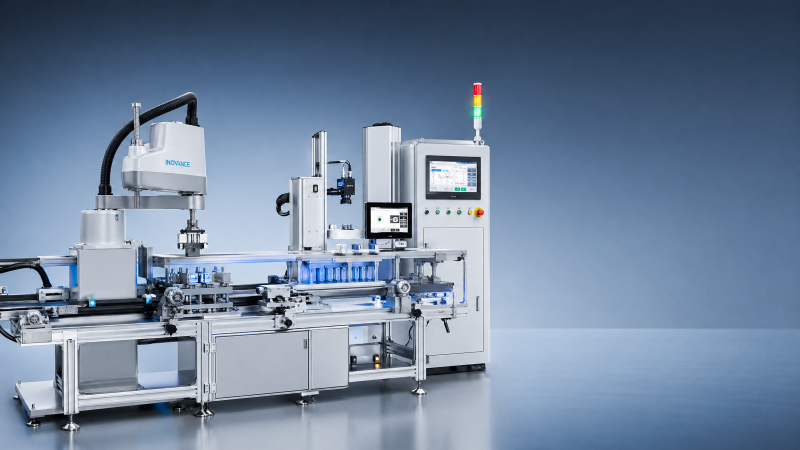
A SCARA robot line that goes live in record time can still suffer repeated stoppages within days or weeks. The reason is simple: installation speed only shortens mechanical setup, while real uptime depends on integration quality, process fit, motion tuning, operator readiness, spare-parts planning, and long-tail software stability. In many factories, the launch looks successful on paper, but hidden weaknesses begin to surface once real production variability hits the system.
That is why post-launch downtime is not usually caused by one dramatic failure. More often, it comes from a chain of smaller issues that were not fully resolved during commissioning: unstable part presentation, PLC handshake delays, gripper wear, vision misalignment, safety logic interruptions, or unrealistic cycle-time assumptions. A quick-install SCARA setup may pass acceptance tests, yet still underperform in live operation when throughput rises and product mix changes.
For automation engineers, procurement teams, plant managers, and business leaders, the key question is not whether a SCARA robot can be installed quickly. The more important question is whether the cell can sustain output with predictable maintenance, recover quickly from faults, and achieve the intended return on investment. Understanding why downtime appears after launch is critical to selecting the right supplier, defining realistic commissioning standards, and reducing avoidable industrial robotics cost over the life of the system.
Why “quick install” often hides the real uptime risk
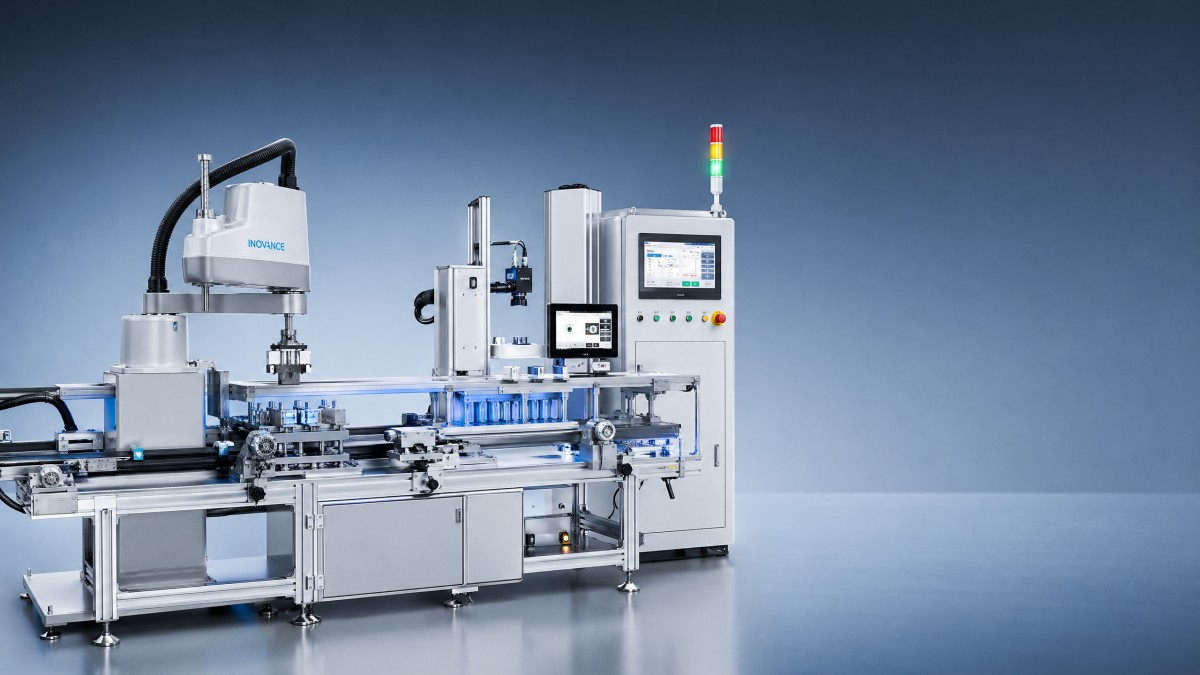
In the automation market, fast deployment is an attractive promise. A supplier may preassemble the SCARA robot cell, shorten floor installation, and accelerate startup. That is valuable, especially for manufacturers under pressure to add capacity without long line disruptions. But “quick install” usually describes only one slice of the project timeline. It does not automatically prove that the robot, controls, tooling, feeding system, vision, safety layer, and upstream/downstream equipment are fully mature as a production system.
Many post-launch failures begin with a mismatch between demonstration conditions and production conditions. During factory acceptance testing, parts may be clean, orientation may be controlled, and cycle timing may be stable. On the real line, however, vibration, inconsistent material quality, operator intervention, dust, temperature changes, and shift-to-shift variation all affect performance. A SCARA robot factory solution that looks robust in a controlled setup can become fragile in live manufacturing.
This is particularly relevant in high-speed assembly, pick-and-place, packaging, electronics, and light industrial handling applications where SCARA robots are popular. Their speed and repeatability are excellent, but these strengths also expose weak process design. When the rest of the cell cannot maintain the same level of consistency, the robot becomes the visible point of failure, even though the root cause lies elsewhere in the automation architecture.
What usually causes downtime after SCARA launch?
The most common source of downtime is not the robot arm itself. In many cases, the SCARA robot is mechanically reliable, but the surrounding system is not. End-of-arm tooling may lose grip consistency, pneumatic lines may leak, fixtures may drift, or sensors may trigger false states. These are small issues individually, yet together they can stop a line repeatedly and erode confidence in the automation investment.
Controls integration is another major problem area. Fast installation projects often compress debug time between the robot controller, PLC, HMI, conveyors, vision systems, and safety devices. As a result, handshake logic may work in normal sequences but fail during exceptions such as jams, restarts, manual mode recovery, or mixed-product transitions. Every unresolved edge case becomes a future downtime event once operators begin using the system under real production pressure.
Cycle-time instability is also frequently underestimated. Buyers often focus on peak rated speed, but sustained output depends on acceleration profiles, payload variation, part infeed consistency, buffer capacity, and line balancing. If the SCARA robot is tuned for speed without enough margin for real-world variability, minor disturbances can trigger repeated faults or force operators to slow down the process manually. In that case, the line does not truly fail technically, but it still fails commercially because expected throughput is never achieved.
Hidden integration flaws that do not appear during commissioning
Commissioning teams are typically measured by getting the line running, not by proving long-term resilience. That creates a structural blind spot. A quick-install SCARA setup may achieve acceptance with a narrow test scope, while deeper failure modes remain unresolved. For example, the robot may complete standard pick-and-place cycles successfully, but no one has fully tested fault recovery after air pressure drops, network interruptions, mispicked parts, or emergency-stop resets during a busy production shift.
Vision-guided applications are especially vulnerable. A camera can perform well in initial calibration yet become unstable when lighting changes, lens contamination builds up, or reflective surfaces vary. If the vision system passes enough parts during startup, it may still be signed off. Weeks later, the line starts accumulating small alignment errors, false rejects, and stop-and-clear events. The SCARA cell is then labeled unreliable, even though the real issue is process robustness rather than robot design.
There is also a common gap between mechanical installation and application engineering. A SCARA robot can be mounted and powered quickly, but if the feeder, nests, gripper compliance, cable routing, and maintenance access were not optimized, reliability problems emerge later. These are not dramatic engineering mistakes; they are practical details that determine whether a system stays productive across three shifts and thousands of cycles per day.
Why industrial robotics cost is often underestimated after go-live
When teams discuss industrial robotics cost, they often compare purchase price, integration fee, and initial installation time. That is too narrow. The more meaningful cost picture begins after launch: unplanned downtime, scrap, overtime labor, emergency service visits, spare-part delays, and lost output. A lower-cost SCARA integration can become more expensive than a higher-priced alternative if post-launch instability consumes engineering hours and disrupts production schedules.
There is also the cost of dependency. If a plant cannot troubleshoot the SCARA cell internally and must rely on the supplier for every parameter change, alarm reset, or recipe update, small issues become expensive operational events. This matters to procurement and plant leadership because supportability is part of total cost of ownership. A system that runs well only when the integrator is present is not truly production-ready.
Another overlooked expense is delayed scaling. A manufacturer may plan to replicate a successful SCARA robot factory concept across multiple lines or sites. But if the first installation suffers unstable uptime, expansion is postponed. That delay affects capacity planning, customer commitments, and future capital allocation. In this way, post-launch downtime is not just a maintenance problem; it is a strategic problem that can reduce confidence in broader automation adoption.
What operators and engineers usually discover too late
Operators are often the first to recognize that a newly launched SCARA cell is not as stable as expected. They see recurring nuisance stops, difficult restart sequences, unclear alarms, or tooling that requires frequent manual adjustment. Yet these practical issues are sometimes dismissed during project handover because the system technically “meets specification.” Over time, the burden shifts to production teams, who compensate through workarounds that hide the real performance gap.
Maintenance teams discover another layer of risk: poor accessibility and weak documentation. If a gripper change, sensor replacement, or cable inspection requires too much disassembly, maintenance windows become longer than planned. If electrical drawings, I/O maps, alarm histories, or recovery procedures are incomplete, every small interruption takes more time to diagnose. Downtime is then prolonged not because the fault is severe, but because the support structure around the equipment is weak.
Process engineers often find that the original cycle model lacked enough variance testing. Product changeovers, lot-to-lot material variation, seasonal environmental changes, and differing operator behaviors all affect performance. A SCARA robot setup that was optimized for one part family may struggle when the plant expands SKU diversity. This is why real production resilience must be validated against operational complexity, not just nominal test conditions.
How to evaluate whether a SCARA setup is actually ready for stable production
For buyers and technical decision-makers, the best protection is to shift evaluation away from installation speed alone and toward uptime readiness. Ask suppliers how they validate fault recovery, not just basic cycle execution. Review how the robot cell behaves during part jams, empty picks, feeder interruptions, communication losses, and restart scenarios. A mature automation partner should be able to show structured exception testing, not just a polished demo of normal operation.
It is also important to examine interface ownership. Many downtime problems appear in the gaps between vendors: robot supplier, end-effector provider, machine builder, vision vendor, and controls integrator. Clarify who owns final system responsibility, who tunes motion and logic after launch, and who signs off on cycle stability across production conditions. If accountability is fragmented, post-launch troubleshooting becomes slower and more political.
Training depth should be treated as a readiness criterion, not a side task. Operators need more than start-stop instructions. They need to understand common alarms, safe recovery steps, part-quality triggers, and escalation paths. Maintenance personnel need backups, parameter control, spare-part lists, and preventive care schedules. The stronger the local capability, the less likely that minor faults will become long stoppages.
Practical steps to reduce downtime before and after go-live
Before launch, manufacturers should expand acceptance criteria beyond speed and installation completion. Include long-run testing, shift-simulation trials, fault injection, restart validation, and product variation checks. The goal is to expose marginal conditions before the line becomes production-critical. Even a short additional validation period can prevent months of recurring downtime later.
After launch, use structured data rather than informal complaint tracking. Log every stop by category: robot fault, feeder issue, vision miss, PLC communication, operator reset, part-quality issue, and tooling maintenance. Patterns emerge quickly when downtime is classified consistently. This prevents the common mistake of blaming the SCARA robot generally when the actual root cause lies in upstream instability or poor interface design.
Plants should also define an early-life support window with the integrator or supplier. The first four to twelve weeks are when hidden defects surface fastest. Clear response times, remote diagnostics, parameter support, and on-site escalation can significantly reduce startup losses. This approach is particularly valuable in multi-shift operations where small unresolved issues can multiply into major availability losses within a short period.
What procurement and leadership should ask before approving the next project
Executives and procurement teams should ask a simple but powerful question: what evidence shows this SCARA solution will remain stable after launch, not just start quickly? Useful answers include mean time between stoppage targets, recovery time benchmarks, documented service procedures, spare-part strategy, and examples of similar applications already running at scale. Speed of deployment is meaningful only when paired with verified operating stability.
It is also worth asking how the supplier manages lifecycle support. Can software changes be version-controlled? Are performance trends visible? Is remote support secure and practical? Are consumables and replacement tooling standardized? These questions may sound operational, but they directly affect capital efficiency because they shape how long the automation asset can deliver value without excessive support cost.
Finally, leaders should compare suppliers on engineering discipline, not marketing claims. A strong partner will discuss assumptions, application limits, maintenance realities, and line-side risks openly. They will not oversell “plug-and-play” simplicity in environments where process variation is high. In industrial automation, the most credible quick-install solution is usually the one backed by the most rigorous integration and support framework.
Conclusion: fast installation is useful, but sustained uptime is the real benchmark
Quick-install SCARA deployments can absolutely help factories shorten project schedules and accelerate automation adoption. But reduced installation time should never be confused with production readiness. The true test begins after launch, when the system meets real material variation, operator behavior, line imbalance, and continuous output demands. That is where hidden weaknesses either remain controlled or turn into downtime.
For engineers, operators, and plant managers, the lesson is to focus on system-level reliability rather than robot speed alone. For procurement and business decision-makers, the lesson is to evaluate total industrial robotics cost through uptime, supportability, and scalability, not just upfront price and launch date. A SCARA robot factory investment delivers its full value only when rapid deployment is matched by disciplined integration, practical maintainability, and proven operational resilience.
In other words, if a supplier promises a fast start, the next question should be even more important: what ensures the line keeps running when production pressure becomes real? That answer is where the best automation decisions are made.
Recommended News
- 2026/10/24Car Spare Parts: How to Check Fitment and Avoid Ordering the Wrong PartOrder car spare parts with confidence. Learn how to verify VINs, OEM numbers, and fitment details to avoid costly mistakes and choose the right replacement first time.
- 2026/10/23How Do You Select a Motion Control System for Synchronized Axes?How do I select a motion control system for synchronized axes? Discover key timing, feedback, and performance checks to choose confidently and reduce costly integration risks.
- 2026/10/23Integrating End-of-Line Sortation with Packing Stations and Conveyor ControlsOptimize end of line sortation with coordinated packing stations and conveyor controls. Learn how to prevent bottlenecks, improve routing accuracy, and handle exceptions reliably.