
Search News
Industry Portal
Popular Tags
Machine Automation Ideas That Solve Repetitive Production Bottlenecks
Author
Dr. Victor Gear
Time
Apr 29, 2026
Pageviews
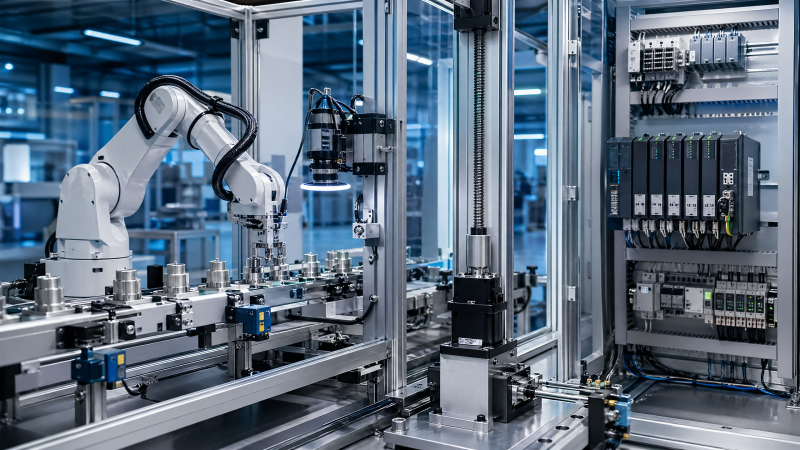
Repetitive production bottlenecks slow output, increase errors, and frustrate operators on the factory floor. The right machine automation strategies can streamline manual tasks, improve consistency, and reduce downtime without adding unnecessary complexity. For teams seeking practical ways to modernize production, understanding which automation ideas deliver real performance gains is the first step toward a faster, smarter, and more reliable manufacturing process.
Where repetitive bottlenecks usually start in machine automation projects
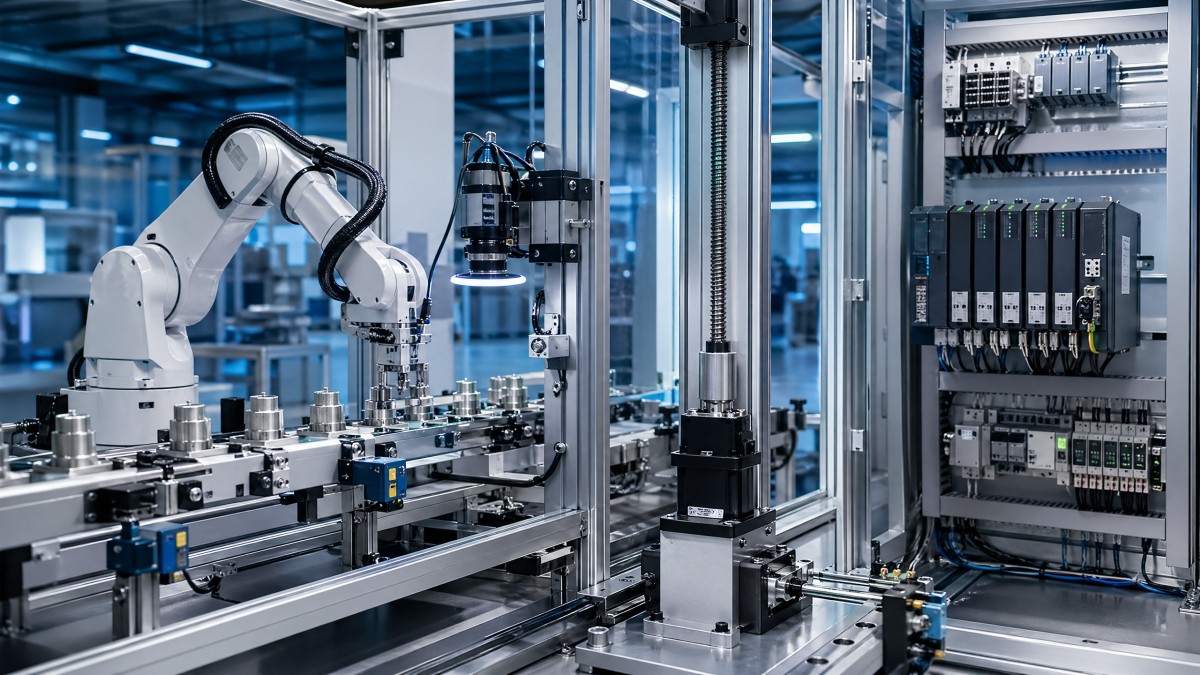
In mixed manufacturing environments, production delays rarely come from one dramatic failure. More often, they come from repeated micro-stoppages: manual loading, slow part positioning, inconsistent inspection, delayed changeovers, or poor communication between machines and operators. These are exactly the areas where machine automation creates measurable value without requiring a full line rebuild.
For operators, the pain is practical. The same motion is repeated hundreds or thousands of times per shift. Fatigue increases. Cycle time varies. Small handling errors lead to scrap, rework, or unplanned maintenance. In many factories, even a 3–8 second delay per cycle becomes a major throughput loss across 2 or 3 shifts.
Across general industry applications, the most effective machine automation ideas usually target three layers at once: motion repeatability, process visibility, and operator support. This may involve a robotic pick-and-place cell, a PLC-based sequence upgrade, servo-driven indexing, or MES-connected production feedback. The best choice depends on product mix, takt time, and how often the process changes during a week or month.
G-IFA helps reduce this uncertainty by benchmarking solutions across Industrial Robotics & Cobots, PLC & Control Systems, Motion Control & Transmission, Industrial IoT & Software, and Pneumatic & Hydraulic Systems. For users and operators, this matters because machine automation should not be selected by marketing language alone. It should be matched to line reality, integration risk, and compliance expectations such as ISO, IEC, and CE-related requirements.
Common bottleneck signals operators should track
- Cycle time drift of more than 5%–10% between the start and end of a shift, often caused by fatigue, inconsistent handling, or unstable work instructions.
- Frequent waiting time between stations, especially when one machine finishes in 20 seconds while the next manual task takes 28–35 seconds.
- High rework rates linked to positioning, fastening, labeling, or inspection steps that depend on human judgment rather than controlled machine logic.
- Unclear fault causes because machine alarms, PLC events, sensor status, and operator actions are not captured in one traceable system.
If two or more of these conditions appear every week, a machine automation upgrade is often more urgent than adding labor. Extra labor can raise capacity in the short term, but it rarely removes the root cause of repetitive production bottlenecks.
Which machine automation ideas solve the most common shop floor constraints?
Not every factory needs a fully autonomous line. In many cases, the best machine automation solution is a focused upgrade that removes one repetitive constraint while preserving operator control. This is especially useful in plants with small-batch, medium-batch, or mixed-SKU production, where flexibility matters as much as raw speed.
The table below compares practical machine automation options that are commonly used to reduce repetitive handling, improve consistency, and stabilize throughput across general manufacturing processes.
A key takeaway is that machine automation should be matched to the bottleneck type. If the issue is repetitive transfer, robot handling may help. If the issue is process timing, motion control may be the better first investment. If the issue is hidden downtime, PLC and IIoT visibility can unlock faster gains than adding mechanical complexity.
How to prioritize ideas by production reality
Start with the highest-frequency repetitive task, not the most advanced technology. A task repeated every 15–30 seconds will usually justify machine automation sooner than a rare but visually dramatic operation. Operators and line leaders often know this before management does, because they see where waiting, rework, and motion waste happen every shift.
Next, check whether the process is fixed or variable. Fixed processes with stable parts often support hard automation or faster servo-based systems. Variable processes with multiple SKUs may benefit more from cobots, flexible grippers, guided changeover logic, or recipe-driven PLC control.
A practical 4-step screening method
- Measure the real bottleneck for 3–5 production days, including stoppages, changeovers, and manual intervention points.
- Separate tasks into handling, positioning, inspection, and data visibility categories.
- Identify whether the process requires flexibility, speed, traceability, or safety improvement first.
- Compare machine automation options against integration difficulty, operator training time, and maintenance readiness.
This method avoids a common mistake: buying an advanced machine automation solution for a problem that could be solved with a simpler control upgrade, sensor redesign, or better line synchronization.
What should operators and buyers check before selecting a machine automation solution?
Selection problems usually start when teams compare solutions by headline speed alone. In reality, machine automation performance depends on compatibility with the product, operator workflow, available floor space, utility conditions, and control architecture. A faster machine on paper can create more stoppages if changeovers, grippers, or software integration are poorly matched.
For operators and plant users, the better question is not “Which system is most advanced?” but “Which system will run reliably for our product range, staffing level, and maintenance capability over the next 12–36 months?” That shift in thinking leads to better procurement decisions.
The table below provides a practical evaluation framework for machine automation sourcing, especially where multiple technologies such as robotics, PLC control, motion systems, and software must work together.
A strong machine automation decision balances at least 4 dimensions: throughput, flexibility, maintainability, and integration risk. G-IFA’s benchmarking approach is valuable here because cross-sector comparisons make it easier to see whether a proposed solution is technically aligned or simply over-specified.
Three selection mistakes that create hidden cost
- Choosing by peak speed only. A system rated for high speed may underperform if feeding, gripping, or reset conditions are unstable.
- Ignoring operator interaction. If HMI logic, alarms, and manual recovery steps are confusing, small faults become long stoppages.
- Underestimating integration time. Even moderate machine automation projects often need 2–4 weeks for controls validation, mechanical fit checks, and training preparation.
When procurement, engineering, and operators review these points together before purchase, implementation risk usually drops and acceptance becomes smoother.
How to implement machine automation without disrupting daily production
Implementation success is often decided before equipment arrives. A practical machine automation rollout should protect current output while preparing operators for a new workflow. In most factories, a phased approach works better than a sudden full-line conversion, especially when the bottleneck affects one station more than the entire process.
A typical project can be organized into 4 stages: assessment, simulation or design validation, installation and commissioning, then operator stabilization. Depending on scope, this may take from 2–6 weeks for a focused cell upgrade or longer for multi-station integration. The main point is to sequence risk, not compress it.
Operators should be included early, especially for manual recovery logic, tool access, safety zones, and changeover steps. Many machine automation projects fail to reach expected output not because the hardware is weak, but because recovery procedures are slow and not aligned with real shift conditions.
A low-disruption rollout checklist
- Document the baseline: cycle time, stop categories, scrap points, and manual touch frequency over at least 1 full production week.
- Confirm utility and interface readiness: power, air, network, fieldbus compatibility, guarding, and available maintenance access.
- Test abnormal conditions: part absence, sensor fault, jam, emergency stop reset, and recipe change during operation.
- Train operators in short modules, ideally 30–60 minutes per topic, rather than one long session that is forgotten after startup.
Why data visibility matters after startup
Once a machine automation system is running, the next improvement layer is visibility. Alarm history, sensor state, cycle count, and downtime codes should be captured in a way that operators can interpret quickly. This is where Industrial IoT and MES-linked software become useful, not as abstract digitalization tools, but as practical aids for line recovery and performance tracking.
A simple dashboard showing top 5 stop reasons each shift can reveal whether the bottleneck moved upstream, downstream, or stayed at the automated station. That feedback loop is essential. Good machine automation does not just speed up one task; it improves the line’s ability to learn and adapt.
G-IFA’s focus on verifiable data across hardware and software layers supports this approach. Instead of viewing robots, servo drives, PLCs, and software as isolated purchases, users can assess them as one coordinated production system.
FAQ: practical questions about machine automation for repetitive production work
How do I know whether a repetitive task is ready for machine automation?
A task is usually a good candidate when it is repeated at a stable frequency, follows clear motion rules, and creates measurable delay or quality risk. Good examples include loading, unloading, indexing, simple fastening, and repeatable inspection. If the task repeats every 20–60 seconds and causes frequent waiting or fatigue, machine automation deserves serious review.
Is a cobot always better than a traditional industrial robot?
No. A cobot can be attractive when flexibility, shared workspace, and easier redeployment are important. A traditional robot may be better for higher speed, heavier payloads, or more demanding cycle consistency. The correct choice depends on payload range, reach, guarding concept, and expected takt time, not on trend alone.
What should operators ask before a machine automation system is approved?
Ask about 5 key points: how faults are cleared, how changeovers are performed, how alarms are displayed, what spare parts are critical, and how long basic training will take. These questions often reveal whether the solution fits daily production reality or only looks good during a presentation.
How long does implementation usually take?
For targeted machine automation upgrades, a common planning window is 2–4 weeks for validation and preparation, followed by installation and commissioning depending on the complexity of controls, mechanics, and software interfaces. Larger multi-station projects naturally take longer, but even small projects benefit from formal staging and acceptance criteria.
Why choose us when evaluating machine automation options?
G-IFA is designed for teams that need more than product claims. Our value is in technical filtering, benchmark-driven comparison, and cross-sector transparency across robotics, controls, motion systems, industrial software, and fluid power technologies. That matters when machine automation decisions involve both mechanical performance and digital integration risk.
For operators, engineers, and production users, we help clarify which machine automation ideas fit real bottlenecks, which specifications need confirmation, and which trade-offs affect uptime, changeover, and maintainability. This is especially useful when you must compare different solution paths under time pressure or budget constraints.
You can contact us for focused support on parameter confirmation, solution selection, expected delivery windows, standards-related considerations, integration planning, and shortlist evaluation. If you are comparing robotic handling, PLC upgrades, servo motion solutions, or IIoT-linked visibility tools, we can help structure the decision around production reality rather than assumptions.
If your line is dealing with repetitive delays, uneven cycle time, or hard-to-trace stoppages, now is the right time to review your machine automation options. A well-scoped upgrade can reduce manual strain, improve consistency, and create a more reliable path to smarter manufacturing.
Recommended News
- 2026/10/24Car Spare Parts: How to Check Fitment and Avoid Ordering the Wrong PartOrder car spare parts with confidence. Learn how to verify VINs, OEM numbers, and fitment details to avoid costly mistakes and choose the right replacement first time.
- 2026/10/23How Do You Select a Motion Control System for Synchronized Axes?How do I select a motion control system for synchronized axes? Discover key timing, feedback, and performance checks to choose confidently and reduce costly integration risks.
- 2026/10/23Integrating End-of-Line Sortation with Packing Stations and Conveyor ControlsOptimize end of line sortation with coordinated packing stations and conveyor controls. Learn how to prevent bottlenecks, improve routing accuracy, and handle exceptions reliably.