
Search News
Industry Portal
Popular Tags
Machine Automation ROI: Where Savings Show Up First
Author
Dr. Victor Gear
Time
Apr 29, 2026
Pageviews
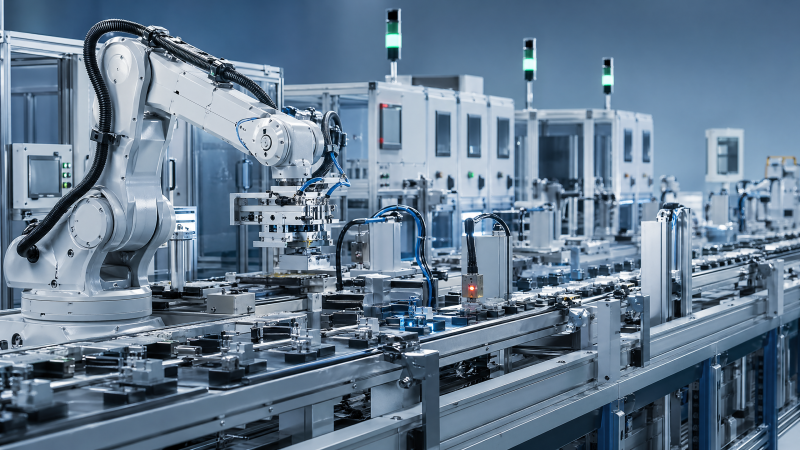
For finance approvers, the case for machine automation becomes clearest when early savings are measurable, repeatable, and tied to risk reduction. From labor efficiency and lower scrap rates to fewer unplanned stoppages and better energy control, machine automation often delivers ROI first in the areas that directly affect cash flow. Understanding where these gains appear helps decision-makers prioritize investments with stronger confidence and faster payback.
Why ROI Looks Different Across Automation Scenarios
In broad industrial settings, machine automation rarely creates value in exactly the same way from one plant to another. A packaging line, a CNC cell, and a mixed-assembly workshop may all invest in automation, yet the first visible savings often appear in different places. For finance approvers, this matters because the best investment cases are not built on general promises. They are built on the specific loss points that automation can reduce within the first 3 to 12 months.
That is why machine automation should be reviewed by scenario rather than by technology label alone. A robotic palletizing project may justify itself through labor redeployment within 6 months, while a PLC and motion-control retrofit may win approval because it cuts stoppage frequency from several short interruptions per shift to a more stable production rhythm. In both cases, the budget logic is sound, but the savings path is different.
For organizations comparing multiple proposals, the practical question is not whether automation has value in the abstract. The question is where cash flow improves first, what risks are reduced early, and how quickly those changes can be verified. Finance teams usually want a short list of measurable variables: labor hours, scrap rate, changeover time, downtime hours, maintenance spend, and energy intensity per unit output.
What finance approvers should compare first
Before comparing vendors or architectures, it helps to classify the business problem. Is the plant losing margin because labor availability is unstable? Are defects creating rework and customer risk? Is throughput capped by manual handling? Are older controls causing frequent resets? Machine automation pays back fastest when it is matched to the dominant loss category rather than deployed as a broad modernization exercise.
- High manual touchpoints often show savings first in labor efficiency, takt consistency, and safety-related disruption reduction.
- Quality-sensitive production usually sees early gains in scrap reduction, repeatability, and lower rework cost.
- Aging equipment environments tend to capture ROI through fewer unplanned stops, better diagnostics, and more predictable maintenance windows.
- Energy-intensive operations often benefit first from optimized cycle control, load balancing, and reduced idle running.
This scenario-based approach is especially relevant for groups managing multisite operations or capex committees. A project with a moderate headline return may deserve priority if its savings are easier to verify in monthly financial reporting and if it reduces operational volatility. In many cases, machine automation is approved faster when the proposal ties expected payback to one or two clear operational bottlenecks instead of six loosely connected benefits.
Three Common Scenarios Where Machine Automation Shows Savings First
Across general industry, three application scenarios repeatedly stand out when evaluating early machine automation ROI: labor-heavy handling, quality-critical processing, and downtime-prone legacy operations. Each one has a different financial signature. For finance approvers, the strongest proposals are usually the ones that make this signature visible in baseline data before the project starts.
The table below compares these scenarios using the operational variables most often reviewed during budget approval. The purpose is not to force identical ROI expectations, but to show where early savings are most likely to emerge and what evidence should be collected in advance.
A useful takeaway is that machine automation does not need to transform every metric at once to justify approval. If one scenario can reduce labor dependence by 15% to 30%, another can reduce scrap by 1 to 3 percentage points, and a third can eliminate several hours of monthly downtime, each may still be financially attractive. The approval logic depends on margin pressure, labor conditions, customer expectations, and the cost of disruption in that specific operation.
Scenario 1: Labor-heavy operations
In operations with repetitive loading, unloading, sorting, packing, or palletizing, machine automation usually shows savings first through labor efficiency and output consistency. This is especially true in facilities running 2 to 3 shifts, where absenteeism, training cycles, and overtime costs create hidden financial drag. A robot or automated handling cell may not remove all labor, but it often stabilizes the highest-friction tasks.
Finance approvers should focus on redeployable labor rather than theoretical headcount elimination. In many plants, the real gain comes from shifting labor to bottleneck areas, reducing temporary staffing, and avoiding overtime during demand peaks. Machine automation in these settings often creates value even when total employee count remains stable, because labor becomes more productive and less vulnerable to scheduling disruptions.
A second benefit is improved rhythm. Manual handling variability can slow downstream equipment, increase micro-stoppages, and create uneven WIP accumulation. Once motion is standardized, the first measurable improvement may appear in throughput per shift or in reduced line imbalance rather than in direct wage savings alone.
Scenario 2: Quality-sensitive production
Where tolerances are tight or repeatability is critical, machine automation often pays back through scrap reduction before any dramatic labor savings appear. This applies to dosing, fastening, pick-and-place accuracy, vision-guided inspection, cut length consistency, and repeatable motion control. A small reduction in defects can have a meaningful cash effect when materials are expensive or customer returns are costly.
For finance teams, quality-driven automation proposals become stronger when baseline losses are stated in unit economics. A scrap rate reduction from 4% to 2.5% may sound modest, but if the process handles high-value components, the annual impact can exceed the value of several labor positions. In addition, more stable process control can lower the risk of expedited shipments, field complaints, and batch rework.
In regulated or audit-sensitive environments, consistency also has a compliance dimension. While machine automation is not a substitute for a quality system, it can support repeatable execution and traceability when paired with sensors, PLC logic, and MES or ERP data links. That lowers the probability of costly exceptions and improves accountability at the machine level.
Scenario 3: Legacy equipment with frequent stoppages
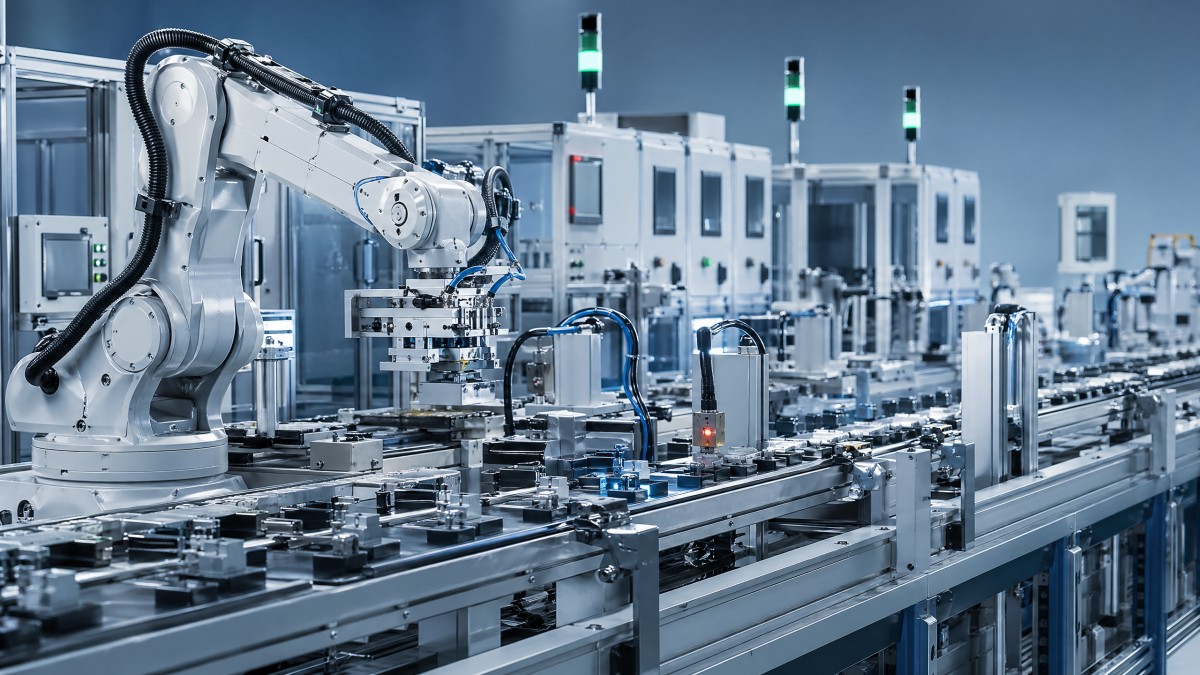
In older factories, the first machine automation win may come from better control stability rather than visible robotics. Replacing outdated control hardware, standardizing drives, adding modern sensors, or introducing IIoT diagnostics can reduce small failures that consume large amounts of supervisory attention. In some lines, 5 to 10 brief stoppages per shift create more financial damage than one major breakdown per month.
Finance approvers should ask how much downtime is truly unplanned, how long root-cause identification currently takes, and whether spare part risk is rising. If maintenance teams are spending excessive time on resets, manual calibration, or unsupported components, machine automation may pay back by reducing instability and extending useful line life without requiring a full replacement project.
This scenario is often attractive because the operational pain is already visible. The challenge is that savings are sometimes undercounted. Lost output, premium freight, maintenance overtime, and schedule recovery costs should be included in the business case. When those factors are measured together, a retrofit can be easier to approve than a larger greenfield automation package.
How Requirements Change by Plant Size, Product Mix, and Risk Profile
Machine automation decisions should also reflect organizational context. A high-volume plant with stable SKUs may prioritize throughput and labor reduction, while a medium-mix operation may care more about changeover flexibility and error prevention. For finance approvers, this means ROI cannot be judged only by equipment cost. It should be judged by fit between automation architecture and the operating model.
A common mistake is applying the same payback logic to every production environment. In low-mix, high-volume settings, fixed automation can be compelling when cycle times are short and demand is predictable for 24 to 36 months. In higher-mix environments, modular cells, cobot-assisted handling, or software-led control upgrades may be less dramatic but financially safer because they preserve flexibility.
The table below helps frame these differences by linking operating conditions to the machine automation priorities most likely to matter during financial review.
For many finance leaders, the implication is simple: the right machine automation project is not always the biggest one. It is the one aligned with production reality. If SKU turnover is high, approval should favor systems that can be reprogrammed, retooled, or redeployed with limited engineering downtime. If demand is stable and labor pressure is high, fixed automation may justify stronger capex concentration.
What large enterprises often prioritize
Larger groups often view machine automation through multisite standardization, spare-parts strategy, cybersecurity alignment, and data integration. Their ROI model may include reduced engineering variation, easier technician training, and better visibility across plants. In these cases, the first savings do not always appear in a single line item; they may appear in lower rollout friction across 3, 5, or 10 sites over time.
What smaller and mid-sized manufacturers often prioritize
Smaller operations usually need machine automation that solves one expensive bottleneck without overwhelming maintenance resources. Their strongest approval cases often involve one cell, one process family, or one troublesome line segment. A phased approach can reduce capex risk: first automate handling or controls, then add inspection, software connectivity, or energy monitoring once baseline improvements are proven over 1 to 2 quarters.
This staged model is financially useful because it creates a decision checkpoint. If the first phase improves OEE, scrap, or labor utilization as expected, the next investment has a stronger internal case. If not, the project scope can be adjusted before additional capital is committed.
Where Finance Teams Should Be Careful: Common Misreads in Automation ROI
Not every machine automation proposal is equally bankable. Some projects look attractive on paper because they combine too many benefits without clarifying which one will materialize first. Others assume perfect utilization from day one, ignore integration downtime, or underestimate maintenance and training needs. A strong approval process should separate likely first-year returns from longer-term strategic upside.
One frequent misread is treating all labor savings as immediate cash savings. If workforce levels cannot be reduced quickly, the near-term benefit may come from overtime reduction, lower turnover dependence, or increased output without additional hiring. That is still valuable, but it should be modeled honestly. Machine automation has strong financial logic when labor is constrained or expensive, yet the timing of savings must match operational reality.
Another common error is overlooking ramp-up. New cells often need a commissioning period of several weeks, and more complex integrations may require 1 to 3 months before stable output is reached. Finance approvers should ask for a realistic timeline that includes installation, debugging, operator training, and spare-parts readiness, especially where PLC, vision, MES, or conveyor interfaces are involved.
A practical due-diligence checklist
- Verify the baseline loss: labor hours, scrap, downtime, or energy should be measured over at least 8 to 12 weeks where possible.
- Check utilization assumptions: a cell designed for full demand may underperform financially if actual loading stays at 60% to 70%.
- Review integration scope: controls, software, safety interfaces, and mechanical fit often determine schedule risk.
- Ask about standards and compatibility: ISO, IEC, CE-related requirements, and plant-level control conventions should be clarified early.
- Model both direct and avoided costs: premium freight, rework labor, missed shipments, and maintenance escalation may be material.
In many reviews, the best machine automation proposal is the one that is easier to verify, not merely the one with the highest theoretical return. Projects with transparent assumptions tend to survive internal scrutiny better and create fewer post-approval disputes. That is especially important for finance approvers who must defend capex decisions across operations, procurement, and executive leadership.
How to Build a Stronger Approval Case for Machine Automation
A credible machine automation business case usually starts with one scenario, one primary KPI, and one realistic payback path. Instead of claiming benefits everywhere, define where the first savings will show up and how they will be measured monthly. This could be labor hours per shift, scrap value per batch, downtime minutes per week, or kWh per unit produced. If the first gain is visible, confidence in the broader automation roadmap increases.
For finance approvers, a phased evaluation approach can be especially effective. Phase 1 may address the dominant bottleneck with limited scope. Phase 2 may extend machine automation into inspection, IIoT monitoring, or software integration after the first results are validated. This approach limits exposure, supports internal learning, and often improves procurement discipline because specifications become clearer after initial deployment.
Organizations also benefit from a technical filter before investment. This is where comparative engineering insight matters. Reviewing robot payload suitability, servo sizing logic, PLC architecture, network compatibility, safety concepts, and MES/ERP data paths can prevent a financially promising project from becoming an implementation burden. In other words, machine automation ROI is not only about what is purchased, but about whether the selected system fits the plant’s actual operating conditions.
Why choose us
G-IFA supports finance approvers, production directors, system integrators, and automation engineers with a practical, engineering-led view of machine automation decisions. Our focus is not limited to single products. We help evaluate the full decision chain across Industrial Robotics & Cobots, PLC & Control Systems, Motion Control & Transmission, Industrial IoT & Software, and Pneumatic & Hydraulic Systems, with attention to international standards such as ISO, IEC, and CE-related requirements where applicable.
If you are reviewing a machine automation proposal, contact us to discuss the points that matter most before approval: parameter confirmation, product selection logic, delivery timing, retrofit versus replacement options, compatibility with existing control architecture, certification-related considerations, sample or pilot support, and budget-stage quotation planning. A scenario-based review can make the difference between a project that looks good on paper and one that delivers measurable savings in the first reporting cycle.
Recommended News
- 2026/10/24Car Spare Parts: How to Check Fitment and Avoid Ordering the Wrong PartOrder car spare parts with confidence. Learn how to verify VINs, OEM numbers, and fitment details to avoid costly mistakes and choose the right replacement first time.
- 2026/10/23How Do You Select a Motion Control System for Synchronized Axes?How do I select a motion control system for synchronized axes? Discover key timing, feedback, and performance checks to choose confidently and reduce costly integration risks.
- 2026/10/23Integrating End-of-Line Sortation with Packing Stations and Conveyor ControlsOptimize end of line sortation with coordinated packing stations and conveyor controls. Learn how to prevent bottlenecks, improve routing accuracy, and handle exceptions reliably.