
Search News
Industry Portal
Popular Tags
What Sets a Reliable Industrial Robotics Manufacturer Apart?
Author
Dr. Victor Gear
Time
May 01, 2026
Pageviews
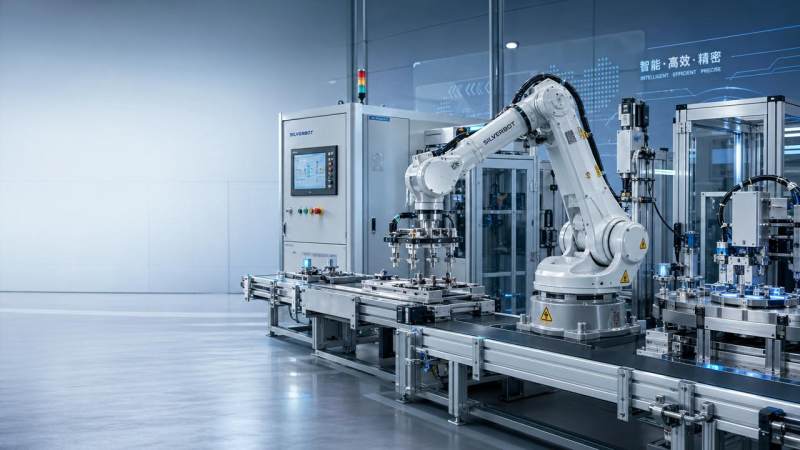
Choosing a reliable industrial robotics manufacturer is no longer just a sourcing decision—it is a strategic investment in uptime, scalability, and long-term factory performance. For business evaluators comparing automation partners, the real differentiators lie in engineering consistency, standards compliance, software integration capability, and verifiable performance data. Understanding these factors helps reduce procurement risk and supports smarter decisions in an increasingly competitive Industry 4.0 landscape.
Why Scenario Differences Matter More Than Brand Claims
A reliable industrial robotics manufacturer may look impressive in a brochure, yet still be a poor fit for a specific production environment. Business evaluators rarely buy robots in isolation. They assess complete operating outcomes: cycle stability, integration effort, maintenance burden, workforce adaptation, software compatibility, and return on automation investment. That is why the same manufacturer can be highly suitable for one factory scenario and less suitable for another.
In high-mix, low-volume production, flexibility and reprogramming speed often matter more than pure payload. In automotive-style mass production, repeatability, uptime, and multi-shift durability may carry more weight. In regulated industries, traceability and standards compliance can outweigh purchase price. For a business evaluator, the right question is not simply, “Who is the best industrial robotics manufacturer?” It is, “Which industrial robotics manufacturer best fits our application risk profile, expansion plan, and digital infrastructure?”
This scenario-based lens is especially important in modern smart manufacturing, where hardware and software are deeply connected. A manufacturer that provides strong mechanical performance but weak PLC, MES, or IIoT integration may increase hidden project costs. By contrast, a supplier with verifiable engineering data, international compliance, and application-specific support can significantly reduce commissioning risk.
Where an Industrial Robotics Manufacturer Is Typically Evaluated
Most procurement reviews emerge from identifiable business scenarios. Understanding these scenarios helps evaluators define the correct selection criteria early, before technical comparison becomes confusing or overly vendor-driven.
- New factory buildouts that require standardized automation architecture from day one
- Capacity expansion projects where robotic cells must connect with existing control systems
- Labor-intensive operations seeking stable quality and lower dependence on manual variability
- Multi-site manufacturing groups that need repeatable deployment across regions
- Digital transformation programs linking robotics with MES, ERP, and data collection platforms
- Safety and compliance upgrades in plants facing stricter operational standards
In each of these cases, a reliable industrial robotics manufacturer is judged not only by machine specifications, but by its ability to support long-term operational consistency. That includes documentation depth, global service capacity, spare parts availability, simulation tools, and the quality of application engineering.
Typical Application Scenarios and What to Prioritize
Different automation tasks place very different demands on robotics suppliers. The table below highlights how a business evaluator should adjust priorities based on use case rather than relying on a generic checklist.
This comparison shows why a reliable industrial robotics manufacturer cannot be judged by payload and speed alone. The deeper issue is whether the supplier has repeatable competence in the exact environment where the robot will operate. Evaluators should ask for comparable case evidence, not just generalized success stories.
How Requirements Change by Factory Type and Business Objective
Beyond the application itself, business context reshapes the definition of reliability. A multinational group standardizing production across countries often values supplier consistency, documentation structure, and international support more than a smaller manufacturer with a single site. Meanwhile, a fast-growing regional producer may prioritize deployment speed and modular upgrade paths.
For high-volume manufacturing
In high-volume environments, a reliable industrial robotics manufacturer must demonstrate low failure rates, predictable maintenance cycles, and dependable spare part logistics. Even minor downtime can create major cost impact. Here, evaluators should focus on MTBF-related evidence, service response structure, and installed-base maturity.
For high-mix production
In flexible manufacturing, the emphasis shifts toward programming simplicity, fast changeover, and compatibility with multiple tooling options. A supplier may be mechanically excellent but still create bottlenecks if every product change requires extensive engineering support. In this scenario, software usability and application libraries become key decision factors.
For regulated or quality-critical operations
Where auditability matters, the industrial robotics manufacturer should provide clear compliance records, stable version control, and support for traceable production data. This is especially relevant when robotic systems connect with inspection, MES, or ERP layers. Reliability here means not only uptime, but also data integrity and controlled process behavior.
The Key Signals That Separate a Reliable Industrial Robotics Manufacturer
When comparing candidates, business evaluators should look for evidence-based signals rather than marketing language. Several indicators consistently distinguish a dependable automation partner from a short-term equipment seller.
Engineering consistency across product lines
A reliable industrial robotics manufacturer typically shows disciplined design logic across robot families, controller architecture, teach pendant interfaces, and safety systems. This consistency lowers training costs and speeds maintenance. It also makes future expansion more manageable.
Compliance with international standards
Standards such as ISO, IEC, and CE-related requirements are not merely formalities. They indicate whether the manufacturer is prepared for structured deployment in global industrial environments. Compliance should be backed by documentation, test reports, and practical implementation guidance.
Software and control integration capability
In Industry 4.0 projects, robotics must connect with PLC systems, motion control layers, sensors, MES, ERP, and IIoT platforms. A manufacturer that supports open communication, diagnostics, and data exchange creates much lower integration friction. This is where organizations such as G-IFA add value by benchmarking both mechanical and digital compatibility, not just standalone hardware performance.
Verifiable application performance data
Reliable suppliers can show repeatability benchmarks, environmental limits, maintenance intervals, and application references that match real operating conditions. If the data is vague, incomplete, or difficult to compare, risk usually moves from the vendor to the buyer.
Lifecycle support beyond installation
A reliable industrial robotics manufacturer remains valuable after commissioning. Training, software updates, spare parts planning, preventive maintenance guidance, and local service coordination all affect total cost of ownership. This is especially important for evaluators making multi-year capital decisions.
Scenario-Based Fit: When to Move Fast and When to Be Cautious
Some business scenarios justify rapid shortlisting, while others require deeper validation. If a company is replacing an existing robot platform in a familiar application, reference checks and compatibility review may be enough to move quickly. However, if the project involves new digital architecture, cross-site deployment, or safety-sensitive collaboration, caution is essential.
- Move faster when the application is proven, line conditions are stable, and integration standards are already defined.
- Be more cautious when robotic systems must connect with legacy PLC environments, custom software layers, or variable upstream processes.
- Use pilot validation when product mix is unstable or operator interaction is high.
- Demand deeper support commitments when maintenance skills are limited on site.
This scenario discipline helps procurement teams avoid overbuying, under-specifying, or selecting a robotics partner based on price alone.
Common Misjudgments in Manufacturer Evaluation
One frequent mistake is assuming that a globally visible brand is automatically the most reliable industrial robotics manufacturer for every plant. In reality, local service maturity, integrator ecosystem strength, and application depth may matter more than brand recognition. Another mistake is focusing heavily on initial equipment cost while ignoring software licensing, line integration effort, training burden, and downtime exposure.
Evaluators also sometimes underestimate the importance of data transparency. If a supplier cannot clearly explain performance limits, communication protocols, or maintenance assumptions, long-term ownership risk increases. Finally, some teams overlook scalability. A robotics platform that works for one cell may become a constraint when the factory later expands into connected, multi-line automation.
FAQ for Business Evaluators
How do I verify whether an industrial robotics manufacturer is truly reliable?
Ask for application-specific references, standards documentation, controller and software compatibility details, spare parts policy, and measurable uptime or repeatability data. Reliability should be evidenced in conditions similar to your own.
Is the best industrial robotics manufacturer always the one with the most advanced robot model?
Not necessarily. For many factories, the better choice is the manufacturer that offers stable integration, easier maintenance, stronger support, and better fit with existing automation systems.
What matters most in a smart factory project?
In smart manufacturing, an industrial robotics manufacturer should be evaluated for both hardware precision and software openness. Data exchange, control architecture compatibility, and lifecycle support are often as important as robot mechanics.
A Practical Next Step for Scenario-Based Selection
The most effective way to choose a reliable industrial robotics manufacturer is to map your decision against a real production scenario: process type, throughput target, labor model, software environment, compliance needs, and expansion roadmap. Then compare manufacturers against those conditions using verifiable technical data rather than broad promises.
For business evaluators, this approach creates a more defensible procurement process and reduces the risk of selecting a robot supplier that looks strong on paper but underperforms in practice. In an Industry 4.0 environment shaped by precision, interoperability, and operational resilience, the right industrial robotics manufacturer is the one that aligns proven engineering integrity with the exact realities of your factory scenario.
Recommended News
- 2026/10/24Car Spare Parts: How to Check Fitment and Avoid Ordering the Wrong PartOrder car spare parts with confidence. Learn how to verify VINs, OEM numbers, and fitment details to avoid costly mistakes and choose the right replacement first time.
- 2026/10/23How Do You Select a Motion Control System for Synchronized Axes?How do I select a motion control system for synchronized axes? Discover key timing, feedback, and performance checks to choose confidently and reduce costly integration risks.
- 2026/10/23Integrating End-of-Line Sortation with Packing Stations and Conveyor ControlsOptimize end of line sortation with coordinated packing stations and conveyor controls. Learn how to prevent bottlenecks, improve routing accuracy, and handle exceptions reliably.