
Search News
Industry Portal
Popular Tags
What defines a reliable industrial robotics custom partner?
Author
Dr. Victor Gear
Time
May 25, 2026
Pageviews
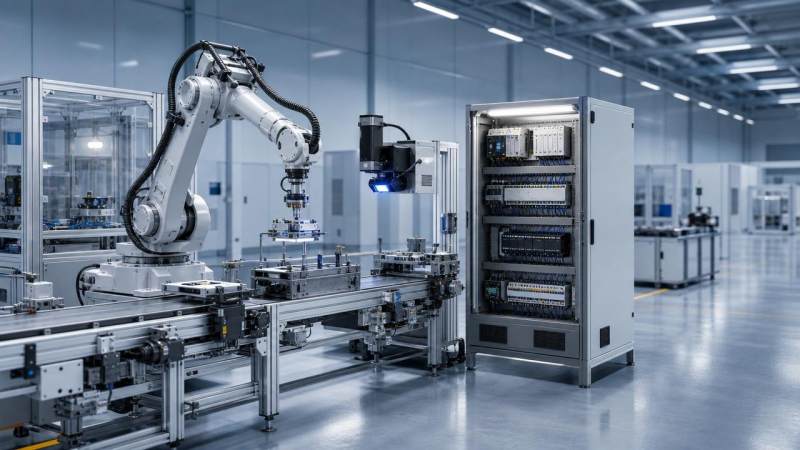
Choosing the right industrial robotics custom partner can determine whether automation creates measurable gains or expensive disruption.
In today’s Industry 4.0 environment, reliability means far more than delivering a robot cell on time.
A dependable industrial robotics custom partner must combine engineering rigor, integration discipline, software compatibility, and compliance transparency.
As factories connect robotics, PLC systems, motion platforms, MES software, and industrial data layers, weak coordination creates hidden risk.
That is why evaluating an industrial robotics custom relationship now requires a broader technical and strategic view.
Reliability in industrial robotics custom is being redefined by smarter, more connected production
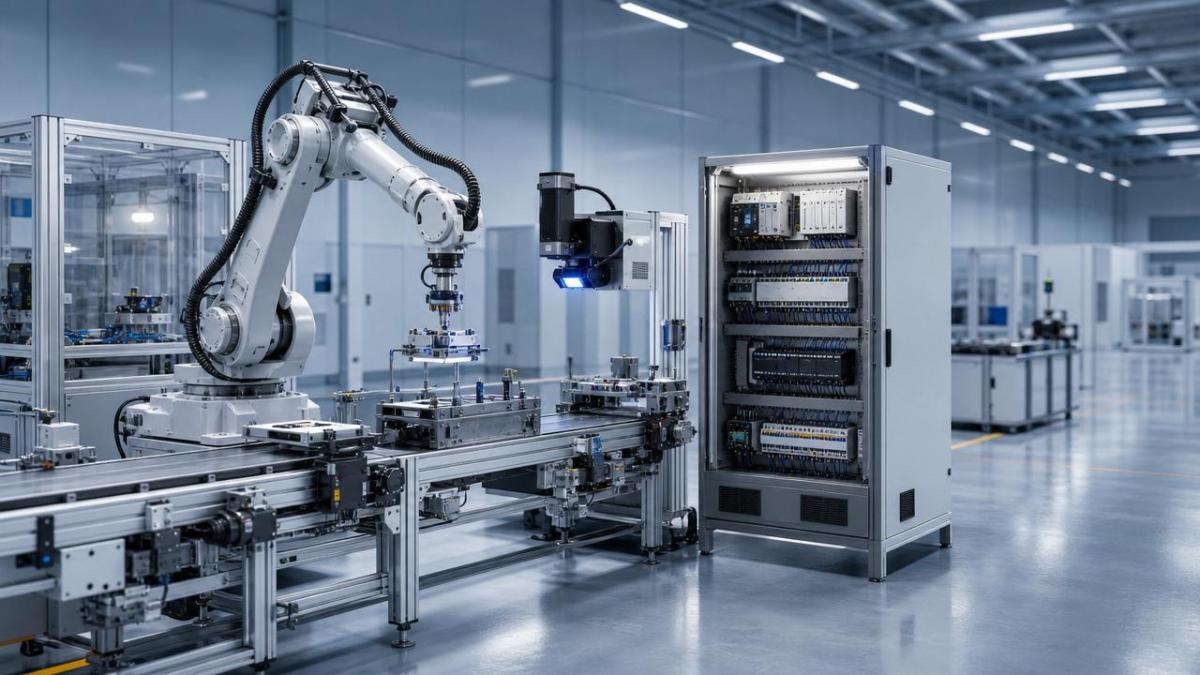
The market no longer treats robotic automation as a standalone hardware purchase.
Industrial robotics custom projects increasingly sit inside larger digital manufacturing systems with traceability, analytics, and remote diagnostics.
Because of this shift, a reliable partner must prove system-level performance, not only machine-level functionality.
This change is especially visible across mixed-industry production environments where product variation, labor pressure, and uptime expectations keep rising.
A credible industrial robotics custom provider should understand both physical automation and the software ecosystem surrounding it.
Several trend signals show what businesses now expect from an industrial robotics custom partner
Traditional vendor selection focused on price, payload, speed, and installation timing.
Today, selection standards are broader and more evidence-driven.
- More projects require robot integration with MES, ERP, vision systems, and IIoT platforms.
- Compliance review now extends beyond CE marking into safety architecture and validation records.
- Production lines must support faster product changes and smaller batch sizes.
- Lifecycle service matters more because downtime costs continue to increase.
- Decision quality depends on transparent benchmarking against ISO, IEC, and practical field performance.
These signals indicate that industrial robotics custom reliability is now measured across design, deployment, operation, and support.
The strongest drivers behind industrial robotics custom reliability are technical, operational, and regulatory
Why has reliability become such a central issue in industrial robotics custom decisions?
The answer lies in converging pressures across production, quality, and digital transformation.
A reliable industrial robotics custom partner responds to all these drivers with structured engineering and measurable proof.
What defines a reliable industrial robotics custom partner in real project conditions
Engineering depth must be visible early
Reliable partners ask detailed questions before proposing architecture, robot models, end effectors, motion logic, and safety concepts.
They validate cycle time assumptions, payload margins, reach envelopes, and maintenance access before final design freeze.
Integration capability is non-negotiable
Industrial robotics custom success often depends on coordination with PLC platforms, conveyors, sensors, drives, vision systems, and software interfaces.
A reliable partner can explain communication protocols, control hierarchies, and recovery logic clearly.
Compliance should be documented, not assumed
Strong providers map designs to relevant ISO, IEC, CE, and local safety expectations from the beginning.
They supply risk assessments, electrical documentation, safety circuit records, and acceptance criteria without hesitation.
Performance transparency separates confidence from marketing
Reliable industrial robotics custom partners present realistic throughput, repeatability, uptime assumptions, and maintenance intervals.
They do not hide limitations involving part variability, fixturing quality, environmental conditions, or software dependencies.
Lifecycle support must be practical
The real test of industrial robotics custom reliability appears after commissioning.
Remote support, spare parts planning, training quality, and change management determine whether the line stays productive.
These reliability factors affect multiple business functions, not only automation performance
A weak industrial robotics custom decision can create downstream problems across operations, quality, finance, and digital systems.
A strong decision improves resilience far beyond one robotic workstation.
- Operations benefit from stable cycle times, predictable downtime, and cleaner restart procedures.
- Quality teams gain better repeatability, traceability, and fewer process deviations.
- Digital transformation efforts gain usable production data and cleaner system connectivity.
- Financial outcomes improve when rework, emergency service, and retrofit costs stay controlled.
- Expansion planning becomes easier when custom robotic cells follow scalable engineering standards.
This is why industrial robotics custom evaluation should be treated as a strategic infrastructure decision.
The most important points to examine before selecting an industrial robotics custom partner
- Request evidence of similar applications, not only generic robot installations.
- Review design methodology, simulation practices, and commissioning procedures.
- Verify experience with your control environment, software stack, and data requirements.
- Check whether safety design is integrated into the project from day one.
- Ask for measurable KPIs covering cycle time, uptime, defect rate, and support response.
- Assess documentation quality, spare parts policy, and operator training structure.
- Confirm how engineering changes, future upgrades, and line expansions will be managed.
These checkpoints help filter industrial robotics custom partners who are capable of long-term performance.
A structured evaluation model can reduce risk before contracts are signed
Many automation failures begin with unclear expectations and incomplete technical comparison.
A simple evaluation framework makes industrial robotics custom decisions more objective.
The next step is to compare industrial robotics custom options through verified engineering data
A reliable industrial robotics custom partner should make technical decision-making easier, not more uncertain.
The best choices are usually supported by benchmark data, standards alignment, and realistic integration planning.
That is where structured intelligence becomes valuable.
G-IFA helps clarify industrial robotics custom decisions by connecting robotics performance with controls, motion systems, industrial software, and compliance context.
When automation investments are reviewed through verifiable engineering benchmarks, reliability becomes easier to define and easier to defend.
Use that approach to shortlist partners, test assumptions, and build production systems that remain effective long after launch.
Recommended News
- 2026/10/24Car Spare Parts: How to Check Fitment and Avoid Ordering the Wrong PartOrder car spare parts with confidence. Learn how to verify VINs, OEM numbers, and fitment details to avoid costly mistakes and choose the right replacement first time.
- 2026/10/23How Do You Select a Motion Control System for Synchronized Axes?How do I select a motion control system for synchronized axes? Discover key timing, feedback, and performance checks to choose confidently and reduce costly integration risks.
- 2026/10/23Integrating End-of-Line Sortation with Packing Stations and Conveyor ControlsOptimize end of line sortation with coordinated packing stations and conveyor controls. Learn how to prevent bottlenecks, improve routing accuracy, and handle exceptions reliably.