
Search News
Industry Portal
Popular Tags
What matters in a robotic welder OEM for shipbuilding
Author
Dr. Victor Gear
Time
May 21, 2026
Pageviews
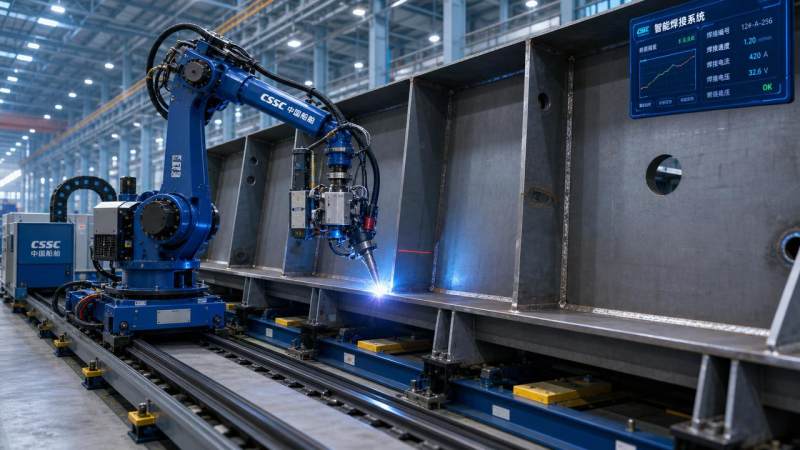
Choosing an industrial robotic welder oem for shipbuilding is not only a question of welding speed. It directly affects distortion control, panel consistency, classification compliance, and digital integration across the yard.
A reliable industrial robotic welder OEM for shipbuilding must demonstrate repeatable seam quality, integration flexibility, and lifecycle service under harsh marine fabrication conditions. The evaluation should be technical, measurable, and risk-based.
Why is an industrial robotic welder OEM for shipbuilding different from a general welding supplier?
Shipbuilding imposes unusual demands on welding automation. Large steel sections, variable joint fit-up, thick materials, and complex hull geometries create challenges beyond standard factory welding applications.
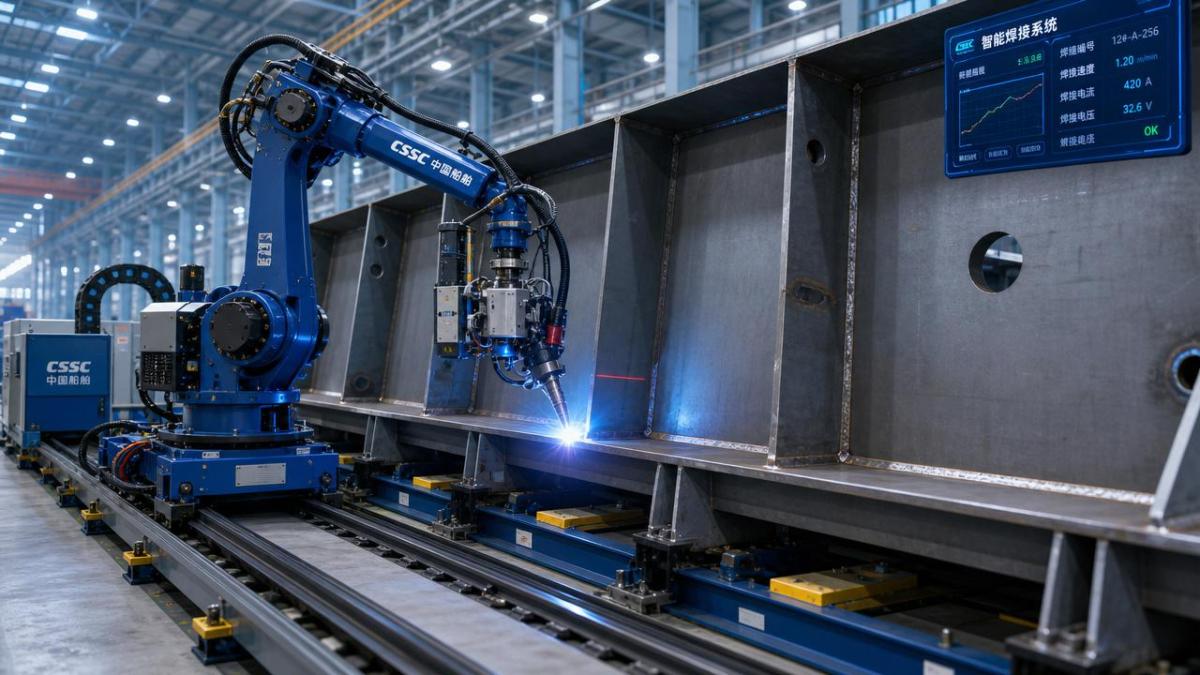
A general robotic welding vendor may offer strong arc packages. However, a true industrial robotic welder OEM for shipbuilding must understand marine structures, block assembly flow, and yard-level production bottlenecks.
The best partners design around real shipyard constraints. These include floor flatness variation, fume extraction, long workpieces, overhead crane interaction, and mixed manual-automatic welding zones.
They also align equipment with marine welding procedures. That means support for fillet, butt, multi-pass, and positional welds on steel grades commonly used in commercial and offshore vessels.
What should be proven early?
- Documented accuracy under heavy-duty welding conditions
- Repeatability with heat, spatter, and long duty cycles
- Compatibility with marine welding standards and procedures
- Integration experience with positioners, rails, scanners, and MES
- Local and remote support for commissioning and troubleshooting
Which technical capabilities matter most in a robotic welder OEM for shipbuilding?
Arc stability is essential, but it is only one layer. The industrial robotic welder OEM for shipbuilding must show complete process capability from part detection to weld data reporting.
1. Mechanical robustness
Shipyard environments are abrasive and dirty. Robots need sealed axes, cable protection, anti-collision design, and stable performance under extended thermal stress and metal dust exposure.
2. Sensing and seam tracking
Plate gaps and edge variation are common in ship panels and subassemblies. Through-arc sensing, laser vision, and adaptive seam tracking help maintain quality when fixtures cannot guarantee perfect alignment.
3. Positioning and reach strategy
Large work envelopes often require gantries, tracks, headstock-tailstock systems, or coordinated external axes. The OEM should optimize robot reach without sacrificing path stability or maintenance access.
4. Process database and parameter governance
Welding libraries should be structured, version-controlled, and easy to validate. Consistent parameter management reduces dependence on individual operators and supports repeatable block production.
5. Data connectivity
A capable industrial robotic welder OEM for shipbuilding should support PLC, SCADA, MES, ERP, and Industrial IoT layers. Weld logging, alarm analysis, and utilization tracking enable smarter capacity planning.
How can welding quality and compliance be evaluated before selection?
Evaluation should begin with evidence, not brochures. Ask the industrial robotic welder OEM for shipbuilding to provide sample procedures, test data, and references tied to comparable marine fabrication tasks.
The review should include welding procedure compatibility, dimensional accuracy, bead consistency, repair rate, and distortion behavior. These factors matter more than isolated maximum speed claims.
Useful validation checkpoints
- Witness a live trial on representative joint types and plate thicknesses.
- Review process capability across tack variation and realistic fit-up tolerance.
- Confirm support for WPS, traceability, and inspection documentation.
- Check compliance pathways for ISO, IEC, CE, and marine classification expectations.
- Request downtime, MTBF, and consumable performance data where available.
G-IFA’s benchmarking approach is useful here. It emphasizes verifiable hardware performance, control compatibility, and standards alignment, reducing uncertainty in automation investment decisions.
How do integration readiness and software compatibility affect shipyard value?
Even a strong welding robot underperforms if software integration is weak. Shipbuilding automation depends on coordination between robots, fixtures, material flow, planning systems, and quality records.
The right industrial robotic welder OEM for shipbuilding should communicate clearly with existing PLC architecture, external sensors, digital work instructions, and production monitoring platforms.
Integration questions worth asking
- Does the controller support open industrial communication protocols?
- Can welding data be exported for quality dashboards and traceability?
- Is offline programming available for large assembly workflows?
- Can the cell scale from one station to multiple synchronized lines?
- Are cybersecurity, user permissions, and recipe control built in?
For modern yards, software readiness often determines long-term return. Better connectivity shortens commissioning, improves diagnostics, and supports gradual Industry 4.0 expansion without replacing core equipment.
What common risks appear when choosing a robotic welder OEM for shipbuilding?
One major risk is choosing based on robot brand alone. The robot arm is important, but torch package, software logic, motion coordination, and application engineering usually decide real weld performance.
Another risk is underestimating fit-up variation. A cell that works on ideal coupons may fail on distorted panels or uneven assemblies unless sensing and adaptive control are mature.
Service depth is also critical. A weak support structure can extend downtime, delay spare parts, and leave process issues unresolved during ramp-up or production peaks.
Red flags to watch carefully
- No marine or heavy fabrication project references
- No clear acceptance criteria for trial welds
- Closed software with limited interoperability
- Unclear spare part lead times and service scope
- Performance claims without measured production evidence
How should cost, timeline, and lifecycle support be compared?
The lowest initial quote rarely delivers the best result. A proper cost review should include engineering hours, fixture strategy, software licensing, training, maintenance, and future line expansion.
Implementation timeline matters as well. The industrial robotic welder OEM for shipbuilding should define milestones for simulation, FAT, SAT, training, process validation, and post-launch optimization.
Lifecycle support should be measured through service response, remote diagnostics, preventive maintenance plans, and upgrade compatibility. Marine production lines need continuity, not one-time installation success.
Evaluation table: practical FAQ summary
What final checklist helps narrow the best option?
Use a structured scorecard before final selection. This keeps the decision focused on measurable engineering value rather than broad commercial claims or isolated demonstration results.
- Match proven welding processes to target ship sections
- Confirm control, sensing, and software interoperability
- Validate standards support and documentation structure
- Compare lifecycle service capability across regions
- Review scalability for future smart shipyard upgrades
A strong industrial robotic welder OEM for shipbuilding combines hardware durability, software intelligence, and application engineering discipline. That combination supports better weld consistency, lower risk, and sustainable automation modernization.
For deeper comparison, build the shortlist around verified performance data, standards alignment, and integration readiness. That approach creates a practical path toward scalable, lower-risk shipyard automation.
Recommended News
- 2026/10/24Car Spare Parts: How to Check Fitment and Avoid Ordering the Wrong PartOrder car spare parts with confidence. Learn how to verify VINs, OEM numbers, and fitment details to avoid costly mistakes and choose the right replacement first time.
- 2026/10/23How Do You Select a Motion Control System for Synchronized Axes?How do I select a motion control system for synchronized axes? Discover key timing, feedback, and performance checks to choose confidently and reduce costly integration risks.
- 2026/10/23Integrating End-of-Line Sortation with Packing Stations and Conveyor ControlsOptimize end of line sortation with coordinated packing stations and conveyor controls. Learn how to prevent bottlenecks, improve routing accuracy, and handle exceptions reliably.