
Search News
Industry Portal
Popular Tags
What sets one industrial robotics manufacturer apart in deployment
Author
Dr. Victor Gear
Time
May 13, 2026
Pageviews
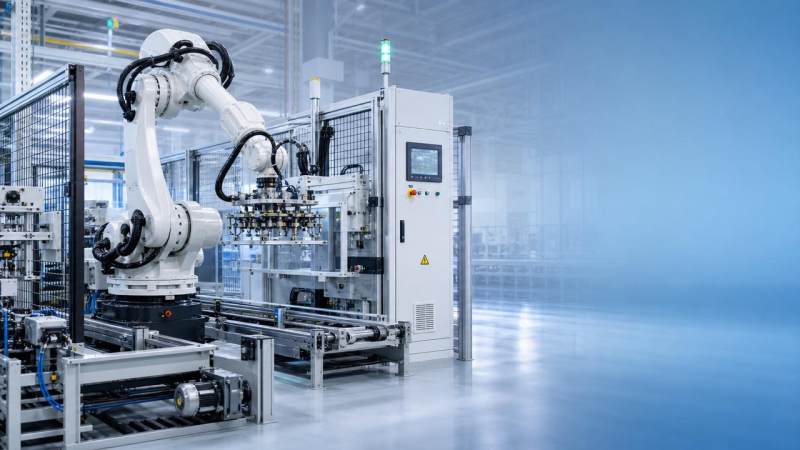
Choosing the right industrial robotics manufacturer can determine how quickly a distributor, agent, or system partner turns technical potential into reliable deployment results. Beyond product specs, the real difference lies in integration readiness, compliance transparency, lifecycle support, and the ability to reduce project risk across diverse factory environments.
For distributors and channel partners, the key question is not simply who builds a capable robot. It is which industrial robotics manufacturer helps customers deploy faster, service easier, and scale with fewer operational surprises.
That search intent is highly practical. Buyers in this segment usually compare manufacturers based on deployment performance, after-sales reliability, documentation quality, certification clarity, and long-term channel viability rather than headline payload or reach alone.
In other words, what sets one supplier apart is its ability to make automation projects more predictable. If integration is smoother, spare parts are accessible, and support is technically competent, a distributor can close more deals with lower risk.
What distributors really need from an industrial robotics manufacturer
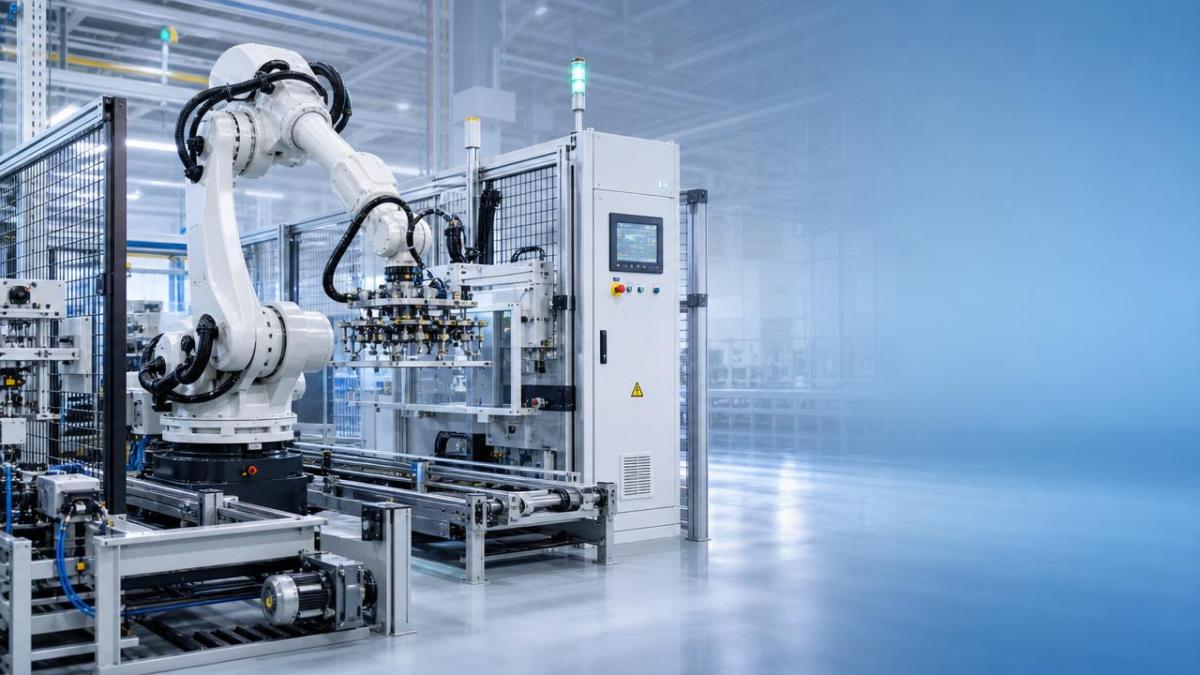
When distributors evaluate an industrial robotics manufacturer, they are usually thinking beyond catalog features. Their commercial success depends on whether the manufacturer can support repeated deployment across different customer sites and production scenarios.
The first concern is integration readiness. Robots do not operate in isolation. They must communicate with PLCs, vision systems, conveyors, safety circuits, MES platforms, and upstream or downstream equipment already used in the factory.
If a manufacturer offers open communication protocols, clean interface documentation, and tested compatibility with mainstream controls, channel partners can reduce engineering hours. That directly affects project profitability and lowers the barrier to customer adoption.
The second concern is deployment consistency. A robot that performs well in a lab demonstration may still create major problems during field installation. Mounting flexibility, wiring logic, software usability, and commissioning tools matter more than marketing claims.
The third concern is serviceability. Distributors need confidence that faults can be diagnosed quickly, parts can be sourced without delay, and software updates will not disrupt the installed base. That is where manufacturer maturity becomes visible.
Finally, distributors care about channel economics. Technical differentiation only becomes meaningful if it supports healthy margins, repeat business, manageable support obligations, and a stable manufacturer relationship over multiple product cycles.
Deployment advantage starts with engineering standardization
One major factor that separates a stronger industrial robotics manufacturer from a weaker one is the level of engineering standardization built into its products, software stack, and deployment process.
Standardization reduces uncertainty. If robot models share common controller architecture, programming logic, accessory interfaces, and maintenance procedures, technicians can move faster from one project to another without relearning the platform.
This is especially important for distributors handling mixed customer portfolios. A partner may support packaging, welding, machine tending, palletizing, and electronics assembly in the same year. Standardized deployment frameworks improve efficiency across all those applications.
Manufacturers with disciplined engineering practices also tend to provide more reliable technical libraries. Accurate CAD files, electrical drawings, I/O maps, cycle data, safety documentation, and application notes reduce pre-sales friction and post-sales troubleshooting.
From a channel perspective, that means lower hidden cost. Every missing document or unclear interface detail creates extra work for the distributor, the system integrator, and the end user. Good standardization prevents that waste.
It also strengthens scalability. Once one successful deployment is completed, the distributor can replicate the same architecture across similar customer lines. That repeatability is often more valuable than small differences in robot specifications.
Compliance transparency is a commercial advantage, not just a technical detail
Many buyers underestimate how much certification and standards clarity influence deployment success. For distributors and agents, compliance transparency is not paperwork. It is a practical tool for reducing approval delays and protecting project credibility.
A trustworthy industrial robotics manufacturer should clearly state how its systems align with relevant standards such as ISO, IEC, CE, and application-specific safety requirements. The documentation should be accessible, current, and technically complete.
This matters because channel partners often serve customers in regulated industries or multinational production environments. If compliance details are vague, the distributor absorbs additional risk during audits, safety reviews, and procurement evaluation.
Transparent manufacturers make it easier to answer customer questions about safety functions, controller architecture, electrical conformity, environmental operating ranges, and risk assessment responsibilities. That accelerates technical due diligence.
It also improves sales confidence. A distributor that can present verified compliance information appears more competent and trustworthy. In competitive tenders, that often influences decision-makers who want assurance that deployment will proceed without regulatory obstacles.
For global projects, consistency is even more important. Manufacturers with robust international certification pathways usually support channel partners more effectively when products move across regions, industries, and procurement frameworks.
Software usability often determines whether hardware value is realized
In industrial automation, hardware precision alone does not define deployment success. Software quality often determines whether a robot system can be commissioned quickly, optimized efficiently, and supported economically over its service life.
For distributors, a manufacturer’s programming environment should be assessed as seriously as the robot arm itself. An intuitive interface, strong diagnostics, simulation capability, and reusable templates can significantly reduce engineering dependency.
If programming requires extensive specialist knowledge for routine setup, the distributor’s support burden rises. That slows installations, increases training cost, and makes smaller projects less commercially attractive for channel partners.
By contrast, a well-designed software ecosystem supports broader market access. It enables distributors to serve customers who may not have deep in-house robotics expertise but still want practical automation with manageable operational complexity.
Integration with factory software also matters. Compatibility with MES, ERP-linked workflows, industrial IoT platforms, and remote monitoring systems can help end users justify investment based on visibility, traceability, and productivity improvement.
In many cases, the industrial robotics manufacturer that stands out is the one whose software makes deployment teachable, repeatable, and diagnosable. That directly translates into lower risk for both the distributor and the end customer.
Lifecycle support is where channel partnerships are truly tested
A robot sale does not end at installation. For distributors and agents, the real commercial relationship begins when equipment enters production and expectations shift toward uptime, responsiveness, and long-term support reliability.
This is why lifecycle support is one of the clearest indicators of manufacturer quality. Strong suppliers provide structured training, spare parts planning, service escalation paths, remote support capabilities, and realistic product roadmap visibility.
Distributors should pay close attention to response procedures. How quickly can technical issues be escalated? Is there local or regional support? Are field service resources available? Can controller logs and alarm histories be reviewed remotely?
Parts availability is equally important. If common wear components or controller modules have long lead times, a single equipment failure can damage the distributor’s reputation even if the original sale was technically successful.
Training depth also matters more than many buyers realize. A manufacturer that equips distributors with application engineering knowledge, safety understanding, and diagnostic competence enables them to build long-term customer trust.
In practice, lifecycle support is what converts a product line into a dependable channel business. Without it, even advanced robots can become difficult to recommend, especially in markets where uptime expectations are high.
Application fit matters more than broad product claims
Another factor that differentiates an industrial robotics manufacturer is how clearly it matches products to real industrial use cases. Broad claims about flexibility are less useful than proven suitability for specific deployment conditions.
Distributors should examine whether the manufacturer has strong references in target applications such as pick-and-place, welding, palletizing, dispensing, machine loading, inspection, or collaborative workstation automation.
Application maturity reduces pre-sales uncertainty. When a supplier already understands end-of-arm tooling needs, cycle constraints, safety architecture, and environmental factors for a given use case, project planning becomes more accurate.
This also affects sales speed. A distributor can present tested layouts, expected cycle ranges, integration examples, and realistic commissioning paths instead of building every proposal from the ground up.
Manufacturers with practical application expertise are often better at identifying mismatch early. They can warn partners when a robot is undersized, software assumptions are unrealistic, or peripheral systems will become the actual bottleneck.
That honesty creates value. For channel partners, avoiding a bad-fit deployment is often more important than winning a marginal sale that later turns into a support problem or reference failure.
How to evaluate manufacturers before committing to a channel relationship
For distributors and agents, selecting an industrial robotics manufacturer should involve a structured commercial and technical review process. Surface-level product comparisons rarely reveal the factors that most affect deployment outcomes.
Start with documentation quality. Request manuals, integration guides, CAD data, certification files, sample fault logs, and software screenshots. Strong manufacturers usually demonstrate technical discipline before any contract discussion begins.
Then test integration openness. Ask how the robots connect with common PLC platforms, fieldbus standards, safety devices, vision tools, and factory software environments. The goal is to identify friction before it reaches the customer site.
Evaluate support workflows using real scenarios. Ask what happens if a servo alarm occurs during commissioning, if a controller fails in production, or if firmware compatibility creates a system conflict. Practical answers matter most.
Review training and channel enablement in detail. A manufacturer that expects distributors to sell independently without sufficient engineering support may create hidden operational burden. Good channel strategy includes technical and commercial onboarding.
Finally, assess roadmap alignment. The right partner should not only fit today’s demand but also support future movement toward smarter factories, connected production systems, data visibility, and more software-defined automation infrastructure.
The strongest differentiator is lower deployment risk
Ultimately, what sets one industrial robotics manufacturer apart in deployment is not a single feature. It is the supplier’s ability to reduce uncertainty across design, installation, compliance, startup, maintenance, and future expansion.
For distributors, that advantage is highly tangible. Lower deployment risk means fewer project delays, better customer satisfaction, stronger references, more repeat business, and healthier service economics over time.
The best manufacturers make complex automation easier to implement in real factories. They combine mechanical reliability, software usability, standards transparency, application knowledge, and support readiness into a deployable business proposition.
That is why smart channel partners look beyond robot performance tables. They evaluate whether the manufacturer can help them build a scalable, defensible, and trustworthy automation portfolio for diverse industrial customers.
In a market shaped by Industry 4.0 expectations, factories need more than equipment. They need dependable automation ecosystems. Distributors who choose manufacturers on that basis are better positioned to win and retain long-term business.
When evaluating your next industrial robotics manufacturer, focus on the factors that affect outcomes after the purchase order is signed. In deployment, that is where true differentiation appears and where channel value is actually created.
Recommended News
- 2026/10/24Car Spare Parts: How to Check Fitment and Avoid Ordering the Wrong PartOrder car spare parts with confidence. Learn how to verify VINs, OEM numbers, and fitment details to avoid costly mistakes and choose the right replacement first time.
- 2026/10/23How Do You Select a Motion Control System for Synchronized Axes?How do I select a motion control system for synchronized axes? Discover key timing, feedback, and performance checks to choose confidently and reduce costly integration risks.
- 2026/10/23Integrating End-of-Line Sortation with Packing Stations and Conveyor ControlsOptimize end of line sortation with coordinated packing stations and conveyor controls. Learn how to prevent bottlenecks, improve routing accuracy, and handle exceptions reliably.