
Search News
Industry Portal
Popular Tags
HMI display resolution standards that affect operator error rates
Author
Dr. Isaac Logic
Time
May 13, 2026
Pageviews
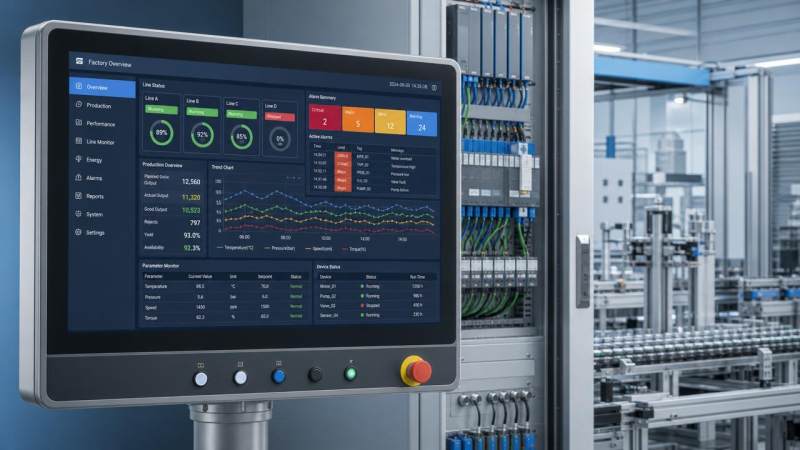
In industrial environments, poor screen clarity can turn a simple task into a costly mistake. Understanding hmi display resolution standards is essential for operators who rely on fast, accurate visual feedback to monitor alarms, read data, and respond correctly under pressure. This article explores how resolution choices directly influence usability, safety, and operator error rates in modern automation systems.
Why hmi display resolution standards are becoming a frontline issue
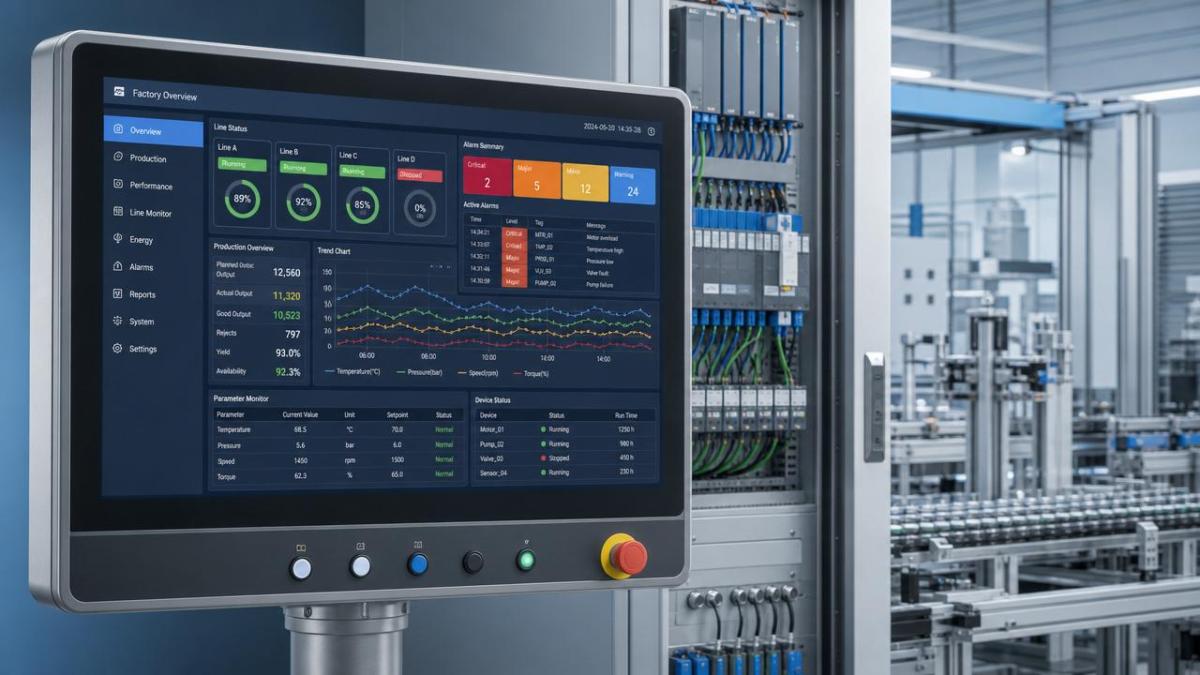
Industrial interfaces are no longer simple status panels. They now carry dense dashboards, live trends, alarm layers, and multi-device control windows.
That shift makes hmi display resolution standards more important than panel size alone. Operators need precise visual structure, not just bigger screens.
Across factories, higher machine speed leaves less time for reading and confirming information. Any visual ambiguity can increase hesitation, misreads, or wrong-touch actions.
This matters across the broader automation landscape tracked by G-IFA. Resolution quality affects robotics cells, PLC stations, motion platforms, MES terminals, and fluid power systems.
The practical question is not whether high resolution looks better. It is whether the chosen standard reduces cognitive load during real operating conditions.
The trend signal is clear: visual complexity is rising faster than interface discipline
Modern control rooms and machine stations display more data layers than ever. Yet many interfaces still use outdated layouts designed for lower pixel density.
This mismatch creates a hidden risk. More information on screen does not automatically mean better decision support.
As smart manufacturing expands, screens must support alarm prioritization, recipe management, trend comparison, energy tracking, and remote diagnostics.
When visual elements are compressed into low-resolution displays, numbers blur, icons crowd together, and touch targets shrink below safe operating thresholds.
That is why hmi display resolution standards are increasingly discussed alongside IEC usability guidance, ISO-centered safety thinking, and human factors engineering.
Typical warning signs in the field
- Frequent wrong-button activation during alarm acknowledgement
- Operators zooming in mentally by moving closer to the screen
- Trend graphs that hide small but critical process changes
- Text truncation in multilingual or symbol-heavy interfaces
- Inconsistent scaling between panel models and remote clients
What is driving the stronger focus on hmi display resolution standards
Several technology and workflow changes are pushing display standards into a more strategic role. Resolution now influences both engineering quality and operating reliability.
In this context, hmi display resolution standards help create repeatable rules for text size, icon clarity, alarm contrast, and touch-zone spacing.
How resolution choices directly affect operator error rates
Operator error rarely comes from one cause. It usually grows from visual overload, time pressure, fatigue, and interface ambiguity working together.
Resolution plays a direct role because it shapes what can be recognized quickly, compared accurately, and selected confidently.
The most common error pathways
- Blurred or crowded numeric values lead to incorrect reading.
- Compressed alarm banners hide priority differences.
- Small touch elements trigger adjacent commands.
- Low-detail trends mask abnormal drift before limits are crossed.
- Scaling artifacts weaken trust in the interface.
A higher pixel count alone will not solve these issues. The display must match viewing distance, ambient light, glove use, and interface layout logic.
Still, poorly chosen resolution standards often lock in failure. Once screen assets are designed around the wrong target, usability declines across the whole lifecycle.
The impact reaches multiple automation layers, not just the HMI panel
The effects of weak visual standards spread beyond one operator station. They influence troubleshooting speed, line continuity, and digital workflow confidence.
In robotics cells, unclear status symbols can delay manual recovery. In motion control systems, poor trend visibility can hide vibration or timing instability.
In PLC-driven packaging lines, similar-looking buttons may cause recipe or mode selection mistakes. In IIoT dashboards, low-detail charts can weaken cross-shift analysis.
For pneumatic and hydraulic equipment, pressure and flow readings must remain instantly legible. Small misreads can affect energy use, component wear, and process consistency.
Business-level consequences
- Longer training time for new interface versions
- More micro-stoppages during mode changes
- Lower alarm response consistency across shifts
- Reduced value from digitalization investments
- Higher redesign cost when scaling globally
What to evaluate first when applying hmi display resolution standards
The most effective approach starts with the task, not the screen vendor. Resolution decisions should support the exact actions required under real production conditions.
Core evaluation points
- Viewing distance: Text and symbols must remain readable from normal operating positions.
- Criticality mapping: High-risk functions need stronger contrast and larger touch areas.
- Data hierarchy: Primary values should never compete visually with secondary analytics.
- Aspect ratio consistency: Avoid distortion when deploying across panel families.
- Environmental conditions: Glare, vibration, dust, and gloves change practical readability.
- Scalability: The same design language should survive migration to remote clients.
These checks turn hmi display resolution standards into a measurable engineering decision instead of a cosmetic preference.
A practical direction for future-ready interface decisions
The next phase of smart manufacturing will depend on cleaner human-machine communication, not just more connected assets.
That means resolution planning should be integrated early with control logic, alarm philosophy, and visual ergonomics review.
When guided by verifiable benchmarks, hmi display resolution standards support safer decisions, faster responses, and more durable automation value.
A useful next step is to review one active HMI screen against actual tasks, viewing distance, and error history. That small audit often reveals where resolution standards are helping—or quietly increasing operator risk.
Recommended News
- 2026/05/30Is lithium battery storage for off-grid applications safe?Lithium battery storage for off-grid applications can be safe with certified cells, smart BMS, thermal control, and expert integration—learn how to reduce risk and boost uptime.
- 2026/05/30Why do decarbonization costs vary by plant?Decarbonization costs vary by plant due to assets, automation, energy mix, and data. Learn how to benchmark sites, cut risk, and prioritize smarter investments.
- 2026/05/30How can industrial infrastructure cut downtime?Industrial infrastructure can cut downtime with smarter asset visibility, resilient automation, predictive maintenance, and proven recovery plans. See the checklist.