
Search News
Industry Portal
Popular Tags
Are safety claims reliable from a cobot manufacturer china
Author
Cobots
Time
May 16, 2026
Pageviews
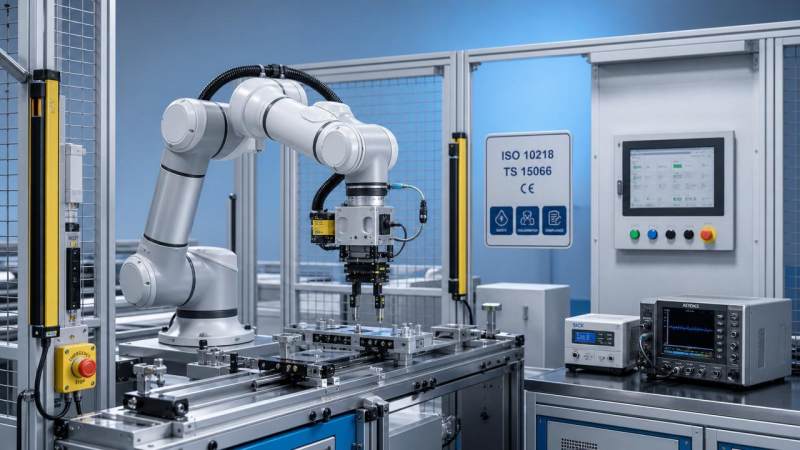
Can you trust the safety claims of a cobot manufacturer china with safety features when worker protection and compliance are on the line? In today’s automated factories, safety statements are no longer marketing extras. They affect legal exposure, uptime, insurance confidence, and deployment speed. Reliable evaluation starts with evidence, not slogans.
Across general industry, collaborative robots are moving from pilot cells into mixed human-machine workspaces. That shift changes how safety is judged. A cobot manufacturer china with safety features must now prove performance under standards, application limits, and integration realities. Buyers need a structured way to verify those claims.
Safety claims are under closer scrutiny as cobots enter shared production spaces
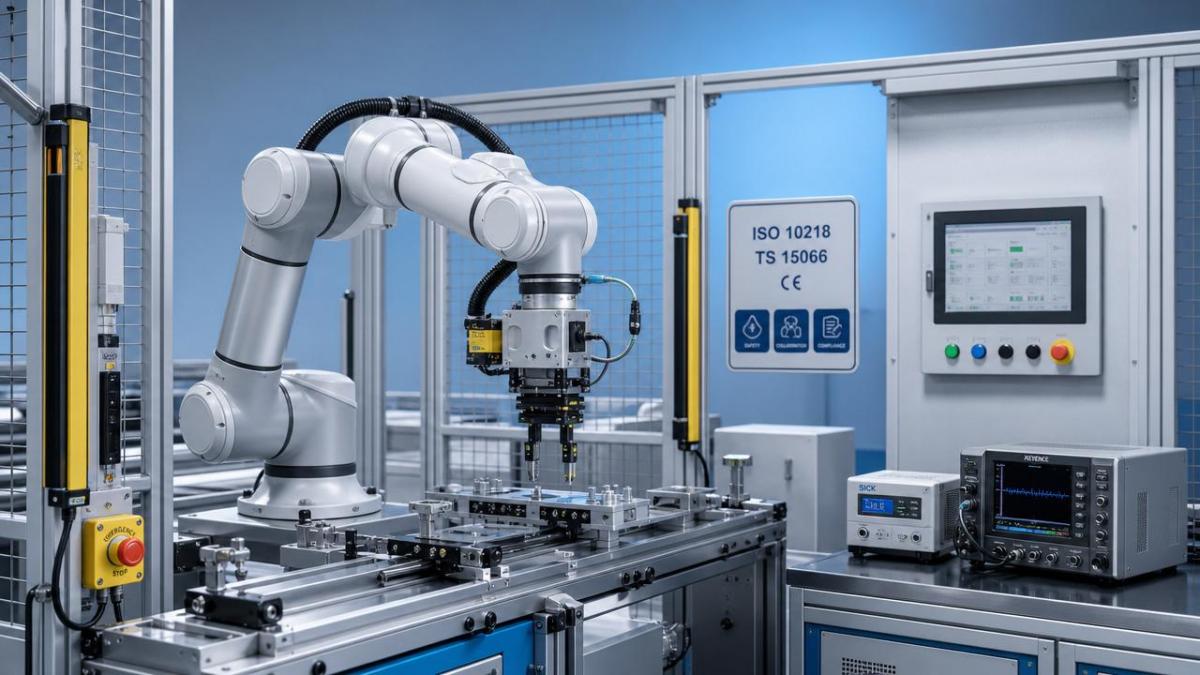
The market has changed quickly. Cobots are no longer used only for light demonstrations or simple loading tasks. They are now deployed in assembly, packaging, inspection, screwdriving, palletizing, and machine tending.
As applications become more demanding, broad safety language becomes less useful. A cobot manufacturer china with safety features may advertise force limitation, collision detection, and emergency stop functions. Yet those features alone do not confirm safe operation in every workspace.
The key trend is clear. End users increasingly ask for verified safety architecture, component certification, risk assessment support, and integration documentation. Safety is shifting from a product claim to a system-level performance requirement.
Why the credibility gap is growing around cobot safety messaging
Several factors explain why safety claims receive more scrutiny today. The issue is not distrust alone. It is the growing complexity of compliance, application diversity, and cross-border industrial standards.
This means a cobot manufacturer china with safety features must support claims with measurable data. Without transparent testing and clear limitations, even advanced safety functions may be presented too broadly.
What makes a safety claim reliable in real industrial evaluation
A reliable claim connects product design, standards alignment, and deployment evidence. It should explain not only what the robot can do, but under which conditions it remains safe.
Standards references should be specific, not decorative
Look for explicit references to ISO 10218, ISO/TS 15066, IEC 60204-1, and relevant CE requirements. A serious cobot manufacturer china with safety features should explain how the product aligns with those standards.
General statements like “complies with international standards” are not enough. Useful documentation includes declarations, test scope, safety functions, and any excluded operating conditions.
Safety functions should be traceable and testable
Check whether core functions are clearly listed. These may include safe stop, speed monitoring, power and force limiting, protective stop, and position monitoring.
More importantly, ask how these functions are validated. Reliable suppliers provide response times, performance levels, fault reactions, and reset behavior. That information helps determine if the system fits actual line conditions.
Risk assessment support separates serious suppliers from weak ones
No cobot is safe by default in every use case. A credible cobot manufacturer china with safety features should acknowledge this. It should provide risk assessment guidance tied to payload, reach, speed, tooling, and workstation layout.
If the supplier treats the robot alone as the full safety answer, that is a warning sign. Real safety depends on the complete application, including grippers, fixtures, sharp edges, and operator access paths.
Where safety claims often fail under practical factory conditions
Many problems appear after installation, not during sales discussions. That is why practical validation matters. Several common gaps explain why some safety claims do not hold up on the shop floor.
- The robot passed tests without the actual end-effector attached.
- Force limits were measured in ideal lab conditions only.
- Stopping performance changes after payload increases.
- Third-party accessories introduce uncontrolled hazards.
- The integrator received incomplete safety parameter guidance.
These issues affect more than compliance. They influence downtime, retraining, redesign costs, and acceptance by health and safety teams. In general industry, even a small mismatch can delay commissioning.
Therefore, a cobot manufacturer china with safety features should be judged on deployment transparency. Real credibility includes application notes, integration constraints, and examples of validated use cases.
How these safety trends affect operations, compliance, and investment decisions
The consequences of unreliable safety claims reach multiple business functions. This is no longer a narrow engineering issue. It shapes production continuity, site approval, and long-term automation strategy.
For operations, unclear safety performance can reduce cycle speed because conservative limits are imposed after installation. For compliance, missing evidence can complicate audits and market entry. For finance, redesign and incident exposure raise total cost of ownership.
What to examine before trusting a cobot manufacturer china with safety features
A practical review process should focus on evidence quality, not presentation style. The following checkpoints help test whether a cobot manufacturer china with safety features is making dependable claims.
- Request full safety manuals, not summary brochures.
- Confirm standard references and certification scope.
- Review safety function details and response metrics.
- Ask for application-specific risk assessment support.
- Check payload, speed, and tooling limitations.
- Verify integration guidance for sensors and guards.
- Look for real deployment cases in similar environments.
- Assess after-sales engineering support for validation.
This approach supports smarter automation benchmarking, which aligns with G-IFA’s mission. Verifiable data and engineering integrity matter more than isolated feature claims, especially in mixed production environments.
The strongest next step is a structured evidence review, not a yes-or-no assumption
Safety claims can be reliable, but only when they are supported by standards alignment, transparent testing, and system-level application guidance. A cobot manufacturer china with safety features should be evaluated as an engineering partner, not only a hardware source.
Before approving a project, build a short validation checklist. Match each claim to a document, test result, or integration condition. Where evidence is incomplete, request clarification before deployment decisions move forward.
If your team is comparing automation options across robotics, controls, motion, and software layers, use a benchmark mindset. Reliable safety performance is part of overall line intelligence. It should be measurable, repeatable, and suitable for the exact production context.
Recommended News
- 2026/10/24Car Spare Parts: How to Check Fitment and Avoid Ordering the Wrong PartOrder car spare parts with confidence. Learn how to verify VINs, OEM numbers, and fitment details to avoid costly mistakes and choose the right replacement first time.
- 2026/10/23How Do You Select a Motion Control System for Synchronized Axes?How do I select a motion control system for synchronized axes? Discover key timing, feedback, and performance checks to choose confidently and reduce costly integration risks.
- 2026/10/23Integrating End-of-Line Sortation with Packing Stations and Conveyor ControlsOptimize end of line sortation with coordinated packing stations and conveyor controls. Learn how to prevent bottlenecks, improve routing accuracy, and handle exceptions reliably.