
Search News
Industry Portal
Popular Tags
Which Safety Features Actually Matter in a China Cobot?
Author
Cobots
Time
May 12, 2026
Pageviews
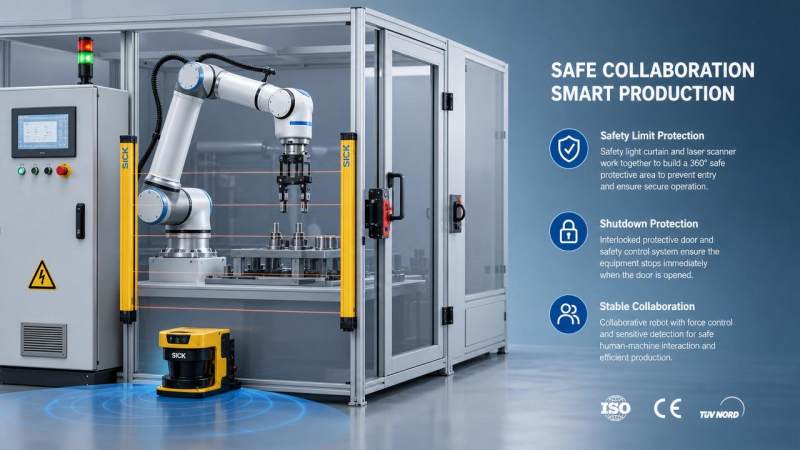
For quality control and safety managers, choosing a cobot is no longer just about payload or speed.
When evaluating a cobot manufacturer china with safety features, the real question is which protections truly reduce risk, support compliance, and maintain production efficiency.
This shift reflects a broader industrial reality.
Collaborative robots now work closer to people, handle varied tasks, and enter mixed-production environments where safety performance must be measurable, not assumed.
In that context, selecting a cobot manufacturer china with safety features means judging engineering depth, control logic, and validation evidence together.
Safety expectations are rising faster than cobot marketing claims
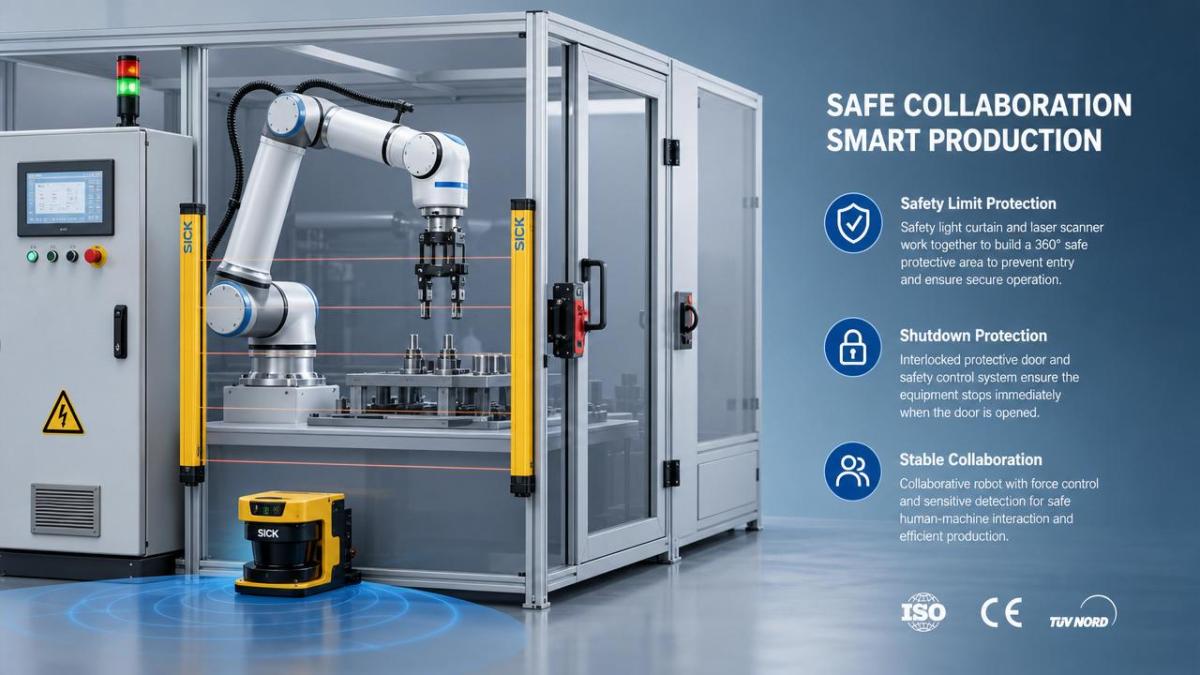
Across general industry, collaborative automation is moving from isolated pilot cells to mainstream production support.
That expansion changes the safety baseline.
Earlier deployments often accepted basic collision detection as enough.
Today, plants expect layered protection, traceable diagnostics, and predictable behavior during abnormal conditions.
This is why the phrase cobot manufacturer china with safety features deserves closer inspection.
Not every safety function has equal value.
Some features reduce real operational risk, while others mainly improve brochure language.
The important trend is clear: users increasingly compare certified limits, response times, stop behavior, and integration readiness.
A capable cobot manufacturer china with safety features must therefore show how safety works under production pressure, not only under laboratory conditions.
The strongest trend signals come from real-world risk scenarios
Safety priorities become clearer when mapped to actual factory events.
Unexpected human entry, variable part handling, restart after faults, and tool-side hazards usually create more exposure than headline robot speed.
For that reason, the most meaningful safety features are those that control energy, motion, and access in a transparent way.
Which safety functions matter most
- Power and force limiting with validated thresholds for contact risk reduction.
- Safe speed monitoring that reduces motion before people enter close range.
- Safe stop functions, including emergency stop and controlled stop categories.
- Safe limited position to prevent arm movement into restricted zones.
- Safe limited speed and safe limited torque for process stability and protection.
- Protective stop logic with reliable restart conditions and event logging.
- Safety I/O compatibility for scanners, light curtains, gates, and PLC safety systems.
- Tool-end safety management, especially for grippers, blades, welders, or screwdriving spindles.
These functions matter because collaborative risk rarely comes from the arm alone.
It often comes from the combined system: robot, tool, workpiece, software, and human movement.
Why these features are becoming selection drivers
Several forces are pushing safety from a secondary checkbox into a primary evaluation criterion.
A reliable cobot manufacturer china with safety features should address all these drivers in technical documentation and application support.
If safety claims stay vague, risk usually shifts to the integrator and end user.
The features that look impressive but matter less alone
Some advertised items are useful, but they should not dominate selection decisions.
- A simple collision alarm without configurable thresholds or validated force control.
- A single emergency stop button presented as a complete safety architecture.
- General statements like “safe collaboration” without stop category details.
- Software warnings that do not connect to certified safety channels.
- Safety features that work only with the base arm, not with the application tooling.
These items may still contribute value.
However, they do not replace structured safety functions, validated system behavior, and application-specific risk reduction.
When assessing a cobot manufacturer china with safety features, substance matters more than interface appearance.
The impact extends beyond compliance into uptime and line design
Better safety engineering changes how automation cells are designed and operated.
It can reduce unnecessary guarding, simplify validation, and support smoother operator interaction.
It also lowers the probability of nuisance stops caused by unstable sensing or weak fault logic.
In practical terms, a strong cobot manufacturer china with safety features can improve three business areas at once.
- Risk control: Safer interaction reduces exposure during loading, inspection, and manual adjustment.
- Operational continuity: Better diagnostics help isolate events faster and shorten recovery time.
- Scalability: Standardized safety interfaces make future line expansion easier.
This is especially relevant in general industry, where one cobot platform may serve packaging, handling, assembly, testing, and machine tending across different sites.
What deserves closer review before approval
A sound evaluation should move from feature lists to proof points.
Before accepting a cobot manufacturer china with safety features, focus on these checkpoints.
- Request ISO-related declarations and supporting technical files, not summary brochures alone.
- Confirm whether safe motion functions are certified, configurable, and application-ready.
- Review fault recovery behavior after power loss, stop events, and communication failures.
- Check if event histories support root-cause analysis and audit transparency.
- Verify safety integration with scanners, interlocks, PLCs, and third-party tooling.
- Assess how the supplier defines safe restart and unauthorized parameter changes.
- Test performance with realistic payloads, speeds, and end-effector conditions.
These checks reveal whether the system protects people while staying usable in production.
That balance is the true differentiator.
A practical judgment framework helps separate robust platforms from risky ones
Using this framework keeps decisions aligned with engineering reality.
It also supports more consistent comparison between global options and any cobot manufacturer china with safety features under consideration.
The next step is to verify safety under actual operating conditions
The market will continue rewarding cobots that combine collaborative flexibility with disciplined safety architecture.
That makes evidence-based assessment essential.
If a cobot manufacturer china with safety features can demonstrate certified control functions, stable diagnostics, tool-level risk management, and practical integration support, the safety proposition is far stronger.
If those elements are missing, the burden often returns to the project team.
A useful next move is to build a short validation checklist based on your target application.
Test contact behavior, stop response, safe zones, restart control, and tooling hazards before final approval.
That approach turns safety from a sales promise into a measurable engineering decision.
For organizations using G-IFA as a benchmark reference, this is the most reliable way to compare any cobot manufacturer china with safety features against global automation expectations.
Recommended News
- 2026/10/24Car Spare Parts: How to Check Fitment and Avoid Ordering the Wrong PartOrder car spare parts with confidence. Learn how to verify VINs, OEM numbers, and fitment details to avoid costly mistakes and choose the right replacement first time.
- 2026/10/23How Do You Select a Motion Control System for Synchronized Axes?How do I select a motion control system for synchronized axes? Discover key timing, feedback, and performance checks to choose confidently and reduce costly integration risks.
- 2026/10/23Integrating End-of-Line Sortation with Packing Stations and Conveyor ControlsOptimize end of line sortation with coordinated packing stations and conveyor controls. Learn how to prevent bottlenecks, improve routing accuracy, and handle exceptions reliably.