
Search News
Industry Portal
Popular Tags
Where industrial robotics custom projects run into avoidable delays
Author
Cobots
Time
May 09, 2026
Pageviews
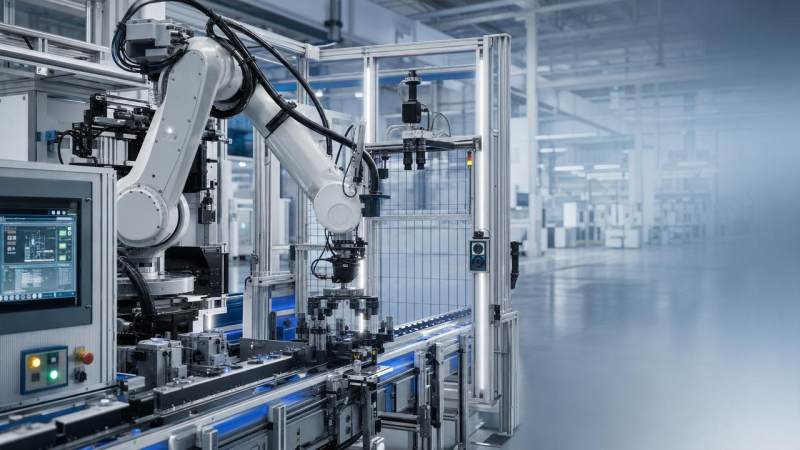
Industrial robotics custom projects often promise competitive gains, yet many stall because of preventable missteps in scope definition, integration planning, and compliance review. In complex automation environments, delays rarely come from a single technical fault. They usually build up across engineering assumptions, supplier coordination, digital interface mismatches, and underestimated commissioning effort. For organizations evaluating industrial robotics custom investments, understanding where avoidable delays appear is essential for protecting capital, improving deployment confidence, and linking automation to measurable throughput, quality, and uptime targets.
What industrial robotics custom projects usually involve
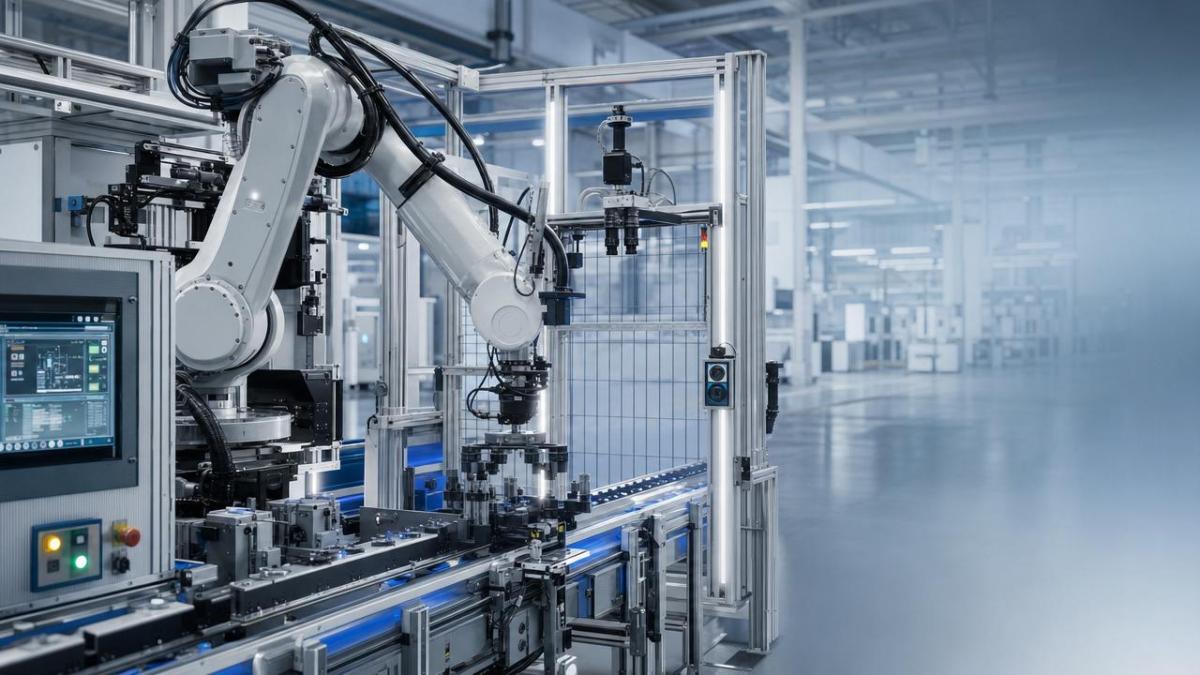
The term industrial robotics custom typically refers to automation projects designed around a specific production requirement rather than a fully standardized machine package. These projects may include robot arm selection, end-of-arm tooling, safety architecture, PLC coordination, vision systems, motion control, conveyor synchronization, MES or ERP data exchange, and site-specific compliance adaptation. In mixed-industry production settings, customization is often necessary because part geometries, cycle-time expectations, traceability needs, and plant layouts vary widely.
A custom robotics project may deliver welding, palletizing, material handling, assembly, inspection, dispensing, machine tending, or packaging functions. However, the more interfaces a solution must support, the greater the risk of delay if upstream assumptions are incomplete. This is why industrial robotics custom planning should be treated not only as equipment procurement, but as a systems engineering exercise with mechanical, electrical, software, safety, and operational dependencies.
Current industry signals behind project delays
Across smart manufacturing programs, several recurring signals explain why industrial robotics custom deployments slip beyond expected timelines. These are not isolated to one sector. They appear in food processing, automotive components, electronics, logistics, medical device assembly, and general industrial production.
These signals matter because they affect the entire automation stack. A robot may be available on schedule, yet the project still misses launch because grippers are not validated, safety zoning is incomplete, or upstream machines cannot maintain the assumed feed consistency. In other words, industrial robotics custom delays are often integration delays rather than robot delays.
Where industrial robotics custom projects run into avoidable delays
The first major source of delay is unclear scope definition. If payload, reach, floor space, part presentation, product mix, and required OEE are not documented early, vendors and integrators may design around different assumptions. This creates downstream revisions in robot size, fixture layout, guarding, cable routing, and controller logic. Even small scope gaps can trigger weeks of redesign when several subsystems are already in procurement.
A second source is unrealistic application testing. Many industrial robotics custom concepts are approved from nominal samples only. Once the project reaches FAT or onsite commissioning, real-world part tolerances, lighting changes, material reflectivity, or incoming position variation begin to break repeatability. Vision-guided picking, sealing, polishing, and precision assembly are especially exposed to this risk. Testing should reflect worst-case conditions, not ideal lab conditions.
Third, integration architecture is often defined too late. Robotics projects now interact with PLC platforms, SCADA layers, barcode systems, torque tools, sensors, and manufacturing software. If network standards, data points, handshake logic, alarm structures, and user-access permissions are not agreed in advance, the controls stage becomes congested. The result is not only schedule delay but also weak maintainability after startup.
A fourth delay point is compliance sequencing. Projects that operate across regions may require review against ISO, IEC, CE, local electrical codes, lockout expectations, and machine safety risk assessments. When these checks are left until the end, approved designs may need physical modification. Guarding distance, emergency stop architecture, safety PLC logic, or pneumatic isolation methods can all change late in the program.
Finally, site-readiness is regularly underestimated. Even a well-built industrial robotics custom cell can sit idle if utilities, floor anchors, compressed air quality, network drops, operator training, spare parts, or maintenance documentation are not ready. Schedule plans that focus only on equipment build dates ignore the fact that deployment success depends on plant preparation and operational adoption.
Business value of reducing delay in custom robotics programs
Reducing avoidable delay in industrial robotics custom work does more than improve project management optics. It directly affects capital efficiency, ramp-up speed, and confidence in future automation scaling. When custom robotic systems launch on time, organizations gain earlier access to labor stability, better repeatability, lower scrap exposure, and more reliable production planning.
There is also a data advantage. Well-scoped industrial robotics custom projects generate cleaner information about cycle time, fault patterns, quality variation, and maintenance behavior. That data becomes a strategic foundation for future line balancing, digital twin refinement, and software-driven optimization. By contrast, projects that launch through rushed workarounds tend to create hidden operating costs that are not visible in the original ROI model.
- Faster time to stable throughput after commissioning
- Lower risk of budget drift from repeated engineering changes
- Improved interoperability across robotics, controls, and software systems
- More credible performance benchmarking for future automation phases
Typical scenarios where delay risk is highest
Not all projects carry the same risk profile. Some industrial robotics custom applications are inherently more exposed because they combine variable inputs, high precision, and multiple interfaces. The following overview helps identify where stronger front-end controls are most valuable.
Practical measures that prevent avoidable delays
The most effective prevention method is disciplined project definition before detailed design starts. For industrial robotics custom deployments, this means documenting not only the intended process but also edge cases: product variation, environmental constraints, reject handling, maintenance access, sanitation or cleanliness expectations, and operator intervention logic. A project specification should be treated as a control tool, not a sales formality.
It is also important to separate “concept proven” from “production proven.” A robot path that works in a demo does not guarantee cycle stability across a full shift. Pilot validation should include real parts, realistic line speeds, and failure-mode testing. Where possible, simulation should cover not just motion envelope but also congestion, recovery logic, and buffer behavior.
- Freeze success criteria early: cycle time, first-pass yield, uptime, and safety acceptance.
- Assign interface ownership across robot, PLC, vision, software, and plant IT.
- Run compliance reviews in parallel with mechanical and electrical design.
- Use FAT and SAT checklists tied to documented process scenarios, not generic templates.
- Prepare the site early, including utilities, networking, training plans, and spare strategy.
For broader automation benchmarking, a structured reference approach also helps. Repositories such as G-IFA are valuable because they connect robotics choices to adjacent layers like motion control, industrial software, and standards alignment. In industrial robotics custom decision-making, that cross-functional visibility can expose hidden dependencies before they become schedule problems.
A practical next step for stronger project outcomes
Before approving a new industrial robotics custom initiative, create a pre-launch review built around five questions: Is the scope fixed enough to engineer? Has the process been tested under real variation? Are controls and software interfaces fully assigned? Has compliance review started early enough? Is the site truly ready for installation and ramp-up? If any answer is uncertain, the schedule is likely carrying hidden risk.
The most reliable path is to compare proposed architectures, hardware choices, and standards assumptions against independent engineering benchmarks before procurement and build begin. That approach supports better vendor alignment, clearer acceptance criteria, and a more defensible automation investment case. In industrial robotics custom programs, delays are often avoidable when technical detail, operational reality, and compliance discipline are addressed as one integrated system rather than as separate workstreams.
Recommended News
- 2026/10/24Car Spare Parts: How to Check Fitment and Avoid Ordering the Wrong PartOrder car spare parts with confidence. Learn how to verify VINs, OEM numbers, and fitment details to avoid costly mistakes and choose the right replacement first time.
- 2026/10/23How Do You Select a Motion Control System for Synchronized Axes?How do I select a motion control system for synchronized axes? Discover key timing, feedback, and performance checks to choose confidently and reduce costly integration risks.
- 2026/10/23Integrating End-of-Line Sortation with Packing Stations and Conveyor ControlsOptimize end of line sortation with coordinated packing stations and conveyor controls. Learn how to prevent bottlenecks, improve routing accuracy, and handle exceptions reliably.