
Search News
Industry Portal
Popular Tags
How to compare cobot manufacturers in China on real safety features
Author
Cobots
Time
May 06, 2026
Pageviews
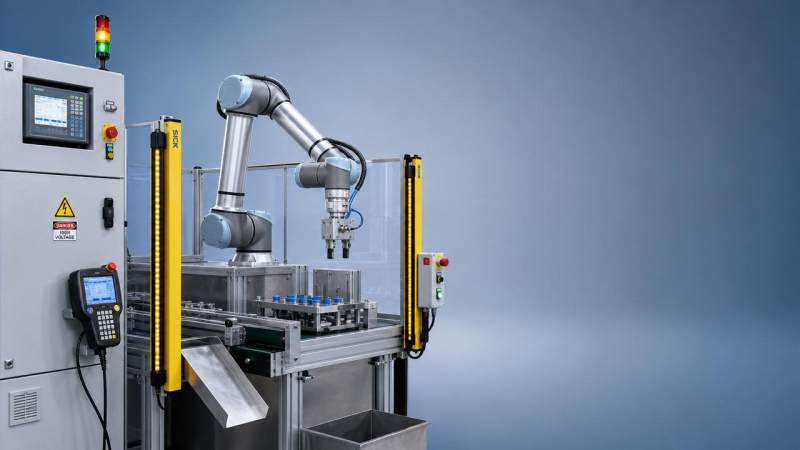
Choosing a cobot manufacturer china with safety features requires more than comparing payload, speed, or price. For business evaluators, the real difference lies in certified safety functions, risk-reduction design, compliance evidence, and integration reliability. This guide explains how to assess Chinese cobot suppliers through practical safety benchmarks, helping you identify partners that reduce operational risk and support long-term automation performance.
Why a checklist-based review works better than a simple product comparison
When evaluating a cobot manufacturer china with safety features, many teams start with technical brochures. That is useful, but not sufficient. Safety performance is rarely captured by one specification line. A collaborative robot may advertise force limitation, emergency stop, or vision integration, yet still create implementation risk if documentation is weak, safety logic is incomplete, or third-party integration breaks compliance assumptions.
A checklist approach helps business evaluators compare suppliers using the same decision criteria across engineering, procurement, compliance, and operations. It also reduces bias caused by aggressive pricing or marketing language. For G-IFA-style benchmarking, the question is not simply whether a robot can collaborate with people, but whether the manufacturer can prove safe design intent, repeatable risk control, and stable integration quality under real production conditions.
In practice, the best supplier is often not the cheapest or the fastest to quote. It is the one that provides auditable evidence: certifications, safety architecture details, validation data, application notes, commissioning procedures, and after-sales support that preserve safety over the equipment lifecycle.
Start with these non-negotiable safety checks
Before comparing optional features, confirm the foundation. If a cobot manufacturer china with safety features cannot clearly answer the points below, it should not move to the final shortlist.
- Verify declared compliance with relevant standards such as ISO 10218, ISO/TS 15066, CE-related requirements, and applicable electrical safety norms. Ask for certificates, test reports, and declaration documents rather than summary slides.
- Confirm built-in safety functions, including safe speed monitoring, emergency stop, protective stop, power and force limiting, safe limited position, and restart behavior after interruption.
- Check whether the safety functions are standard in the controller or depend on extra paid modules, external PLC logic, or third-party devices.
- Review risk assessment support. A serious manufacturer should provide application-level guidance, hazard examples, and interface conditions for safe deployment.
- Inspect documentation quality. User manuals, wiring diagrams, functional safety descriptions, and validation instructions should be detailed, consistent, and available in clear English.
- Assess local and international support capability, because safety failures are often solved during integration, commissioning, maintenance, and software updates, not only during purchase.
How to compare real safety features instead of brochure claims
1. Examine certified functions, not generic wording
Many suppliers use broad terms such as “safe collaboration” or “human-friendly design.” These phrases are not evaluation criteria. Ask the manufacturer to specify which safety functions are integrated, what standards they align with, and whether the functions are independently certified. If a cobot manufacturer china with safety features cannot distinguish between system safety and marketing description, that is a warning sign.
2. Check the safety architecture of the controller
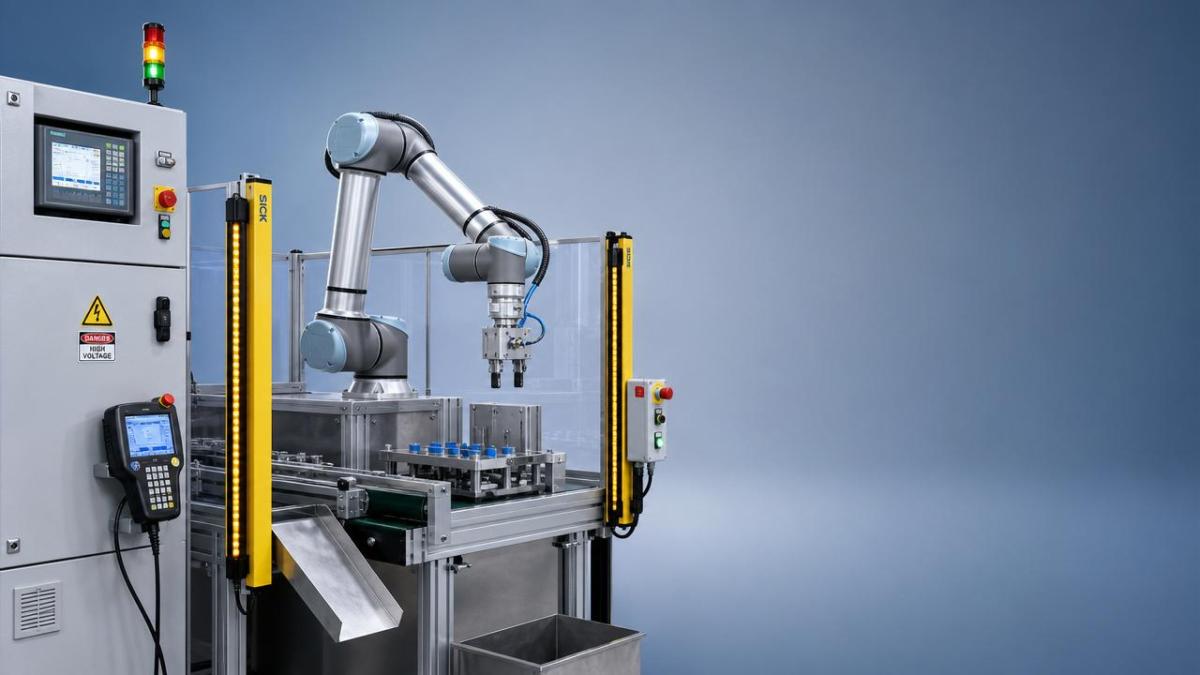
The robot arm alone does not define safety. The controller, drive system, firmware, and I/O handling determine how the machine behaves when a fault occurs. Ask whether safety is dual-channel, how fault detection is handled, what diagnostic coverage exists, and how stop categories are implemented. Also verify whether safety signals can be integrated cleanly with plant PLC, safety relays, light curtains, area scanners, or access control systems.
3. Review force and speed behavior in realistic applications
Power and force limiting is one of the most important topics in collaborative automation. However, actual safety depends on end-effector design, payload, tool geometry, workpiece shape, motion path, and task speed. Ask for validation examples under similar use cases such as pick-and-place, machine tending, screwdriving, inspection, or packaging. A reliable supplier should explain where collaboration is suitable and where guarding is still required.
4. Evaluate safety during faults, recovery, and restart
Normal operation is easy to demonstrate. What matters more is fault behavior. Ask what happens during encoder failure, communication loss, power interruption, protective stop reset, collision event, or software exception. Does the system fail to a safe state? Who can authorize restart? Are there lockout and recovery procedures? Business evaluators should look for disciplined operational control, not just smooth demo performance.
Practical comparison table for supplier shortlisting
Use a structured scorecard when comparing each cobot manufacturer china with safety features. This prevents safety-critical topics from being overshadowed by price or delivery speed.
Different application scenarios require different safety priorities
A cobot manufacturer china with safety features may perform well in one scenario and poorly in another. Business evaluators should align safety review with the intended task rather than treating all collaborative robots as interchangeable.
Machine tending
Look closely at guarding interfaces, door interlocks, restart conditions, and coordination with CNC or press equipment. The robot may be collaborative, but the overall cell often is not fully open due to pinch points, sharp parts, or machine hazards.
Assembly and screwdriving
Prioritize low-force motion, path stability, torque tool integration, and safe hand-guiding modes. End-of-arm tooling can become the main hazard, so review tool certification and collision response.
Packaging and palletizing
Focus on speed zoning, load stability, reach envelope, and scanner integration. Higher throughput applications may require hybrid safety strategies rather than pure collaborative operation.
Inspection and lab-style processes
Confirm smooth motion, precise stop behavior, low vibration, and dependable access control where people frequently interact with the robot. Here, software reliability and repeatable state transitions often matter as much as mechanical safety.
Commonly overlooked risks when sourcing from overseas suppliers
- Assuming CE marking alone proves application safety. In reality, final cell compliance depends on the full integrated system.
- Ignoring software update control. Firmware changes can affect validated safety behavior if change management is weak.
- Overlooking English documentation quality. Poor translation can create wiring mistakes, unsafe assumptions, or audit delays.
- Evaluating the arm but not the end effector. Grippers, screwdrivers, cutters, and custom fixtures can invalidate collaborative assumptions.
- Failing to test fault recovery. Many issues appear during reset, maintenance, and restart, not in normal cycle operation.
- Underestimating support distance. If remote support is slow or spare parts are difficult to obtain, safety incidents can become prolonged downtime events.
Execution advice for business evaluators before RFQ or pilot approval
To compare a cobot manufacturer china with safety features effectively, prepare internal decision inputs before requesting final proposals. This saves time and produces more realistic quotations.
- Define the application clearly: payload, part geometry, cycle target, human interaction frequency, and environment constraints.
- List mandatory compliance requirements for the destination market, facility rules, and internal EHS expectations.
- Request a supplier safety package including certificates, manuals, safety function descriptions, sample risk assessment guidance, and commissioning workflow.
- Ask for reference cases in similar industries, especially where integration involved PLCs, scanners, machine tools, or traceability software.
- Run a pilot acceptance checklist covering normal operation, collision handling, emergency stop, reset, restart, and network interruption.
- Score total lifecycle readiness, not just purchase cost. Include training, spare parts, software maintenance, and validation support.
Questions to ask each supplier in the final comparison round
If two suppliers look similar on paper, the final decision often depends on the quality of their answers. Ask each cobot manufacturer china with safety features these practical questions:
- Which safety functions are built in, and which require additional hardware or licenses?
- Can you provide application-specific guidance for ISO/TS 15066 force and pressure considerations?
- How do you manage firmware updates after validation at the customer site?
- What is your standard process for risk assessment support during system integration?
- How quickly can you provide remote diagnostics, replacement parts, and on-site engineering assistance?
- What limitations should we expect for collaborative mode in our target application?
Final decision guidance
The best way to choose a cobot manufacturer china with safety features is to treat safety as a measurable procurement category, not a general brand promise. Use a shortlist built on evidence: standards compliance, validated safety functions, controller architecture, integration maturity, documentation quality, and service capability. For business evaluators, this method supports lower deployment risk, smoother audits, and better long-term automation performance.
If your team plans to move forward, prioritize discussions around application parameters, safety assumptions, end-effector risks, plant integration requirements, validation responsibilities, delivery lead time, and post-installation support. Those questions will reveal whether the supplier is only selling a robot, or truly capable of supporting a safe and scalable automation program.
Recommended News
- 2026/10/24Car Spare Parts: How to Check Fitment and Avoid Ordering the Wrong PartOrder car spare parts with confidence. Learn how to verify VINs, OEM numbers, and fitment details to avoid costly mistakes and choose the right replacement first time.
- 2026/10/23How Do You Select a Motion Control System for Synchronized Axes?How do I select a motion control system for synchronized axes? Discover key timing, feedback, and performance checks to choose confidently and reduce costly integration risks.
- 2026/10/23Integrating End-of-Line Sortation with Packing Stations and Conveyor ControlsOptimize end of line sortation with coordinated packing stations and conveyor controls. Learn how to prevent bottlenecks, improve routing accuracy, and handle exceptions reliably.