
Search News
Industry Portal
Popular Tags
Electronics Assembly Cobots from China: Speed or Stability First?
Author
Cobots
Time
Apr 28, 2026
Pageviews
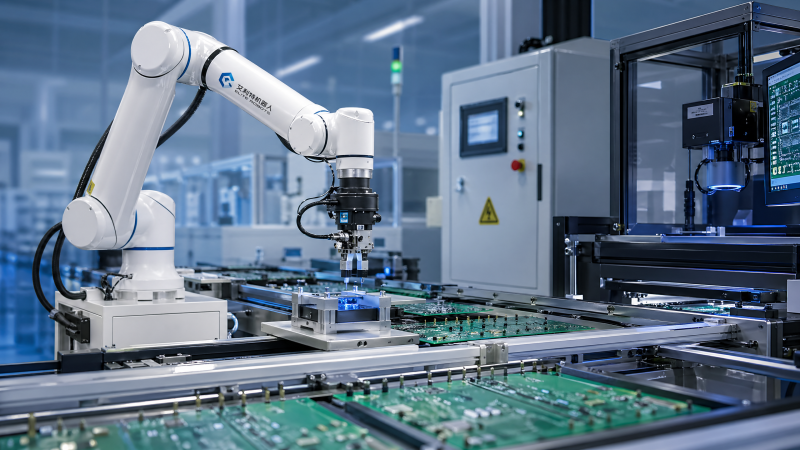
When evaluating a cobot manufacturer china for electronics assembly, should factories prioritize speed or long-term stability? For buyers comparing industrial robotics cost, hydraulic systems quotation options, and scalable automation paths, the answer affects productivity, quality, and risk. This article explores how electronics manufacturers can balance performance, reliability, and integration value before making critical automation investments.
In electronics assembly, the trade-off is rarely as simple as choosing the fastest unit or the most conservative platform. Surface-mount support, screwdriving, dispensing, testing, packaging, and micro-component handling all place different demands on payload, repeatability, software compatibility, and uptime. A cobot that performs well at 40 picks per minute may still become a weak investment if it struggles with vibration control, calibration drift, or unstable communication with PLC and MES layers.
For production directors, operators, sourcing teams, and plant-level decision makers, the more useful question is this: at what production volume, defect threshold, and integration complexity does speed create value, and when does stability become the bigger driver of total return? That is the lens used by G-IFA when reviewing smart manufacturing hardware and automation architectures across industrial robotics, control systems, motion platforms, software, and fluid power environments.
Why the Speed vs Stability Debate Matters in Electronics Assembly
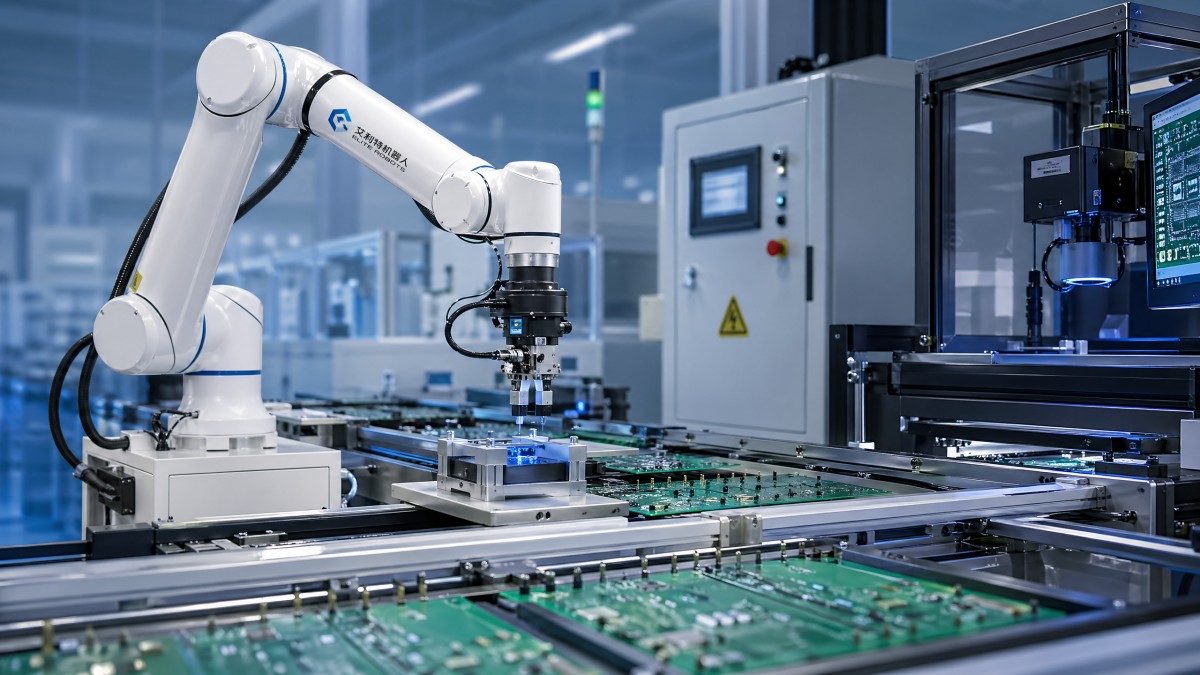
Electronics assembly is less forgiving than many general industrial applications. In a line producing control boards, sensors, consumer devices, or communication modules, a positioning deviation of even ±0.05 mm to ±0.10 mm can affect solder joint quality, screw seating, connector insertion, or adhesive placement. This is why a cobot manufacturer china should not be judged only by cycle-time claims or headline payload figures.
Speed matters most when takt time is tight. If a workstation has a target of 12 to 18 seconds per unit, saving 1.5 seconds per cycle can materially increase daily throughput across 2 or 3 shifts. However, the gain disappears quickly if the robot requires frequent resets, re-teaching, or unplanned stoppages every 6 to 8 hours. In electronics, uptime consistency often has more value than peak speed because line balancing depends on predictable station output.
Stability includes several dimensions: mechanical repeatability, servo smoothness, thermal consistency, controller reliability, communication robustness, and software maturity. A cobot may demonstrate strong lab performance but still fail in production if Ethernet/IP, Modbus TCP, Profinet, or digital I/O behavior becomes unstable under real factory loads. For plants with MES traceability and quality logging, integration stability is often as important as arm motion stability.
Another reason the debate matters is labor strategy. Operators can adapt to cobots quickly when interfaces are intuitive and task recovery is simple. But if a faster system requires deeper programming support or frequent intervention, the staffing burden rises. In many electronics factories, the real bottleneck is not robot speed alone but the number of engineering hours needed to keep 5, 10, or 20 cells running without disruption.
Typical consequences of choosing the wrong priority
- Overvaluing speed can increase micro-stop frequency, causing downstream buffering issues and hidden yield loss.
- Overvaluing stability alone can lead to underutilized assets when product demand requires shorter cycle times or multi-model flexibility.
- Ignoring integration fit can create extra spending on fixtures, vision calibration, and custom middleware within 4 to 12 weeks of deployment.
- Focusing only on purchase price can distort industrial robotics cost analysis by excluding spare parts, training, maintenance intervals, and software updates.
How to Evaluate Cobot Performance Beyond Headline Specs
A practical selection process starts with the job, not the brochure. Electronics assembly tasks usually fall into 4 broad categories: precision handling, fastening, dispensing, and inspection support. Each category demands a different balance of speed, path smoothness, force control, and end-effector compatibility. A 3 kg payload cobot with excellent repeatability may outperform a 10 kg unit in PCB loading simply because inertia and settling time are better matched to the task.
For sourcing teams, 6 performance variables usually deserve review: repeatability, maximum TCP speed, acceleration profile, trajectory stability, communication protocol support, and restart recovery behavior. Repeatability ranges such as ±0.02 mm, ±0.03 mm, or ±0.05 mm should be interpreted in context. A good figure on paper does not guarantee good process capability if the fixture, vision system, gripper, and conveyor synchronization are not equally stable.
Test the cobot under a simulated production sequence of at least 300 to 500 continuous cycles. Short demos of 20 cycles may hide heat buildup, cable drag issues, vacuum loss variation, or controller lag. In electronics assembly, intermittent faults matter because they are expensive to trace. It is often better to request evidence of stable operation over 8 hours than to focus only on peak motion speed measured over 30 seconds.
G-IFA’s benchmarking perspective also recommends reviewing software openness. If a cobot integrates cleanly with PLC and control systems, motion control modules, and industrial IoT software, future scaling becomes easier. A system that supports standard interfaces and clean data logging can reduce troubleshooting time by 15% to 30% during commissioning and line changes, especially when plants run multiple product variants.
Core evaluation metrics for electronics assembly cobots
The comparison below shows how speed and stability should be interpreted at the application level rather than as isolated specifications.
The key conclusion is that speed should be qualified by repeatable output, not by maximum motion alone. In most electronics cells, a slightly slower cobot with smoother servo behavior and better fault recovery will generate a stronger total cost result over 12 to 24 months.
Questions buyers should ask suppliers
- What is the tested cycle time for a comparable electronics task, including pick, place, vision confirmation, and recovery logic?
- How many communication protocols are supported without third-party gateway dependency?
- What preventive maintenance interval is recommended: 3 months, 6 months, or 12 months?
- What spare parts usually need stocking for the first 12 months of operation?
Cost, Integration, and the Hidden Drivers of Long-Term ROI
Industrial robotics cost is often misunderstood because many budget comparisons stop at the arm price. In real electronics deployment, the full investment usually includes grippers, vision, fixtures, safety devices, PLC interface work, HMI adaptation, commissioning, training, and spare parts. In a modest cobot cell, the robot arm may represent only 35% to 55% of total project value, depending on how much custom engineering is required.
This is where supplier maturity matters. A lower initial quote may become expensive if the plant needs external programming support, frequent firmware troubleshooting, or repeated tooling modifications. Procurement teams should compare 3 cost layers: acquisition cost, integration cost, and lifecycle support cost over 24 to 36 months. That framework is more decision-useful than simply comparing one cobot manufacturer china against another by list price.
Some buyers also compare cobot projects with broader automation spending, including hydraulic systems quotation reviews, conveyors, servo modules, or inspection stations. Although electronics assembly is typically electric and precision-driven, fluid power may still appear in clamping, feeding, or fixture subsystems. The correct approach is to evaluate the cell as a coordinated automation package rather than treating the cobot as a stand-alone purchase.
Stable integration usually protects ROI better than raw speed claims. A cell that reaches target output in 2 to 4 weeks with minimal rework will generally outperform a theoretically faster system that needs 8 to 12 weeks of tuning. Lost production, delayed launch, and engineering overtime are real costs, even if they do not appear in the original quote.
Cost factors that should appear in any buying decision
The table below can help procurement teams compare offers using practical ROI criteria instead of one-dimensional pricing.
A useful buying principle is to accept slightly higher upfront cost if it lowers commissioning uncertainty and support dependency. In electronics environments with frequent model changes, platform consistency across multiple cells often produces greater value than the cheapest single-cell purchase.
A 5-step ROI review method
- Define target output by shift, such as 800, 1,200, or 2,000 units.
- Measure current labor content and defect cost at the target station.
- Estimate total integration spend, not just robot purchase value.
- Model uptime at 85%, 90%, and 95% to test sensitivity.
- Check payback under 2 scenarios: stable demand and variable mix production.
Selection Criteria for Different Electronics Production Scenarios
Not every electronics plant should rank speed and stability in the same order. A high-mix, low-volume contract manufacturer may care more about quick changeover, simple teaching, and broad task flexibility. By contrast, a plant producing one or two mature products at high volume may justify more aggressive cycle-time optimization. The best cobot manufacturer china for one scenario may not be the best fit for the other.
For high-mix lines, stability usually comes first because setup errors multiply across many SKUs. If a plant changes models 3 to 8 times per week, the robot must recover fast from recipe changes, support intuitive parameter adjustment, and maintain motion consistency without heavy code editing. In such cases, shaving 0.8 seconds from cycle time is less valuable than reducing changeover from 45 minutes to 20 minutes.
For medium- to high-volume lines with repeat orders, speed rises in importance after process stability is proven. Once fixturing, vision alignment, and PLC communication are stable, gains from acceleration tuning, path compression, and dual-grip handling can be meaningful. However, those optimizations should come only after defect rates and false reject rates are under control for at least 2 to 4 production weeks.
Another factor is operator skill level. If the cell will be maintained by line technicians rather than full-time robot engineers, ease of use should be weighted heavily. A sophisticated robot platform with weak on-site usability can create hidden labor cost, especially across night shifts or multi-site deployments.
Scenario-based priority guide
This matrix helps align cobot selection with factory reality rather than generic marketing claims.
The most important takeaway is sequencing. In electronics assembly, stability should be validated first, then speed should be optimized within proven process boundaries. That approach reduces quality escapes and protects launch schedules.
Common selection mistakes
- Choosing a payload class based on future assumptions rather than current end-effector and part requirements.
- Ignoring controller usability for operators who will perform daily recovery and recipe changes.
- Accepting a demo without checking communication behavior with the actual PLC or traceability system.
- Evaluating repeatability without considering fixture rigidity, vision repeatability, and cable routing effects.
Implementation, Maintenance, and Risk Control for Sustainable Performance
A successful cobot investment depends on disciplined implementation. In electronics projects, deployment usually moves through 4 phases: process study, offline validation, on-site commissioning, and production stabilization. Depending on complexity, the timeline can range from 2 to 10 weeks. Compact pick-and-place cells may be installed quickly, while systems involving vision, screwdriving torque traceability, or MES data exchange take longer to harden.
Maintenance planning should be defined before purchase, not after startup. Buyers should ask whether preventive checks are recommended every 3 months, 6 months, or 12 months, and whether wear parts can be stocked locally. Electronics factories usually value predictable service windows because even a 2-hour stoppage can disrupt synchronized testing, packaging, and shipping schedules.
Risk control also includes environmental fit. Dust, static management, cable movement, temperature variation, and compressed air quality can all influence cell stability. Even if the robot is electrically driven, related subsystems such as pneumatic grippers or fixture clamps need consistent supply conditions. Where hydraulic systems quotation packages are part of a broader automation tender, interface planning should ensure that utility design does not introduce vibration, contamination, or maintenance complexity into sensitive electronics areas.
At the management level, long-term performance improves when plants standardize acceptance criteria. Typical benchmarks may include less than 1 unplanned stop per shift after stabilization, restart time under 3 minutes, and verified output within ±5% of planned takt. These are not universal numbers, but they create a more actionable framework than subjective phrases like “running well” or “high efficiency.”
Implementation checklist for buyers and users
- Confirm process tolerances, part presentation method, and fixture repeatability before approving the robot path.
- Require a documented FAT or equivalent acceptance test with at least one continuous cycle run.
- Train operators, maintenance technicians, and engineers separately so each group can handle its own level of intervention.
- Define spare parts coverage for the first 6 to 12 months, especially gripper seals, sensors, and critical cables.
- Verify remote diagnostics capability and response expectations for both software and hardware issues.
FAQ for electronics manufacturers considering cobots from China
How long does cobot deployment usually take?
For a relatively standard electronics cell, the project may take 2 to 4 weeks from delivery to basic production readiness. If the cell includes machine vision, torque traceability, MES connectivity, or multiple end-effectors, 6 to 10 weeks is a more realistic planning range. The deciding factor is usually integration depth rather than robot motion itself.
What metrics matter most during supplier comparison?
Focus on repeatability, continuous-cycle stability, communication compatibility, recovery workflow, training burden, and support responsiveness. For many buyers, those 6 criteria are more useful than headline maximum speed. If the task is delicate, request proof of process performance under realistic fixtures and part tolerances.
Are lower-cost cobots always riskier?
Not always. A competitively priced system can deliver strong value if it matches the application and comes with stable integration support. The real risk appears when low price is paired with weak documentation, limited protocol support, or long spare-part lead times. That is why lifecycle review over 24 to 36 months is essential.
Should factories prioritize local support or platform capability?
They should balance both, but for electronics plants with tight launch schedules, service responsiveness can be decisive. A capable platform with delayed troubleshooting support may cause more disruption than a slightly less advanced system backed by faster technical follow-up. The best choice is usually a platform that combines solid capability with practical service access.
For electronics assembly, the most reliable answer is not speed first or stability first in absolute terms. Stability should form the baseline because precision, uptime, and integration discipline determine whether output is repeatable at scale. Once that baseline is proven, speed becomes the lever that lifts capacity, labor efficiency, and payback.
G-IFA supports production leaders, integrators, and procurement teams by filtering automation choices through engineering reality across robotics, PLC and control systems, motion platforms, industrial software, and related mechanical infrastructure. If you are reviewing a cobot manufacturer china, comparing industrial robotics cost, or aligning a new cell with broader automation investment plans, a structured benchmark view can reduce risk before capital is committed.
To move from comparison to implementation, contact us to discuss your application, get a tailored evaluation framework, or learn more solutions for smart electronics manufacturing and scalable industrial automation.
Recommended News
- 2026/10/24Car Spare Parts: How to Check Fitment and Avoid Ordering the Wrong PartOrder car spare parts with confidence. Learn how to verify VINs, OEM numbers, and fitment details to avoid costly mistakes and choose the right replacement first time.
- 2026/10/23How Do You Select a Motion Control System for Synchronized Axes?How do I select a motion control system for synchronized axes? Discover key timing, feedback, and performance checks to choose confidently and reduce costly integration risks.
- 2026/10/23Integrating End-of-Line Sortation with Packing Stations and Conveyor ControlsOptimize end of line sortation with coordinated packing stations and conveyor controls. Learn how to prevent bottlenecks, improve routing accuracy, and handle exceptions reliably.