
Search News
Industry Portal
Popular Tags
When Does an Industrial Robotics Manufacturer Need Cobots?
Author
Cobots
Time
May 03, 2026
Pageviews
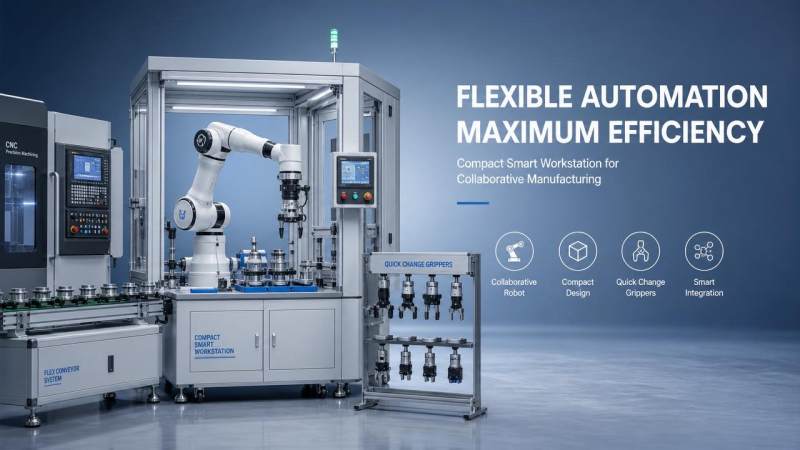
For an industrial robotics manufacturer, the shift toward collaborative automation is no longer optional in many production environments. As demand grows for flexible, safe, and cost-efficient manufacturing, cobots offer a practical path to faster deployment, easier integration, and improved human-machine cooperation. This article explores when adopting cobots becomes a strategic necessity for manufacturers aiming to stay competitive in the Industry 4.0 landscape.
Why Scenario Differences Matter More Than Theory
For business decision-makers, the real question is not whether cobots are technically impressive. It is whether they solve the right problem in the right production setting. An industrial robotics manufacturer may already deliver conventional 6-axis robots, SCARA systems, gantries, or customized automation cells. Yet the need for cobots appears when customer demand shifts from pure speed and isolation toward flexibility, mixed human-robot workflows, faster line changes, and lower integration barriers.
This is why scenario-based evaluation is essential. In high-volume, fenced, repetitive operations, traditional robots may still be the best fit. In contrast, low- to medium-volume production, multi-SKU assembly, manual handling support, and space-constrained workstations often create strong business cases for collaborative robots. A forward-looking industrial robotics manufacturer should therefore assess not only robot performance, but also labor structure, production variability, safety architecture, commissioning time, and software usability.
For organizations guided by data-driven engineering principles such as those promoted by G-IFA, the best investment decisions come from matching automation technology to operational reality. Cobots are not a universal replacement for industrial robots, but in specific environments they become a strategic requirement rather than an optional product extension.
When an Industrial Robotics Manufacturer Starts Needing Cobots
An industrial robotics manufacturer typically needs cobots when customer projects begin showing one or more of the following patterns: shorter product life cycles, smaller batch sizes, more manual assembly, labor shortages, safety concerns around human interaction, or rising pressure to reduce automation deployment time. These signals indicate that the market is no longer asking only for power and precision; it is asking for adaptability.
In practical terms, the need becomes urgent when end users cannot justify large fenced cells for every task, when integrators require easier programming for rapid replication, or when line managers want operators and robots to share workstations without complex infrastructure changes. For many sectors in the comprehensive industrial landscape—from electronics and consumer goods to metalworking, packaging, medical devices, and light automotive subassembly—these conditions are already common.
The strategic value of cobots also rises when after-sales service and customer retention depend on ease of use. If buyers increasingly demand shorter learning curves, intuitive HMIs, plug-and-play grippers, and flexible redeployment, an industrial robotics manufacturer that lacks a collaborative portfolio may lose opportunities even when its traditional robotic platforms are technically superior.
Typical Application Scenarios Where Cobots Make Sense
1. Assembly Lines with Frequent Changeovers
Cobots are especially suitable for assembly environments where products change often and manual intervention remains necessary. In such scenarios, operators may handle delicate alignment, quality checks, cable routing, or part positioning, while the cobot performs repetitive fastening, pick-and-place, dispensing, or screwdriving. Here, the advantage is not maximum cycle speed but flexible task sharing.
For an industrial robotics manufacturer, this scenario signals a need to offer easy reprogramming, compact footprints, vision compatibility, and fast end-effector swapping. Customers in these settings prioritize uptime during model transitions more than absolute throughput.
2. Machine Tending in Space-Constrained Workshops
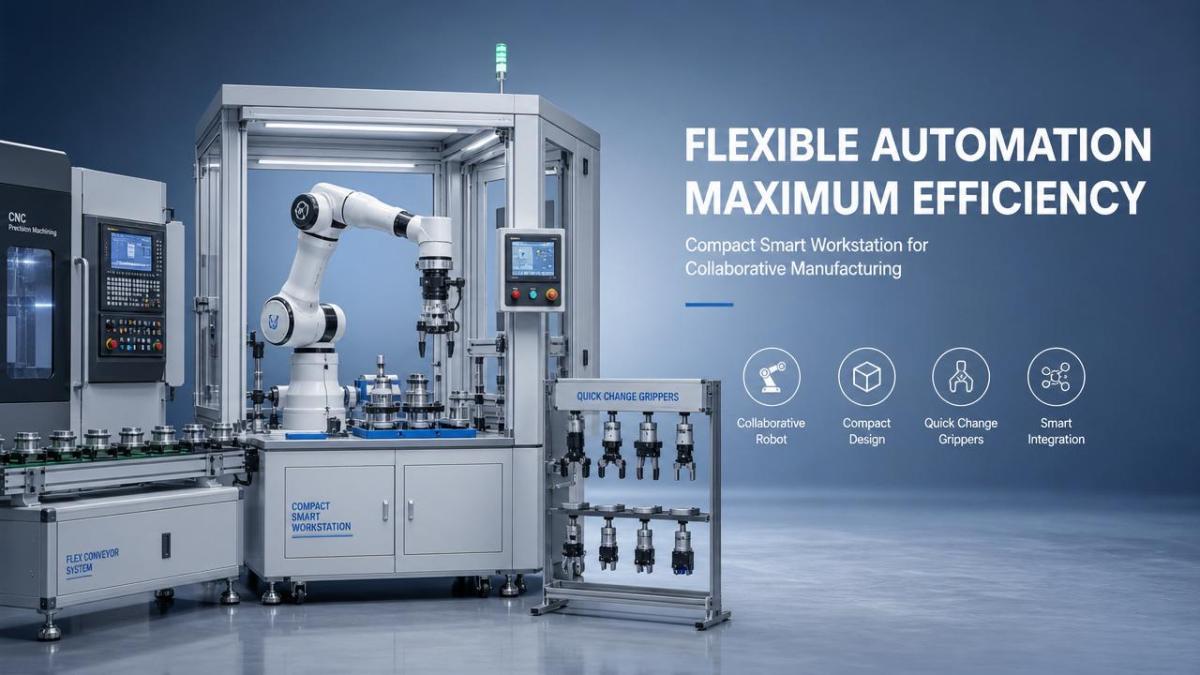
Small and medium manufacturing sites often run CNC machines, injection molding systems, or testing equipment in limited floor space. Full industrial robot cells may be difficult to install because of guarding requirements and layout restrictions. Cobots can support loading and unloading, part transfer, and simple in-process handling with lower infrastructure impact.
In this application, the industrial robotics manufacturer needs to think beyond the arm itself. Success depends on gripper selection, reach-to-footprint ratio, repeatability, quick safety validation, and integration with machine I/O or PLC systems. If the customer values installation speed and minimal disruption, cobots often become the preferred automation route.
3. Packaging, Palletizing, and End-of-Line Support
Not every packaging line needs a heavy-duty robot. For moderate payloads, mixed SKU handling, or end-of-line areas where staff remain nearby, cobots can provide practical value. They can reduce ergonomic strain, stabilize output, and adapt to changing box sizes or product configurations. This is common in food-adjacent secondary packaging, e-commerce fulfillment support, consumer goods, and light industrial warehousing.
For the industrial robotics manufacturer, the opportunity is strongest when clients want scalable automation without redesigning entire lines. Cobots in these scenarios are less about replacing a full robotic palletizing cell and more about adding affordable, modular automation to remove bottlenecks.
4. Quality Inspection and Test Assistance
Inspection tasks often sit between manual work and full automation. A cobot can position parts for vision inspection, move sensors consistently, or support repetitive test sequences while operators make pass/fail decisions. This scenario is highly relevant where traceability, consistency, and labor efficiency matter, but full autonomous inspection is not yet justified.
An industrial robotics manufacturer entering this use case should emphasize repeatable motion, software interoperability, camera support, and user-friendly workflow design. The value comes from standardization and operator support, not just from robotic movement.
Scenario Comparison: Where Cobots Fit Best
The table below helps business leaders evaluate whether collaborative automation is becoming necessary for a specific customer or internal market segment.
How Needs Differ by Customer Type
Not every buyer evaluates cobots the same way. A large enterprise may ask whether a cobot platform can integrate with MES, ERP-linked traceability, plantwide PLC standards, and global safety governance. A small manufacturer may care more about payback period, operator training, and whether the system can be moved between stations. An industrial robotics manufacturer should tailor its cobot strategy accordingly.
Large Multi-Site Manufacturers
These organizations usually need standardization, cybersecurity discipline, spare-parts continuity, and compatibility with broader Industry 4.0 architectures. Cobots become valuable when they can scale across plants as repeatable modules rather than one-off experiments.
Mid-Sized Factories
This group often faces the strongest pressure to automate but has tighter engineering resources. For them, a cobot can be the ideal bridge between manual operations and advanced automation. The industrial robotics manufacturer that offers simplified deployment, bundled tooling, and dependable support can win significant loyalty here.
System Integrators and Solution Partners
Integrators want platforms that reduce project risk. They look for open communication protocols, stable software ecosystems, accessories, simulation tools, and straightforward safety validation. If an industrial robotics manufacturer wants channel adoption, its cobot offering must be efficient to engineer, not just attractive in demos.
What an Industrial Robotics Manufacturer Should Verify Before Expanding into Cobots
Adding cobots to a portfolio should not be a reaction to hype. It should be based on clear operational and commercial criteria. First, examine whether your customer base increasingly requests collaborative applications or shorter automation projects. Second, assess whether your engineering team can support application design, end-effectors, vision, safety assessment, and software commissioning. Third, confirm that your cobot line aligns with recognized standards and practical factory requirements.
From an engineering benchmark perspective, key checkpoints include payload-to-reach balance, repeatability, speed under safe operation, ISO-aligned safety functionality, integration with PLC and control systems, and ease of digital connectivity. G-IFA’s broader framework is relevant here because cobot success depends on the interaction of robotics, motion control, software, and industrial communication—not on the robot arm alone.
- Does the target application involve shared human workspaces?
- Are product variants or batch sizes too dynamic for rigid automation cells?
- Is installation speed a competitive factor in winning projects?
- Can customers maintain and reprogram the system without specialist robotics teams?
- Will cobots complement rather than cannibalize your core industrial robot offerings?
Common Misjudgments in Cobot Scenario Planning
A frequent mistake is assuming that collaborative means universally safer and therefore automatically better. In reality, application risk still depends on tooling, part geometry, speed, layout, and workflow design. Another common error is selecting cobots for high-speed operations where conventional industrial robots clearly outperform them on throughput.
Some companies also underestimate software and peripheral complexity. A cobot may be easier to program, but a real production cell still requires reliable grippers, sensing, communication, fixture design, and process validation. For an industrial robotics manufacturer, the lesson is simple: sell solutions by scenario, not robot category alone.
There is also a commercial blind spot. If leadership treats cobots as a low-end side product, they may miss where the long-term market is heading. In many factories, the first successful cobot project opens the door to broader digital transformation, standardized automation modules, and higher-value software integration. That creates not only hardware revenue, but also service, support, and data-driven optimization opportunities.
FAQ: Practical Questions Decision-Makers Ask
Do cobots replace traditional industrial robots?
No. For an industrial robotics manufacturer, cobots are usually a portfolio expansion, not a full replacement. Traditional robots remain stronger in heavy payload, high-speed, and fully isolated production environments.
Which factories should prioritize cobot adoption first?
Factories with labor-intensive assembly, frequent product changes, compact layouts, and a need for quick automation payback should evaluate cobots first. These are often the clearest-fit scenarios.
What makes a cobot strategy credible?
A credible strategy combines technical reliability, standards-based safety, user-friendly software, and a clear application library. Decision-makers want proof that the industrial robotics manufacturer understands production realities, not just product features.
Final Decision Guide for Business Leaders
An industrial robotics manufacturer needs cobots when market demand moves toward flexible, human-centered, quickly deployable automation and when customers increasingly judge value by adaptability rather than raw speed alone. The strongest fit appears in assembly support, machine tending, packaging assistance, and inspection workflows where collaboration, redeployment, and space efficiency matter.
The right next step is not to ask whether cobots are popular, but whether your target scenarios consistently require them. Review customer project pipelines, map recurring pain points, compare application KPIs, and validate technology against international standards and real integration conditions. With that disciplined approach, an industrial robotics manufacturer can use cobots not as a trend response, but as a strategic capability that strengthens competitiveness in the Industry 4.0 era.
Recommended News
- 2026/10/24Car Spare Parts: How to Check Fitment and Avoid Ordering the Wrong PartOrder car spare parts with confidence. Learn how to verify VINs, OEM numbers, and fitment details to avoid costly mistakes and choose the right replacement first time.
- 2026/10/23How Do You Select a Motion Control System for Synchronized Axes?How do I select a motion control system for synchronized axes? Discover key timing, feedback, and performance checks to choose confidently and reduce costly integration risks.
- 2026/10/23Integrating End-of-Line Sortation with Packing Stations and Conveyor ControlsOptimize end of line sortation with coordinated packing stations and conveyor controls. Learn how to prevent bottlenecks, improve routing accuracy, and handle exceptions reliably.