
Search News
Industry Portal
Popular Tags
How to compare a China cobot maker with safety features
Author
Cobots
Time
May 28, 2026
Pageviews
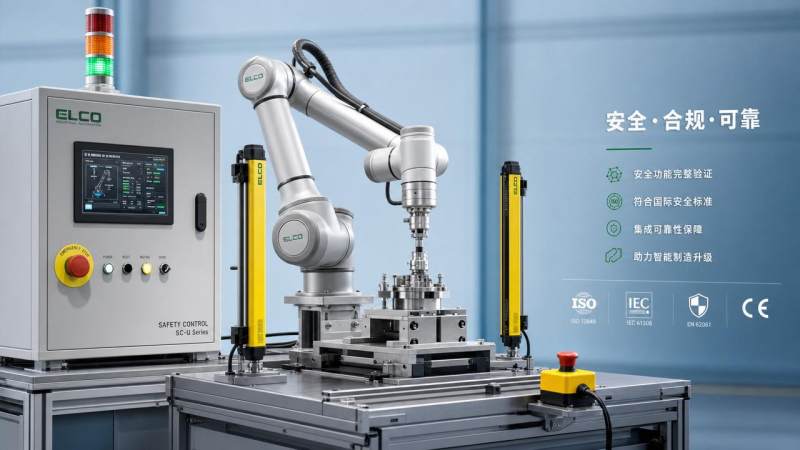
Selecting a cobot manufacturer china with safety features requires more than checking basic specifications. For quality control and safety managers, the real comparison lies in certified protection functions, risk-reduction design, integration reliability, and compliance with global standards. This guide helps you assess Chinese cobot makers through a practical, engineering-focused lens so you can reduce operational risk and make safer automation decisions.
Why a checklist matters when comparing a cobot manufacturer china with safety features
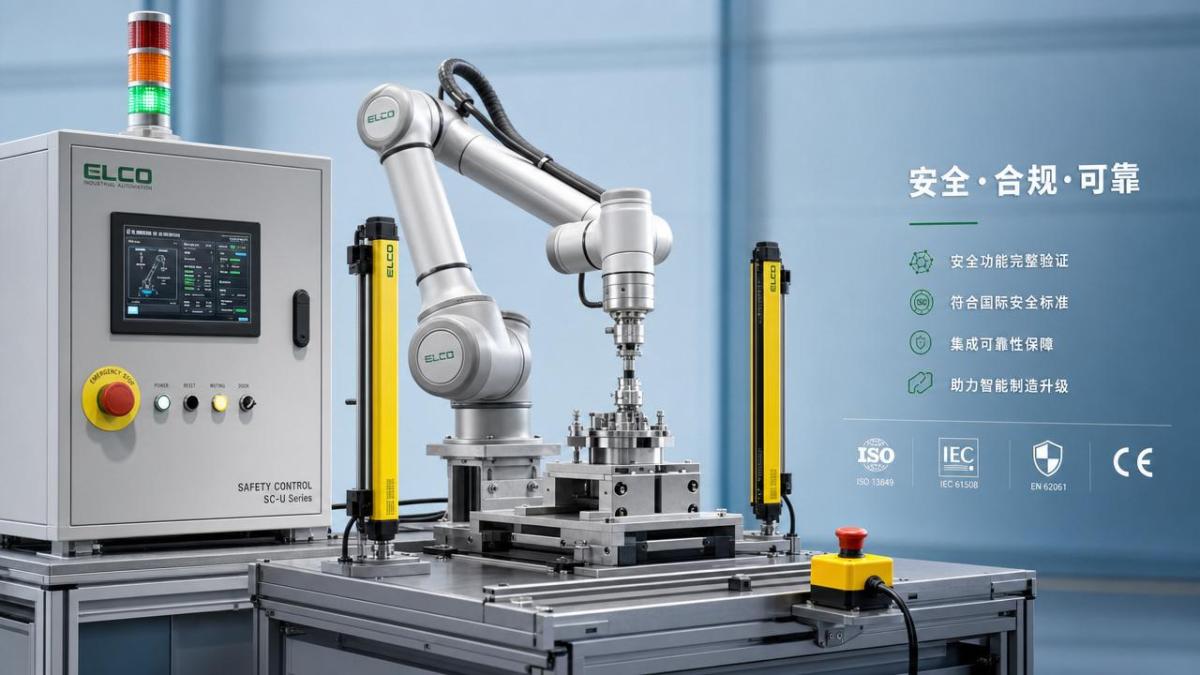
A datasheet rarely shows how safely a cobot behaves after installation. Real performance depends on sensors, control logic, end-of-arm tooling, and line-level integration.
That is why a checklist is essential when reviewing any cobot manufacturer china with safety features. It creates a repeatable method for comparing safety architecture, certification evidence, and deployment risk.
In mixed production environments, collaborative robots must protect people without sacrificing uptime. A structured review helps separate marketing claims from verified engineering capability.
Core checklist for evaluating safety features
Use the following checklist to compare each cobot manufacturer china with safety features on measurable, audit-ready points rather than broad promotional statements.
- Verify compliance documents, including ISO 10218, ISO/TS 15066, CE-related declarations, and electrical safety records that match the actual cobot model under review.
- Check built-in safety functions such as emergency stop, safe speed, safe limited position, power and force limiting, and protective stop response timing.
- Request performance level or safety integrity data for sensors and control circuits, then confirm whether the architecture supports the required risk reduction.
- Inspect joint torque monitoring accuracy because collision detection quality depends heavily on sensor resolution, algorithm tuning, and repeatable force limitation behavior.
- Review controller redundancy, fault diagnostics, and restart logic to ensure a single failure does not create uncontrolled motion or unsafe recovery conditions.
- Assess software permissions, safety parameter locking, and event logs so operational changes can be traced and unauthorized edits are prevented.
- Confirm integration support for safety PLCs, light curtains, area scanners, interlock switches, and safe fieldbus communication used in the target line.
- Evaluate end-effector compatibility because grippers, screwdrivers, welders, or blades can increase risk even when the robot arm itself is collaborative.
- Ask for application-specific risk assessment templates covering payload, reach, speed, pinch points, and human interaction zones instead of generic manuals only.
- Review service capability, spare parts availability, and remote diagnostics because delayed support can extend unsafe downtime or encourage incorrect field modifications.
What strong evidence looks like
Reliable suppliers provide model-specific certificates, functional safety reports, and test records. They also explain application limits, not only nominal collaborative claims.
A capable cobot manufacturer china with safety features should also support third-party validation. Independent review strengthens confidence in export, regulated, or multi-site projects.
How comparison criteria change by application
Assembly and screwdriving cells
These tasks often involve close human interaction, frequent resets, and shared workspaces. Force limiting and safe speed control matter more than peak cycle time.
When comparing a cobot manufacturer china with safety features, focus on tool-side risk. Rotating bits, sharp fixtures, and hand-guiding functions require detailed validation.
Machine tending
Machine doors, clamps, and part transfer zones create pinch and crush hazards. In this case, safe interlocking and coordinated stop behavior become critical.
A Chinese cobot maker may advertise collaboration, yet the final cell may still require guarding. The safest choice is the supplier that acknowledges this clearly.
Packaging and palletizing
Higher payload and longer reach increase impact energy. Here, compare stopping distance, payload derating rules, and stability under emergency motion interruption.
For these applications, a cobot manufacturer china with safety features should provide clear data linking payload, speed, and allowable collaborative operation modes.
Electronics and clean processes
Small-force applications may look low risk, but electrostatic control, cable routing, and precision fault recovery still affect safe operation and product integrity.
In these lines, compare alarm traceability, software stability, and repeatable restart procedures. Safety also includes preventing hidden process errors after interruption.
Commonly overlooked risks during supplier comparison
Confusing robot safety with cell safety
A collaborative arm alone does not make the entire workstation safe. Fixtures, tooling, conveyors, and surrounding machines may introduce the highest hazards.
Accepting generic certificates
Some documents apply only to component families or outdated firmware. Always match revision numbers, control boxes, and safety functions to the delivered configuration.
Ignoring integration maturity
A strong arm with weak integration support creates field risk. Poor wiring guidance, unclear safe I/O mapping, or limited diagnostics can undermine compliance.
Overlooking service responsiveness
Safety depends on maintenance quality over time. If spare parts or firmware support are slow, temporary bypasses may appear during production pressure.
Practical execution steps for a fair comparison
- Build a comparison matrix covering standards, safety functions, diagnostic depth, integration interfaces, and service capability for every shortlisted supplier.
- Request a live demonstration of protective stop, speed reduction, fault recovery, and safe restart under conditions close to the intended application.
- Score documentation quality separately from hardware quality because weak manuals and poor application notes often predict integration issues later.
- Run a preliminary risk assessment using actual tooling, payload, and operator approach paths before deciding whether collaborative mode is truly suitable.
- Confirm long-term support terms, including firmware policy, regional technical service, training materials, and spare part lead times.
This process makes it easier to compare any cobot manufacturer china with safety features using objective evidence. It also aligns with data-driven evaluation principles used in advanced automation programs.
Final takeaway and next action
The best cobot manufacturer china with safety features is not simply the one with the longest feature list. The right choice combines verified compliance, transparent engineering limits, reliable integration, and sustained service support.
Start with a checklist, validate with application-level tests, and review every claim against real documentation. That approach reduces safety uncertainty and improves automation outcomes across diverse industrial environments.
For a stronger decision, create a side-by-side benchmark file covering standards, safety logic, tooling risks, and service readiness before issuing final technical approval.
Recommended News
- 2026/10/24Car Spare Parts: How to Check Fitment and Avoid Ordering the Wrong PartOrder car spare parts with confidence. Learn how to verify VINs, OEM numbers, and fitment details to avoid costly mistakes and choose the right replacement first time.
- 2026/10/23How Do You Select a Motion Control System for Synchronized Axes?How do I select a motion control system for synchronized axes? Discover key timing, feedback, and performance checks to choose confidently and reduce costly integration risks.
- 2026/10/23Integrating End-of-Line Sortation with Packing Stations and Conveyor ControlsOptimize end of line sortation with coordinated packing stations and conveyor controls. Learn how to prevent bottlenecks, improve routing accuracy, and handle exceptions reliably.