
Search News
Industry Portal
Popular Tags
When a Hydraulic Systems Quotation Looks Cheap but Costs More Later
Author
Robert Valve
Time
Apr 28, 2026
Pageviews
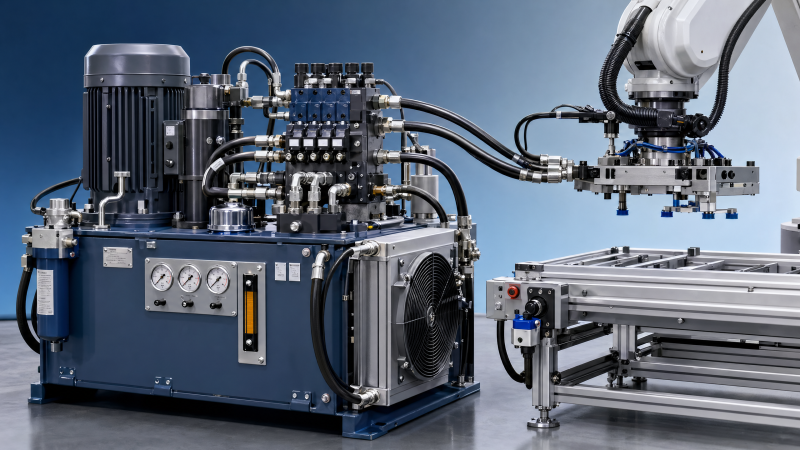
A low hydraulic systems quotation can look attractive at first, but hidden lifecycle costs often turn a bargain into a liability. For buyers comparing a hydraulic systems supplier, industrial robotics cost, or even options like cobot manufacturer China for electronics assembly and AGV supplier wholesale for warehouse automation, the real question is long-term value. This article explains how to spot cost traps early and evaluate quotations with greater engineering confidence.
Why does a cheap hydraulic systems quotation often become expensive later?
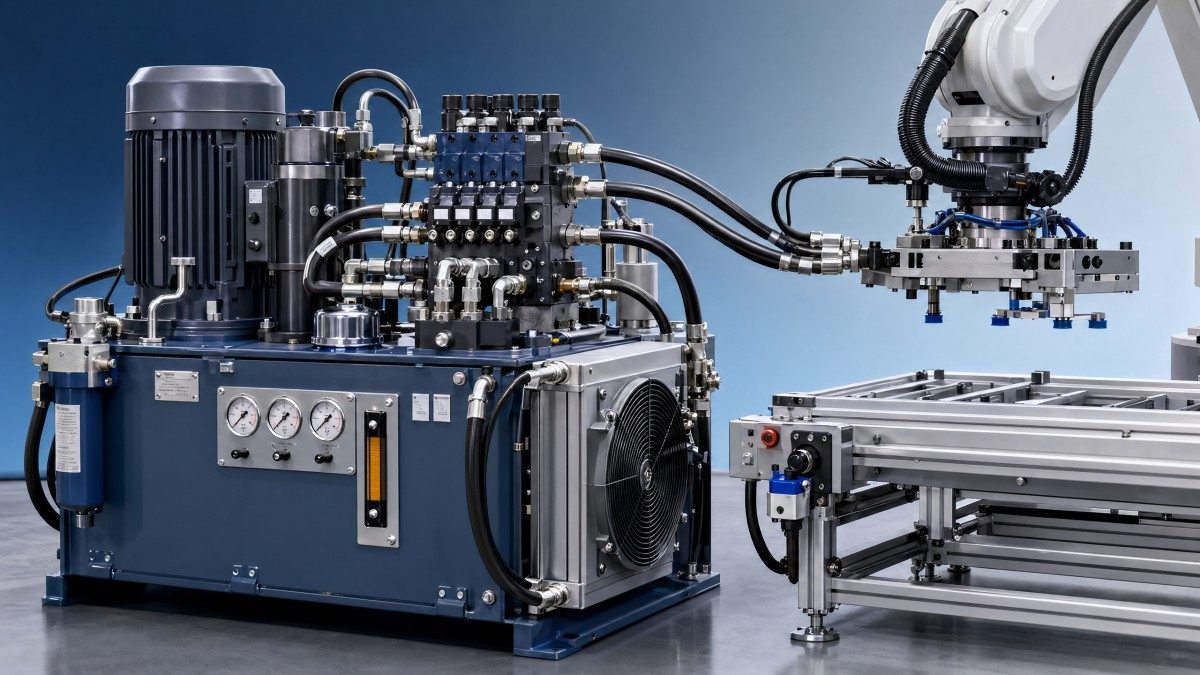
In industrial procurement, the quoted price is only the visible layer of cost. A hydraulic systems quotation may look 8%–20% lower than competing offers, yet the lower figure often excludes engineering hours, startup support, testing scope, spare parts, safety devices, or documentation. What appears economical during comparison can become expensive within the first 6–12 months of operation.
This issue affects more than hydraulic power units alone. The same logic applies when evaluating industrial robotics cost, control systems, motion components, or warehouse automation packages. In each case, under-specified quotations increase the risk of downtime, retrofit work, and incompatible interfaces. For procurement teams and factory decision-makers, the problem is not low price by itself; it is low transparency.
A complete hydraulic systems supplier evaluation should consider three cost layers: acquisition cost, implementation cost, and operating cost. Acquisition is the invoice value. Implementation includes integration, commissioning, and validation. Operating cost covers energy use, oil management, seal replacement, maintenance frequency, and production interruption. Ignoring the second and third layers leads to weak purchasing decisions.
For researchers, operators, buyers, and executives, the best question is simple: what exactly is included, what is excluded, and what assumptions is the supplier making? G-IFA approaches this through cross-sector benchmarking, using engineering logic instead of headline pricing. That helps teams compare hydraulic, robotic, PLC, and automation quotations on a like-for-like basis rather than on incomplete commercial snapshots.
Common hidden cost categories in hydraulic quotations
Below is a practical comparison of low-visibility cost items that frequently change the true project value. These items are especially important in multi-equipment lines where hydraulic systems interact with PLC logic, sensors, guarding, or robotic handling.
A quotation with these omissions is not necessarily wrong, but it is incomplete. The buyer must either add the missing scope before order placement or accept that later service, delay, and downtime costs will move the total project value upward.
What should buyers compare beyond the headline price?
A reliable procurement review usually starts with 5 key checks: technical fit, integration scope, duty cycle, compliance requirements, and after-sales support. These are valid whether you are reviewing a hydraulic systems supplier, an AGV supplier wholesale package, or a cobot manufacturer China proposal for electronics assembly. The procurement logic remains consistent across automation categories.
Technical fit means confirming pressure range, flow demand, actuator response, control architecture, ambient conditions, and continuous operating hours. For many industrial hydraulic systems, the real gap between quotations is not the pump or manifold itself. It is whether the supplier sized the system for intermittent use, 2-shift duty, or 24/7 production.
Integration scope matters because a low quotation may exclude PLC communication, sensor feedback mapping, HMI alarm logic, or safety interlock support. If your hydraulic station must coordinate with robots, conveyors, presses, or MES-triggered recipes, the cost of rework can quickly exceed the initial saving. That is why system-level evaluation is more useful than component-only comparison.
Support terms also deserve close review. A supplier offering 7–15 days faster delivery but no startup plan, no FAT checklist, and no spare recommendation may create more operational risk than a supplier with a slightly longer lead time and a complete implementation package. Buyers should compare not only price but also the probability of disruption.
A practical quotation comparison matrix
The table below helps procurement teams normalize two or three hydraulic systems quotations before making a selection. It is especially useful when suppliers use different commercial formats or incomplete technical descriptions.
This matrix shows why a “cheap” quotation may rank poorly after normalization. It also provides a common language for technical teams and purchasing teams, who often evaluate the same offer from different perspectives.
Three questions that expose quotation risk early
- Is the quoted system sized for actual operating conditions, including oil temperature, run hours, contamination risk, and peak pressure events?
- Does the quotation define interface responsibility between hydraulic hardware, electrical control, and higher-level automation systems?
- What services are billable extras after purchase, such as commissioning, tuning, remote diagnostics, operator training, or documentation revisions?
If a supplier cannot answer these clearly, the low price should be treated as a risk indicator rather than a cost advantage.
Which technical details usually create the biggest lifecycle cost differences?
From an engineering standpoint, lifecycle cost is often driven by a small set of technical decisions made early. These include pump type selection, reservoir volume, filtration grade, cooling strategy, valve response characteristics, hose routing, sensor coverage, and maintainability. A quotation that simplifies these choices may save money upfront while increasing service burden later.
For example, if the hydraulic system is intended for repetitive clamping, lifting, pressing, or synchronized motion, the supplier should confirm flow stability and temperature control across the expected cycle range. In practice, many systems behave acceptably during a short factory test but drift in performance after several hours of continuous operation. This is especially relevant in 2-shift or 3-shift factories.
Maintenance accessibility is another overlooked cost driver. If filters, gauges, valves, and sensors are difficult to access, every service intervention takes longer. A 20-minute task can become a 90-minute task when guarding must be removed or when the maintenance team lacks clear schematic mapping. Over 12–24 months, labor time becomes a measurable cost category.
In modern automated lines, the hydraulic system also needs digital visibility. Pressure switches, temperature monitoring, level detection, and fault alarms should be aligned with PLC and HMI logic. Without this visibility, operators see only symptoms, not causes. That extends troubleshooting time and raises downtime risk during critical production windows.
Technical items that deserve line-by-line review
- Pressure and flow definition: confirm nominal values, peak values, and expected cycle behavior, rather than relying on one static rating.
- Contamination control: ask whether the quotation includes return-line filtration, offline filtration, or only minimal protection for startup.
- Thermal management: verify operating ambient range and whether cooling is designed for intermittent use or continuous production.
- Instrumentation coverage: determine which values can be monitored locally and which are available to the plant control system.
- Serviceability: review access points, replacement intervals, and whether common maintenance parts can be sourced quickly.
These checks do not require a full redesign. They simply force the quotation into a form that can be compared technically and financially. That is one of the most useful ways to reduce lifecycle surprises before purchase order release.
How do standards, testing, and documentation affect quote reliability?
In cross-border manufacturing, quotation quality is closely tied to documentation discipline. A supplier may mention ISO, IEC, or CE-related practices, but the buyer still needs clarity on what is actually delivered. For a hydraulic systems supplier, useful proof is not a broad marketing claim. It is the presence of coherent schematics, component traceability, test records, and interface definitions.
Testing scope also matters. A quotation should state whether FAT includes pressure holding, leakage inspection, functional sequence checks, alarm verification, and if possible, simulation of production duty. Even a 4-step FAT process can dramatically reduce onsite correction work compared with shipping an unverified assembly into a time-sensitive factory expansion.
Documentation reduces dependence on individual technicians. Operators need clear alarm references. Maintenance teams need hydraulic and electrical diagrams. Procurement teams need a defined bill of materials for future spare sourcing. Executives need predictable implementation risk. When these documents are absent, every future intervention becomes slower and more expensive.
G-IFA’s strength in this area is its benchmarking perspective across five automation pillars: industrial robotics and cobots, PLC and control systems, motion control and transmission, industrial IoT and software, and pneumatic and hydraulic systems. That cross-sector view helps buyers understand whether a quotation is technically complete, not only commercially attractive.
A basic compliance and delivery checklist
The following checklist is useful before approving a hydraulic systems quotation for production use, especially when the project includes export requirements, multi-supplier integration, or formal internal acceptance.
A quotation that documents these items clearly is usually easier to approve internally and easier to manage after delivery. This is where disciplined suppliers stand apart from low-price offers that rely on ambiguity.
What are the most common procurement mistakes and how can they be avoided?
The first mistake is comparing only total quoted price instead of normalized scope. A buyer may request three quotations and assume the lowest one is the strongest commercial result. In reality, one supplier may include startup, drawings, and a 12-month spare recommendation, while another provides hardware only. These are not equivalent offers.
The second mistake is separating mechanical and automation decisions too late. Hydraulic performance is strongly affected by control timing, sensor placement, interlocks, and production sequencing. The same issue appears when assessing industrial robotics cost or AGV supplier wholesale packages. If the system is reviewed in isolated pieces, interface cost appears only after the purchase order is issued.
The third mistake is underestimating first-year support needs. Most cost surprises happen in the first 3–9 months: debugging, operator adjustment, leaks, contamination events, alarm interpretation, and spare lead time. Procurement teams should treat support scope as a direct cost variable, not a secondary service topic.
The fourth mistake is failing to define success criteria before approval. If acceptance standards are vague, suppliers and buyers will interpret performance differently. That is why leading factories define 4–6 acceptance points, such as pressure stability, sequence response, temperature behavior, alarm functionality, documentation completeness, and training handover.
FAQ for buyers, operators, and decision-makers
How can I tell if a hydraulic systems quotation is too cheap?
Check whether the quotation defines scope in enough detail. If testing, commissioning, documentation, control interface, spare parts, or compliance notes are missing, the low price may simply mean that major cost categories are deferred. A very low number without line-by-line clarity is usually a warning sign.
What lead time is typical for a hydraulic system project?
For standard assemblies, lead times may be in the range of 2–6 weeks depending on configuration and component availability. More customized systems, especially those requiring PLC integration, testing, or export documentation, often require additional engineering and validation time. Buyers should ask what part of the lead time covers fabrication and what part covers verification.
Should I compare hydraulic systems suppliers with robotics or AGV vendors differently?
The technical details differ, but the purchasing method should be similar. Normalize scope, verify interfaces, define acceptance criteria, and estimate lifecycle support. Whether you are comparing a hydraulic systems supplier, industrial robotics cost, a cobot manufacturer China option, or an AGV supplier wholesale offer, hidden integration cost is often the real commercial risk.
What should operators ask before startup?
Operators should ask for alarm definitions, normal pressure and temperature ranges, filter replacement guidance, startup and shutdown sequence, and escalation contacts. Even a short 1–2 hour operator handover can reduce avoidable misuse and improve fault reporting quality during the first production weeks.
Why work with G-IFA when evaluating hydraulic systems quotations?
G-IFA is built for manufacturers and automation teams that need more than a supplier brochure. Its value lies in acting as a technical filter across smart manufacturing categories, helping users compare hydraulic systems, PLC architecture, motion control, industrial software, and robotics through the same disciplined benchmark logic. That is especially useful when hidden cost often sits between systems rather than inside a single component.
For information researchers, G-IFA helps structure the market and identify what a complete quotation should include. For operators and maintenance users, it highlights the practical details that affect uptime and serviceability. For procurement teams, it supports scope normalization and risk reduction. For enterprise decision-makers, it improves confidence in capital allocation by focusing on verifiable engineering integrity.
If you are reviewing a hydraulic systems supplier, comparing industrial robotics cost, studying a cobot manufacturer China option for electronics assembly, or screening an AGV supplier wholesale proposal for warehouse automation, the most useful next step is not asking for a lower price first. It is asking for a clearer technical basis and a more complete lifecycle view.
Contact G-IFA to discuss parameter confirmation, quotation review, solution selection, delivery cycle expectations, integration scope, applicable certification needs, spare strategy, sample support where relevant, and cross-system benchmarking. A better decision usually starts with better visibility into what the quotation really buys.
- cobot manufacturer china
- agv supplier wholesale
- industrial robotics
- motion control
- industrial IoT
- hydraulic systems
- control systems
- smart manufacturing
- industrial software
- hydraulic systems supplier
- industrial robotics cost
- hydraulic systems quotation
- agv supplier wholesale for warehouse automation
- cobot manufacturer china for electronics assembly
Recommended News
- 2026/05/28How to compare a China cobot maker with safety featuresCobot manufacturer china with safety features: compare certifications, force limiting, integration support, and service quality with a practical checklist for safer automation decisions.
- 2026/05/28Why low maintenance matters when choosing an agv supplieragv supplier wholesale with low maintenance helps cut downtime, lower service costs, and protect ROI. Learn how to choose a reliable AGV partner for long-term automation success.
- 2026/05/28Is a wholesale 6 axis robot arm worth it for heavy loadsWholesale 6 axis robot arm for heavy payload: learn if it’s worth the investment by comparing ROI, load stability, compliance, and long-term service value.