
Search News
Industry Portal
Popular Tags
When does industrial robotics custom really pay off?
Author
Lina Cloud
Time
May 19, 2026
Pageviews
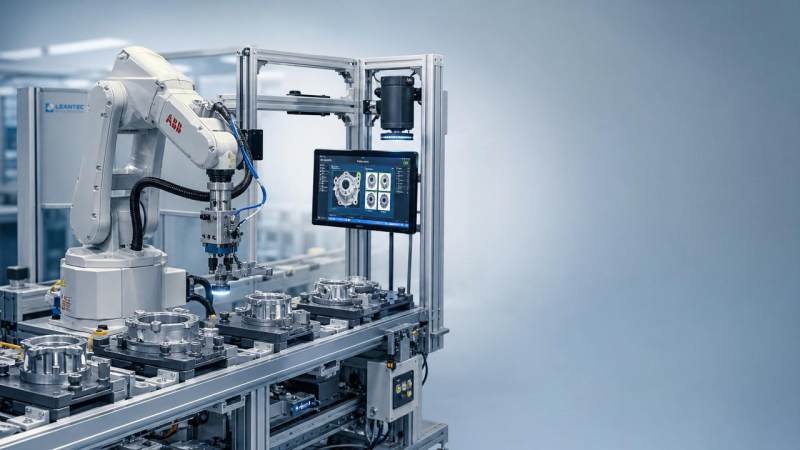
For enterprise decision-makers, the real question is not whether automation matters, but when industrial robotics custom delivers measurable ROI. In complex production environments, tailored robotic systems can reduce integration risk, improve throughput, and align more precisely with operational goals than off-the-shelf solutions. Understanding where customization truly adds value is essential to making smarter, lower-risk investment decisions in modern manufacturing.
Why a checklist is the safest way to evaluate industrial robotics custom
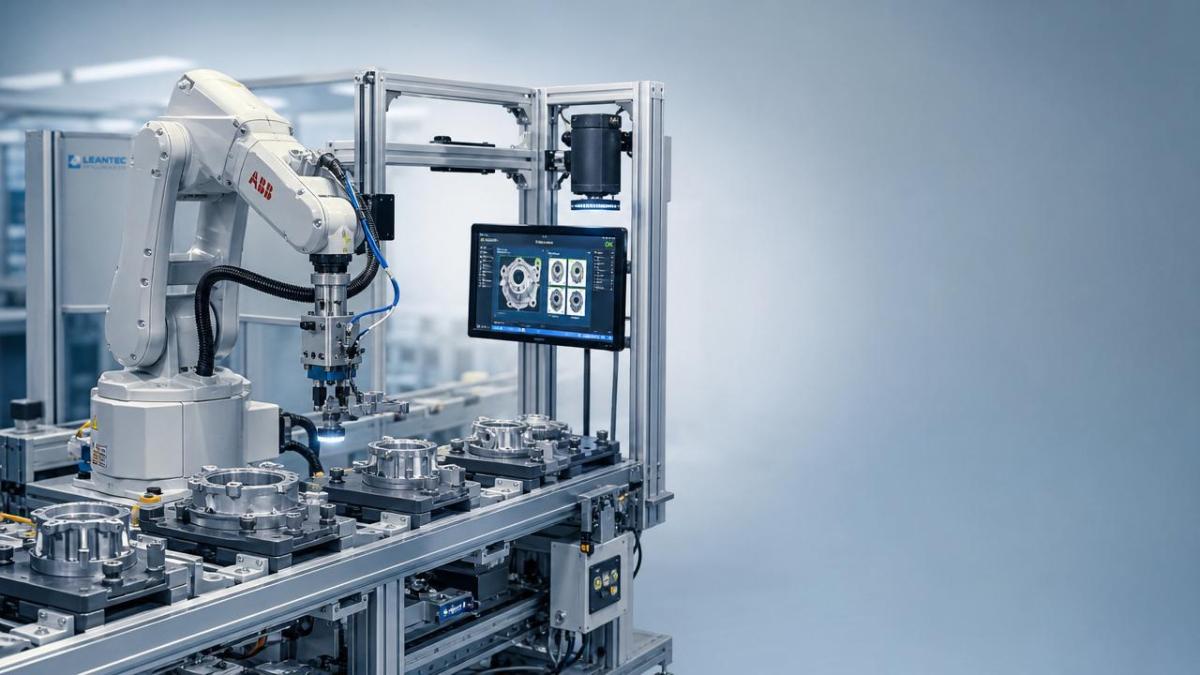
Standard robots are faster to source, but not always faster to monetize. The hidden variable is system fit across tooling, controls, cycle time, safety, and digital integration.
A checklist-based review helps separate genuine engineering need from expensive overdesign. It also supports cleaner comparisons between standard cells, configured platforms, and full industrial robotics custom projects.
In cross-sector automation, payback rarely depends on the robot arm alone. It depends on line constraints, product variation, uptime economics, and how deeply the robot must interact with upstream and downstream systems.
Core checklist: when industrial robotics custom really pays off
Use the following checklist before approving a tailored automation project. If several points score high, industrial robotics custom usually has a stronger business case.
- Map product variability first. Choose customization when part geometry, material behavior, orientation, or packaging changes too often for fixed grippers, static recipes, or manual changeover logic.
- Measure integration friction. Favor industrial robotics custom when the robot must communicate with legacy PLCs, MES, vision systems, conveyors, torque tools, or traceability platforms.
- Quantify downtime costs. Invest in tailored design when one hour of stoppage creates major scrap, missed shipments, or labor disruption across several linked process steps.
- Check cycle-time bottlenecks. Custom robotic cells pay off when standard programs cannot meet takt time without unstable motion, excessive wear, or unsafe operator intervention.
- Review space and layout limits. Use custom engineering when floor footprint, ceiling height, guarding zones, or access paths make standard cell architecture impractical or maintenance-heavy.
- Validate quality sensitivity. Custom solutions become attractive when repeatability, force control, dispensing accuracy, weld consistency, or inspection reliability directly affect warranty or compliance exposure.
- Compare changeover demands. Select customization when product families require rapid tool switching, recipe control, or modular fixturing that standard platforms cannot support efficiently.
- Assess safety complexity. Tailored robotics often pays off when human-robot interaction, mixed manual stations, or restricted access zones require application-specific safeguarding and validated logic.
- Model total lifecycle cost. Approve industrial robotics custom only if engineering spend is offset by lower rework, fewer retrofits, simpler maintenance, and longer system relevance.
- Test scalability early. A custom architecture is stronger when it can expand across lines, plants, or regions without redesigning every interface from scratch.
Where customized robotic systems create the most value
High-mix assembly lines
Assembly environments with frequent SKU changes often struggle with rigid automation. Here, industrial robotics custom supports adaptive gripping, smart feeders, vision-guided alignment, and recipe-driven motion profiles.
The payoff comes from shorter changeovers and fewer manual interventions. In many cases, the real win is stable quality at higher mix, not just raw speed.
Precision handling and inspection
Delicate parts, tight tolerances, and traceable quality data often exceed the capability of generic robotic packages. Custom end-of-arm tooling and force, torque, or vision feedback improve process control.
This is especially relevant when inspection data must feed MES or ERP systems. A well-scoped industrial robotics custom project can connect physical handling with digital verification.
Harsh or constrained production environments
Heat, dust, fluids, vibration, and limited access all raise integration complexity. Standard cells may fit on paper, yet fail under real operating conditions.
Customized robotic enclosures, cable routing, maintenance access, and protective logic reduce failure points. In these settings, industrial robotics custom often protects uptime more than it boosts nominal speed.
Legacy line modernization
Many plants cannot replace an entire line at once. They need robotic upgrades that fit existing PLC architecture, conveyor timing, safety circuits, and reporting structure.
Custom engineering pays off here because retrofit work is rarely plug-and-play. The best result is not a flashy robot, but a stable transition with minimal disruption.
Commonly ignored factors that weaken the ROI case
Overcustomizing low-value motions
Not every task deserves a bespoke design. If the motion is simple, repeatable, and already supported by proven standard modules, excessive customization can delay payback.
Underestimating software scope
Many teams budget for hardware and mechanics, then miss the real effort in robot logic, HMI, recipe management, alarms, and data exchange. Software often determines whether industrial robotics custom feels seamless or fragile.
Ignoring maintainability at the design stage
A custom cell that is hard to access, diagnose, or retool can erase its own productivity gains. Service clearances, spare parts strategy, and fault recovery must be designed in early.
Using unrealistic ROI assumptions
ROI models often assume perfect uptime and instant operator adoption. A stronger model includes commissioning time, debugging cycles, training, and gradual ramp-up under production pressure.
Separating robotics from plant data strategy
A robotic cell that cannot provide usable production data limits future optimization. Custom projects should align with broader control, IIoT, traceability, and benchmarking goals.
A practical decision framework for industrial robotics custom
- Define the business constraint in measurable terms, such as takt shortfall, scrap rate, labor instability, changeover duration, or integration risk.
- Compare three options side by side: standard cell, configured platform, and full industrial robotics custom, using the same throughput and lifecycle assumptions.
- Request interface details early, including PLC protocols, safety architecture, data points, tooling logic, and maintenance responsibilities.
- Run a digital or physical proof of concept for the highest-risk function, especially gripping, vision, part presentation, or mixed-model sequencing.
- Build the ROI case on total system performance, not robot speed alone. Include yield, uptime, engineering change costs, and future expansion value.
Conclusion and next-step guidance
Industrial robotics custom really pays off when complexity is structural, not temporary. If the process involves high variation, difficult integration, strict quality control, or retrofit constraints, customization can reduce risk while improving long-term economics.
The key is disciplined evaluation. Use a checklist, test the risky interfaces, and compare lifecycle outcomes rather than upfront price alone. In advanced automation, the best investment is the one that fits the line, the data architecture, and the growth plan at the same time.
A strong next step is to document one target process in detail: cycle time, failure points, system interfaces, and changeover demands. That single review often reveals whether industrial robotics custom is essential, optional, or premature.
Recommended News
- 2026/07/05Polycarbonate Roofing vs Metal Sheets: Which Is Better for Light Industrial Buildings?polycarbonateroofing vs metal sheets: discover which roof performs better for light industrial buildings based on daylight, heat, corrosion, and lifecycle cost.
- 2026/07/05PPE Wholesale Buying Guide: How to Compare MOQ, Compliance, and Unit CostPPE wholesale buyers: learn how to compare MOQ, compliance, and true unit cost to reduce risk, control budgets, and choose suppliers with confidence.
- 2026/07/05Supplier Qualification Assessment Checklist: Key Documents, Risks, and Scoring CriteriaSupplier qualification assessment made practical: explore key documents, risk signals, and scoring criteria to reduce supplier risk, improve compliance, and make smarter approval decisions.