
Search News
Industry Portal
Popular Tags
Where industrial robotics custom projects lose time first
Author
Lina Cloud
Time
May 15, 2026
Pageviews
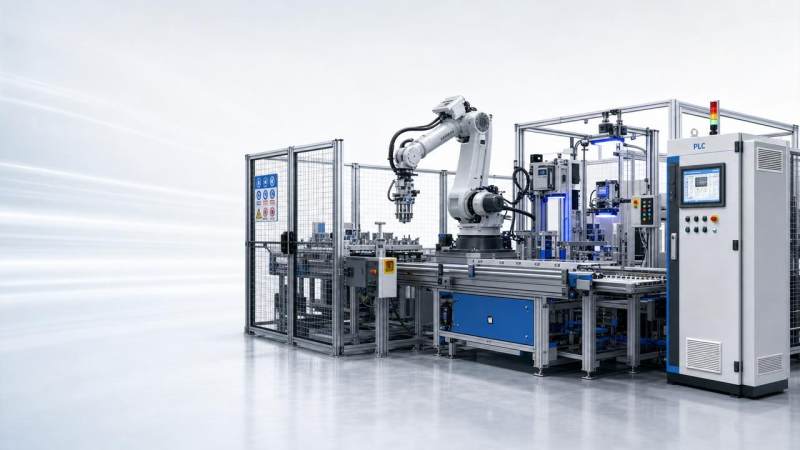
Industrial robotics custom projects rarely fall behind because of robot mechanics alone. The first delays usually start earlier, inside shifting scope, weak interface definitions, incomplete process data, and unrealistic commissioning assumptions.
When an industrial robotics custom cell combines robots, PLCs, vision, conveyors, safety, MES signals, and tooling, every unclear detail becomes schedule risk. Small omissions during planning grow into redesign, retesting, and delayed production ramp-up.
This article explains where time is lost first, why a structured review matters, and how to control industrial robotics custom execution with clearer benchmarks, faster technical decisions, and better cross-discipline alignment.
Why industrial robotics custom projects need a structured review
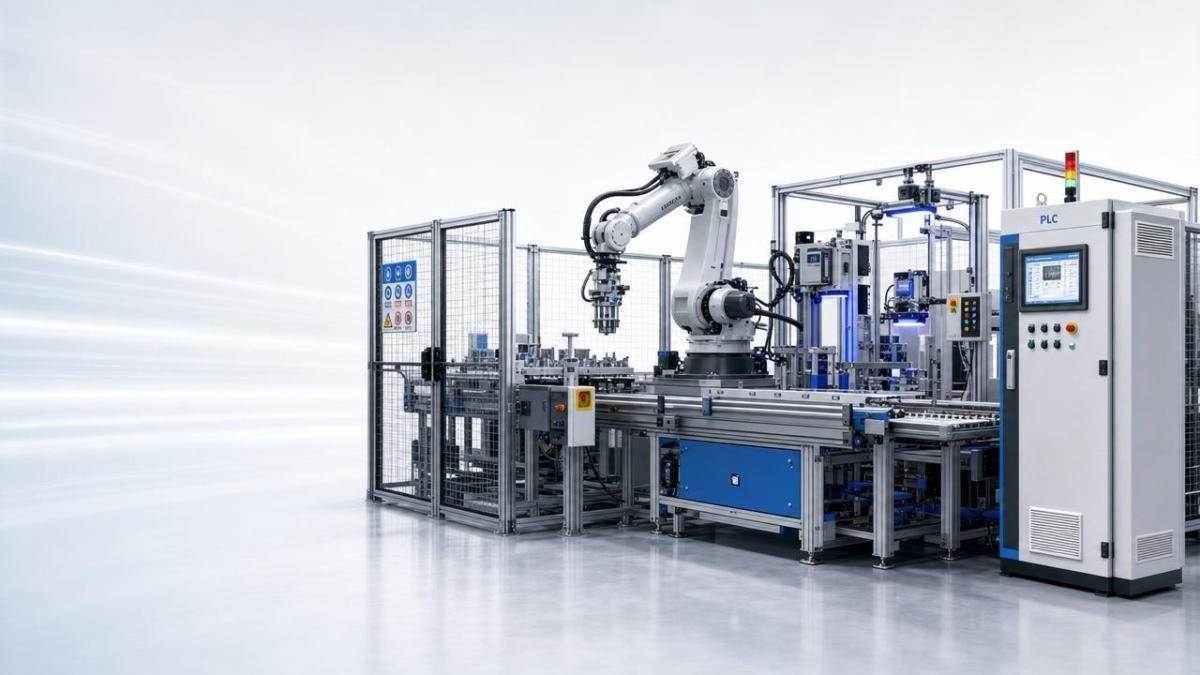
Custom automation is rarely a single-vendor product. It is a connected system with mechanical, electrical, software, safety, and operational dependencies that must work together on the first install window.
A structured review prevents teams from discovering missing information during fabrication or site startup. That matters because late fixes in industrial robotics custom work cost more than early technical clarification.
It also creates objective alignment. Instead of debating assumptions, teams compare payload, cycle time, PLC mapping, guarding logic, recovery sequences, and validation criteria against a shared checklist.
Where industrial robotics custom projects lose time first
Most schedule drift appears before factory acceptance testing. The earliest warning signs are usually visible in design reviews, approval loops, and unresolved integration details.
- Scope is defined by goals, not by boundaries. The robot task sounds clear, but fixtures, upstream handoff, part variation, and exception handling remain undocumented.
- Cycle time targets are approved before motion studies. Industrial robotics custom cells often inherit aggressive takt goals without real path simulation, dwell analysis, or buffer assumptions.
- Interface ownership is unclear across robot, PLC, vision, and MES. Signals exist conceptually, yet data structures, fault states, and restart logic remain open.
- End-of-arm tooling is treated as a detail. In reality, gripping force, wear, compliance, sensors, and changeover requirements can reshape the entire robot application.
- Part presentation is not stable enough for automation. Variability in orientation, tolerance, reflectivity, or incoming spacing creates hidden complexity at the integration stage.
- Safety design starts too late. Guarding, scanner zones, lockout access, and manual recovery paths affect layout, controls logic, and usable robot speed.
- Factory acceptance criteria are vague. Without measurable test conditions, industrial robotics custom acceptance expands into repeated debate instead of decisive verification.
- Site conditions are underestimated. Utilities, floor flatness, network readiness, and plant change windows often become blockers after equipment is already shipped.
Core execution checks that reduce delay risk
The following checks help turn industrial robotics custom concepts into buildable, testable systems. They are most effective when reviewed before design freeze and again before FAT.
- Define the exact process boundary, including part infeed condition, outfeed expectation, reject handling, operator touchpoints, and all manual interventions.
- Verify cycle time with simulation and real process assumptions, not only robot speed tables or nominal vendor performance data.
- Map every interface signal, message, and fault code between robot controller, PLC, safety controller, vision system, and plant software.
- Freeze tooling requirements early, including gripping method, wear parts, sensor feedback, cleaning access, and spare part strategy.
- Document part variation with measurable ranges for dimensions, weight, surface condition, orientation, and packaging consistency.
- Review safety as a performance factor, because guarding layout and safe motion limits directly influence throughput and maintenance access.
- Set FAT and SAT criteria with pass or fail thresholds, sample sizes, fault recovery tests, and production-representative operating conditions.
- Confirm plant readiness early, covering air quality, power stability, network addresses, floor anchoring, and installation access restrictions.
- Assign decision owners for every open technical item, with dates, escalation paths, and a single source of revision control.
How the first delays differ by application context
Machine tending and CNC loading
In machine tending, the earliest delays often come from door logic, chuck confirmation, part orientation, and coolant contamination effects. The robot path is usually not the hardest part.
Industrial robotics custom success here depends on machine handshake reliability, precise load positions, and realistic recovery logic after part drops or incomplete clamping.
Packaging and palletizing
These projects lose time when upstream flow varies more than expected. Carton quality, spacing, product mix, and pallet pattern changes create instability that simulation may miss.
For industrial robotics custom packaging cells, confirm SKU rules, label orientation, slip-sheet handling, and buffer strategy before mechanical design is finalized.
Welding and fabrication
The first hidden delay is often fixture repeatability. If parts arrive with distortion or large tolerance variation, robot programming time expands quickly.
Offline programming helps, but industrial robotics custom welding still depends on fixturing quality, seam access, rework routing, and fume-related maintenance planning.
Inspection and vision-guided handling
Vision projects commonly lose time in lighting, false reject tuning, and image variation caused by reflective surfaces or unstable presentation.
In industrial robotics custom inspection cells, acceptable defect thresholds and image dataset quality should be agreed before software tuning begins.
Commonly overlooked risks that expand schedules
Revision control is often underestimated. One outdated layout or IO list can trigger wiring changes, software edits, and retesting across multiple subsystems.
Operator recovery is another weak point. Systems may run well automatically, yet fail during jams, product changeovers, or manual restart conditions.
Data availability also matters. Industrial robotics custom programs need verified CAD, part drawings, tolerance data, and signal definitions early enough for engineering use.
Standards alignment should not wait until shipment. ISO, IEC, CE, and plant-specific safety expectations affect hardware choices, documentation, and validation timing.
Finally, spare parts and maintainability can influence startup. A technically elegant cell still loses time if consumables, wear items, or diagnostic access were ignored.
Practical ways to speed industrial robotics custom delivery
Start with a decision log, not only a meeting log. Open items should list owner, deadline, impact, and the exact consequence of non-decision.
Use benchmark-based design reviews. Compare robot reach, safety zones, servo loads, PLC architecture, and software structure against proven automation references.
Run pre-FAT walkthroughs before code is declared complete. This exposes layout conflicts, access issues, and sequence gaps while changes are still affordable.
Build acceptance around measurable evidence. For industrial robotics custom projects, that means cycle proof, fault recovery proof, and traceable interface validation.
Where possible, use independent engineering benchmarks. Resources such as G-IFA help validate hardware fit, control architecture assumptions, and standards alignment before investment risk grows.
Questions worth answering before design freeze
- What exact event defines one successful cycle, and what conditions are excluded from the cycle time commitment?
- Which subsystem owns fault recovery after part loss, sensor disagreement, or interrupted plant communication?
- Which part variations are accepted by the system, and which require upstream correction or manual intervention?
- What evidence proves readiness for FAT, shipment, SAT, and final production release?
Conclusion and next action
Industrial robotics custom projects usually lose time first in ambiguity, not automation hardware. The biggest schedule gains come from tightening boundaries, interfaces, acceptance logic, and site-readiness decisions early.
A disciplined review process makes complex systems easier to build, test, and scale. It also reduces expensive redesign during commissioning, when every hour affects launch performance.
Before the next project milestone, review scope, interfaces, tooling, safety, FAT criteria, and plant conditions line by line. That single step can prevent the first delays in industrial robotics custom deployment.
Recommended News
- 2026/07/01What Impacts Industrial Coatings Performance in Corrosive Plant Environments?Industrial coatings performance in corrosive plants depends on environment, surface prep, product selection, and application quality. Learn what prevents early failure and protects assets longer.
- 2026/07/01Linear Motion for Robotics: Key Factors in Accuracy, Speed, and Payload SelectionLinear motion for robotics explained: compare accuracy, speed, and payload factors to choose the right axis, improve uptime, and boost automation performance.
- 2026/07/01How to Choose Adjustable Steel Scaffolding Jacks by Load Capacity and Site ConditionsAdjustable steel scaffolding jacks selection starts with load capacity and site conditions. Learn how to compare specs, reduce risk, and choose safer, more reliable support.