
Search News
Industry Portal
Popular Tags
Which consumer tech trends will matter in 2026?
Author
Lina Cloud
Time
May 29, 2026
Pageviews
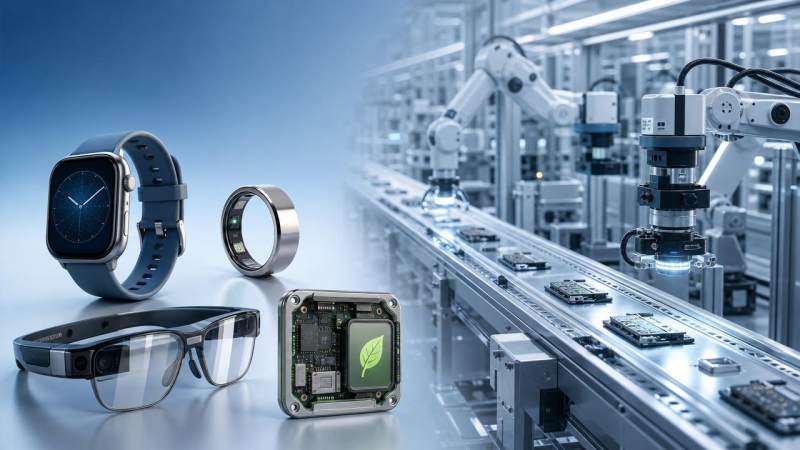
As 2026 approaches, the most important consumer tech trends will be defined not only by smarter devices, but by the industrial systems that make them scalable, reliable, and secure. From AI-enabled wearables and connected homes to immersive interfaces and sustainable electronics, information researchers must look beyond product hype to the automation, data infrastructure, and manufacturing standards behind the next wave of innovation. Understanding these forces helps identify which technologies are likely to move from early adoption to mainstream impact.
Which Consumer Tech Trends Will Matter in 2026?
The consumer technology market is entering a more disciplined phase. Novelty still matters, but reliability, interoperability, privacy, and manufacturability now decide momentum.
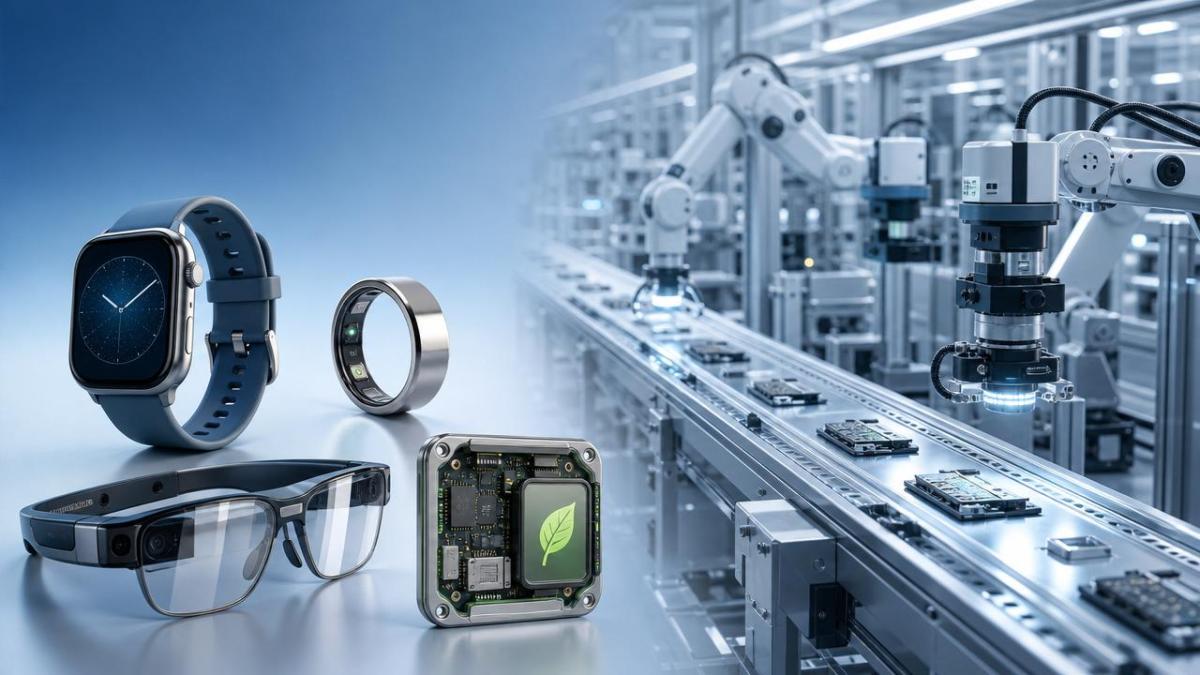
The strongest consumer tech trends in 2026 will connect user experience with industrial execution. Devices must be intelligent, affordable, repairable, and produced at scale.
This is where smart manufacturing becomes relevant. Robotics, PLC control, motion systems, industrial software, and quality data shape what reaches households.
G-IFA tracks this connection through verifiable automation benchmarks. The same factory intelligence behind industrial robotics also influences phones, wearables, appliances, and personal mobility.
Why a Checklist Matters for Consumer Tech Trends
Consumer electronics cycles move quickly. A structured checklist separates durable innovation from temporary buzz, especially when AI branding appears on almost every device.
Many consumer tech trends fail because the supply chain cannot support cost, safety, lifecycle service, or software updates after the first launch.
A checklist also exposes hidden industrial constraints. Battery sourcing, sensor calibration, firmware governance, and automated inspection all affect market readiness.
For 2026, the question is not only what looks futuristic. The better question is what can be built, secured, supported, and trusted.
Core Checklist for Evaluating 2026 Consumer Tech Trends
- Verify real user value by checking whether the device reduces friction, improves health, saves energy, or automates a repeated household task.
- Assess AI usefulness by confirming that models operate reliably, explain outputs clearly, and avoid sending unnecessary personal data to external systems.
- Check manufacturing maturity through yield rates, component availability, automated inspection capability, and compliance with relevant safety standards.
- Evaluate interoperability by testing whether products connect smoothly with major ecosystems, open protocols, and future software update paths.
- Prioritize security design by reviewing encryption, identity management, patch frequency, vulnerability disclosure, and default privacy settings.
- Measure sustainability through repair access, recycled materials, modular components, battery replacement options, and transparent end-of-life handling.
- Compare automation dependency by identifying which production steps require robotics, precision motion control, vision systems, or AI quality inspection.
- Confirm service economics by estimating warranty risk, spare part availability, remote diagnostics, and the cost of long-term software maintenance.
This checklist helps rank consumer tech trends by evidence rather than presentation. It also connects product decisions with factory-level feasibility.
Trend 1: AI Wearables Become Practical Health Companions
AI wearables are among the strongest consumer tech trends for 2026. The category is shifting from step counting to contextual health interpretation.
Smart rings, patches, earbuds, and watches will use multimodal sensors. Heart rhythm, sleep, temperature, motion, and stress indicators will be combined.
The key test is accuracy under daily conditions. Sweat, movement, skin tone, charging habits, and fit variation can distort readings.
Advanced assembly will matter. Miniature sensors need precision placement, controlled bonding, automated optical inspection, and traceable calibration data.
What to Check
- Demand validated sensor performance across movement, temperature changes, varied skin contact, and realistic battery levels.
- Review whether AI coaching stays transparent, avoids false certainty, and supports professional medical review when needed.
- Inspect charging design, water resistance, firmware update policy, and long-term comfort during sleep or exercise.
Trend 2: Connected Homes Move Toward Invisible Automation
Connected homes remain central to consumer tech trends, but the winning products will not demand constant app management.
In 2026, smart lighting, HVAC, security, appliances, and energy storage will move toward automated orchestration.
The best systems will learn routines without becoming intrusive. Local processing will reduce latency and improve privacy.
Interoperability will decide adoption. Matter, Wi-Fi, Thread, Bluetooth, and cloud APIs must work without confusing setup flows.
What to Check
- Test setup time, recovery after network failure, and compatibility with existing routers, voice assistants, and energy devices.
- Confirm local fallback controls for locks, cameras, alarms, thermostats, and essential household equipment.
- Track energy savings with measurable baselines rather than relying only on marketing claims about intelligent optimization.
Trend 3: Spatial Interfaces Mature Beyond Entertainment
Spatial computing, AR glasses, and mixed reality remain high-visibility consumer tech trends. In 2026, usefulness will outweigh spectacle.
Adoption will depend on comfort, battery life, display quality, heat control, and content workflows that justify daily use.
Practical scenarios include remote collaboration, guided repair, fitness coaching, design visualization, education, travel assistance, and accessibility support.
Manufacturing complexity is high. Micro-displays, lenses, cameras, hinges, and thermal modules require stable precision assembly.
What to Check
- Evaluate field of view, weight balance, eye comfort, heat output, and usable battery life during extended sessions.
- Check whether spatial features solve real tasks, such as hands-free instructions, immersive learning, or accurate room mapping.
- Review privacy controls for cameras, microphones, spatial maps, biometric signals, and bystander consent.
Trend 4: Personal AI Agents Enter Everyday Devices
Personal AI agents are likely to influence many consumer tech trends. They will appear across phones, laptops, cars, appliances, and wearables.
Their value will come from coordinating tasks. Scheduling, shopping, search, home control, translation, and document handling may become more fluid.
However, the agent must be controllable. Permission layers, audit trails, and easy cancellation will be essential for trust.
Edge AI will gain importance. Running more inference on-device lowers latency, cuts cloud cost, and protects sensitive information.
What to Check
- Require clear permission boundaries before agents access payments, contacts, calendars, location, cameras, or home devices.
- Compare on-device AI performance with cloud-assisted performance under weak networks and offline conditions.
- Inspect how the system logs actions, explains recommendations, and reverses mistakes without complex support steps.
Trend 5: Sustainable Electronics Become a Buying Criterion
Sustainability is becoming one of the most commercially relevant consumer tech trends. It now affects design, regulation, and brand trust.
Repairable devices, recyclable materials, efficient chargers, modular batteries, and longer update windows will gain attention in 2026.
The challenge is proof. Environmental claims must be supported by lifecycle data, supply chain traceability, and credible certification.
Smart factories can reduce waste through predictive maintenance, robotic precision, digital twins, and automated quality control.
What to Check
- Verify repair scores, spare part access, battery replacement options, and realistic software support periods.
- Look for documented material sourcing, packaging reduction, power efficiency, and end-of-life collection channels.
- Compare durability claims with drop testing, water resistance, connector lifecycle, and thermal aging results.
Application Scenarios That Clarify Market Impact
Health and Wellness
Consumer tech trends in health will matter when they support prevention, daily awareness, and better communication with care systems.
Wearables should not replace diagnosis. They should provide consistent signals, clear alerts, and exportable data with secure consent.
Home Energy and Security
Smart homes will be judged by resilience. Energy automation, leak detection, security alerts, and backup controls must work during disruptions.
The most relevant consumer tech trends here combine sensors, AI, local control, and simple dashboards for measurable savings.
Mobility and Personal Transportation
E-bikes, scooters, in-car assistants, and connected charging tools will continue expanding. Safety systems and battery management will decide confidence.
Industrial traceability is critical. Battery packs, motors, controllers, and braking components need reliable testing and certification.
Learning and Work
AI laptops, smart displays, translation tools, and spatial collaboration will support hybrid learning and productivity.
Successful products will reduce cognitive load. They should summarize, visualize, translate, and organize without creating extra configuration work.
Commonly Overlooked Risks in Consumer Tech Trends
Privacy drift: Devices often collect more data after updates. Review permissions regularly, especially for cameras, microphones, health data, and location.
Unsupported ecosystems: A promising product can lose value if cloud services close, standards shift, or companion apps stop receiving updates.
Manufacturing bottlenecks: Consumer tech trends may stall when specialized sensors, chips, lenses, or batteries face quality or supply constraints.
AI overreach: Automated decisions can become risky when systems act without confirmation, especially around payments, health advice, or home access.
Repair barriers: Sealed designs, paired components, unavailable parts, and short software support can make devices expensive to keep.
Practical Execution Advice for 2026 Evaluation
- Start with the problem, not the feature. Identify the repeated user pain that the technology clearly removes.
- Compare pilot reviews with long-term ownership feedback, including battery degradation, app stability, and support responsiveness.
- Check whether production uses traceable quality data, automated inspection, and compliance with ISO, IEC, CE, or relevant standards.
- Score each technology against usability, security, interoperability, sustainability, manufacturability, and service economics before ranking market potential.
- Watch factory signals. Robotics investment, MES adoption, and sensor calibration capacity often reveal which products can scale.
G-IFA’s automation lens is useful because consumer devices are never only software experiences. They are physical products shaped by production discipline.
Industrial robotics, PLC control, motion systems, IIoT software, and pneumatic or hydraulic infrastructure all influence repeatability and cost.
Summary and Next-Step Action Guide
The consumer tech trends that will matter in 2026 are practical, measurable, and supported by mature industrial systems.
AI wearables, invisible smart homes, spatial interfaces, personal agents, and sustainable electronics all have strong potential.
Yet each category must prove security, reliability, interoperability, and manufacturability before becoming mainstream.
Use the checklist to rank consumer tech trends by evidence. Then examine the automation foundation behind each device.
The next step is simple: track product value, factory capability, compliance data, and lifecycle support together. That combined view reveals which consumer tech trends deserve serious attention in 2026.
Recommended News
- 2026/07/14Factory Integration Platform vs MES: Which Fits Multi-Line Production Better?Factory integration platform or MES? Discover which option fits multi-line production better, compares connectivity vs execution control, and helps you choose with less risk.
- 2026/07/14Industrial Robotics Platform for Automation: What to Compare Before You InvestIndustrial robotics platform for automation: compare integration, software, safety, and lifecycle support before you invest to reduce risk, improve ROI, and future-proof your production.
- 2026/07/14Carbon Compliance for Export Manufacturers: What Documents and Data Are Required?Carbon compliance explained for export manufacturers: learn which documents, data, and reporting methods buyers and regulators expect to reduce audit risk and win approvals.