
Search News
Industry Portal
Popular Tags
MES Software Price Gaps Often Come From Hidden Modules
Author
Lina Cloud
Time
May 14, 2026
Pageviews
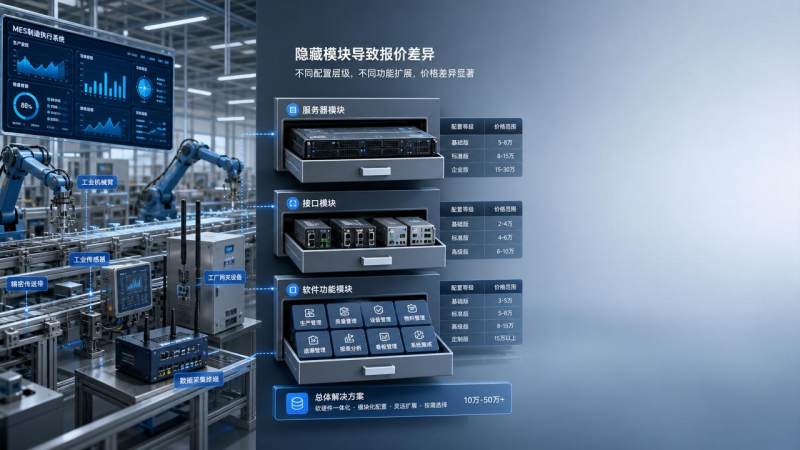
MES software price can shift sharply between proposals, even when vendors appear to promise similar outcomes. In smart manufacturing, those gaps often come from modules hidden outside the base scope.
Across the general industry, factories now compare software with the same rigor used for robotics, PLC systems, and motion platforms. Budget control depends on seeing the full architecture, not only the entry quote.
When module costs surface late, ROI weakens, timelines stretch, and integration risks rise. A realistic view of MES software price should include functions, interfaces, scalability, compliance, and post-launch support.
Why MES software price gaps are becoming more visible now
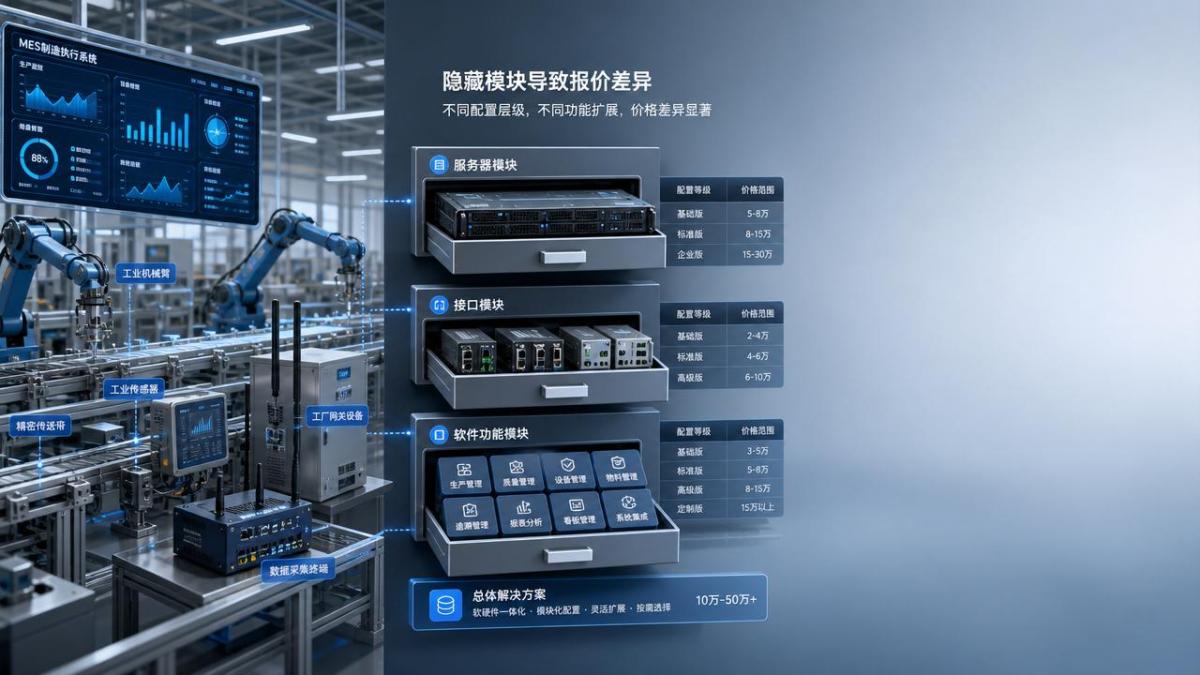
The pricing gap is not only a vendor issue. It reflects a broader Industry 4.0 shift toward modular software, subscription licensing, and data-driven production control.
In earlier deployments, MES projects were often scoped around work orders, traceability, and reporting. Today, buyers expect real-time dashboards, edge connectivity, AI analytics, and ERP synchronization.
That expansion changes how MES software price is built. One proposal may include advanced modules from day one, while another adds them later through change orders or separate licenses.
This matters across mixed-process environments. Discrete assembly, packaging, machining, electronics, and hybrid plants all need different combinations of scheduling, quality, maintenance, and data collection.
The strongest trend signals behind hidden MES modules
Several market signals explain why hidden modules now influence MES software price more than many approval teams expect.
The result is simple. Two quotes can share the same headline functionality, yet carry very different long-term operational value and very different total MES software price.
Where hidden modules usually appear inside an MES quote
Most hidden costs do not look dramatic at first. They appear as optional modules, user tiers, connector packs, service bundles, or customization assumptions.
Common modules excluded from the base offer
- Advanced production scheduling and finite planning
- Traceability and genealogy across batches, lots, or serialized units
- Quality management, SPC, deviation handling, and CAPA workflows
- OEE dashboards, downtime classification, and performance analytics
- Maintenance links with CMMS or predictive maintenance tools
- Energy monitoring and sustainability reporting
- ERP, WMS, LIMS, SCADA, and machine connector libraries
- Role-based approvals, audit trails, and electronic records controls
Less visible cost layers
- Per-device, per-line, or per-site license expansion
- Data historian storage limits and backup retention fees
- Custom dashboard development and report templates
- Validation documents, cybersecurity hardening, and test environments
- Training refreshes, support response tiers, and upgrade migration work
If these elements are missing from the first quote, the initial MES software price may look attractive. However, the effective project cost may be much higher after deployment begins.
How these pricing gaps affect operations and investment quality
Pricing gaps create more than accounting issues. They influence rollout speed, plant standardization, and the reliability of production data across the enterprise.
When a base MES package lacks connectors, manual data entry remains in place longer. That delays visibility, weakens traceability, and limits the value of automation hardware already installed.
When reporting modules are optional, KPI governance becomes fragmented. Different lines may calculate downtime, scrap, or cycle efficiency differently, making cross-site benchmarking unreliable.
When quality functions are excluded, compliance exposure can rise. Operators may depend on spreadsheets or disconnected systems, which undermines digital continuity and audit readiness.
This is why MES software price should be judged against the target operating model. A lower quote is not lower risk if it postpones critical capabilities.
What to examine before accepting any MES software price
A disciplined review process helps separate a competitive quote from an incomplete one. The goal is to compare scope clarity, not only purchase value.
Core checks that reveal hidden modules
- Request a module-by-module breakdown of all functional areas.
- Ask which features are included in the base MES software price.
- Confirm user, device, line, plant, and database scaling rules.
- List every third-party integration and note separate connector fees.
- Review implementation assumptions, including master data preparation.
- Check support scope, upgrade rights, and cybersecurity patch policy.
- Verify reporting, dashboard, and analytics limits in writing.
- Identify excluded validation, testing, and training services.
Questions that improve cost visibility
- Which modules are mandatory for the intended production scenario?
- What functionality requires future activation or additional licenses?
- How does the MES software price change when another line is added?
- What costs appear during year two and year three?
- Which customizations can be replaced by configuration instead?
These questions support clean comparison between vendors and reduce the risk of approving a quote that only covers a partial digital workflow.
A practical framework for comparing total MES software price
A useful comparison method is to evaluate software in lifecycle layers. This prevents a low initial quote from hiding a high total cost of ownership.
This structure makes MES software price more transparent. It also aligns software approval with the same engineering discipline used in automation hardware benchmarking.
What deserves close attention as MES platforms keep evolving
The next wave of MES platforms will likely increase modular pricing further. AI assistants, digital twins, contextual alarms, and low-code workflows are already moving into premium layers.
At the same time, factories want faster deployment and measurable ROI. That tension will keep pressure on vendors to present low entry MES software price figures, even when full value requires added modules.
The strongest response is disciplined scope mapping. Every required outcome should connect to a named module, implementation activity, integration point, and recurring cost line.
- Map target KPIs to exact software functions.
- Separate must-have modules from phase-two enhancements.
- Model three-year cost, not only year-one spending.
- Benchmark software scope against plant automation maturity.
- Document exclusions before technical approval is finalized.
In a connected factory strategy, software transparency is as important as machine performance. A credible MES software price is one that remains valid after integration, scaling, and compliance demands appear.
Before moving forward, convert every proposal into a line-by-line scope matrix. That single step reveals hidden modules quickly and protects the business case behind the MES investment.
Recommended News
- 2026/06/28Specialty Chemicals Sourcing Guide: How to Evaluate Suppliers, Specs, and ComplianceSpecialty chemicals sourcing guide covering supplier evaluation, specs, compliance, and total cost. Learn how to reduce risk, improve quality, and choose suppliers with confidence.
- 2026/06/28Modern Office Furniture for Small Businesses: How to Choose Layouts That Save SpaceModern office furniture for small businesses can do more than fit a tight space. Learn smart layouts, modular picks, and practical planning tips to boost comfort, workflow, and growth.
- 2026/06/28Rockwell Metal Hardness Testing Explained: Scale Selection, Test Loads, and Common ErrorsMetal hardness testing (Rockwell) explained clearly: learn scale selection, test loads, and common errors to improve accuracy, compliance, and shop-floor quality control.