
Search News
Industry Portal
Popular Tags
Production line automation costs that often get missed early
Author
Lina Cloud
Time
May 09, 2026
Pageviews
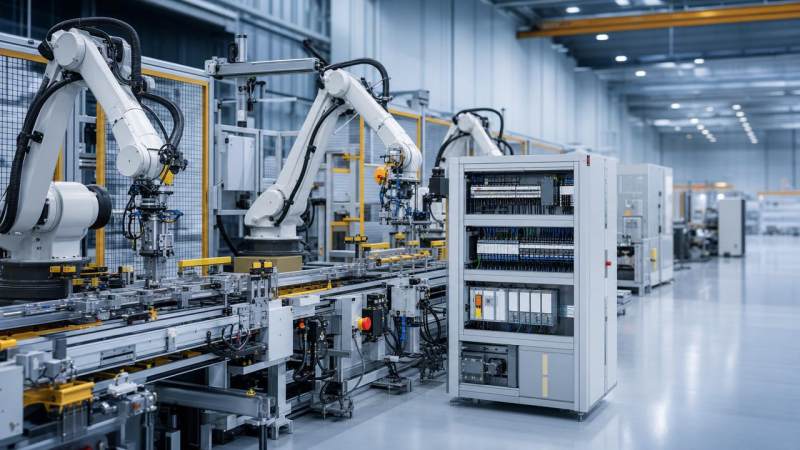
Many finance approvers underestimate the true scope of production line automation because early budgets often focus only on equipment prices. In reality, integration, software compatibility, training, downtime risk, compliance, and lifecycle maintenance can reshape total investment. Understanding these overlooked cost drivers helps decision-makers approve smarter projects, reduce financial surprises, and protect long-term manufacturing returns.
For capital approval teams, this gap matters because a production line automation project is rarely a single purchase. It is usually a multi-layer investment that combines robotics, PLC and control systems, motion hardware, industrial software, safety architecture, installation labor, and long-term service obligations. A line that looks affordable at quotation stage can become 20%–50% more expensive after engineering adjustments, factory acceptance testing, site commissioning, and post-launch support are added.
In cross-sector manufacturing, where packaging, assembly, machining, electronics, food handling, and materials processing all follow different operational constraints, financial risk increases when hidden costs are not mapped early. For that reason, finance approvers need a clearer framework to evaluate production line automation beyond machine price alone, especially when comparing integrators, benchmarking technical options, or validating expected payback periods of 18–36 months.
Why early automation budgets are often incomplete
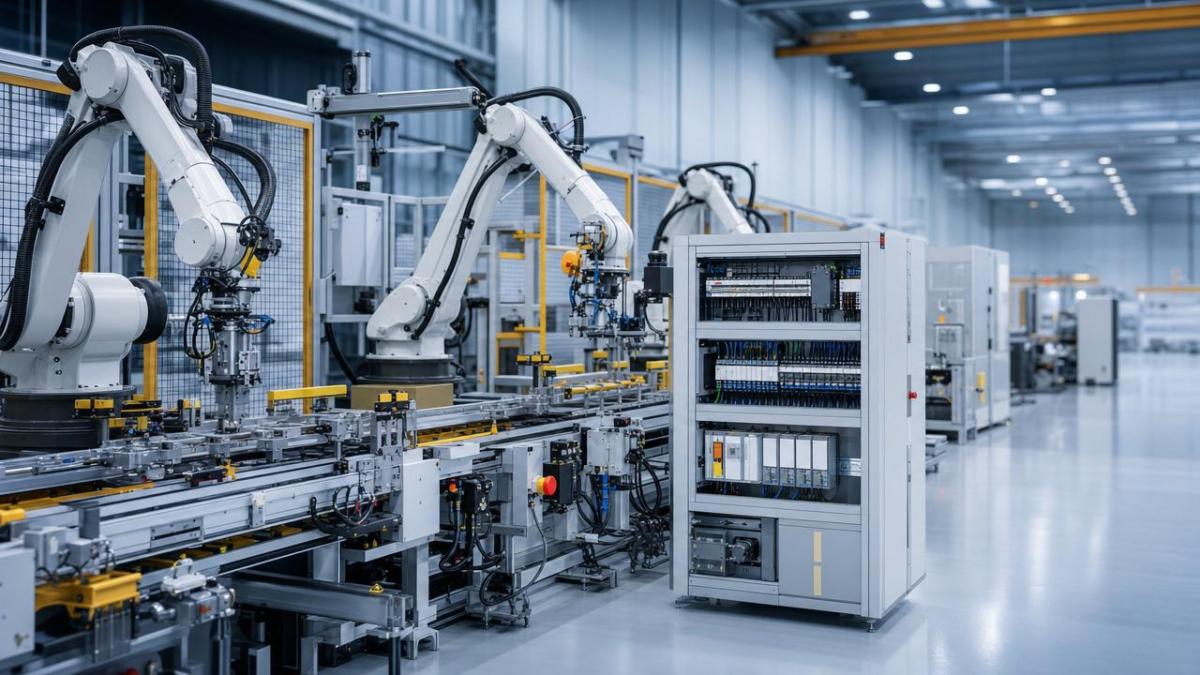
The first budget draft for production line automation often starts with visible assets: robots, conveyors, servo systems, sensors, HMI panels, and guarding. That is necessary, but incomplete. In most real projects, direct hardware may represent only 45%–70% of total project cost, depending on how much custom engineering, software integration, and production interruption are involved.
This is especially true when existing production assets are not standardized. A factory with mixed PLC brands, legacy drives, non-unified communication protocols, or outdated MES/ERP interfaces will usually need additional middleware, gateway devices, custom coding, or staged migration work. Those items do not always appear in the first quotation, yet they affect both capex and implementation schedule.
The most common cost gaps finance teams miss
Approvers should expect at least 6 hidden cost categories in a typical automation review. These include controls integration, mechanical adaptation, software licensing, operator training, validation and compliance, and early-stage productivity loss during ramp-up. In projects with 2–3 upstream and downstream line interfaces, each interface can introduce additional testing cycles and engineering hours.
- Electrical and control cabinet redesign for line compatibility
- Retrofit brackets, custom fixtures, or conveyor modifications
- Industrial network setup for Ethernet/IP, Profinet, Modbus TCP, or OPC UA
- MES, ERP, SCADA, or traceability software connectors
- Safety validation for CE, ISO, or local machine directives
- Operator, maintenance, and supervisor training across 2–4 user levels
A useful financial test is simple: if the budget only lists equipment, freight, and installation, it is probably too narrow. A more reliable approval pack should reflect at least 10 cost lines, including commissioning support, spare parts, software updates, and a defined stabilization period after handover.
Cost visibility by project stage
The table below shows how production line automation costs typically emerge across project stages. This helps finance approvers understand why a quote that appears competitive in week 1 may no longer be the lowest-risk option by week 12 or week 20.
The key lesson is that hidden costs are not random. They appear predictably at different milestones. A stronger approval process therefore asks not only “What is the machine price?” but also “Which costs are likely to appear after PO issuance, FAT, SAT, and the first 90 days of operation?”
A practical budgeting rule
For new standalone cells, finance teams often reserve an additional 10%–15% contingency. For integrated line automation with software handshakes, legacy machine interfaces, or regulatory validation, a 15%–30% contingency is often more realistic. The correct number depends on design maturity, not optimism.
The overlooked cost drivers behind total investment
When production line automation goes over budget, the cause is usually not one dramatic failure. It is the accumulation of smaller cost drivers that were either underestimated or approved without enough technical scrutiny. For finance approvers, understanding these drivers is essential because each one affects cash flow, payback, and implementation risk in different ways.
Integration engineering and controls complexity
A robot or motion system rarely operates alone. It must exchange signals with upstream feeders, downstream packers, quality inspection stations, emergency stops, and plant-level reporting systems. Even a moderate line can involve 100–300 I/O points, 3–6 safety zones, and multiple device protocols. Each additional interface raises engineering time, testing effort, and future troubleshooting cost.
In mixed-vendor environments, the cost issue is not only hardware compatibility. It is also software logic ownership. If one supplier delivers the robot, another provides the PLC, and a third controls MES integration, responsibility for delays and debugging can become fragmented. That fragmentation often increases change-order exposure.
Software licenses, data architecture, and cybersecurity
Finance teams frequently approve hardware with little visibility into software layers. Yet industrial software can account for a meaningful share of lifecycle cost. This includes SCADA tags, HMI runtime licenses, historian storage, MES connectors, database support, annual software maintenance, and version upgrades required every 3–5 years.
Cybersecurity is another emerging cost center. If the automated line connects to plant networks or cloud dashboards, it may require segmented architecture, managed access, backup routines, and documented recovery procedures. Those controls add value, but they should be budgeted from the start instead of treated as late compliance extras.
Training, adoption, and labor transition
A technically sound production line automation project can still fail financially if the workforce is not ready. Operators need startup and fault-reset training. Maintenance teams need electrical, mechanical, and controls familiarity. Supervisors need KPI visibility. In practice, training often happens across 2–4 rounds: pre-start, startup week, post-stabilization, and refresher sessions after shift expansion.
The hidden cost is not only training fees. It also includes the opportunity cost of labor hours diverted from normal output, especially in factories running 2 or 3 shifts. If the line reaches target OEE only after 6–10 weeks, the ramp-up gap should be considered part of investment planning.
Downtime risk and production disruption
For finance approvers, downtime is often the largest missed variable. A shutdown window that slips from 3 days to 7 days can materially affect monthly output, customer delivery performance, and working capital. This is especially important when the automation project touches bottleneck equipment or high-mix production schedules.
A realistic approval case should model at least 3 scenarios: planned schedule, moderate delay, and extended delay. This does not require speculative forecasting. It only requires translating production interruption into unit loss, overtime cost, expedited freight, or external subcontracting risk.
Maintenance, spares, and lifecycle support
The purchase order is the start of cost, not the end. Servo drives, pneumatics, linear guides, sensors, safety relays, and industrial PCs all have service profiles. Some need inspection every 3 months, others annual calibration, and others replacement after a cycle threshold. Without a spare parts strategy, even a low-cost component can create high-cost downtime.
This matters more when imported components have lead times of 4–12 weeks. Finance approvers should therefore ask whether the project includes critical spare kits, remote diagnostics, patch support, and response-time commitments for the first 12 months and beyond.
How finance approvers can evaluate production line automation more accurately
The solution is not to reject automation proposals. It is to review them using a broader financial lens. A better approval method combines technical validation with cost transparency, so capex decisions reflect implementation reality rather than quotation appearance. This is where structured benchmarking becomes valuable for finance, operations, and engineering teams alike.
Use a total-cost review instead of a machine-price review
A reliable production line automation approval should compare at least 8 dimensions: equipment cost, integration effort, software scope, compliance needs, downtime exposure, training demand, spare strategy, and support terms. This approach helps identify which quote is merely cheaper upfront and which quote is financially safer over 3–7 years.
The table below can serve as a practical decision matrix during budgeting and supplier review. It is especially useful when bids differ in scope definition rather than in technical intent.
This matrix shows that better approval decisions come from asking sharper questions, not only from negotiating lower hardware prices. A complete scope often protects margin better than a nominally cheaper proposal with unresolved interfaces.
Build approval around 4 decision checkpoints
Finance approvers can reduce surprises by using a 4-checkpoint review model. Each checkpoint should have measurable outputs rather than informal assumptions.
- Concept checkpoint: validate business case, target throughput, labor reduction assumptions, and line constraints.
- Technical checkpoint: confirm controls architecture, software interfaces, compliance scope, and required utilities.
- Execution checkpoint: review build schedule, FAT criteria, SAT plan, and shutdown window.
- Lifecycle checkpoint: verify spares, training, warranty boundaries, and 12–24 month support model.
Using these checkpoints can shorten internal approval cycles because engineering, operations, and finance align earlier. It also creates a stronger audit trail for why the selected production line automation option was approved.
Questions worth asking before sign-off
- What percentage of the quoted system is standard versus custom engineered?
- Which software licenses are perpetual, annual, or user-based?
- How many days of planned downtime are assumed, and what is the cost if startup slips by 2–5 days?
- What OEE level is expected at week 1, week 4, and week 12?
- Which critical spare parts have lead times longer than 30 days?
Where benchmarking and technical due diligence create financial value
In many factories, financial uncertainty comes from limited technical comparability. Two suppliers may both propose production line automation, yet one uses globally common components with clear service channels, while the other relies on less transparent software structures or unsupported interfaces. Without benchmarking, finance teams may approve apparent savings that later become support liabilities.
This is where a technical intelligence platform such as G-IFA becomes relevant. By providing benchmark visibility across industrial robotics and cobots, PLC and control systems, motion control and transmission, Industrial IoT software layers, and pneumatic or hydraulic systems, decision-makers gain a more disciplined view of where cost and risk actually sit.
What finance teams should benchmark before approving
Benchmarking does not mean overcomplicating procurement. It means checking a short list of variables that directly influence budget reliability and operational continuity.
- Component standardization across plants or regions
- Compliance alignment with ISO, IEC, CE, or local machine requirements
- Interoperability between robotics, PLC, drives, and plant software
- Serviceability, spare availability, and expected replacement cycles
- Scalability if the line expands from 1 station to 3 or more modules
Even for a finance-led review, these checks are practical. They help identify whether a low initial quote is likely to create hidden expenditure through duplicated engineering, conversion hardware, repeated software adjustments, or extended dependence on specialist support.
A stronger approval outcome
The best production line automation approvals are not the fastest or the cheapest on paper. They are the ones that connect capex discipline to long-term operating reliability. When finance teams evaluate total scope, challenge vague assumptions, and use benchmark-based technical due diligence, they reduce surprise costs while improving confidence in projected returns.
For organizations navigating Industry 4.0 investments, the real financial advantage comes from seeing the full system: hardware precision, software intelligence, standards alignment, and maintainability over time. If you want a clearer basis for comparing automation architectures, validating hidden cost exposure, or de-risking your next investment, contact G-IFA to get a tailored evaluation framework, explore benchmark-backed options, and learn more solutions for smarter production line automation decisions.
Recommended News
- 2026/05/28How to compare a China cobot maker with safety featuresCobot manufacturer china with safety features: compare certifications, force limiting, integration support, and service quality with a practical checklist for safer automation decisions.
- 2026/05/28Why low maintenance matters when choosing an agv supplieragv supplier wholesale with low maintenance helps cut downtime, lower service costs, and protect ROI. Learn how to choose a reliable AGV partner for long-term automation success.
- 2026/05/28Is a wholesale 6 axis robot arm worth it for heavy loadsWholesale 6 axis robot arm for heavy payload: learn if it’s worth the investment by comparing ROI, load stability, compliance, and long-term service value.