
Search News
Industry Portal
Popular Tags
When does an industrial robotics manufacturer become risky?
Author
Dr. Victor Gear
Time
May 18, 2026
Pageviews
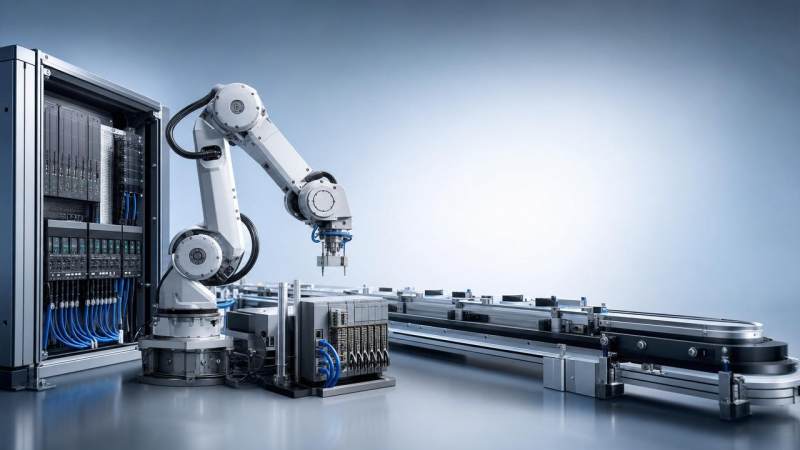
Choosing an industrial robotics manufacturer is no longer just a sourcing decision—it is a risk management exercise. The core issue is not speed, payload, or headline pricing alone.
Risk appears when an industrial robotics manufacturer cannot sustain compliance, software compatibility, service continuity, and long-term support across the factory lifecycle.
In modern automation, weak integration can interrupt production, delay commissioning, and increase hidden ownership costs. A capable supplier must support both mechanical reliability and digital interoperability.
This matters across the broader industrial landscape, where robotics increasingly connect with PLC systems, motion platforms, MES layers, safety networks, and predictive maintenance software.
Risk Thresholds in Industrial Robotics Manufacturing
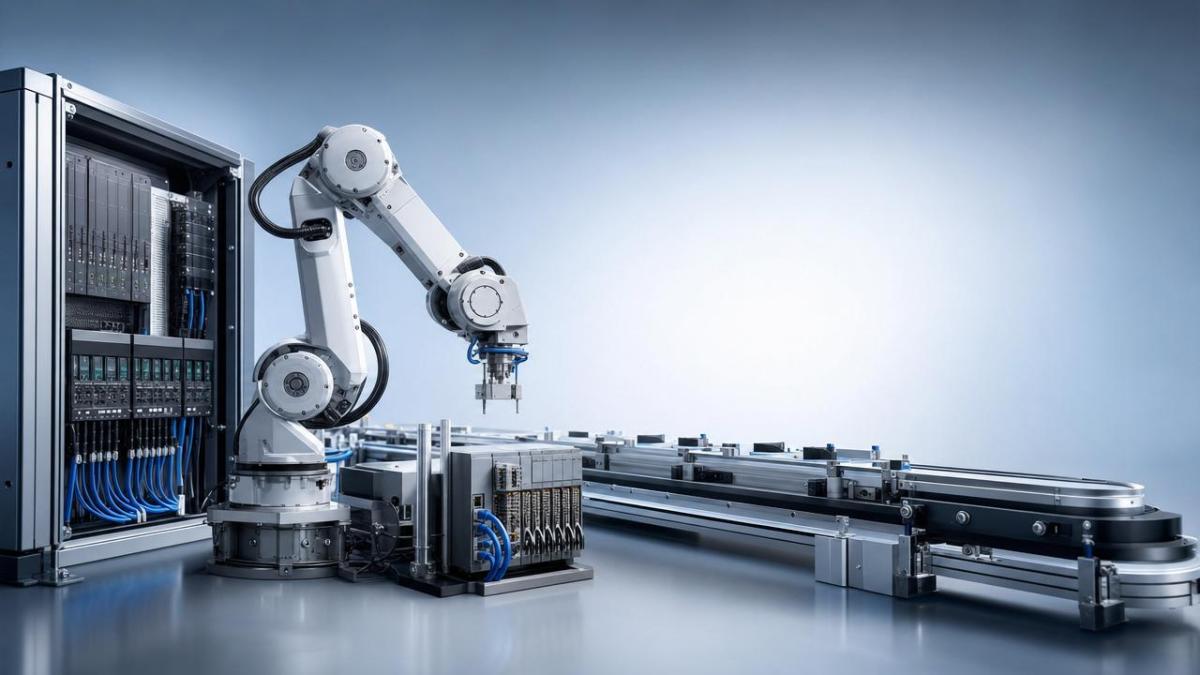
An industrial robotics manufacturer becomes risky when product performance can no longer be verified consistently across design, deployment, and lifecycle support.
The first threshold is compliance uncertainty. If certifications, safety documentation, or test records are incomplete, technical risk quickly becomes operational risk.
The second threshold is software isolation. Robots that cannot communicate cleanly with PLC, SCADA, MES, or industrial IoT platforms create long-term integration debt.
The third threshold is service instability. If spare parts, firmware updates, or field engineering response are inconsistent, downtime exposure rises sharply.
The fourth threshold is roadmap opacity. A dependable industrial robotics manufacturer should show a clear upgrade path for controllers, safety functions, and data interfaces.
Core Definition of a Risky Industrial Robotics Manufacturer
A risky industrial robotics manufacturer is not simply a weak brand or a lower-cost supplier. Risk is defined by uncertainty that threatens production continuity.
That uncertainty may involve hardware durability, software compatibility, quality repeatability, regional service coverage, or poor documentation discipline.
In Industry 4.0 environments, robotics are no longer standalone cells. They operate inside interconnected systems where one incompatible node can affect the whole line.
For that reason, evaluating an industrial robotics manufacturer requires attention to engineering governance, not marketing claims.
- Verified conformity with ISO, IEC, CE, and local safety requirements
- Stable controller architecture and communication protocols
- Repeatable production quality across batches and facilities
- Documented service procedures and spare parts availability
- Clear lifecycle commitments for software and hardware support
Current Industry Signals That Increase Supplier Risk
The automation market has expanded quickly, but growth has also widened the quality gap between vendors. Not every industrial robotics manufacturer scales with equal control.
Several market signals deserve close attention before qualification or platform standardization decisions are made.
These signals do not automatically disqualify a supplier. They indicate where deeper technical review is necessary before long-term commitments are made.
Business Impact Across the Integrated Factory
The risk of a poor industrial robotics manufacturer extends beyond the robot cell itself. Failures often cascade into upstream and downstream systems.
A controller mismatch can delay PLC handshaking. Weak diagnostic data can limit MES traceability. Firmware instability can interrupt motion synchronization and safety validation.
The result is often hidden cost rather than immediate failure. Extra commissioning hours, engineering workarounds, manual intervention, and repeated qualification testing reduce project efficiency.
For high-mix manufacturing, the problem becomes sharper. Flexible automation depends on rapid recipe switching, clean data exchange, and predictable recovery after faults.
If an industrial robotics manufacturer cannot support those capabilities, line agility weakens and future digital transformation becomes more expensive.
Common Risk Patterns by Supplier Type
Different supplier profiles carry different forms of risk. Understanding those patterns improves qualification and benchmarking accuracy.
The key lesson is simple: price position alone does not define risk. Engineering maturity and support structure define it more accurately.
Practical Evaluation Criteria Before Commitment
A structured review framework helps reveal when an industrial robotics manufacturer is becoming a strategic liability rather than a technical asset.
Compliance and Safety Evidence
- Request current certificates, test reports, and safety manuals
- Confirm region-specific conformity requirements
- Check functional safety integration with external systems
Software and Data Interoperability
- Validate OPC UA, fieldbus, and API support
- Review compatibility with PLC, MES, and cloud gateways
- Test diagnostic data quality and event logging depth
Lifecycle Support Capacity
- Assess spare parts lead times and regional stocking
- Verify firmware maintenance policy and version control
- Review training, troubleshooting, and escalation procedures
This process should include site references, pilot validation, and integration testing under realistic production conditions.
Recommended Actions for Lower-Risk Selection
A lower-risk decision starts with disciplined comparison, not brand familiarity. A strong industrial robotics manufacturer should perform well across technical and operational dimensions.
- Build a weighted scorecard covering compliance, software, service, and lifecycle economics.
- Run a pilot cell before standardizing across multiple lines or plants.
- Benchmark fault recovery time, not only speed and payload.
- Require documentation quality equal to hardware quality.
- Review five-year support visibility before signing long-term agreements.
Where possible, compare suppliers using neutral engineering benchmarks and cross-sector data. That approach reduces bias and exposes hidden compatibility risks earlier.
A trustworthy industrial robotics manufacturer should strengthen factory resilience, not introduce uncertainty disguised as innovation.
The practical next step is to convert supplier evaluation into a formal risk review. Use measurable criteria, demand verifiable records, and test integration before expansion.
In a connected factory, the right industrial robotics manufacturer is not only a machine supplier. It is a long-term reliability partner within the wider automation architecture.
Organizations using independent benchmark intelligence, such as G-IFA’s cross-sector engineering perspective, can make faster and safer decisions with greater technical confidence.
Recommended News
- 2026/10/24Car Spare Parts: How to Check Fitment and Avoid Ordering the Wrong PartOrder car spare parts with confidence. Learn how to verify VINs, OEM numbers, and fitment details to avoid costly mistakes and choose the right replacement first time.
- 2026/10/23How Do You Select a Motion Control System for Synchronized Axes?How do I select a motion control system for synchronized axes? Discover key timing, feedback, and performance checks to choose confidently and reduce costly integration risks.
- 2026/10/23Integrating End-of-Line Sortation with Packing Stations and Conveyor ControlsOptimize end of line sortation with coordinated packing stations and conveyor controls. Learn how to prevent bottlenecks, improve routing accuracy, and handle exceptions reliably.